






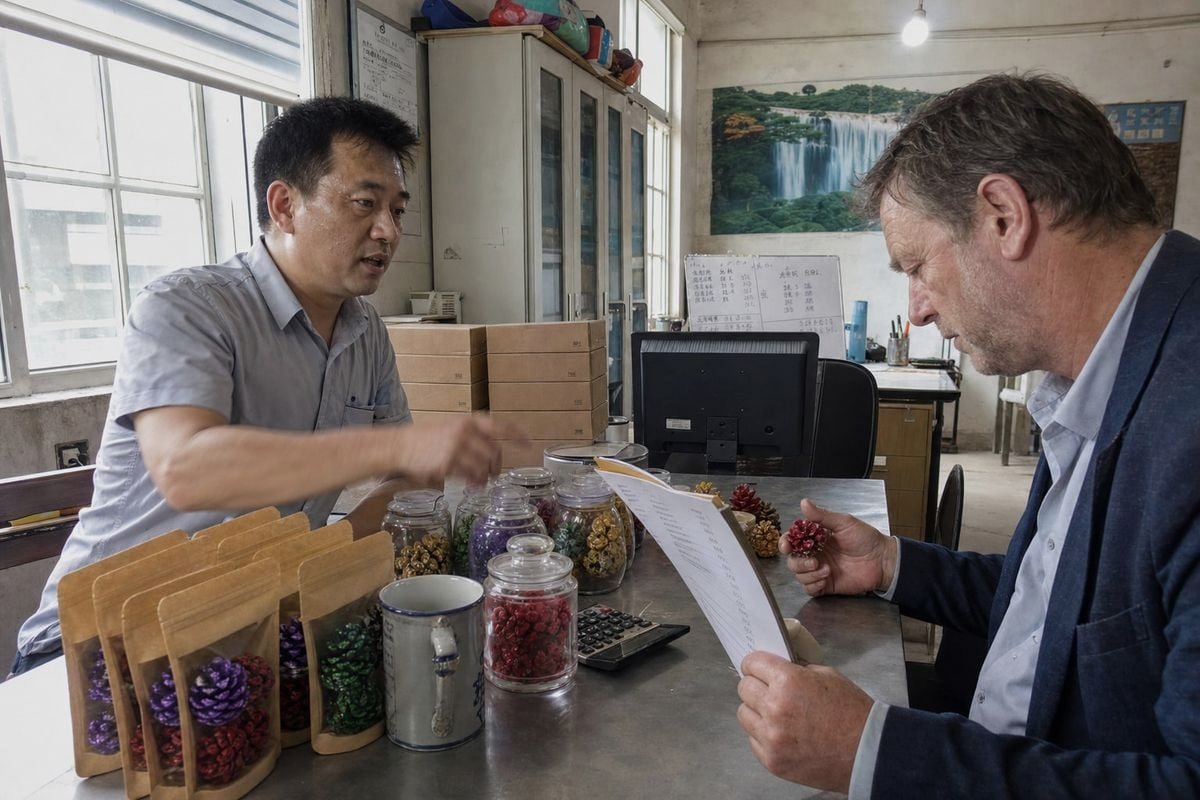
Buyers ask me about deposit percentage for fireplace colored pine cones almost weekly BSCI 1. Guess wrong, and our production line sits idle — or your cash flow gets squeezed before the season even starts.
A reasonable deposit for fireplace colored pine cones is 30% to 50% of the order value. Most manufacturers require 30% for standard bulk orders and 50% for custom colors, private labeling, or first-time buyers, with the balance due before shipment.
That is the short answer. The right number for your order depends on customization, order history, and timing. Let me break down each factor below.
What Deposit Percentage Should I Expect When Placing a Bulk Order for Colored Pine Cones?
Last October, a German distributor asked us why we quoted a 30% deposit while a trading company quoted 20%. My answer came down to one thing: who actually carries the production risk.
Expect a 30% deposit for standard bulk orders of colored pine cones, with 70% due before shipment. Custom or made-to-order batches typically require 40% to 50% upfront, because the seller must buy raw cones, flame colorants, and packaging before production begins.
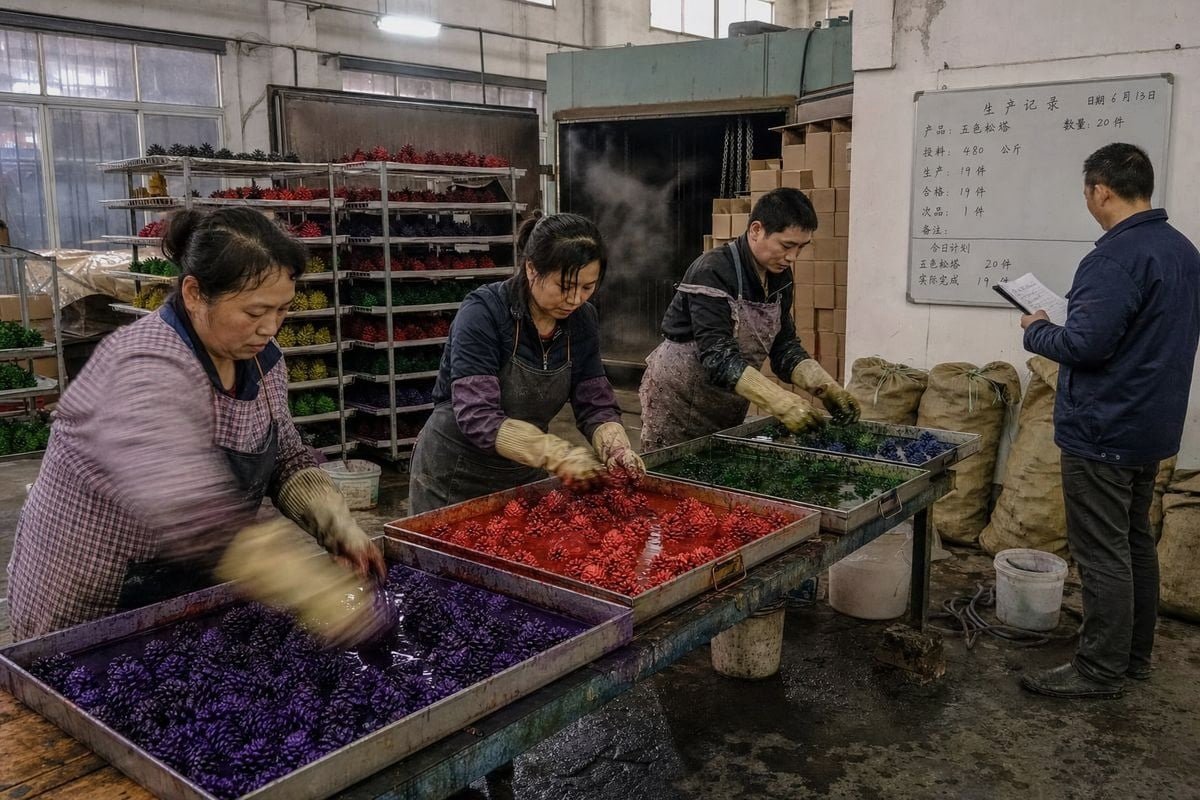
Colored pine cones are not a commodity product. They sit somewhere between craft goods and seasonal décor. Each batch involves sourcing kiln-dried pine cones, treating them with rainbow fire chemicals such as copper sulfate flame colorant 2, drying them again, and then packing them into retail-ready pouches or jars. All of that costs money before a single carton ships. That is why deposits exist in this niche at all.
There is no universal industry standard. So the honest way to think about it is in tiers. A lower deposit works when the seller holds stocked inventory. A higher deposit is fair when the seller must produce your order from scratch.
Typical Deposit Tiers in This Niche
| Order Type | Common Deposit | Why |
|---|---|---|
| In-stock, ready-to-ship inventory | 100% prepayment | Low value, no production risk, ships fast |
| Standard bulk order (catalog product) | 30% | Materials must be purchased, but specs are proven |
| Custom colors or custom packaging | 50% | Order has no resale value if canceled |
| Rush or peak-season orders | 40–50% | Production slots are reserved during high demand |
Some buyers push back and argue pine cones are cheap and easy to replace, so deposits should be minimal. I understand the logic, but it misses the real cost driver: the prep-and-cure phase. Cleaning, soaking, drying, and quality-checking treated cones is labor-intensive, and a finished seasonal batch has an extremely short shelf life. If a buyer cancels a Christmas order in November, that inventory may be worthless by January. A 30% deposit on standard bulk order payment terms is not a profit grab. It simply covers materials and labor already committed.
How Can I Negotiate Payment Terms with a Colored Pine Cone Manufacturer?
One lesson from 17+ years of exporting fire products to 30+ countries: the buyers who negotiate best are not the ones who push hardest on price. They are the ones who reduce our risk in exchange for flexibility.
Negotiate payment terms by reducing the supplier's risk: commit to repeat volume, accept standard specs, order early in the season, or pay via secure methods. In exchange, ask for a lower deposit, split shipments, or partial balance-on-delivery terms.
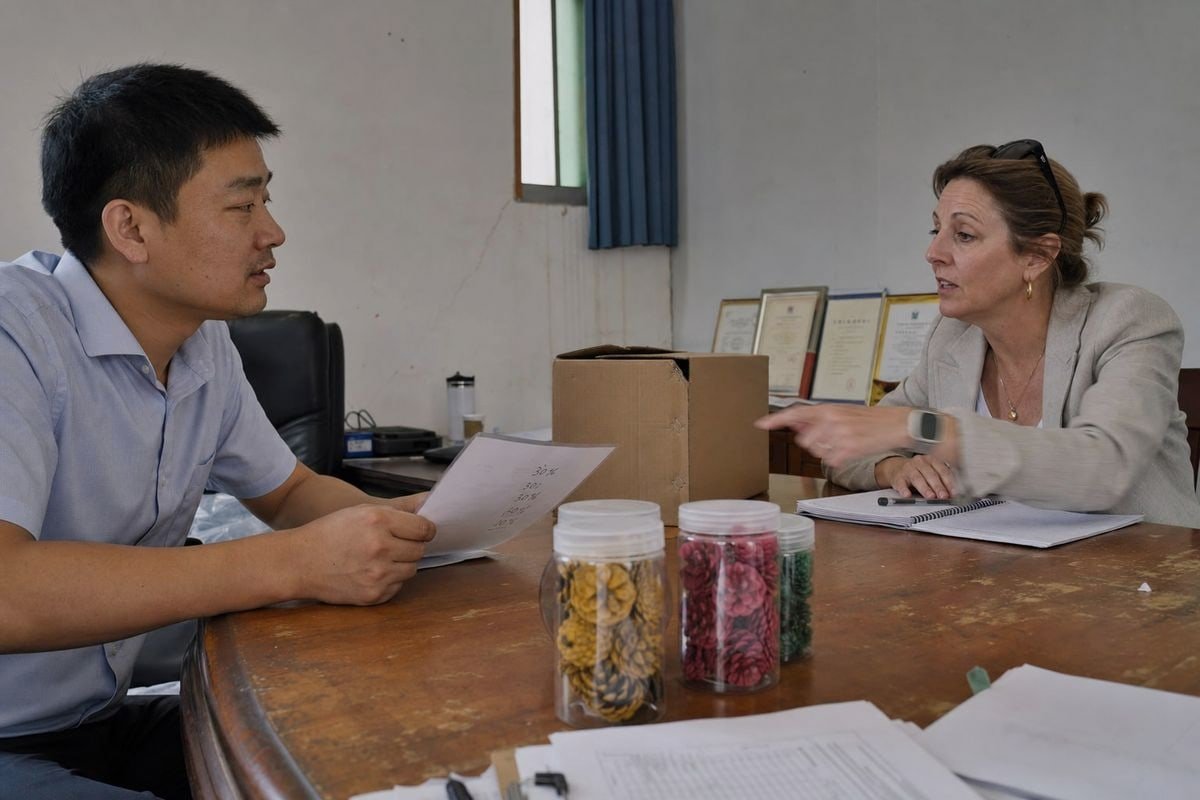
Negotiation works when both sides trade something real. If you simply demand a 10% deposit on a fully custom order, most serious factories will decline, because the math does not work. But if you offer something that lowers our exposure, we have room to move.
What You Can Offer vs. What You Can Ask For
| You Offer | You Can Reasonably Ask For |
|---|---|
| Signed annual volume commitment | Deposit reduced from 30% to 20% |
| Standard catalog specs (no custom colorant blend) | Faster lead time for production and lower deposit |
| Early order placed before peak season | Priority production slot at standard terms |
| Payment by irrevocable L/C or verified escrow | Balance due against shipping documents |
| Prompt payment history over 2–3 orders | Net terms on part of the balance |
A few practical negotiation tips from our side of the table. First, ask about the custom order policy in writing before you sample. A supplier who cannot explain their deposit logic clearly is a red flag. Second, negotiate the balance timing, not just the deposit size. Moving the balance from "before production ends" to "against bill of lading copy" often matters more to your cash flow than shaving 5% off the deposit. Third, verify what protects you. When buyers see our ISO 9001 3, BSCI, CE, and SGS/Intertek certifications and test reports, the deposit conversation gets easier, because they know the first sample reliably reflects mass-production quality SGS/Intertek certifications 4. Certification is your leverage too — it justifies trusting a supplier with a larger upfront payment.
Finally, always clarify refund conditions. Many seasonal craft suppliers use a non-refundable deposit agreement for holiday inventory. That is normal, but the trigger conditions should be spelled out in the proforma invoice, not assumed.
Does the Deposit Amount Change If I Request Custom Packaging or Private Labeling?
A Canadian outdoor brand once asked us to switch from our kraft stand-up pouch to a fully branded drawstring burlap sack with their logo and custom warning labels. The product inside was identical. The deposit was not.
Yes. Custom packaging and private labeling usually raise the deposit from 30% to around 50%, because branded pouches, boxes, labels, and barcodes are printed exclusively for you and cannot be resold to anyone else if the order is canceled.
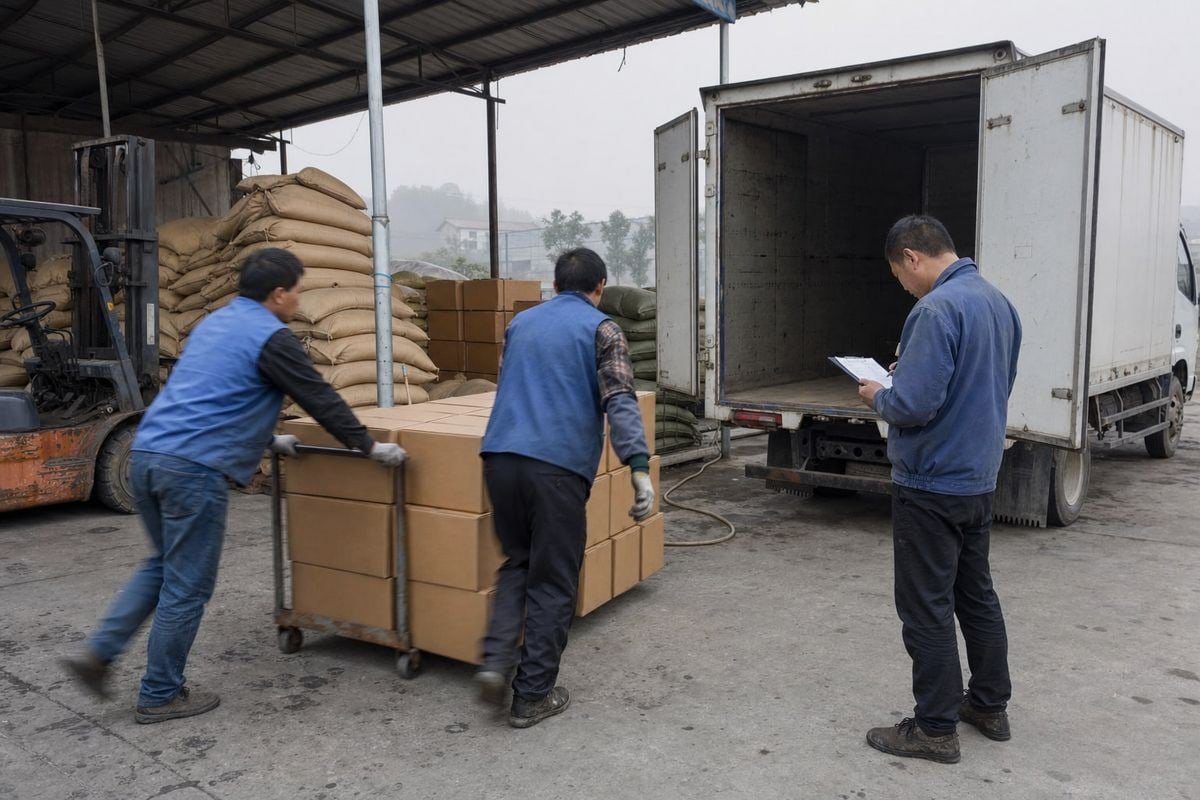
The reason is simple: resale value. If you cancel an order of plain, catalog-spec colored pine cones, a factory can eventually sell that stock to another wholesale holiday decor buyer. But if the cones are sealed in pouches carrying your brand name, your barcode, and your market-specific warning labels, that inventory is dead stock the moment you walk away. The deposit has to reflect that.
In our OEM/ODM 5 work, packaging is often where most of the upfront cost sits. Custom printing has its own minimums, its own suppliers, and its own lead time for production. We routinely handle custom boxes, display packaging, warning labels, and barcodes for private-label buyers 6, and every one of those items must be ordered and paid for before the first cone is packed.
How Customization Layers Affect Your Deposit
- Stock product, stock packaging — lowest deposit, often 30% or full prepayment for small ready-made lots.
- Stock product, private-label packaging — deposit rises to 40–50% to cover printed materials.
- Custom flame colors, private-label packaging — 50% is standard; specialized colorants like boric acid 7 for green flames may need dedicated sourcing.
- Fully custom fire starter gift sets — 50% minimum, sometimes with tooling or plate fees paid 100% upfront.
One more nuance worth knowing. Some vendors price exotic treatments differently — a variable deposit tied to colorant cost, since chemicals for certain flame colors cost far more than common blends. If your spec calls for a rare color effect, expect the deposit conversation to reflect the chemistry, not just the packaging. Ask for the cost breakdown so you can see exactly what your deposit is covering: materials, printing, or reserved production capacity.
What Payment Schedule Is Standard for First-Time versus Repeat Orders of Fire Pine Cones?
When we onboard a new distributor — whether in the US, the Netherlands, or Australia — the first order always runs on stricter terms than the fifth. That is not distrust. It is simply how both sides earn flexibility.
First-time orders typically follow a 50/50 schedule: 50% deposit to start production, 50% before shipment. Repeat customers with clean payment history usually move to 30% deposits, and long-term partners may earn balance-against-documents or partial net terms.

The 50/50 model dominates first orders for a good reason. Neither side has history with the other. The buyer worries about quality and delivery. The factory worries about cancellation and non-payment. Splitting the payment evenly balances that risk. In our experience exporting fire products for over 17 years, buyers who start on 50/50 and pay cleanly almost always graduate to better terms by the second or third order.
Standard Payment Schedule Progression
| Relationship Stage | Deposit | Balance | Notes |
|---|---|---|---|
| First order (trial) | 50% | 50% before shipment | Often smaller MOQ to test quality |
| Second and third orders | 30–40% | Balance before shipment | Terms ease as trust builds |
| Established partner (2+ years) | 30% | Balance against B/L copy | Cash flow friendly for both sides |
| Seasonal program partner | 10–20% rolling | Scheduled installments | Locks in pricing and production slots |
That last row deserves a note. Some suppliers offer a subscription-style rolling deposit for recurring seasonal customers — a small deposit maintained year-round that locks in harvest-season pricing and guarantees production capacity before the autumn rush. For distributors who reorder every holiday season, this can be smarter than renegotiating from zero each year.
Timing matters as much as history. Fire pine cones are a seasonal product with a compressed selling window. Orders placed in June for October delivery get comfortable lead time for production and standard terms. Orders placed in September compete for capacity, and rush production usually means firmer deposits, regardless of your history. Some suppliers even adjust terms during high-humidity months, when treated cones need extended kiln-drying and energy costs rise. Plan early, and the payment schedule almost always works in your favor.
Conclusion
Deposit percentage for fireplace colored pine cones follows risk, not habit: 30% for standard bulk, 50% for custom or first orders, better terms as trust grows. Clarify everything in writing before production starts.
Footnotes
1. Explains the BSCI social compliance certification mentioned alongside other supplier credentials. ↩︎
2. Authoritative NIH PubChem entry for copper sulfate, providing comprehensive chemical and safety data. ↩︎
3. Stable Wikipedia alternative to the official ISO site which frequently returns 403 errors for crawlers. ↩︎
4. Intertek is a named third-party testing body referenced for buyer confidence in quality. ↩︎
5. Background on OEM/ODM manufacturing arrangements referenced in private-label production context. ↩︎
6. Explains private labeling concept relevant to custom packaging deposit requirements discussed. ↩︎
7. Authoritative NIH PubChem entry for boric acid, providing comprehensive chemical and safety data. ↩︎



 English
  Spanish
  German
  French
  Arabic
  Portuguese
Join the Conversation