






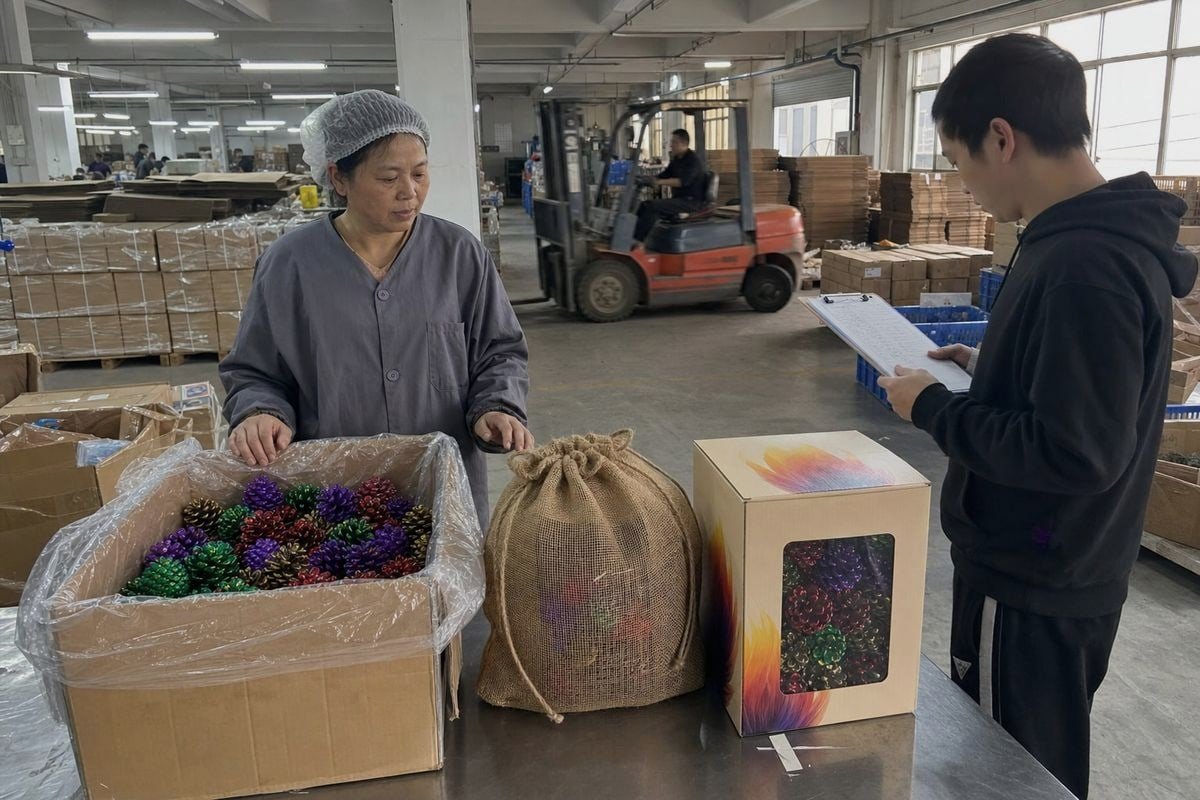
Choosing packaging for fireplace colored pine cones stalls more orders than pricing does. On our production line, I've watched buyers lose a full season because the wrong format killed their shelf performance.
Choose bulk packaging for wholesale and refill programs where per-unit cost matters most, mesh bags for rustic retail shelves and impulse buys, and color boxes for premium gifting and e-commerce. Match the format to your sales channel, price point, and shipping route — not personal preference.
Each format has a clear job. Below, I break down shelf appeal, order volume, shipping protection, and custom branding so you can decide with confidence.
What packaging option gives me the best shelf appeal for retail sales?
A German distributor once sent me photos of our color-flame pinecones sitting unsold in plain poly bags. We switched him to printed burlap pouches, and his reorder came within eight weeks.
Color boxes deliver the strongest shelf appeal for gift and holiday retail, thanks to full-surface printing and premium perceived value. Mesh and burlap bags win in rustic, farmhouse, and seasonal displays where customers want to see and touch the natural pine cones directly.
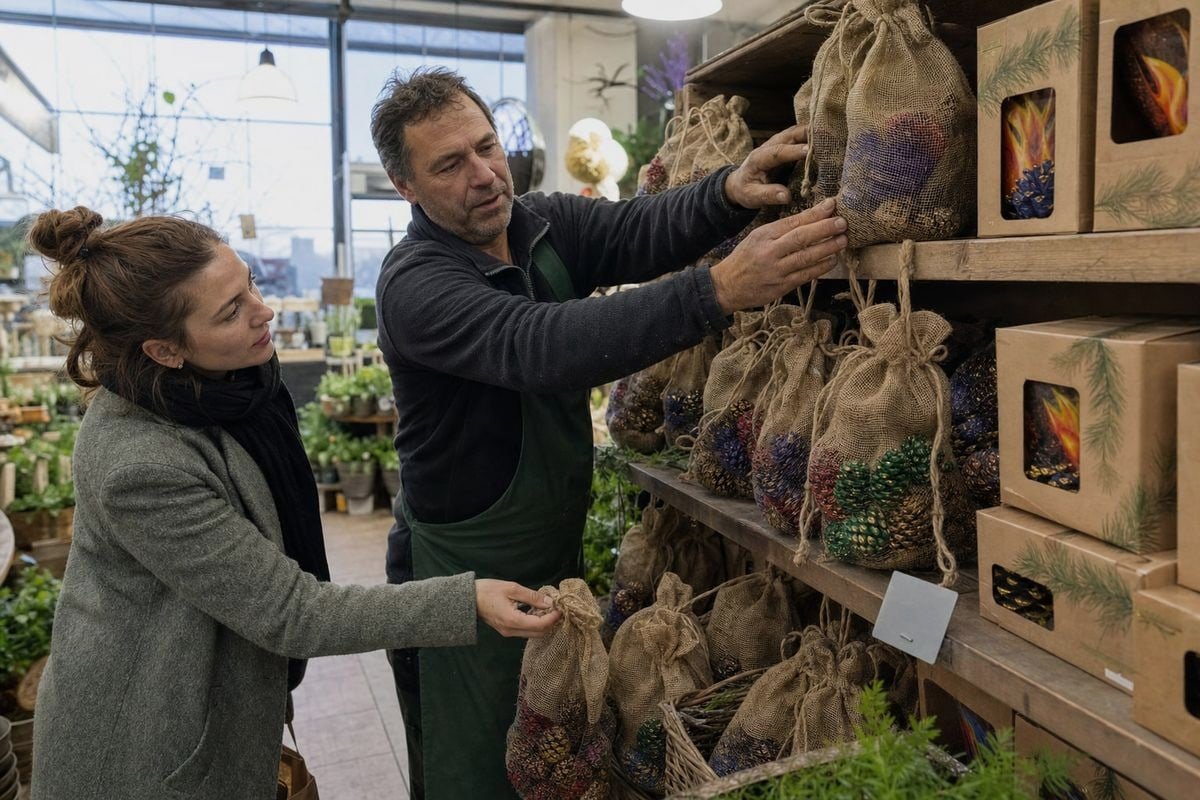
Shelf appeal is not one thing. It changes with the store environment, the price point, and the shopper's mindset. In our experience exporting to the US and Europe, the same product can look premium or generic depending entirely on the retail display packaging around it.
How each format performs on the shelf
| Format | Visual impact | Best retail setting | Price tier it supports |
|---|---|---|---|
| Bulk (poly liner in carton) | Low | Behind-counter refill, farm stores | Economy |
| Mesh / burlap bag | Medium-high | Garden centers, seasonal aisles, pegboard hooks | Mid-range |
| Color box | High | Gift shops, holiday hearth decor sections, e-commerce | Premium |
A mesh or burlap bag has one huge advantage: visibility. Shoppers see the vivid painted cones — the purples, emeralds, and gold-tipped scales — and instantly understand the product. The coarse woven texture also signals "natural" and "handcrafted," which fits the category perfectly. Natural fiber bags in cotton or burlap appeal strongly to eco-conscious buyers who avoid plastic-heavy formats.
A color box works differently. It hides the product unless you add a window, but it gives you a storytelling canvas. You can print the rainbow flame effect, usage steps, and gift messaging on every panel. For holiday hearth decor and gift set presentation, that canvas usually converts better than raw visibility.
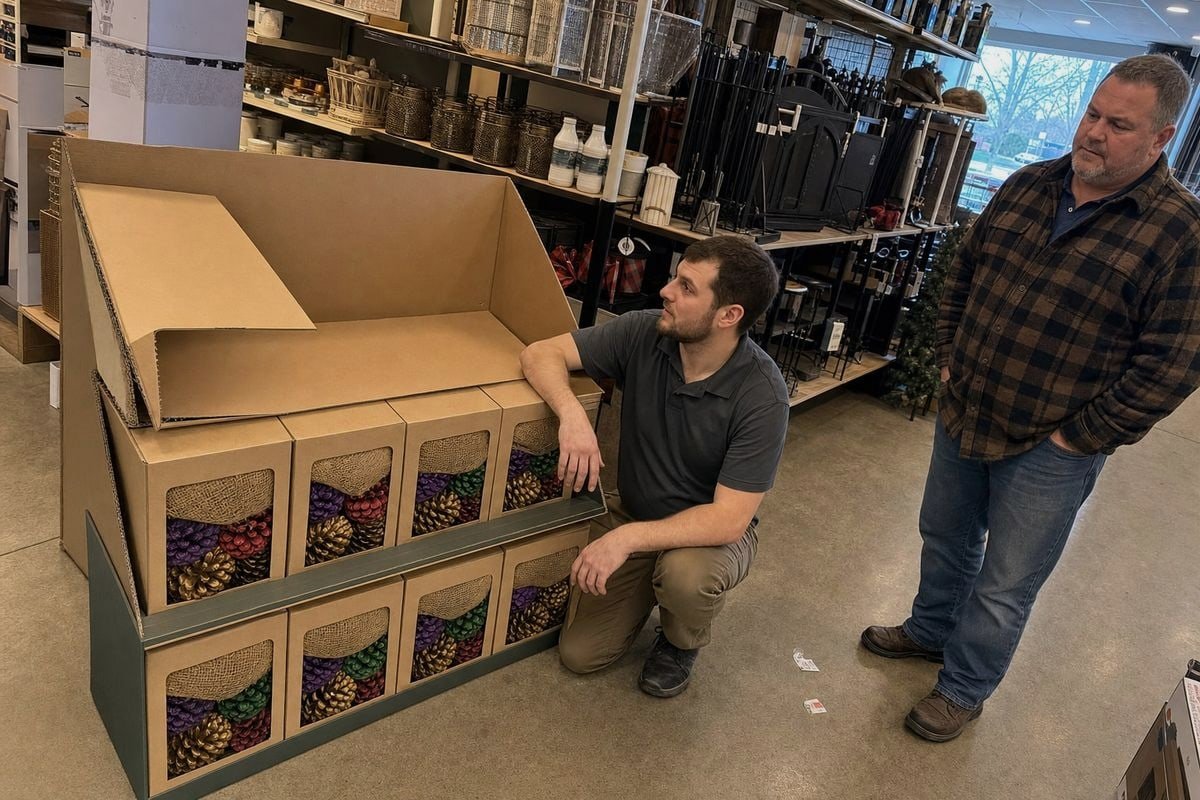
One hybrid trend I recommend to buyers testing premium tiers: a windowed box with a mesh insert. You get structural protection, full branding, and product visibility in one unit. We build these as point-of-purchase displays with tear-away tops so retailers can go from carton to shelf in under a minute.
How do I decide between bulk, mesh, and color box packaging for my order volume?
The trade-off I weigh most often with new buyers is simple: packaging cost per unit versus sell-through speed. After 17+ years supplying wholesale fire starters to 30+ countries, the math rarely lies.
Order bulk when you buy by the pallet and repackage or refill downstream. Choose mesh bags for mid-volume trial orders of a few thousand units. Reserve color boxes for volumes where premium margins absorb the higher tooling, printing, and dimensional shipping costs.
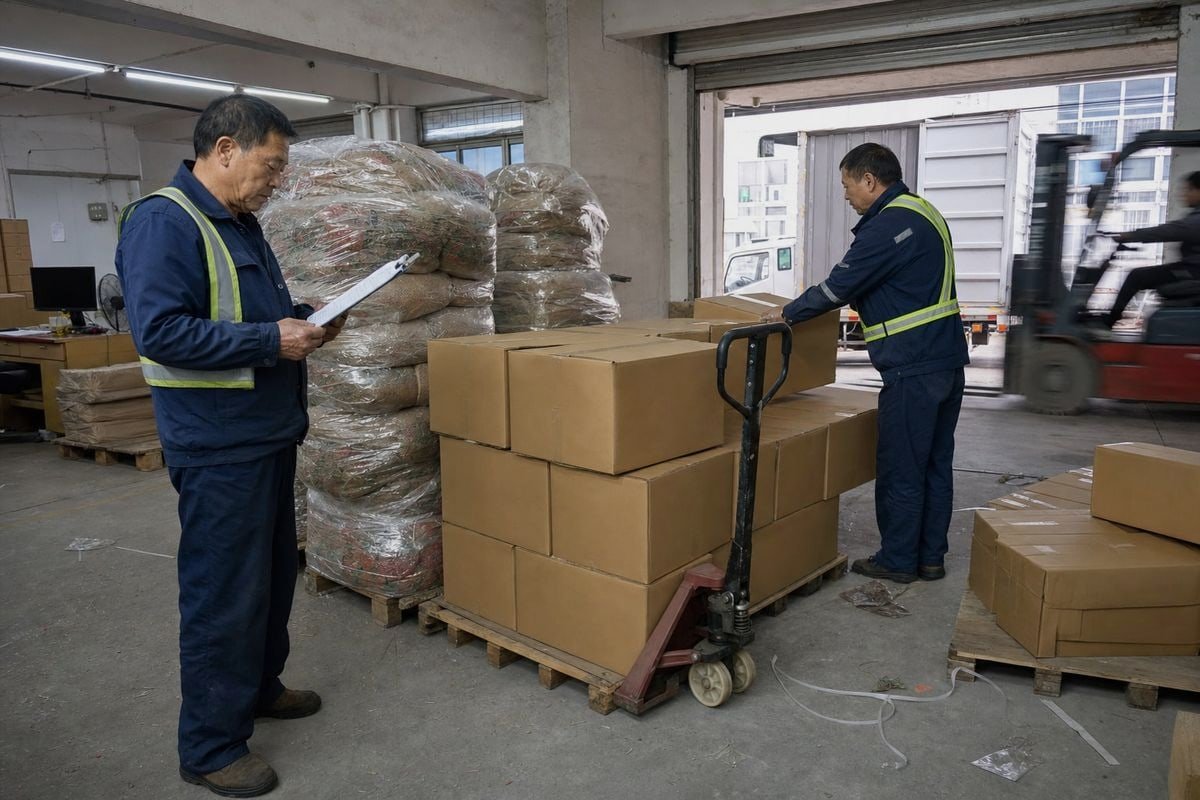
Volume changes everything about this decision. The market already leans toward bagged, weight-based refill formats — 2 lb, 5 lb, and 6 lb packs dominate listings — because buyers think in usage quantity, not unit count. That tells you something important: the refill logic is baked into this category.
A simple decision path by order size
- Pallet-scale wholesale or private-label repacking: Go bulk. Poly-lined master cartons cut per-unit packaging cost to a minimum, simplify palletizing, and let you brand downstream with your own labels or overwrap.
- Trial orders and seasonal retail programs: Go mesh or burlap. Tooling costs are near zero, MOQs stay flexible, and the bags hang straight onto pegs.
- Established premium lines with proven sell-through: Go color box. Printing plates and box dies are fixed costs, so they only pay off at volume with healthy margins.
Cost and logistics comparison
| Factor | Bulk | Mesh bag | Color box |
|---|---|---|---|
| Packaging cost per unit | Lowest | Low-medium | Highest |
| Setup / tooling cost | Minimal | Minimal | Moderate (dies, plates) |
| Container space efficiency | Best | Good | Weakest (dimensional weight) |
| Rebranding flexibility | Highest | Medium | Lowest |
| MOQ friendliness for trials | High | High | Lower |
Some buyers object that bulk means "unbrandable commodity." That is not true. We regularly support bulk buyers with printed inserts, roll labels, safety warning labels 1, and barcode sheets so their downstream repack still carries full branding. Bulk is the flexible option, not the unfinished one.
One more angle worth stealing: burnable packaging. We can produce kraft components with non-toxic inks 2 so the entire container works as kindling. Zero-waste consumers in Germany and the Netherlands respond strongly to this, and it pairs naturally with eco-friendly shipping materials on the export side.
Which packaging type offers the best protection during international shipping?
Years ago, a Canadian buyer opened a container to find broken scales on a portion of his loosely packed cones. That claim taught our QC team more about transit protection than any manual ever did.
Rigid color boxes offer the best physical protection for fragile pine cone scales during international shipping. Bulk cartons with dividers rank second. Mesh bags protect least on their own, so they need padded master cartons to survive long ocean freight and repeated handling.
Colored pine cones are more fragile than they look. The painted scales can snap under compression, and the lacquered finish can scuff when cones rub together for weeks in a container. Protection during shipping comes down to three threats: crushing, abrasion, and moisture.
The three transit threats and how each format handles them
| Threat | Bulk | Mesh bag | Color box |
|---|---|---|---|
| Crushing (stacked pallets) | Fair — depends on carton strength | Weak — bags compress freely | Strong — rigid walls resist load |
| Abrasion (cone-on-cone rubbing) | Poor without dividers | Poor — loose movement inside | Good — snug fit limits movement |
| Moisture (ocean humidity) | Needs poly liners | Weak — open weave breathes but absorbs | Good with moisture-barrier liners 3 |
Moisture deserves special attention. Ocean humidity can cause flame colorant chemicals 4 to "sweat" or leach in storage, staining packaging and dulling the color effect. On premium runs, we integrate moisture-barrier liners inside boxes and add desiccants to master cartons. For bulk shipments, sealed poly liners inside double-wall cartons provide moisture-resistant storage from our Ningbo facility to your warehouse door.
Mesh has one genuine advantage here: airflow. The open weave prevents trapped humidity and mold when cones are stored long-term. But that same openness offers zero crush protection, so mesh bags must always travel inside properly padded master cartons.
Our practical rule after shipping to 30+ countries: the outer master carton matters as much as the retail packaging. We spec double-wall corrugate 5, honeycomb dividers where needed, and drop-test every new packaging configuration before mass production. That is why our first sample reliably matches what arrives in your container.
Can I get custom branding and labeling on any of these packaging formats?
A UK fireplace brand once asked me whether burlap could carry their logo cleanly. Two weeks later, our sample room shipped them screen-printed pouches with their pinecone-branch artwork in crisp black ink.
Yes — all three formats support custom branding. Bulk takes private labels, inserts, and branded overwrap. Mesh and burlap bags accept printed logos, hang tags, and header cards. Color boxes offer full OEM/ODM customization including artwork, windows, barcodes, and multilingual safety labeling.
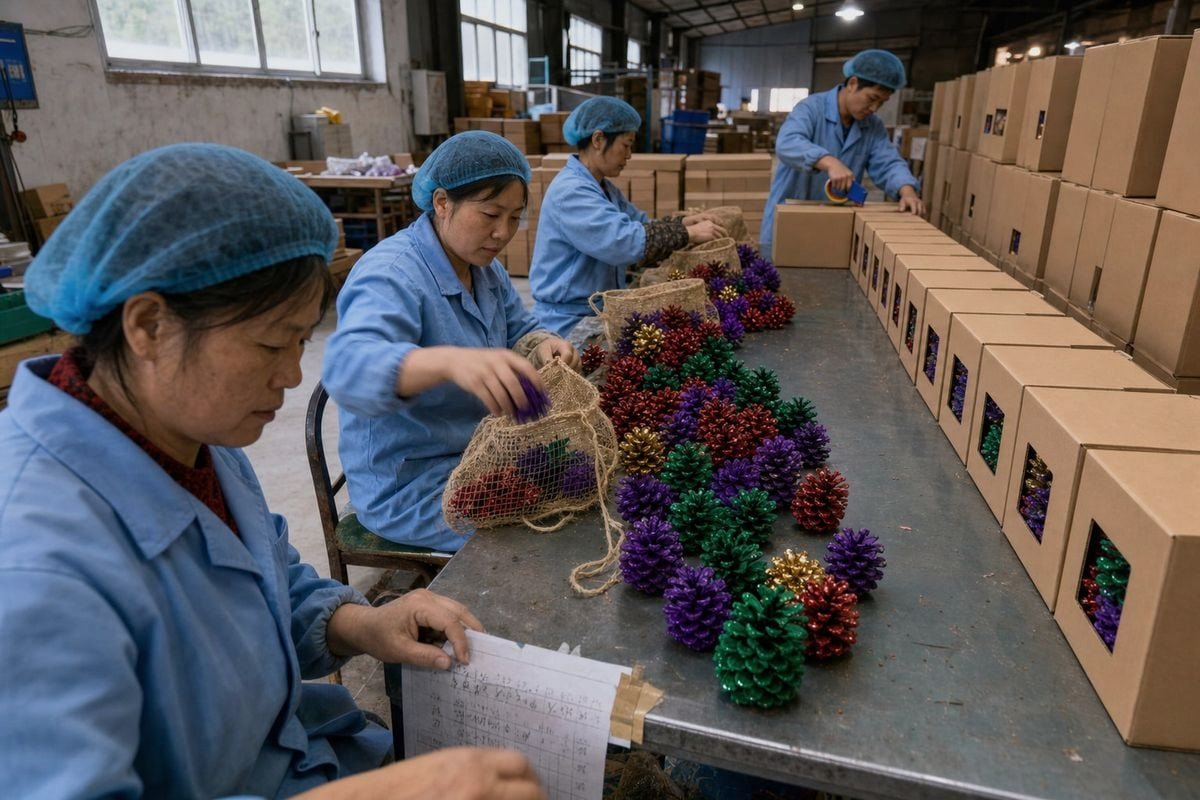
Private-label support is where a real factory separates itself from a trading company. Because we run our own production lines, we control every branding surface from the bag weave to the box coating — and we build compliance in from the start.
What you can customize on each format
- Bulk: branded poly liners, carton printing, roll labels, barcode sheets 6, and printed instruction inserts for downstream repacking.
- Mesh / burlap bags: one- or two-color screen printing, woven or paper hang tags, header cards, and drawstring color choices. A strong hang card is essential — it carries your brand story and usage instructions where the bag surface cannot.
- Color boxes: full-color offset printing, matte or gloss lamination, die-cut windows, foil accents for gift set presentation, and inner trays that hold each cone in place.
Compliance belongs on the packaging, not just the paperwork
Branding is only half the job. Safety warning labels are the other half, and they are non-negotiable in our export markets. Every format we produce can carry clear copy stating the cones are for wood-burning fireplaces and fire pits only — never gas units, where ash and residue can clog pilot and burner orifices. Buyers sometimes ask about copper sulfate pine cones from older formulations; our color-flame products use eco-friendly materials with no harmful chemicals, and we back that with SGS/Intertek test reports, plus ISO 9001, BSCI, and CE certification your compliance team can file.
One feature I push US and EU buyers toward: QR-code integration 7 on retail boxes. A printed code linking to a flame-color demonstration video and safety tutorial answers the shopper's biggest question — "what will this actually look like?" — right at the point of sale. It costs almost nothing to add and measurably lifts conversion on premium boxed sets.
Conclusion
The wrong packaging quietly bleeds margin and shelf space all season. Match the format to your channel — bulk for volume, mesh for rustic retail, color box for premium gifting — and let a certified factory partner handle the rest.
Footnotes
1. Authoritative Wikipedia entry covering safety labeling standards and legal requirements for consumer products. ↩︎
2. EPA Safer Choice program verifies non-toxic ink and material standards for eco-friendly products. ↩︎
3. Technical Wikipedia page explaining moisture barrier performance and measurement standards for packaging materials. ↩︎
4. Explains chemistry behind metal-salt colorants that produce flame color effects in pine cones. ↩︎
5. Background on corrugated fiberboard used as master carton material for shipping protection. ↩︎
6. GS1 sets global barcode standards used for private-label branding and inventory tracking. ↩︎
7. Background on QR code technology used to link retail packaging to demonstration videos. ↩︎



 English
  Spanish
  German
  French
  Arabic
  Portuguese
Join the Conversation