







Buyers ask me weekly whether the dye in decorative fireplace pine cones is truly safe. On our production line, I've seen how one bad coating formula can sink an entire import shipment.
The dye in decorative fireplace pine cones is safe and eco-friendly only when it uses tested, low-VOC, heavy-metal-controlled flame colorants backed by SGS or Intertek test reports and certifications like CE, ISO 9001, and BSCI. Without documented proof, "eco-friendly" is just a marketing claim.
That answer raises more questions. Which certifications matter? Which test reports 1 should you demand? How do you satisfy customs and your retail customers? Let me walk you through each one.
What certifications should I request to verify the dye safety in color-flame pinecones?
A German distributor once rejected a competitor's shipment because the supplier had a certificate for the packaging, not the coating. In our 17 years exporting color-flame pinecones, that mix-up comes up constantly.
Request ISO 9001 for quality management, BSCI for factory ethics, CE marking for EU market compliance, and third-party SGS or Intertek test certificates covering the flame colorant formulation itself. Verify each certificate number directly with the issuing body before placing your order.

Certifications fall into two groups, and buyers often confuse them. The first group proves the factory is reliable. The second group proves the product is safe. You need both. A factory certificate like ISO 9001 tells you the supplier runs consistent processes, so batch ten matches batch one. A product certificate tells you what is actually on the pine cone.
Here is the distinction in plain terms. Many decorative fireplace pine cones use metal salts such as copper sulfate 2 for blue-green flames and strontium chloride for red. These are legitimate flame colorants. But the same category also contains cheap, uncontrolled coatings loaded with heavy metals that release toxic fumes when burned. Only product-level testing separates the two.
The certification checklist I give our own buyers
| Certification | What It Proves | Who Issues It |
|---|---|---|
| ISO 9001 | Consistent quality management system | Accredited certification bodies |
| BSCI | Ethical, audited factory conditions | Amfori audit program |
| CE marking | EU health, safety, environmental conformity | Self-declared, backed by test files |
| SGS / Intertek reports | Actual chemical composition and safety of the coating | Independent third-party labs |
One more tip from our experience: ask for the certificate scope. A CE mark that covers a firelighter category is different from one covering a color-flame additive. If the scope does not name the actual product, keep asking. At our factory, we hand over the full documentation set before sampling, because serious importers check scope first and price second.
Can I get test reports proving these pinecones are free from harmful chemicals?
Every trial order we ship from Ningbo includes a lab report folder, because one of our earliest US buyers taught us a hard lesson: a verbal safety promise means nothing at a retail buyer meeting.
Yes. A credible supplier should provide SGS or Intertek test reports covering heavy metals content, VOC emissions, and combustion byproducts, plus a full Safety Data Sheet listing every ingredient in the flame colorant coating. Refuse suppliers who offer only marketing claims or generic certificates.

Let me be direct about a known industry problem. There is a real regulatory gap in labeling for decorative fire starters. Many products on the market ship with no standardized Safety Data Sheet 3 at all. That gap is exactly why serious importers now demand documentation upfront, and why we test every formulation batch before it leaves our line.
What should a proper test package cover? Three risk areas, matching three use scenarios.
First, handling. The coating touches human skin during packing and display. Some chemical coatings are toxic to pets and children if touched or ingested, so reports should confirm the formulation is safe to handle and packaging should still advise storage away from kids.
Second, indoor air quality. When cones burn in a fireplace, any solvent-heavy or petroleum-based coating 4 adds VOCs to the smoke stream. Low-VOC formulations matter here, and a test report should state VOC content, not just say "low."
Third, combustion residue. Ash from poorly formulated cones can concentrate heavy metals. That ash should never go into garden soil or near water. Our own reports address residue composition so your customers know how to dispose of it.
What a complete test report package looks like
| Document | What It Verifies | Red Flag If Missing |
|---|---|---|
| Heavy metals test (SGS/Intertek) | Lead, cadmium, mercury within limits | Supplier "doesn't have it on file" |
| VOC emission report | Indoor air quality impact when burned | Only a vague "low-VOC" claim |
| SDS (Safety Data Sheet) | Full ingredient disclosure, handling guidance | Refusal to disclose ingredients |
| Batch QC records | Sample matches mass production | Only golden-sample testing |
One caution: never accept a report dated years ago for a different SKU. Formulations change. Ask for reports tied to your production batch or at least the current formulation version.
How do I confirm the eco-friendly materials meet my country's import regulations?
Shipping to 30-plus countries has taught our export team one rule: the word "eco-friendly" does not exist in customs law. Regulations name specific substances, limits, and label requirements, and every market draws the lines differently.
Match your supplier's test reports against your market's specific rules: REACH and CLP for the EU, CPSC and state-level rules for the US, and equivalent national chemical regulations elsewhere. Ask the supplier which markets they already export to and request proof of past customs clearance.
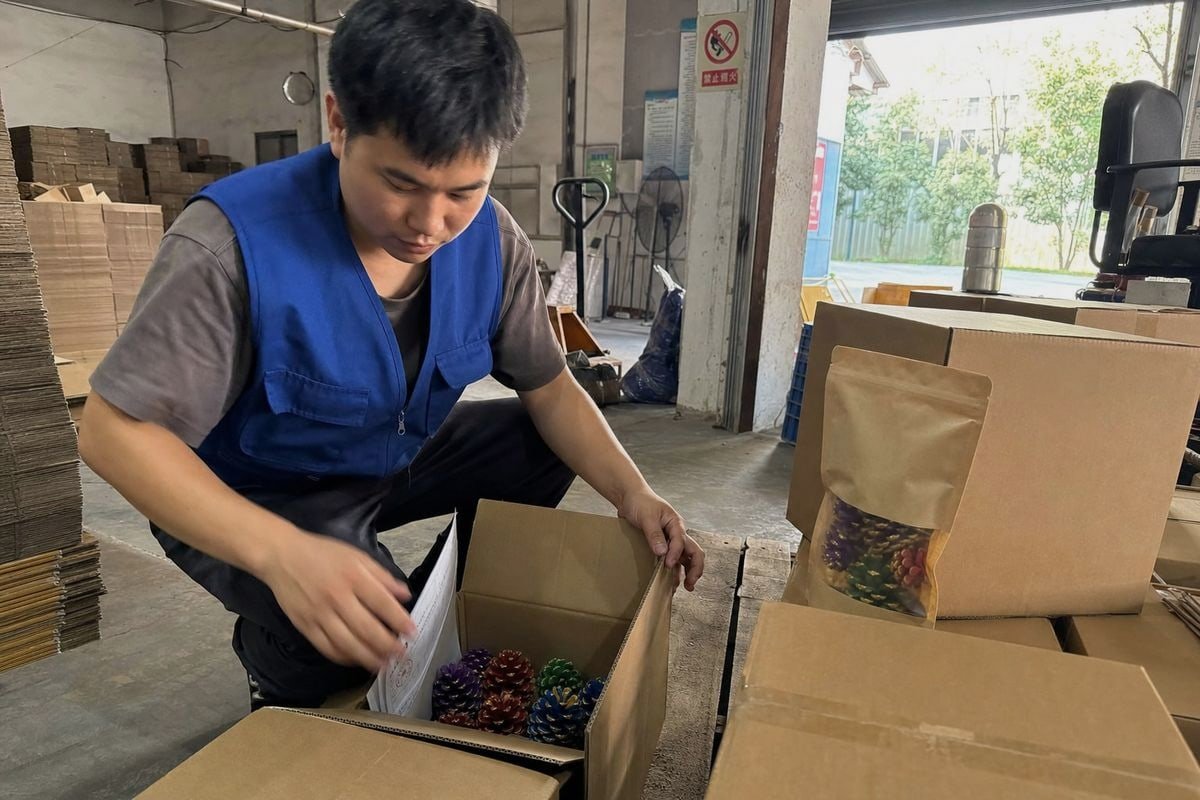
Here is the practical process I recommend, based on how our compliance team preps shipments to the US, Germany, UK, France, and Canada.
A five-step import compliance process
- Identify your product category. Color-flame pinecones are usually classified as fire-starting or fire-accessory goods, not toys or food-contact items. The category determines which rules apply.
- Map the chemical rules. In the EU, the coating's metal salts and any boric acid content must be checked against REACH restrictions 5 and CLP labeling rules. In the US, CPSC labeling and any state chemical disclosure rules apply.
- Cross-check the test reports. Lay the SGS or Intertek report next to the regulation. The tested substances and limits should line up with your market's list, not a generic list.
- Verify labeling and warnings. Most markets require hazard or usage warnings in the local language. "Not for cooking food over" and "keep away from children" warnings are standard for this category, since cooking marshmallows or hot dogs over colored flames risks chemical contamination.
- Ask for export history. A supplier who has already cleared customs in your market has solved these problems before. We keep clearance records for our main markets precisely because buyers ask.
Now, the eco-friendly question specifically. Some skeptics argue that "natural" marketing on these products is greenwashing, since mining metal salts carries environmental cost. That objection is fair, and it is why we tie our eco-friendly positioning to concrete inputs: natural pinecones, controlled non-hazardous formulations, and kraft or recyclable packaging, all documented. Eco-friendly fire starters earn the label through verifiable materials and low-toxicity chemistry, not through a green leaf printed on the bag. If your supplier cannot show the substance behind the claim, drop the claim before your regulator or a competitor does it for you.
What documentation do I need from my supplier to reassure my retail customers about safety?
A Canadian fireplace distributor once told me his store buyers spend thirty seconds per product, and the safety story has to survive that half minute. That conversation reshaped how we build documentation packs for private-label clients.
Collect a Safety Data Sheet, third-party lab reports, certification copies, batch traceability records, and consumer-facing usage warnings covering ventilation, food safety, pets, and ash disposal. Package these into a retail-ready compliance file your store buyers and end customers can actually understand.

Retail reassurance works on two levels, and your documentation needs to serve both. Store buyers want legal cover. End consumers want simple, honest usage guidance. Let me break down both.
For the store buyer, the file is technical: SDS, lab reports, certificate copies, and your import compliance summary. For the end consumer, the message goes on the packaging itself. In our OEM work, we print custom warning labels, barcodes, and usage instructions directly on the pouch or jar, so the safety story travels with the product to the shelf.
The consumer guidance matters because these are fire products, and honest suppliers say so. Color-flame pinecones are generally safe for indoor fireplaces with a working chimney 6 and reasonable ventilation. But the guidance should still cover the edge cases. Never cook food over colored flames. Keep unburned cones away from pets and children. Dispose of ash in household waste, never in the garden.
There are also hardware questions your dealers will face. Some formulations with sodium borate 7 can help loosen creosote buildup, which reduces a long-term chimney fire hazard. On the other hand, chloride-heavy colorants used constantly can stress stainless steel chimney liners, and metal vapors can degrade the catalysts in high-efficiency EPA-certified wood stoves. Your documentation should tell dealers to recommend occasional use in standard open fireplaces and to avoid catalytic stoves. That kind of honesty builds more retail trust than a spotless-sounding brochure.
The retail documentation pack, layer by layer
| Layer | Documents | Audience |
|---|---|---|
| Legal | SDS, lab reports, certificates | Compliance teams, insurers |
| Trade | Import clearance records, batch traceability | Store buyers, category managers |
| Shelf | Warning labels, usage instructions, ventilation guidance | End consumers |
| After-sale | FAQ sheet on ash disposal, stove compatibility, pets | Customer service teams |
Conclusion
Decorative fireplace pine cones are only as safe as their documentation. Demand certifications, batch-level test reports, and honest labeling, and choose a factory partner who provides them before you ask.
Footnotes
1. Replaced 403 link with a stable Wikipedia page explaining third-party product testing and certification. ↩︎
2. Scientific overview of copper sulfate, a common metal salt used for creating blue-green flames. ↩︎
3. Replaced 404 with the official OSHA Hazard Communication landing page. ↩︎
4. EPA information on how petroleum-based products and VOCs affect indoor air quality. ↩︎
5. Official European Chemicals Agency list of substances restricted under the REACH regulation for market safety. ↩︎
6. Replaced 404 with the updated NFPA heating safety page which covers chimney maintenance. ↩︎
7. Detailed chemical data on sodium borate, used in some fire products to manage creosote. ↩︎


 English
  Spanish
  German
  French
  Arabic
  Portuguese
Join the Conversation