






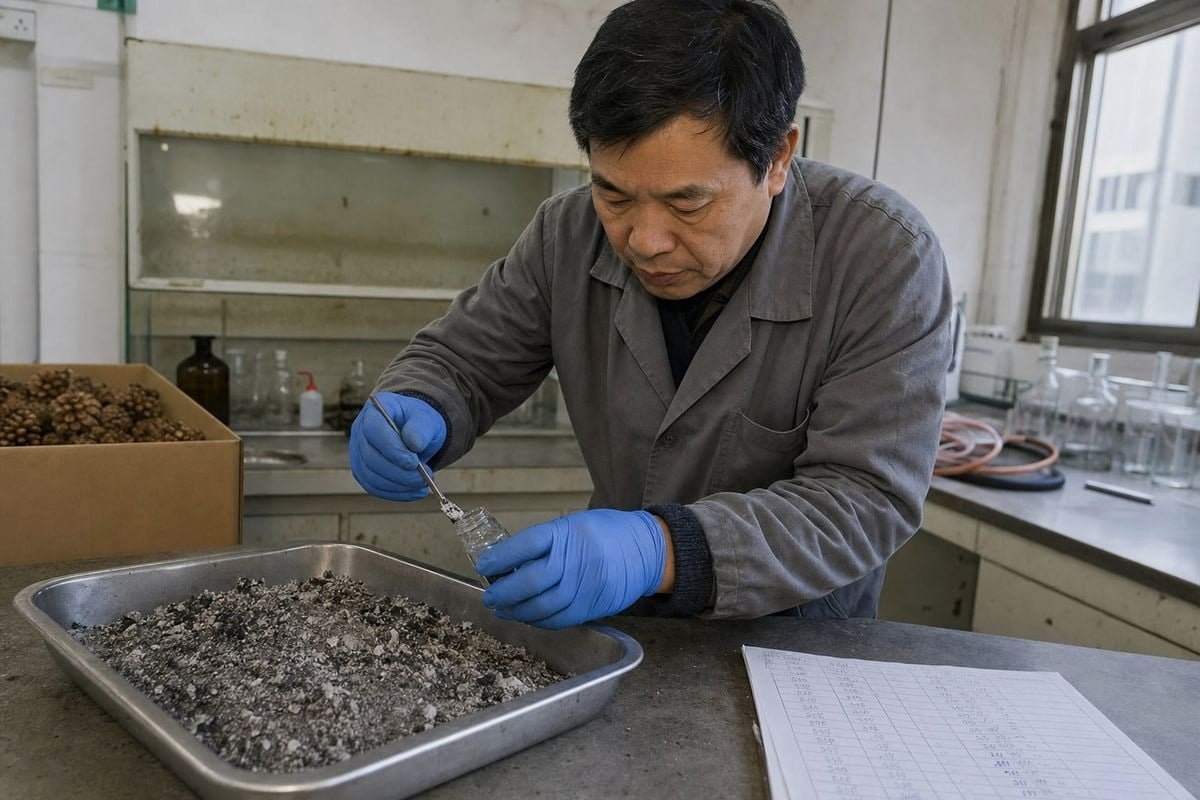
When we first developed our [color-flame pinecones](https://sunrichfire.com/colored-fireplace-pine-cones-biodegradable-environmentally-friendly-are/), buyers kept asking one hard question: what do copper and lithium salts actually do to soil and water after the fire dies?
The environmental impacts of copper and lithium salts in colored pine cones center on post-use contamination: copper salts are toxic to aquatic life, while lithium salts leach readily through soil into groundwater. Proper ash disposal and certified low-residue formulations keep these risks small and manageable.
That answer sounds simple, but the details matter for anyone importing or selling these products. Below, I break down the science, the standards, and the sourcing steps that protect your brand.
Are Copper and Lithium Salts in Color-Flame Pinecones Safe for Soil and Waterways?
During a formulation review at our Ningbo plant a few years back, our QC team tested leftover ash from a burn trial. The residual metal content surprised even our senior chemists.
Copper and lithium salts are safe in normal use but not environmentally neutral. Copper ash runoff harms algae, invertebrates, and fish in waterways, while lithium is highly mobile in soil and can leach into groundwater. Risk depends almost entirely on disposal, not the burn itself.

Let me be direct with you. The pinecone itself is harmless. It is natural wood. The environmental question sits entirely with the chemical flame colorants soaked into it, and with what happens to the toxic ash residue after the flames go out.
How Copper Behaves After Burning
Copper salts, such as copper sulfate 1, create the striking green and blue flames buyers love. But copper does not vanish in the fire. The metal ions stay in the ash. Canada's environmental assessments 2 concluded there is a real risk of harm from copper compounds, especially in aquatic environments. Copper dissolves into bioavailable forms in water. At elevated concentrations it impairs plant growth, photosynthesis, respiration, and nitrogen fixation. Aquatic toxicity is the headline concern: even small amounts of ash washing into a pond can stress algae and invertebrates.
How Lithium Behaves After Burning
Lithium tells a different story. It is less acutely toxic to aquatic life, but it is one of the most mobile cations in soil. That means heavy metal leaching is the main pathway. Lithium moves with groundwater runoff 3, gets taken up by plants, and can inhibit nitrogen-fixing soil bacteria, causing mild phytotoxicity in legumes nearby.
| Factor | Copper Salts | Lithium Salts |
|---|---|---|
| Main risk pathway | Aquatic toxicity via runoff | Soil mobility and groundwater lea |
Footnotes
1. Authoritative chemical database detailing the environmental toxicity and aquatic impact of copper sulfate compounds. ↩︎
2. Official Canadian government screening assessment evaluating the environmental risks associated with copper compounds. ↩︎
3. USGS resource explaining the presence and mobility of lithium in groundwater systems. ↩︎


 English
  Spanish
  German
  French
  Arabic
  Portuguese
Join the Conversation