






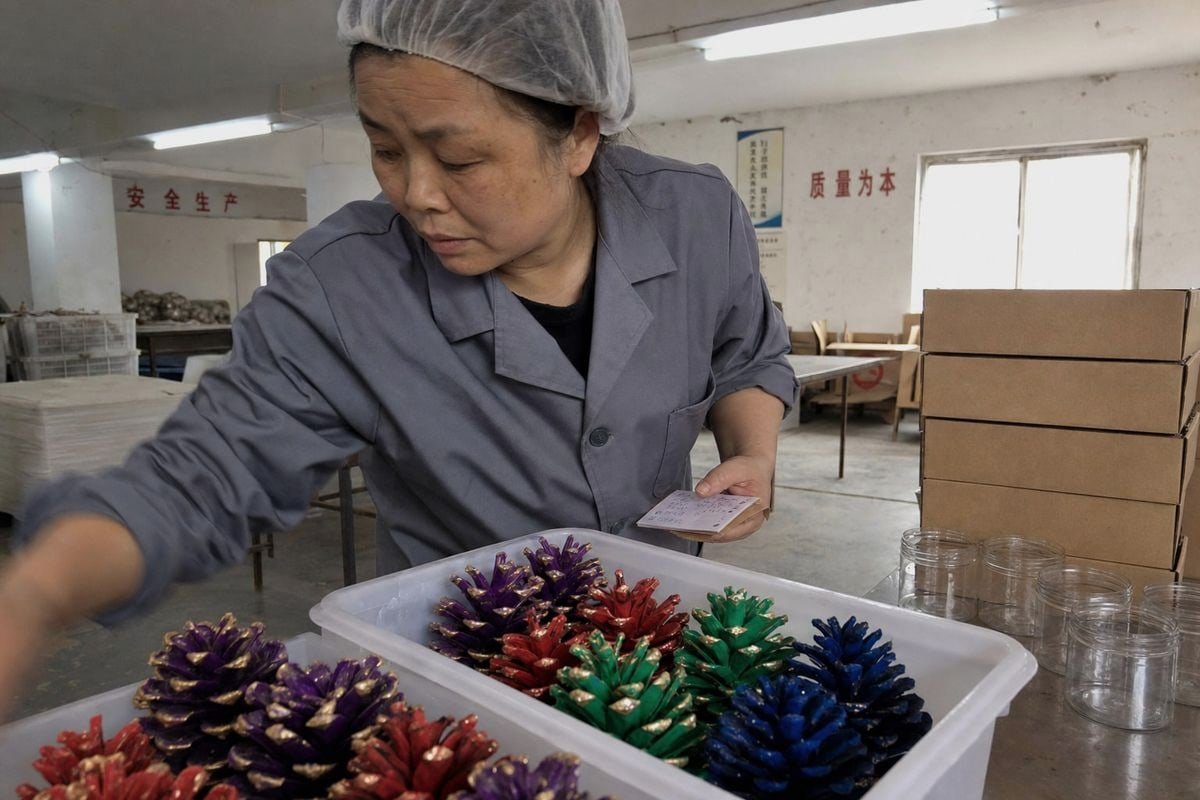
Les acheteurs me demandent chaque semaine si le colorant des pommes de pin décoratives pour cheminée est vraiment sûr. Sur notre chaîne de production, j'ai vu comment une mauvaise formule de revêtement peut couler une expédition entière.
La teinture dans les pommes de pin décoratives pour cheminée est sûre et écologique uniquement lorsqu'elle utilise des colorants ignifuges testés, à faible teneur en COV et contrôlés en métaux lourds, étayés par des rapports de test et des certifications SGS ou Intertek tels que CE, ISO 9001 et BSCI. Sans preuve documentée, "écologique" n'est qu'une affirmation marketing.
Cette réponse soulève plus de questions. Quelles certifications sont importantes ? Lesquelles rapports de test 1 devriez-vous exiger ? Comment satisfaire les douanes et vos clients détaillants ? Laissez-moi vous guider à travers chacune d'elles.
Quelles certifications devrais-je demander pour vérifier la sécurité des colorants dans les pommes de pin colorées à la flamme ?
Un distributeur allemand a un jour rejeté l'expédition d'un concurrent parce que le fournisseur avait un certificat pour l'emballage, pas pour le revêtement. Au cours de nos 17 années d'exportation de pommes de pin colorées, cette confusion se présente constamment.
Demander la certification ISO 9001 pour la gestion de la qualité, la certification BSCI pour l'éthique en usine, le marquage CE pour la conformité au marché européen, et des certificats de test tiers SGS ou Intertek couvrant la formulation du colorant ignifuge elle-même. Vérifiez chaque numéro de certificat directement auprès de l'organisme émetteur avant de passer votre commande.

Les certifications se répartissent en deux groupes, et les acheteurs les confondent souvent. Le premier groupe prouve que l'usine est fiable. Le second groupe prouve que le produit est sûr. Vous avez besoin des deux. Un certificat d'usine comme ISO 9001 vous indique que le fournisseur gère des processus cohérents, de sorte que le lot dix correspond au lot un. Un certificat de produit vous indique ce qu'il y a réellement sur la pomme de pin.
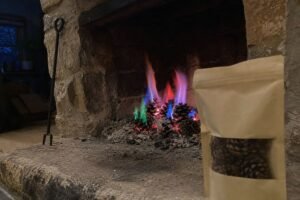
Voici la distinction en termes simples. De nombreuses pommes de pin décoratives pour cheminée utilisent des sels métalliques tels que sulfate de cuivre 2 pour les flammes bleu-vert et du chlorure de strontium pour le rouge. Ce sont des colorants de flamme légitimes. Mais la même catégorie contient également des revêtements bon marché et non contrôlés chargés de métaux lourds qui libèrent des fumées toxiques lorsqu'ils sont brûlés. Seuls les tests au niveau du produit séparent les deux.
La liste de contrôle de certification que je donne à nos propres acheteurs
| Certification | Ce qu'il prouve | Qui le délivre |
|---|---|---|
| ISO 9001 | Système de gestion de la qualité cohérent | Organismes de certification accrédités |
| BSCI | Conditions d'usine éthiques et auditées | Programme d'audit Amfori |
| Marquage CE | Conformité européenne en matière de santé, de sécurité et d'environnement | Auto-déclaré, étayé par des dossiers de test |
| Rapports SGS / Intertek | Composition chimique réelle et sécurité du revêtement | Laboratoires indépendants tiers |
Encore un conseil de notre expérience : demandez la portée du certificat. Une marque CE qui couvre une catégorie d'allume-feu est différente de celle qui couvre un additif de flamme colorée. Si la portée ne nomme pas le produit réel, continuez à demander. Dans notre usine, nous remettons l'ensemble de la documentation avant l'échantillonnage, car les importateurs sérieux vérifient d'abord la portée et ensuite le prix.
Puis-je obtenir des rapports de test prouvant que ces pommes de pin sont exemptes de produits chimiques nocifs ?
Chaque commande d'essai que nous expédions de Ningbo comprend un dossier de rapport de laboratoire, car l'un de nos premiers acheteurs américains nous a enseigné une dure leçon : une promesse de sécurité verbale ne signifie rien lors d'une réunion avec un acheteur au détail.
Oui. Un fournisseur crédible devrait fournir des rapports de test SGS ou Intertek couvrant la teneur en métaux lourds, les émissions de COV et les sous-produits de combustion, ainsi qu'une fiche de données de sécurité complète répertoriant chaque ingrédient du revêtement colorant ignifuge. Refusez les fournisseurs qui ne proposent que des allégations marketing ou des certificats génériques.

Soyons directs sur un problème connu de l'industrie. Il existe une véritable lacune réglementaire dans l'étiquetage des allume-feux décoratifs. De nombreux produits sur le marché sont expédiés sans norme Fiche de Données de Sécurité 3 du tout. Cette lacune est exactement la raison pour laquelle les importateurs sérieux exigent désormais une documentation préalable, et pourquoi nous testons chaque lot de formulation avant qu'il ne quitte notre chaîne.
Que devrait couvrir un dossier de test approprié ? Trois domaines de risque, correspondant à trois scénarios d'utilisation.
Premièrement, la manipulation. Le revêtement entre en contact avec la peau humaine lors de l'emballage et de l'exposition. Certains revêtements chimiques sont toxiques pour les animaux domestiques et les enfants s'ils sont touchés ou ingérés, les rapports doivent donc confirmer que la formulation est sûre à manipuler et l'emballage doit toujours conseiller de stocker à l'écart des enfants.
Deuxièmement, la qualité de l'air intérieur. Lorsque les cônes brûlent dans une cheminée, tout revêtement chargé de solvants ou à base de pétrole 4 ajoute des COV au flux de fumée. Les formulations à faible teneur en COV sont importantes ici, et un rapport de test doit indiquer la teneur en COV, pas seulement dire "faible"."
Troisièmement, le résidu de combustion. Les cendres de cônes mal formulés peuvent concentrer des métaux lourds. Ces cendres ne devraient jamais aller dans le sol du jardin ou près de l'eau. Nos propres rapports traitent de la composition des résidus afin que vos clients sachent comment les éliminer.
À quoi ressemble un dossier de rapport de test complet
| Document | Ce qu'elle vérifie | Signal d'alarme s'il manque |
|---|---|---|
| Test de métaux lourds (SGS/Intertek) | Plomb, cadmium, mercure dans les limites | Le fournisseur "ne l'a pas en dossier" |
| Rapport d'émission de COV | Impact sur la qualité de l'air intérieur lors de la combustion | Seulement une vague affirmation "faible teneur en COV" |
| FDS (Fiche de Données de Sécurité) | Divulgation complète des ingrédients, conseils de manipulation | Refus de divulguer les ingrédients |
| Dossiers de contrôle qualité des lots | L'échantillon correspond à la production de masse | Tests uniquement sur l'échantillon doré |
Une mise en garde : n'acceptez jamais un rapport datant de plusieurs années pour un SKU différent. Les formulations changent. Demandez des rapports liés à votre lot de production ou au moins à la version actuelle de la formulation.
Comment puis-je confirmer que les matériaux écologiques respectent la réglementation d'importation de mon pays ?
L'expédition dans plus de 30 pays a appris à notre équipe d'exportation une règle : le mot "écologique" n'existe pas dans le droit douanier. La réglementation nomme des substances spécifiques, des limites et des exigences d'étiquetage, et chaque marché trace les lignes différemment.
Faites correspondre les rapports de test de votre fournisseur aux règles spécifiques de votre marché : REACH et CLP pour l'UE, CPSC et règles au niveau des États pour les États-Unis, et réglementations chimiques nationales équivalentes ailleurs. Demandez au fournisseur sur quels marchés il exporte déjà et demandez une preuve de dédouanement passé.
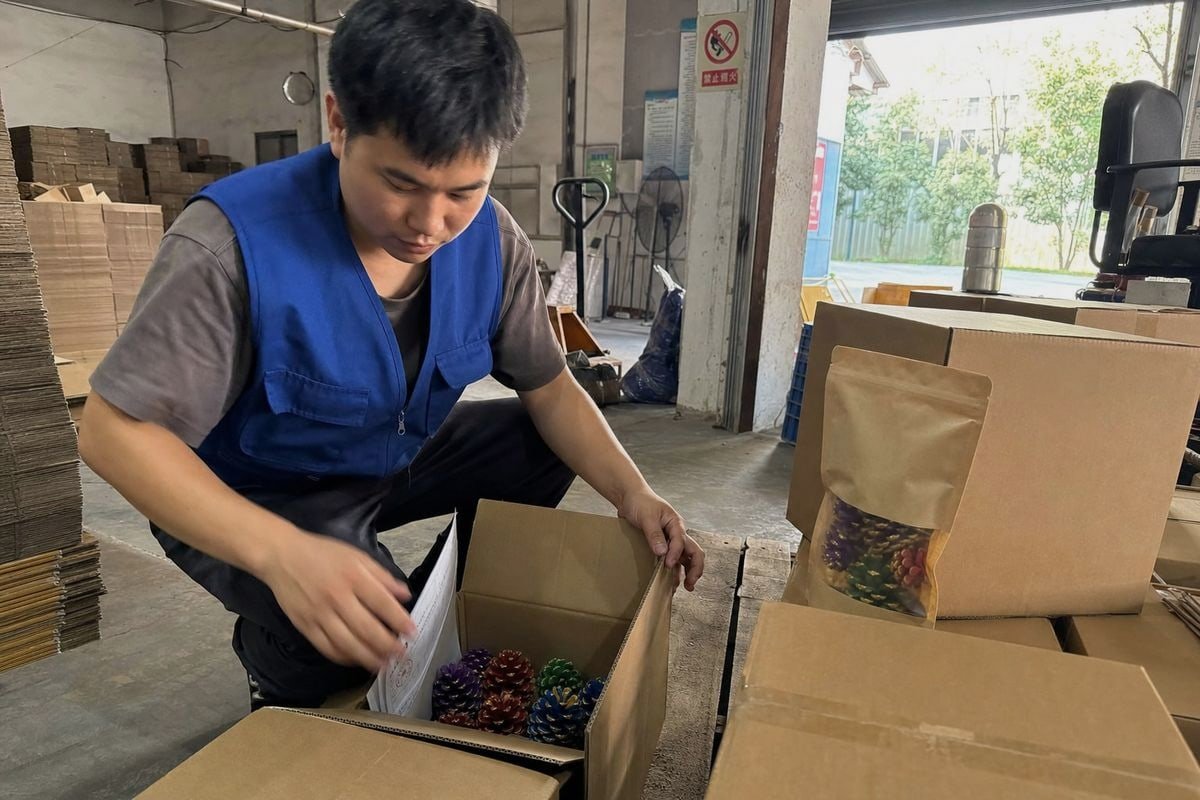
Voici le processus pratique que je recommande, basé sur la façon dont notre équipe de conformité prépare les expéditions vers les États-Unis, l'Allemagne, le Royaume-Uni, la France et le Canada.
Un processus de conformité d'importation en cinq étapes
- Identifiez votre catégorie de produit. Les pommes de pin à flamme colorée sont généralement classées comme des articles d'allumage ou des accessoires de feu, et non comme des jouets ou des articles en contact avec les aliments. La catégorie détermine les règles applicables.
- Cartographiez les règles chimiques. Dans l'UE, les sels métalliques du revêtement et toute teneur en acide borique doivent être vérifiés par rapport aux restrictions REACH 5 et aux règles d'étiquetage CLP. Aux États-Unis, les règles d'étiquetage CPSC et toute règle de divulgation chimique de l'État s'appliquent.
- Croisez les rapports de test. Placez le rapport SGS ou Intertek à côté du règlement. Les substances testées et les limites doivent correspondre à la liste de votre marché, et non à une liste générique.
- Vérifiez l'étiquetage et les avertissements. La plupart des marchés exigent des avertissements de danger ou d'utilisation dans la langue locale. Les avertissements "Ne pas utiliser pour cuisiner des aliments" et "Tenir hors de portée des enfants" sont standard pour cette catégorie, car la cuisson de guimauves ou de hot-dogs sur des flammes colorées présente un risque de contamination chimique.
- Demandez l'historique des exportations. Un fournisseur qui a déjà dédouané sur votre marché a déjà résolu ces problèmes. Nous conservons les enregistrements de dédouanement pour nos principaux marchés précisément parce que les acheteurs le demandent.
Maintenant, la question de l'éco-responsabilité spécifiquement. Certains sceptiques soutiennent que le marketing "naturel" sur ces produits est du greenwashing, puisque l'extraction des sels métalliques a un coût environnemental. Cette objection est valable, et c'est pourquoi nous lions notre positionnement éco-responsable à des intrants concrets : pommes de pin naturelles, formulations contrôlées non dangereuses, et emballages en kraft ou recyclables, le tout documenté. Les allume-feux éco-responsables obtiennent le label grâce à des matériaux vérifiables et une chimie à faible toxicité, et non grâce à une feuille verte imprimée sur le sac. Si votre fournisseur ne peut pas prouver la substance derrière l'affirmation, abandonnez l'affirmation avant que votre régulateur ou un concurrent ne le fasse à votre place.
Quelle documentation ai-je besoin de mon fournisseur pour rassurer mes clients détaillants sur la sécurité ?
Un distributeur canadien de foyers m'a dit un jour que les acheteurs de son magasin passaient trente secondes par produit, et que l'histoire de la sécurité devait survivre à cette demi-minute. Cette conversation a remodelé la façon dont nous construisons les dossiers de documentation pour les clients en marque privée.
Collectez une fiche de données de sécurité, des rapports de laboratoire tiers, des copies de certification, des enregistrements de traçabilité des lots et des avertissements d'utilisation destinés aux consommateurs concernant la ventilation, la sécurité alimentaire, les animaux de compagnie et l'élimination des cendres. Intégrez-les dans un dossier de conformité prêt pour la vente au détail que vos acheteurs en magasin et vos clients finaux pourront réellement comprendre.

La réassurance du commerce de détail fonctionne à deux niveaux, et votre documentation doit servir les deux. Les acheteurs des magasins veulent une couverture légale. Les consommateurs finaux veulent des conseils d'utilisation simples et honnêtes. Laissez-moi vous expliquer les deux.
Pour l'acheteur du magasin, le dossier est technique : FDS, rapports de laboratoire, copies de certificats et votre résumé de conformité à l'importation. Pour le consommateur final, le message est sur l'emballage lui-même. Dans notre travail d'OEM, nous imprimons des étiquettes d'avertissement personnalisées, des codes-barres et des instructions d'utilisation directement sur la pochette ou le pot, de sorte que l'histoire de la sécurité accompagne le produit jusqu'à l'étagère.
Les conseils aux consommateurs sont importants car il s'agit de produits à feu, et les fournisseurs honnêtes le disent. Les pommes de pin à flamme colorée sont généralement sûres pour les foyers intérieurs avec une cheminée fonctionnelle 6 et une ventilation raisonnable. Mais les conseils devraient toujours couvrir les cas limites. Ne jamais cuisiner de nourriture sur des flammes colorées. Tenir les cônes non brûlés à l'écart des animaux domestiques et des enfants. Éliminer les cendres dans les déchets ménagers, jamais dans le jardin.
Il y a aussi des questions matérielles auxquelles vos revendeurs seront confrontés. Certaines formulations avec du borate de sodium 7 peuvent aider à desserrer l'accumulation de créosote, ce qui réduit un risque d'incendie de cheminée à long terme. D'autre part, les colorants riches en chlorure utilisés constamment peuvent stresser les revêtements de cheminée en acier inoxydable, et les vapeurs métalliques peuvent dégrader les catalyseurs des poêles à bois certifiés EPA à haute efficacité. Votre documentation devrait indiquer aux revendeurs de recommander une utilisation occasionnelle dans les foyers ouverts standard et d'éviter les poêles catalytiques. Ce genre d'honnêteté renforce la confiance du commerce de détail plus qu'une brochure sans défaut.
Le dossier de documentation commerciale, couche par couche
| Couche | Documents | Public |
|---|---|---|
| Légal | FDS, rapports de laboratoire, certificats | Équipes de conformité, assureurs |
| Commerce | Enregistrements de dédouanement, traçabilité des lots | Acheteurs de magasin, chefs de catégorie |
| Étagère | Étiquettes d'avertissement, instructions d'utilisation, conseils de ventilation | Consommateurs finaux |
| Après-vente | Feuille FAQ sur l'élimination des cendres, la compatibilité des poêles, les animaux domestiques | Équipes de service client |
Conclusion
Les pommes de pin décoratives pour foyer ne sont aussi sûres que leur documentation. Exigez des certifications, des rapports de test au niveau du lot et un étiquetage honnête, et choisissez un partenaire d'usine qui les fournit avant de demander.
Notes de bas de page
Lien 403 remplacé par une page Wikipedia stable expliquant les tests et certifications de produits par des tiers. ↩︎
Aperçu scientifique du sulfate de cuivre, un sel métallique courant utilisé pour créer des flammes bleu-vert. ↩︎
Remplacement de 404 par la page d'accueil officielle de la communication sur les dangers de l'OSHA. ↩︎
Informations de l'EPA sur la façon dont les produits à base de pétrole et les COV affectent la qualité de l'air intérieur. ↩︎
Liste officielle de l'Agence européenne des produits chimiques des substances restreintes en vertu du règlement REACH pour la sécurité du marché. ↩︎
Remplacement de 404 par la page mise à jour de la NFPA sur la sécurité du chauffage, qui couvre l'entretien des cheminées. ↩︎
Données chimiques détaillées sur le borate de sodium, utilisé dans certains produits à feu pour gérer la créosote. ↩︎
 English
  Spanish
  German
  French
  Arabic
  Portuguese
Rejoignez la conversation