






Choosing packaging for wood fire starters seems simple until a container of product arrives damp, damaged, or rejected by a retailer SGS and Intertek test reports 1. I have watched it happen to buyers before they found our factory.
The best packaging format for wood fire starters depends on your sales channel: sealed poly or kraft paper bags for value retail, printed corrugated cardboard boxes for shelf-ready display, bulk cartons for wholesale clubs, and jars or tins for premium gift positioning.
There is no single winner. In this guide, I will walk through each format, the compliance rules that shape your choice, and how to match packaging to your channel.
What Packaging Options Are Available for My Wood Fire Starter Orders?
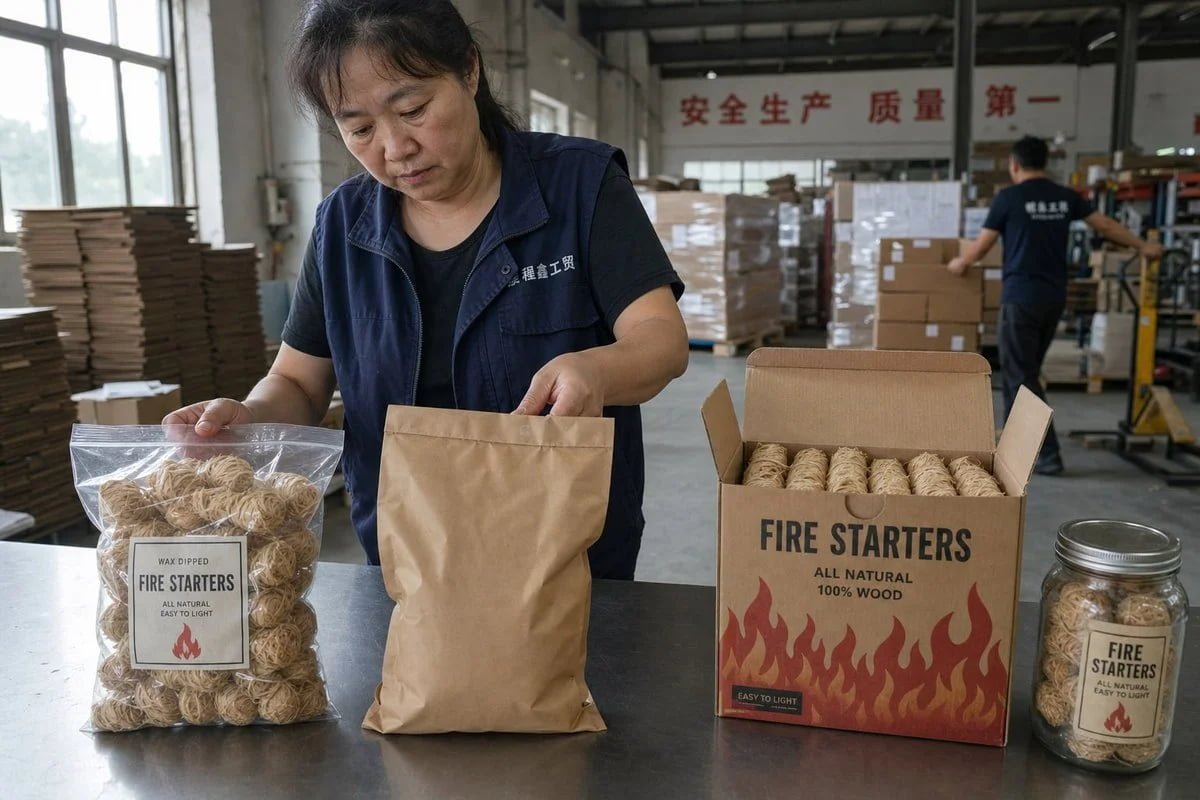
During a packaging trial in our Ningbo plant last autumn, we ran the same wax-dipped wood rolls through four different formats amfori BSCI 2. The unit costs, damage rates, and shelf impact varied more than most buyers expect.
Wood fire starters are commonly packed in poly bags, kraft paper bags, stand-up pouches, printed cardboard boxes, bulk cartons or case packs, and premium jars or tins. Each format trades off cost, moisture protection, retail shelf appeal, and shipping efficiency differently.

Let me break down each option the way I explain it to buyers who visit our production line CE certification 3. The format you choose changes your landed cost, your damage rate, and how your product looks on a shelf in Hamburg or Houston.
The Six Main Formats Compared
| Format | Typical Pack Count | Cost Level | Moisture Protection | Best For |
|---|---|---|---|---|
| Poly / plastic bags | 20–40 pcs | Lowest | Good (sealed) | Value retail, e-commerce |
| Kraft paper bags | 12–24 pcs | Low | Weak without liner | Eco-branding, natural look |
| Stand-up pouches | 12–36 pcs | Medium | Very good (with zip seal) | Camping, outdoor retail |
| Corrugated cardboard boxes 4 | 24–100 pcs | Medium | Good (with inner bag) | Mainstream retail shelves |
| Bulk cartons / case packs | 100–200 pcs | Low per unit | Moderate | Wholesale, club stores |
| Jars, tins, wooden crates | 6–20 pcs | Highest | Excellent | Gifts, premium hearth shops |
Poly bags are the workhorse. They keep wax-dipped rolls dry, they are light, and they print well enough for basic branding. Their weakness is shelf presence. A bag slumps; a box stands.
Kraft paper bags photograph beautifully and support eco-friendly packaging materials claims. But paraffin-coated starters can wick oils into uncoated paper, and humidity gets in. We always recommend an inner liner or a moisture-resistant barrier coating when buyers choose kraft.
Cardboard boxes give you the most print space for instructions, warnings, and barcodes. Corrugated cardboard boxes also stack cleanly on pallets, which cuts damage in transit. For bulk wholesale distribution, large case packs of 100 or 200 pieces reduce per-unit packaging cost dramatically, which is why club-store buyers prefer them.
Jars and tins sit at the top. They cost more and ship less efficiently, but they justify a premium price in gift and fireplace and hearth accessories channels.
How Do I Choose Packaging That Meets Compliance and Safety Labeling Requirements?
One of our German distributors once had a full shipment held at a retailer's DC because a warning phrase was missing from the back panel. Since then, our team pre-checks every artwork file against destination-market labeling rules before print approval.
Compliant wood fire starter packaging must carry clear safety warnings, ignition and storage instructions, composition disclosure, a scannable UPC/EAN barcode, and country-of-origin marking. Work with a certified supplier holding ISO 9001, BSCI, CE, and SGS or Intertek test reports to satisfy retail audits.

Compliance is not paperwork for its own sake. It is the difference between a smooth receiving process and a rejected pallet. In our 17-plus years exporting to the US, Germany, the UK, and 30-plus other countries, we have seen labeling requirements tighten steadily, especially for anything that ignites.
What Must Appear on the Package
Here is the checklist we apply during artwork review:
- Safety warnings. Phrases such as "Keep away from children," "Do not expose to heat above 120°F," and "Use only in well-ventilated areas" should appear on the primary package, not just an insert.
- Ignition and usage instructions. Simple pictograms plus short text. Many retailers now expect multilingual versions for the EU.
- Composition disclosure. For example, "50% wood fiber, 50% paraffin." Buyers and regulators want to know what burns.
- Storage and handling safety. State that the product must be stored cool, dry, and away from open flame.
- Barcodes. A UPC or EAN/GTIN 5 that scans on the first pass. Major retail sourcing channels will test-scan samples before onboarding.
- Country of origin and importer details. Required in most of our export markets, including the US and the EU.
Why Supplier Certification Matters
Your packaging is only as trustworthy as the factory behind it. Our buyers treat ISO 9001 6, BSCI, and CE certification, backed by SGS and Intertek test reports, as a hard requirement rather than a nice-to-have. When a retailer audits your supply chain, those documents keep your product on the shelf. A cheap supplier without them can turn a good packaging design into an unsellable inventory problem.
We also recommend leaving deliberate blank space in your artwork for market-specific stickers. It sounds minor. It saves reprints when a regulation changes mid-season.
Can I Get Custom or Private-Label Packaging for My Brand?
A UK fireplace brand approached us two years ago with nothing but a logo and a rough pack count. Ninety days later, their private-label boxes were on hearth-shop shelves. That project taught me how much packaging flexibility matters to growing brands.
Yes. A true OEM/ODM factory can fully customize your wood fire starter packaging, including box or bag format, artwork, private-label branding, pack count, burn-time specification, warning labels, barcodes, and display-ready cartons, usually with flexible MOQs for trial orders.
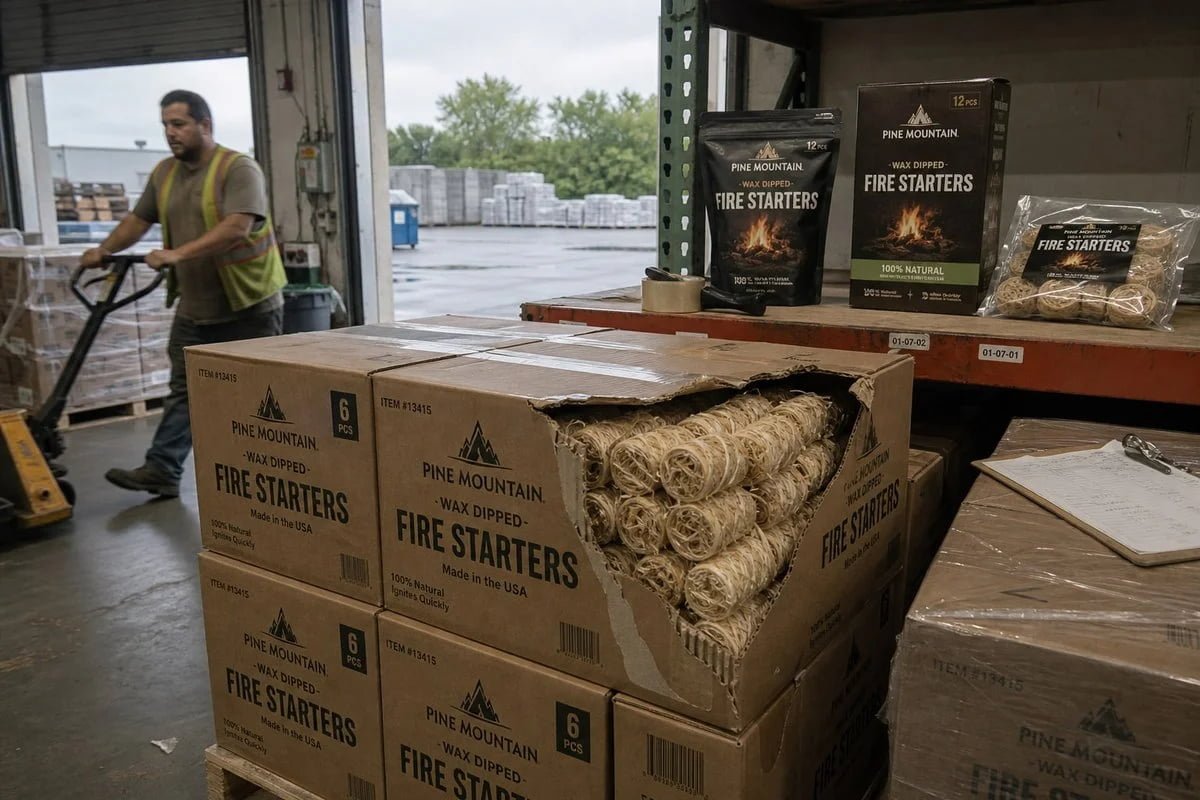
Private labeling is where a genuine factory separates itself from a trading company. Because we run our own production lines, we can adjust the product and the packaging together, not just slap a new label on a stock item. That matters more than most first-time importers realize.
What Can Be Customized
| Element | Customization Options | Typical Lead Impact |
|---|---|---|
| Format | Poly bag, kraft bag, stand-up pouch, box, jar, tin, crate | Low to medium |
| Artwork | Full-color print, kraft natural look, matte or gloss finish | Low |
| Pack count | 12, 24, 36, 40, 48, 100, or 200 pieces | Low |
| Product spec | Roll size, wax ratio, burn time | Medium |
| Labels | Warning text, multilingual panels, barcodes, QR codes | Low |
| Display | Shelf-ready trays, counter displays, floor stands | Medium |
Matching Packaging to Brand Positioning
Value brands should keep it simple. A sealed poly bag with clean print sells on utility and price. Premium brands can lean into kraft finishes, natural fibers visible through a window, or reusable tins that echo fireplace and hearth accessories aesthetics. For eco-positioned lines, we pair recyclable outer packaging with FSC-certified wood products 7 messaging, since our starters are made from eco-friendly materials with no harmful chemicals — a story your package should tell clearly.
A Realistic Development Path
My advice for a first order: start with a trial run at a flexible MOQ, test one or two formats in your channel, then scale the winner. Because our batch-to-batch quality control keeps mass production consistent with the first sample, what you approve is what your customers receive. That consistency is what turns a trial order into a multi-year program.
Which Packaging Format Best Supports Retail Display and Safe Shipping?
Weighing display impact against transit protection is a trade-off I discuss with buyers weekly. A gorgeous box that arrives crushed helps nobody; a bulletproof bag that disappears on the shelf sells nothing.
Shelf-ready corrugated cardboard boxes with sealed inner bags best balance retail display and safe shipping. They stack efficiently on pallets, resist crushing, provide print space for branding and warnings, and keep wax-dipped starters dry from factory to checkout.
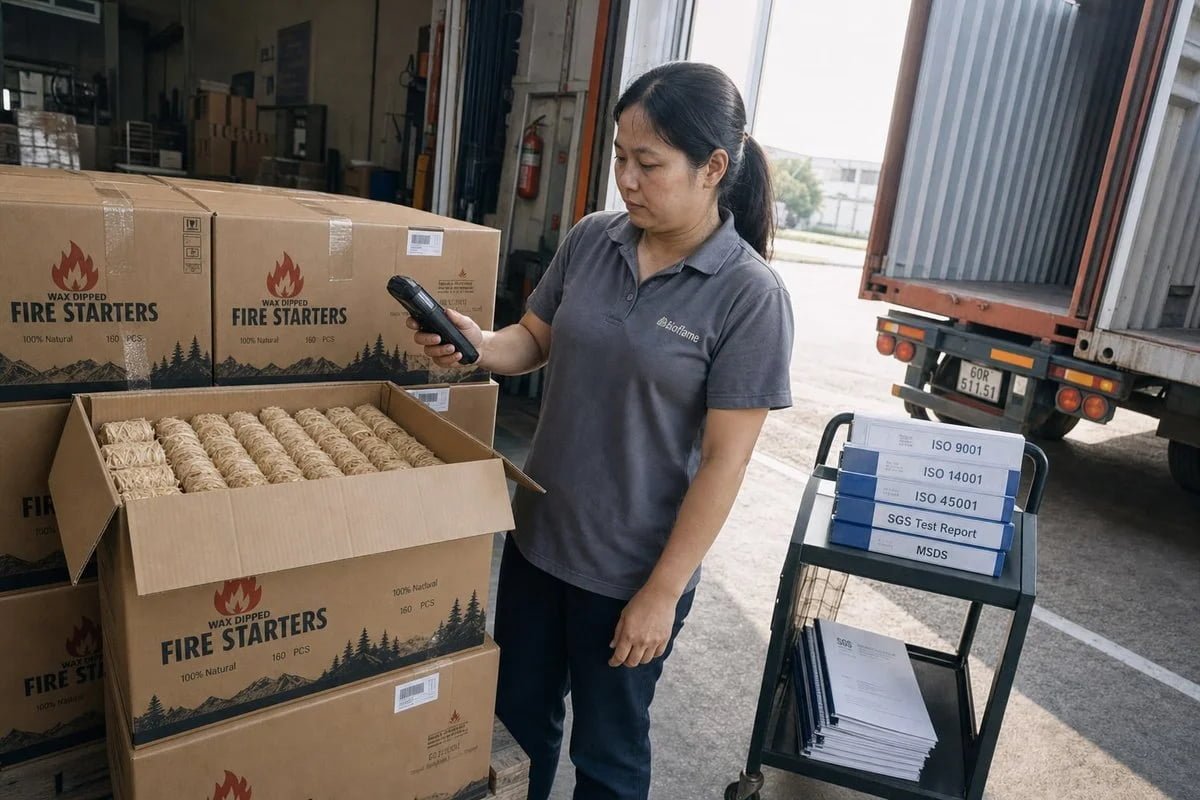
Think of packaging as doing two jobs in sequence. First, it must survive an ocean container, a distribution center, and a delivery truck. Second, it must sell the product the moment it lands on a shelf. Formats differ sharply in how well they handle both jobs.
Matching Format to Channel
| Sales Channel | Recommended Format | Key Reason |
|---|---|---|
| Grocery / hardware retail | Printed box, 24–48 count | Retail shelf appeal and stacking |
| Club / big-box stores | Display-ready carton, 100–200 count | Minimal handling, bulk value |
| Camping / outdoor retail | Stand-up pouches with zip seal | Lightweight, resealable, portable |
| E-commerce | Sealed poly bag inside a shipper box | Seal integrity during long transit |
| Gift / seasonal | Jar, tin, or decorative box | Premium presentation |
Moisture Is the Silent Killer
A fire starter that absorbs humidity lights poorly, and the customer blames your brand, not the warehouse. For e-commerce especially, the product may sit in transit or in a humid fulfillment center for weeks. We heat-seal inner bags as a moisture-resistant barrier even inside printed boxes. For camping channels, resealable stand-up pouches let users detach what they need while keeping the rest sealed against damp air.
Palletization and Damage Control
Standardized case packs pay for themselves. Uniform corrugated cartons cube out a pallet cleanly, reduce shifting, and lower damage claims. In our experience optimizing global logistics for buyers in the US, Germany, and Australia, moving from mixed pack sizes to a standardized master carton often cuts transit damage noticeably and simplifies receiving at the retailer's DC. Display-ready cartons go one step further: store staff cut one strap, fold one flap, and the product is on the shelf. Retail operations teams love that, and it strengthens your position in line reviews.
Conclusion
Wrong packaging quietly drains margin through damage, rejections, and weak shelf impact. Match the format to your channel, seal against moisture, label for compliance, and partner with a certified factory that customizes all of it.
Footnotes
1. SGS is a leading global testing and certification body verifying product safety compliance. ↩︎
2. Official website for the Business Social Compliance Initiative (now amfori BSCI). ↩︎
3. CE marking indicates conformity with EU safety and regulatory requirements for exported goods. ↩︎
4. Explains the structural material used in shelf-ready boxes for stacking and damage resistance. ↩︎
5. GS1 manages the global GTIN/barcode standards required for retail scanning compliance. ↩︎
6. Authoritative Wikipedia overview of the ISO 9001 quality management standard. ↩︎
7. FSC certification verifies responsible sourcing of wood fiber used in fire starter manufacturing. ↩︎



 English
  Spanish
  German
  French
  Arabic
  Portuguese
Join the Conversation