






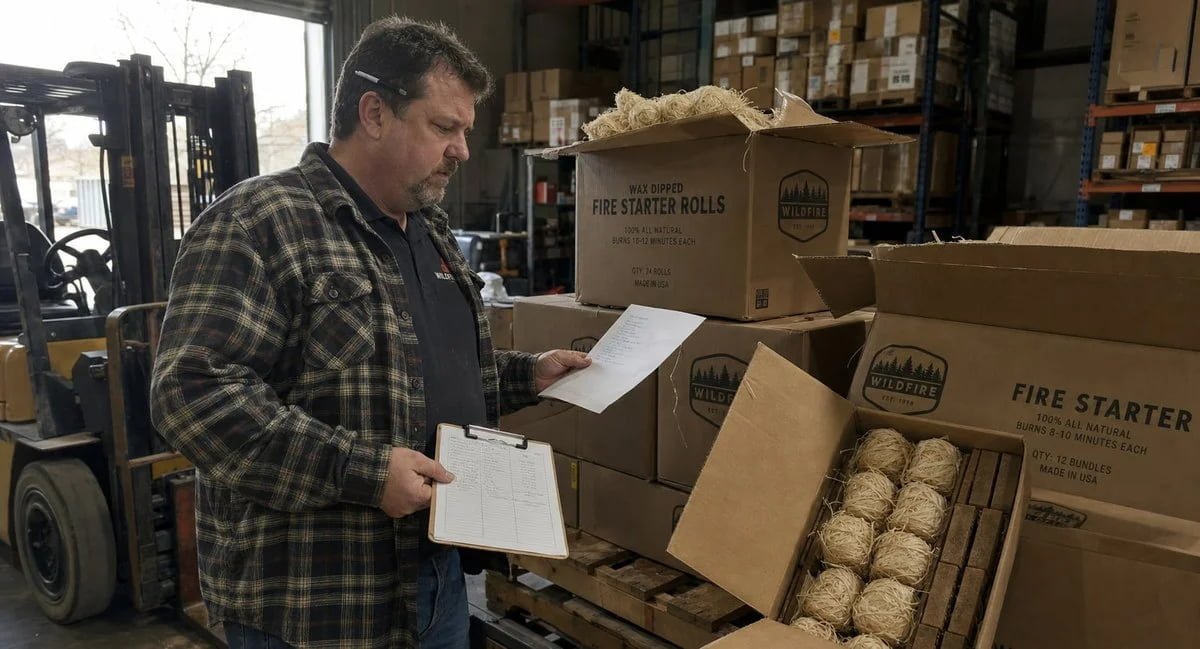
Buyers ask me about the right MOQ for wood fire starters almost weekly BSCI 1. Order too much, and cash sits in a warehouse. Order too little, and your wholesale unit price collapses your margin SGS 2. After 17+ years running our own production lines, I have seen both mistakes destroy first orders.
The right MOQ for wood fire starters is the smallest quantity that covers the supplier's setup costs while matching your demand forecast, storage capacity, and cash flow. For most B2B buyers, this falls between one trial pallet and one 20-foot container, adjusted for seasonality and packaging customization.
That short answer hides a lot of moving parts. Let me walk you through each factor, step by step, so you can set an MOQ that actually fits your business.
What Factors Should I Consider Before Setting My First Wood Fire Starter Order?
A German distributor once asked us to quote 50,000 wax-dipped wood rolls for his first order Intertek 3. I told him to start smaller. His storage space, not our factory, was the real constraint.
Before setting your first wood fire starter order, evaluate five factors: your demand forecast over one sales cycle, inventory carrying costs, available dry storage, cash flow limits, and the supplier's production minimums. The right MOQ sits where all five overlap, not at the lowest quoted price.
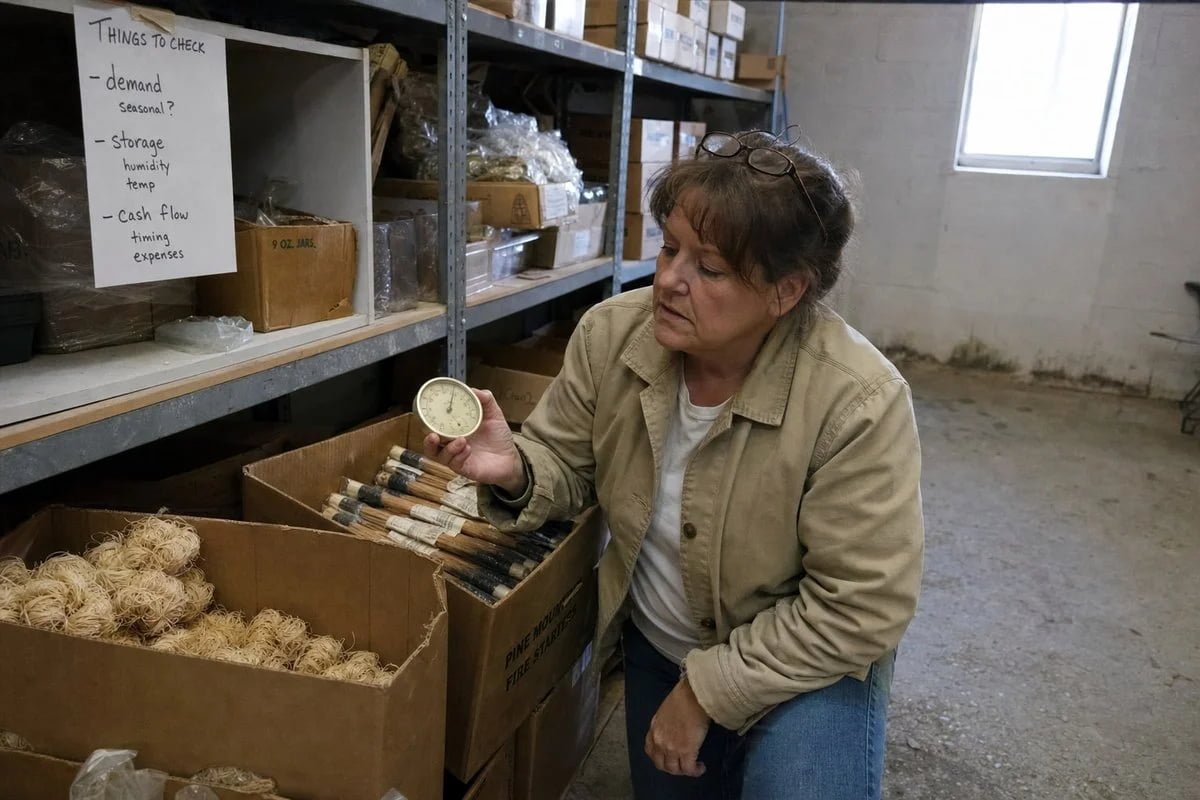
Wood fire starters look like a simple commodity. They are not. They are moisture-sensitive, seasonal, and low-ticket. Each of those traits changes how you should think about your first order.
Start With Demand, Not Price
Your demand forecast is the anchor. Estimate how many units you can realistically sell in one reorder cycle, usually three to six months. Then add a safety buffer of 15–25%. If a supplier's minimum sits far above that number, the discount does not matter. You will pay for it in dead stock.
Count the Hidden Costs
Inventory carrying costs 4 are often estimated at 20–30% of inventory value per year. That includes warehousing, insurance, shrinkage, and the capital tied up in boxes on shelves. Wood wool fire starters add one more cost: they need dry, climate-stable storage. Humidity can degrade ignition reliability, and natural wood-based starters can lose volatility if stored in bulk for more than about two years.
| Factor | Question to Ask | Why It Matters |
|---|---|---|
| Demand forecast | How many units sell in one cycle? | Sets the floor for order size |
| Carrying costs | What does storage cost per month? | A cheap unit price can still lose money |
| Storage conditions | Is the space dry and stable? | Moisture kills burn performance |
| Cash flow | Can I fund freight and marketing too? | Overordering starves reorders |
| Supplier minimums | What is the factory's real floor? | Setup costs define their limits |
In our experience exporting to 30+ countries, first-time buyers who start with a manageable trial quantity reorder faster and scale more confidently than those who chase the deepest volume discount on day one.
How Can I Balance Trial Order Flexibility With Long-Term Pricing Benefits?
There is a trade-off I discuss with nearly every new buyer: a small trial order protects you, but a larger commitment unlocks our tiered pricing structure. Both positions are legitimate.
Balance flexibility and pricing by starting with a trial order at a slightly higher unit price, validating sell-through, then negotiating tiered pricing on a committed reorder schedule. Many suppliers will lower MOQs in exchange for repeat-order commitments, simpler packaging, or longer lead times.
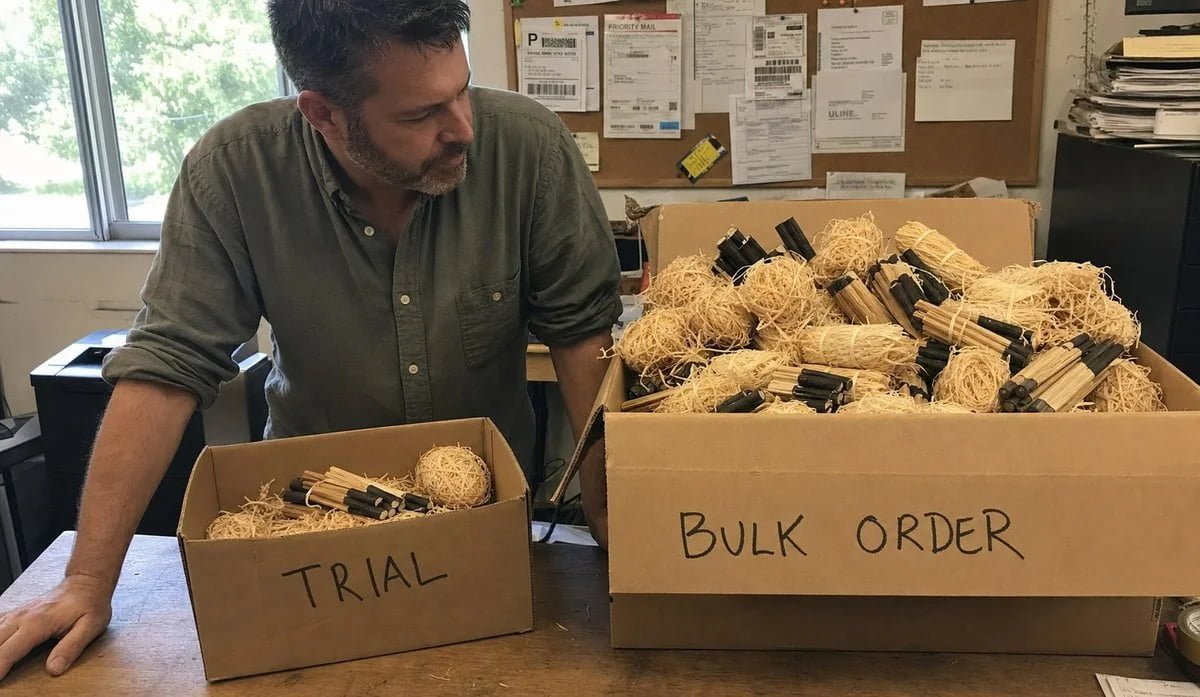
The tension is real. Suppliers push higher MOQs to recover fixed setup costs. Buyers want lower MOQs to test the market. The good news: this is a negotiation, not a wall. Here is a practical sequence we recommend.
- Order a trial pallet or small batch. Accept the higher wholesale unit price. Treat it as market research, not margin.
- Track sell-through for one full season. Fire starters are seasonal, so measure the autumn fireplace surge or the spring BBQ kickoff, not a quiet summer month.
- Return with data. Show the supplier your reorder plan. This is where supplier negotiation actually works.
- Lock in a tiered pricing structure. Commit to a quarterly or annual volume in exchange for better per-unit rates.
- Optimize freight. Align order volumes with standard pallet dimensions or shipping container volume 5 tiers. A half-empty container wastes money on both sides.
Levers That Lower MOQ Without Lowering Quality
From the factory side, I can tell you which concessions are easiest to grant. Standard packaging instead of custom boxes. Flexible lead times so we can slot your batch into an existing production run. Mixed-SKU orders — for example, combining wood fire starters with color-flame pinecones in one container. Each of these reduces our setup burden, which lets us accept a smaller quantity.
| Buyer Concession | Typical MOQ Impact | Trade-Off |
|---|---|---|
| Standard packaging | Significant reduction | No shelf-ready branding |
| Longer lead time | Moderate reduction | Requires seasonal inventory planning |
| Mixed-SKU container | Moderate reduction | More SKUs to manage |
| Repeat-order commitment | Better pricing at same MOQ | Less supplier flexibility later |
The buyers who succeed long-term treat MOQ as a relationship variable. They earn flexibility through predictability.
What MOQ Should I Expect When Requesting Private-Label or Custom Packaging?
When our design team builds a custom retail box — flame graphics, brand logo, barcodes, warning labels — the printing plates and setup work exist whether you order 3,000 boxes or 30,000. That fixed cost drives the MOQ conversation.
Expect private-label MOQs to run two to five times higher than standard-packaging orders, because custom printing, tooling, and label compliance add fixed setup costs. Typical private label branding minimums for wood fire starters start around 3,000–5,000 retail units, often scaling to full-container quantities for best pricing.
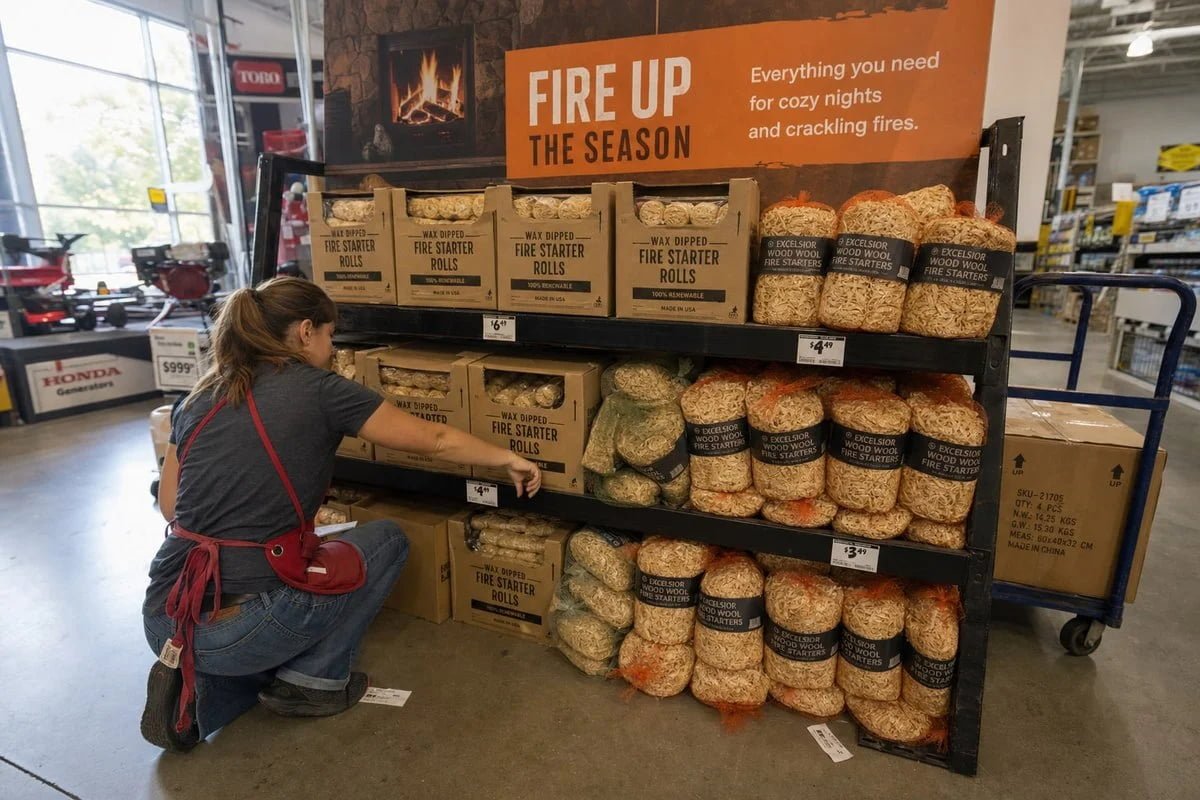
Private label branding changes the economics on both sides. Here is why, and what you can do about it.
Why Customization Raises the Floor
Custom packaging requires printing plates, dielines, artwork approval, and often separate compliance labeling for each destination market. For US and EU buyers, warning labels, barcodes, and language requirements are non-negotiable. We handle all of this in-house as part of our OEM/ODM service 6, but the setup work is real. A print run of 2,000 boxes costs almost as much to set up as a run of 20,000. That is why smaller custom orders carry a higher wholesale unit price.
Lead times and logistics also stretch. Standard-packaging orders can ship in weeks. Private-label orders add artwork rounds, sample approval, and print production. Plan for extra time, especially if your order must land before the autumn peak season.
Typical MOQ Tiers by Customization Level
| Customization Level | Typical MOQ Range | Lead Time Impact |
|---|---|---|
| Standard bulk packaging | Lowest (trial pallets possible) | Shortest |
| Sticker or sleeve branding | Low-to-moderate increase | Minor addition |
| Full custom retail box | 3,000–5,000+ units | Several extra weeks |
| Custom box + display packaging + custom burn specs | Container-level quantities | Longest; plan a full season ahead |
One more angle worth knowing: the survivalist and emergency-prep market often justifies higher MOQs. Durable, long-shelf-life packaging costs more per unit, but prep-market buyers pay a premium for it, and the product tolerates longer storage. Match your packaging investment to your actual sales channel.
How Do I Know if a Supplier's MOQ Reflects Consistent Production Quality?
Early in our export history, a buyer told me something I never forgot: "Your sample was perfect. My worry is unit number 40,000." He was right to worry. Sample quality and mass-production quality are not automatically the same thing.
A supplier's MOQ reflects consistent quality when they can prove batch-to-batch control: valid certifications like ISO 9001 and BSCI, third-party test reports from SGS or Intertek, documented burn and moisture testing, and samples pulled from real production runs rather than a hand-made showcase batch.
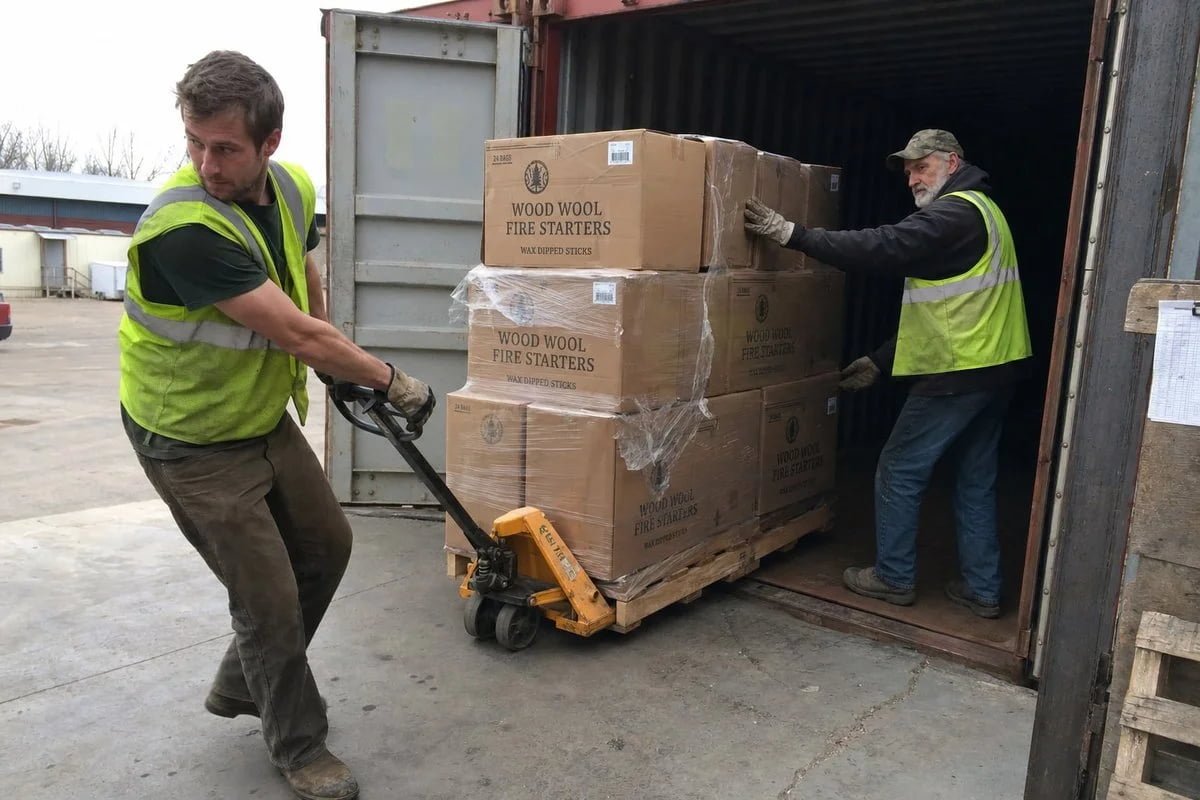
A high MOQ from an unverified supplier is not a bargain. It is concentrated risk. Before you commit to any bulk quantity, run the product and the factory through a structured check.
Test the Product, Not the Brochure
Wood fire starters have measurable performance traits. Test them yourself before signing a bulk purchase order.
- Ignition speed. The starter should light quickly with a single match and transfer flame to kindling reliably.
- Burn duration. Long enough to ignite firewood, but not so long that material is wasted. Our wax-dipped wood rolls are calibrated for this balance, and we can adjust burn time as part of customization.
- Moisture tolerance. Expose samples to damp conditions, then test ignition. Outdoor and camping customers will do exactly this in the field.
- Residue and cleanliness. Excessive soot or sticky residue drives returns and bad reviews.
- Material transparency. Know the composition — for example, a wood fiber and paraffin blend — because it affects both performance and storage behavior.
Verify the Factory Behind the Number
Ask for certifications and actual test reports, not just logos on a website. In our case, ISO 9001 7, BSCI, CE, and SGS/Intertek documentation is standard because our US and European buyers treat compliance as a hard requirement. Ask whether the sample comes from a production line or a lab bench. Ask about on-time delivery history and how they handle a failed batch. A factory with 17+ years of continuous production will answer these questions without hesitation. A trading company usually cannot.
Also check the physical logistics of quality. Loose-packed wood wool fire starters can suffer bulk-crush damage at the bottom of large containers. Carton strength and packing method matter as much as the product itself. A supplier who has optimized shipping container volume and carton specs for your route has done this before. That experience is what a fair MOQ actually buys you.
Conclusion
The right MOQ for wood fire starters is not a magic number. It is a calculated balance of demand, storage, cash flow, and supplier economics. Start with a trial order, verify quality through real testing and certifications, then scale into tiered pricing with a partner who can prove batch consistency. Get that sequence right, and your first container becomes the start of a profitable, repeatable program — not a warehouse full of regret.
Footnotes
1. Official resource for the Business Social Compliance Initiative standards. ↩︎
2. Global leader in inspection, verification, testing, and certification services. ↩︎
3. Major international provider of product testing and certification services. ↩︎
4. Authoritative definition of the costs associated with holding inventory over a specific period. ↩︎
5. Standard reference for shipping container specifications and logistics terminology. ↩︎
6. Explains the industry standard terms for original equipment and design manufacturing. ↩︎
7. Official site for the international standard for quality management systems. ↩︎


 English
  Spanish
  German
  French
  Arabic
  Portuguese
Join the Conversation