






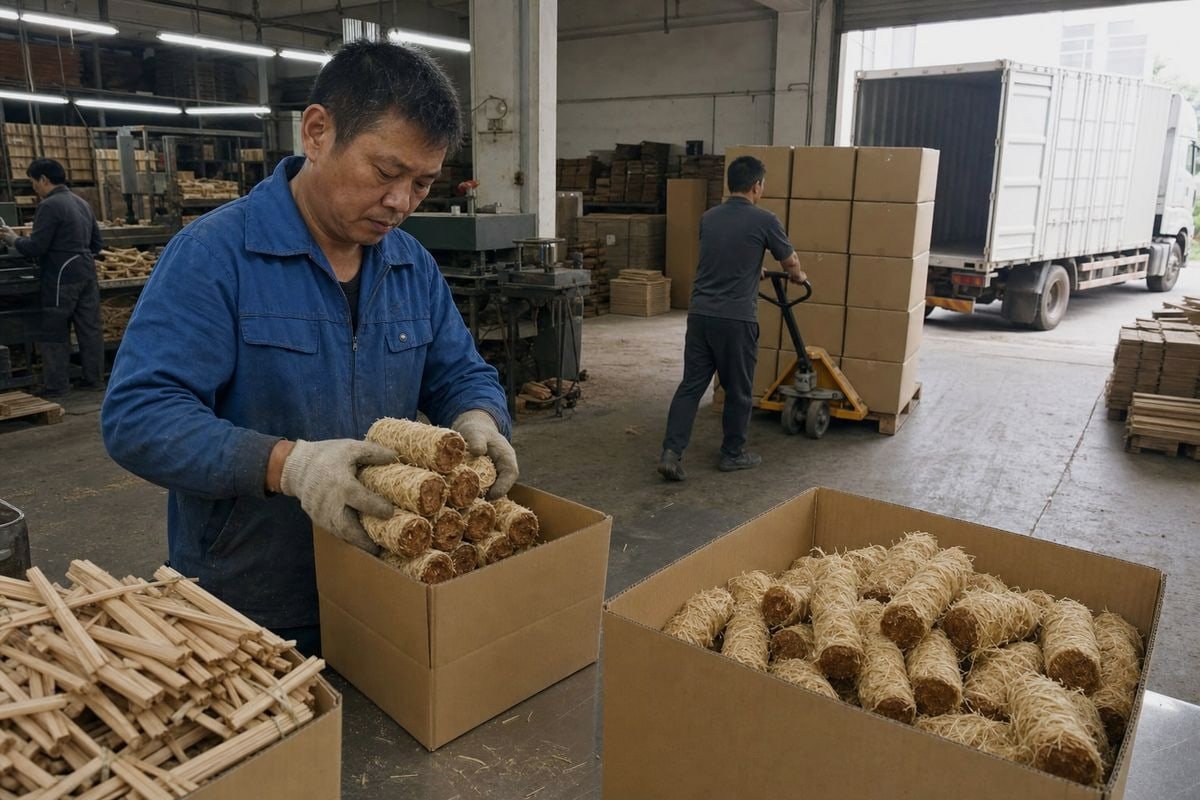
Wood fire starter costs look simple until quotes arrive. On our production line, I have watched Canadian buyers chase a five-cent unit price, only to discover freight, duties, and compliance quietly doubled it.
China typically offers the lowest ex-factory wood fire starter costs, often US$0.05–0.20 per piece in bulk, versus higher North American and European prices. However, Canadian buyers must compare total landed cost—freight, duties, GST/HST, brokerage, and compliance—not factory price alone.
Let me walk you through the real numbers. I will break down what drives landed cost, actual savings, lead-time trade-offs, and quality risks—so you can decide with clear eyes.
What factors actually drive my landed cost when sourcing wood fire starters from China versus North America or Europe for Canada?
A buyer from Toronto once asked me why two identical-looking wax-dipped wood rolls landed at very different costs. The answer had almost nothing to do with the product itself.
Landed cost for Canadian importers is driven by ex-factory price, ocean or air freight, customs duties under the applicable HS code, GST/HST, brokerage fees, inland trucking, compliance testing, and currency conversion. CUSMA/USMCA origins ship duty-free; Chinese goods face MFN tariffs plus longer freight legs.

In my seventeen years shipping fire-starting goods to Canada and thirty other markets, I have learned that the quote is only the opening line of the cost story. The true comparison happens on a spreadsheet, line by line.
The main cost layers
Here is how the cost stack differs by origin for a typical container-scale order of wax-dipped wood wool fire starters:
| Cost layer | China origin | US/Mexico origin | Europe origin |
|---|---|---|---|
| Ex-factory unit price | Lowest (US$0.05–0.20 bulk) | 30–50% higher | Often 2–4x higher |
| Import duty | MFN tariff rates apply | Duty-free under CUSMA | MFN rates apply |
| Freight | Ocean to Vancouver/Prince Rupert; competitive for FCL | Overland trucking; fast but not always cheaper | Ocean to East Coast ports |
| GST/HST | Payable on import | Payable | Payable |
| Brokerage & clearance | Required | Simpler paperwork | Required |
| Compliance testing | Buyer must verify | Often pre-verified | Often pre-certified |
A few details matter more than most buyers expect. First, HS code classification 1. Wood wool and agglomerated wood products sit in different tariff lines, and misclassification is a leading cause of surprise duty assessments at the Canadian border. We always supply accurate HS codes and test documentation with our shipments, because one reclassification can erase months of margin.
Second, freight economics favor full containers. Ocean freight from Chinese ports to Vancouver is genuinely competitive for FCL orders 2. For small LCL shipments, the per-unit freight burden climbs fast, and that is where a North American source can quietly win.
Third, compliance is a real cost line, not a footnote. Fire safety verification, VOC checks 3, and bilingual English-French labeling for Canada all cost money. When we run private-label programs, we build bilingual warning labels and barcodes into the packaging spec upfront, so the buyer does not pay twice.
How much can I really save by importing from China once duties, freight, and customs clearance into Canada are factored in?
Numbers settle arguments better than opinions. When we model landed costs for our Canadian distributor clients, we start from published market benchmarks and work backward to the shelf.
Chinese bulk quotes of US$0.05–0.20 per starter often land in Canada at roughly US$0.12–0.35 after freight, duties, taxes, and clearance—still typically 40–70% below Canadian domestic wholesale equivalents. Savings shrink sharply on small orders, air freight, or premium certified product tiers.
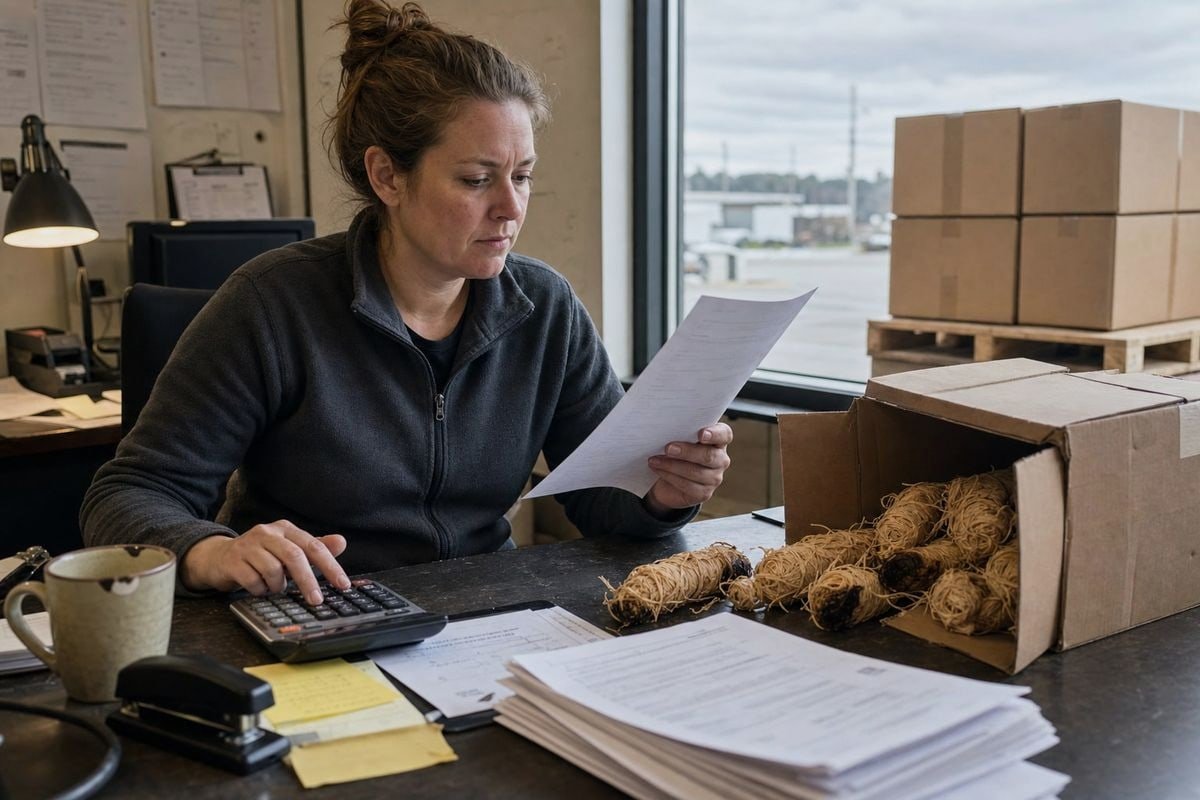
The savings are real, but they are conditional. Let me show you the market signals I use when advising buyers, then explain where the savings evaporate.
What the market actually prices
| Sourcing origin | Indicative price signals | What it means for you |
|---|---|---|
| China factory/bulk | US$0.04–0.07; US$0.05–0.06; US$0.18–0.56; US$0.86–1.68 per piece by type and MOQ | Lowest ex-factory pricing, especially at high volume |
| Canada retail | $8.77/7-pack; $14.48/20 cubes; $34.99 charcoal starters; $120.34/24-pack logs | High shelf prices reflecting packaging, margin, distribution |
| Canada-made retail | $24.99 for 96 pieces | Roughly $0.26/unit at retail—a useful domestic benchmark |
| Europe supplier | €1.60/4 pcs; €9.00/48 pcs; €14.50/75 pcs | Above Chinese bulk, below much Canadian retail |
Run the math on the Canadian-made example: $24.99 for 96 pieces is about $0.26 per unit at retail. A Chinese wax-and-sawdust cube quoted at US$0.05–0.08 in very high quantity, or wood wool with natural wax at US$0.10–0.20, still lands well below that even after adding freight and duty. That gap is why importers and private-label brands keep coming to factories like ours.
But the savings compress in three cases. First, small orders. LCL freight and fixed brokerage fees spread across a few thousand units can add ten cents or more per piece. Second, certified premium tiers. Eco-certified or FSC-type products 4 often sit above US$0.25 per unit in bulk, narrowing the gap with nearshore options. Third, tariff volatility. CBSA has historically applied anti-dumping and countervailing duties to certain Chinese wood product categories, so a cost projection built on today's rates carries policy risk that CUSMA-sourced goods do not.
One more lens I always recommend: cost per ignition. A consumer benchmark of roughly $0.31 per starter, or $0.38 per successful light, tells you more about value than sticker price. A cheap starter that fails to light is the most expensive one you can buy.
Will choosing a China-based manufacturer over a local supplier affect my lead times and inventory planning for the Canadian market?
Every January, I remind our overseas partners about the same thing: Chinese New Year 5 is coming, and the calendar does not negotiate. Planning around it is half the job.
Yes. China sourcing typically requires 8–12 weeks door-to-door versus days or weeks domestically. Chinese New Year shutdowns of 4–6 weeks demand 2–3 months of extra buffer. Canadian buyers must order earlier, forecast seasonal demand, and hold more safety stock.

Fire starters are a fiercely seasonal product. Demand in Canada spikes from late September through the holidays, then again for spring camping. Miss your window, and no unit price can save the season. Here is the planning framework we use with our distributor clients.
A realistic China-to-Canada timeline
- Sampling and approval: 1–2 weeks if specs are clear.
- Production: 3–5 weeks depending on volume and customization.
- Ocean freight to Vancouver or Prince Rupert: 3–5 weeks including port handling.
- Customs clearance and inland delivery: 1–2 weeks.
- Total: roughly 8–12 weeks, before any buffer.
Now layer in the calendar risks. Chinese New Year 6 typically shuts factories for four to six weeks, and the pre-holiday rush pushes both prices and booking times upward. Peak ocean season before Western holidays adds congestion. A prudent Canadian buyer targeting an October shelf date should confirm orders by June, not August.
By contrast, a US-based or Canadian supplier can often replenish in one to three weeks. That agility carries a price premium of 30–50% on unit cost, but it reduces the inventory you must carry and the forecasting risk you absorb. For many buyers, the smart answer is a hybrid: a large China order for the predictable seasonal base, plus a nearshore backstop for surprise demand.
What we do on our side matters too. Because we run complete production lines rather than brokering from other factories, our confirmed ship dates hold. In my experience, lead-time reliability is worth more to a purchasing manager than a marginally lower quote from a trading company that cannot control its own schedule.
Can I trust that a lower per-unit price from China still meets Canadian safety, labeling, and quality standards?
A German distributor once rejected an entire competitor shipment over inconsistent wax coating—then came to us asking how we control batch variation. That conversation shaped how I answer this question.
A low Chinese price can meet Canadian standards, but only with a certified factory. Verify ISO 9001 and BSCI audits, SGS or Intertek test reports, safe non-toxic composition, bilingual English-French labeling, and batch-level quality control before committing. Cheap quotes without documentation are a liability.
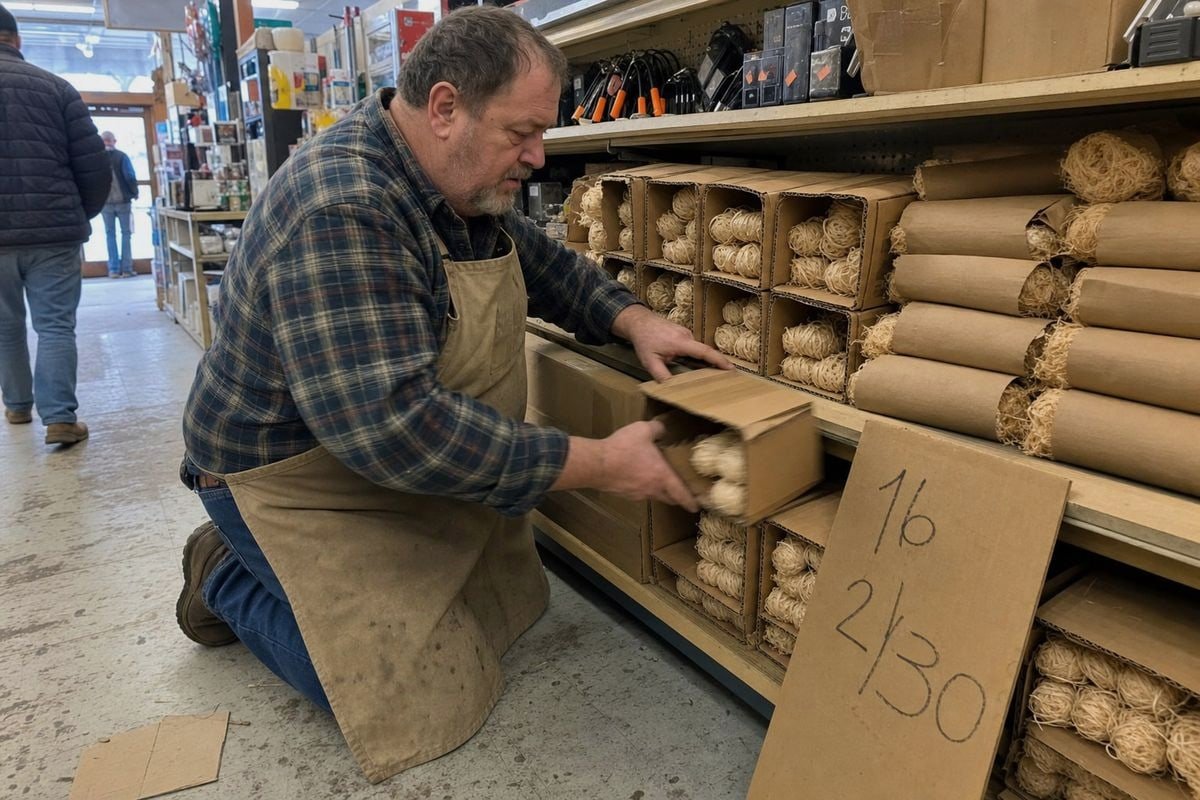
The uncomfortable truth about ultra-low quotes is that something usually funds them. Sometimes it is genuine scale efficiency. Sometimes it is thinner wax coating, inconsistent wood wool density 7, skipped testing, or packaging that ignores Canadian labeling rules. The unit price cannot tell you which; the documentation can.
A verification checklist for Canadian buyers
| Verification item | Why it matters for Canada | Red flag |
|---|---|---|
| ISO 9001 and BSCI audits | Confirms real factory systems and ethical production | Supplier cannot name the auditing body |
| SGS/Intertek test reports | Independent proof of safety and composition | Reports are outdated or for a different product |
| Composition disclosure | E.g., 50% wood fiber, 50% paraffin should be stated and consistent | Vague or shifting spec sheets |
| Bilingual labeling | Canada requires English and French consumer information | Supplier has never produced French labels |
| Batch QC records | Burn time and ignition consistency across production runs | First sample quality not matched in mass production |
| Warning labels and barcodes | Required for retail shelf readiness | Buyer left to design compliance elements alone |
At our factory in Ningbo, with headquarters in Liuyang's fire-products cluster, compliance is a hard requirement, not a nice-to-have. Our buyers in Canada, the US, Germany, and the UK will not place a purchase order without current certificates and test reports, and I would not respect them if they did. We hold ISO 9001, BSCI, CE, and SGS/Intertek certifications precisely because that paperwork is the entry ticket to serious retail channels.
Quality consistency is the second half of trust. A wax-dipped wood roll must ignite reliably and burn long enough to catch kindling every single time. We control wax saturation and wood wool density batch by batch, so the sample a buyer approves genuinely reflects the container that arrives months later. That consistency, more than any certificate, is what turns a first order into a five-year relationship.
Conclusion
Chasing the lowest quote can quietly wreck a Canadian import program. Compare wood fire starter costs on landed cost and cost per ignition, then choose a certified, consistent factory partner.
Footnotes
1. Explains how tariff classification affects Canadian import duties on wood products. ↩︎
2. Background on full container load shipping relevant to freight economics discussion. ↩︎
3. EPA reference explains volatile organic compound testing relevant to fire starter compliance. ↩︎
4. Forest Stewardship Council is the authoritative source for eco-certified wood product standards. ↩︎
5. Clarifies the holiday period causing factory shutdowns that affect Canadian import lead times. ↩︎


 English
  Spanish
  German
  French
  Arabic
  Portuguese
Join the Conversation