







Evaluating private label packaging 1 costs for wood fire starters trips up many buyers. On our production line in Ningbo, I see quotes that hide half the real cost. Margins vanish fast.
Evaluate private label packaging costs for wood fire starters by calculating total landed cost per unit: packaging materials, printing, one-time setup and plate fees amortized over your order, compliance labeling, inbound freight, and fulfillment prep — never rely on the supplier's quoted packaging price alone.
That formula sounds simple. In practice, each cost bucket hides traps. Below, I break down every packaging decision you will face, using real numbers from our own OEM projects.
What Packaging Options Should I Compare When Budgeting for Private Label Wood Fire Starters?
Last spring, a German distributor asked us to quote three packaging tiers for the same wax-dipped wood rolls. The unit cost spread surprised even him — nearly triple from lowest to highest.
Compare three packaging tiers: budget (stock poly or kraft bag plus sticker label, roughly $0.40–$1.50 per unit), mid-tier (custom-printed bag or folding carton, $0.80–$2.50), and premium (rigid retail box with multi-color print, inserts, and eco certifications, $2.00 and up per unit).

The right tier depends on your channel. A campground shop tolerates a kraft bag 2 with a sticker. A Home Depot–type retail shelf does not. When we run private label projects at our factory, we always start by asking where the product will actually sit — online marketplace, garden center, or big-box shelf. That answer drives everything else.
The Three Packaging Tiers Side by Side
| Factor | Budget Tier | Mid-Tier | Premium Tier |
|---|---|---|---|
| Primary package | Stock kraft or poly bag | Custom-printed bag or carton | Rigid box, window cutout, insert |
| Branding method | Sticker label | 1–2 color flexo print | Full-color print, embossing |
| Typical unit cost | $0.40–$1.50 | $0.80–$2.50 | $2.00+ |
| Setup fees | Minimal ($0–$50 artwork) | $100–$500 plates | $500–$2,000+ tooling |
| Best MOQ fit | 300–1,000 units | 1,000–5,000 units | 5,000+ units |
| Best channel | Online test, farm stores | DTC brands, distributors | Big-box retail, gift market |
What Each Tier Buys You
Budget packaging protects the product and carries your logo. Nothing more. It works for demand testing. Mid-tier packaging adds shelf presence and consistent brand colors. It is the sweet spot for most first serious orders we produce. Premium packaging buys retail compliance, gift-ability, and perceived value — but the tooling and MOQ commitments are real money.
Remember the product itself is cheap relative to the box. Basic wax and wood-fiber fire starters run $0.05–$0.20 per piece at scale. That means packaging can easily represent 30%–50% of your per-unit cost. For fire starters, packaging is not an afterthought. It is the main cost lever.
How Do Custom Boxes and Warning Labels Affect My Total Landed Cost Per Unit?
In our 17 years exporting fire products to the US and EU, warning labels have caused more shipment delays than any other packaging element. One missing hazard statement can hold an entire container at customs.
Custom boxes typically add $0.30–$2.00 per unit plus one-time plate or die fees of $100–$2,000, while compliant warning labels add $0.05–$0.25 per unit. Amortize all setup fees across your order quantity, then add freight and prep to get true landed cost.
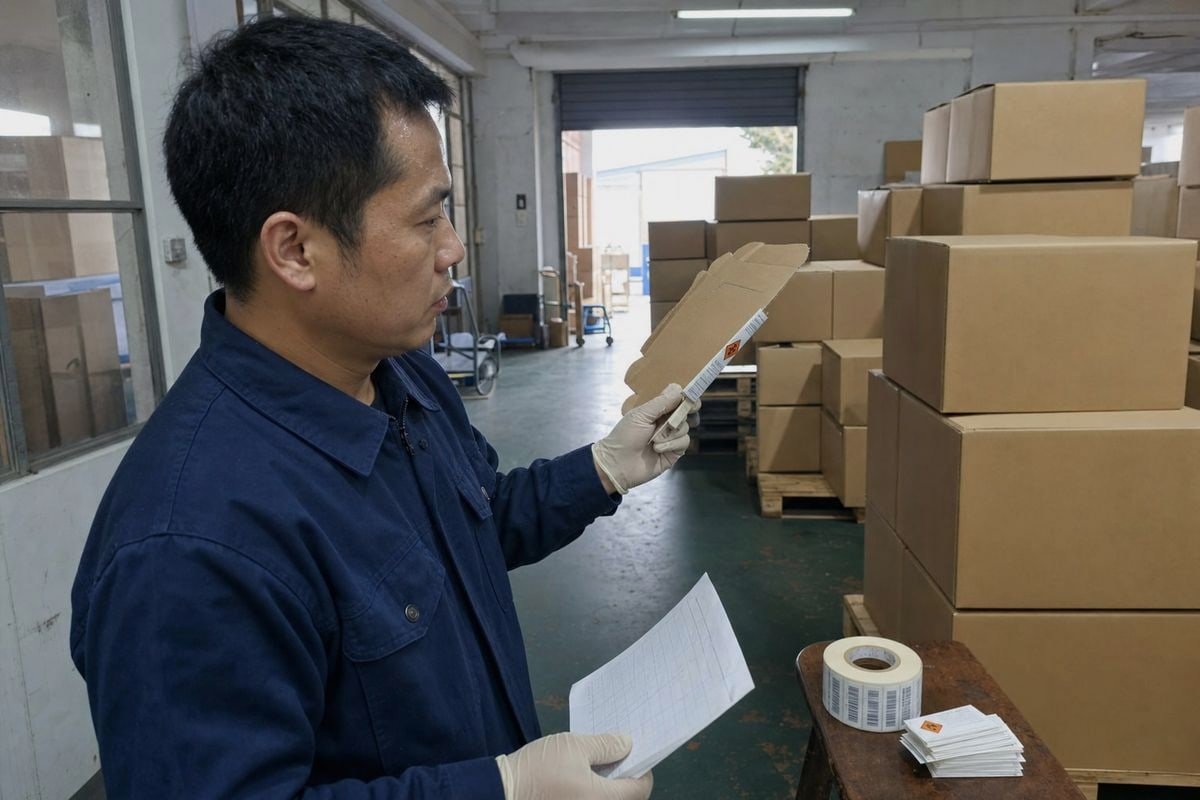
Let me walk through how we actually build a landed cost with buyers. The math is straightforward once every line item is on the table. The trouble starts when suppliers leave items off the quote.
The Landed Cost Formula, Line by Line
- Start with the base product cost per fire starter.
- Add the primary packaging material cost (bag, carton, or box).
- Add printing and decoration cost per unit.
- Divide one-time setup fees (plates, dies, artwork) by total units, and add that share.
- Add warning labels, barcodes, and any compliance inserts.
- Add the master carton and pallet share per unit.
- Add inbound freight per unit, including DIM weight 3 effects.
- Add a 1%–3% allowance for damage and rejects.
A Sample Calculation
| Cost Item | Per Unit (5,000-unit order) |
|---|---|
| Wood fire starter (product) | $0.15 |
| Custom folding carton, 2-color | $0.65 |
| Warning label + barcode | $0.08 |
| Setup fees ($400 ÷ 5,000) | $0.08 |
| Master carton share | $0.06 |
| Ocean freight share | $0.22 |
| Damage allowance (2%) | $0.02 |
| True landed cost | $1.26 |
Notice the quoted "packaging price" was $0.65, but packaging-related costs actually total nearly double that. Warning labels deserve special attention for fire starters. Carriers and retailers expect flammability warnings, ignition instructions, and keep-away-from-children text. At our factory, we pre-build compliant label templates for the US, Germany, UK, and France because retrofitting labels after production is far more expensive than printing them right the first time. Our CE marking 4 and SGS/Intertek test reports also feed directly into what the label must state, so compliance and packaging costs are linked, not separate.
What Hidden Costs Should I Watch for When Switching Suppliers for Private Label Packaging?
A UK buyer once came to us after switching away from a cheaper vendor. His "savings" evaporated in re-tooling fees, a failed color match, and a relabeling job at a bonded warehouse. He kept the invoices as a reminder.
Watch for repeated setup and plate fees, artwork revision charges, color-matching proofs, new MOQ thresholds, regulatory relabeling, DIM-weight freight increases from different box dimensions, defect-tolerance gaps, and EPR eco-packaging levies in the EU — costs that rarely appear on the initial quote.

Switching suppliers resets more than the unit price. It resets your entire packaging setup. Here are the traps I see most often when buyers move their fire starter programs to us — or away from someone else.
Setup Costs That Come Back
Plates, dies, and molds usually stay with the old supplier. You pay for them again. Ask every new supplier, in writing, whether setup fees are one-time or recurring, and who owns the tooling. At our factory, we state tooling ownership in the OEM agreement 5 so buyers are never locked in by their own artwork.
Quality and Compliance Resets
A new printer means new color proofs. Pantone matching 6 across kraft paper, coated cartons, and labels is not automatic. Budget one or two proof rounds. Compliance is a bigger risk. If your new supplier lacks current SGS or Intertek test reports, your existing warning labels may no longer be backed by valid documentation. Some markets also classify certain fire starter formats as flammable solids under DOT or IATA rules 7, which can require certified packaging testing. Verify this before you commit, not after production.
Logistics and Regulatory Drift
New box dimensions change DIM weight. A carton just 2 cm taller can push your shipment into a higher freight bracket. And in the EU and parts of the US, Extended Producer Responsibility fees now attach per-unit levies to non-recyclable packaging. A supplier using cheaper laminated film may quietly raise your EPR bill for years.
The lesson: request itemized quotes, physical samples, and defined defect tolerances from any new supplier. A quote without a stated reject rate is not a real quote.
How Can I Balance MOQ Requirements With Packaging Customization Costs for My First Order?
Trial orders are where we spend the most time advising buyers. A purchasing manager in Canada recently wanted full custom boxes on a 500-unit test — the setup fees alone would have added over a dollar per unit.
Balance MOQ and customization by matching your commitment to your confidence: use stock packaging with sticker labels below 1,000 units, custom-printed bags or cartons at 1,000–5,000 units, and reserve tooling-heavy premium packaging for 5,000+ units once demand is proven.
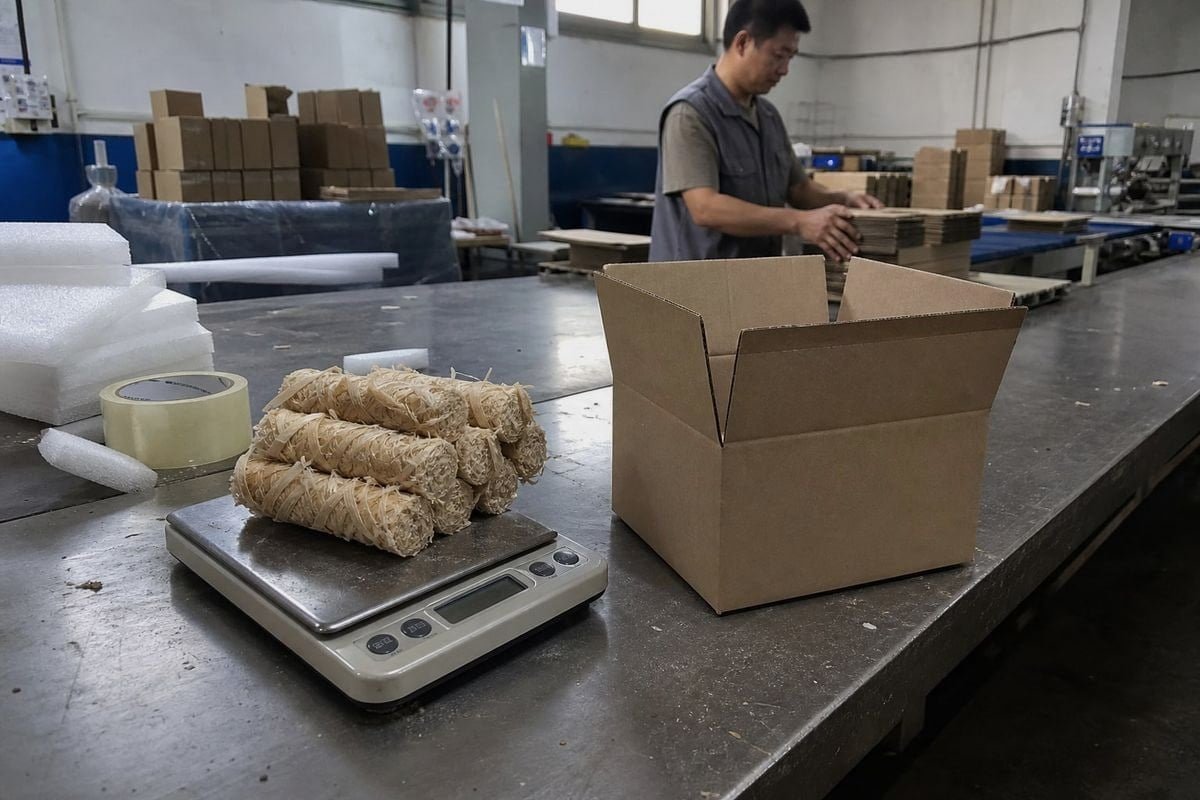
The core tension is simple. Customization costs are mostly fixed. MOQs determine how thinly those fixed costs spread. Order too few units with too much customization, and setup fees crush your margin. Order too many units to dilute the fees, and you carry inventory risk on an unproven product.
How Amortization Changes the Picture
| Order Quantity | $400 Setup Fee Per Unit | $1,500 Setup Fee Per Unit |
|---|---|---|
| 500 units | $0.80 | $3.00 |
| 1,000 units | $0.40 | $1.50 |
| 5,000 units | $0.08 | $0.30 |
| 10,000 units | $0.04 | $0.15 |
The table shows why we steer first-time buyers toward semi-custom options. A stock kraft bag with a well-designed label looks professional, needs almost no setup fee, and lets you test three markets with one production run.
A Staged Approach That Works
First order: stock packaging, sticker branding, low MOQ. Goal — validate demand and your sales channel. Second order: custom-printed bag or folding carton at a moderate MOQ, reusing the same artwork to avoid new design fees. Third order and beyond: invest in retail-ready boxes, display packaging, and sustainability messaging once volumes justify the tooling.
In our OEM program, we deliberately keep trial MOQs flexible for exactly this reason. Our batch-to-batch quality control means the sample you approve matches mass production, so buyers can scale packaging investment step by step without re-validating the product each time. That staged path protects cash while still building a real brand.
Conclusion
Judge private label packaging by total landed unit cost, not quoted price. Stage customization with MOQ, amortize setup fees, verify compliance early, and partner with a certified factory.
Footnotes
1. Provides background on private label manufacturing model referenced in the article's opening context. ↩︎
2. Provides background on kraft paper material commonly used for budget-tier packaging bags. ↩︎
3. Explains dimensional weight pricing, a freight cost factor mentioned in the landed cost formula. ↩︎
4. Explains the EU compliance mark referenced alongside test reports for packaging labels. ↩︎
5. Alibaba is a leading sourcing platform where OEM agreements and tooling ownership terms are commonly negotiated. ↩︎
6. Background on the Pantone color system used for consistent brand color matching across packaging. ↩︎
7. IATA sets international air transport rules for classifying flammable solids in shipments. ↩︎



 English
  Spanish
  German
  French
  Arabic
  Portuguese
Join the Conversation