







Registering for EPR packaging compliance in the EU trips up many fire starter importers EAN barcodes 1. I've watched buyers of our wax-dipped wood rolls get listings blocked overnight. One missing registration number froze an entire launch season. The fix is a clear, country-by-country registration plan — and that's exactly what I'll walk you through here.
To register for EPR packaging compliance in the EU for wood fire starters, register separately in each country where you sell, either through the national producer register or a Producer Responsibility Organisation, declare your packaging materials and weights, then report volumes and pay eco-fees periodically.
There is no single EU-wide registration. Each country runs its own system. Below, I break the process into four practical steps, based on what our export customers deal with every season.
What documents do I need to prepare before registering for EPR packaging compliance in the EU?
During a pre-shipment review last autumn, a German distributor asked us for the exact gram weight of every packaging layer on our fire starter cartons. That request taught me how document-heavy EPR really is.
Before registering for EPR packaging compliance in the EU, prepare your company registration details, VAT and tax numbers, contact information, a full packaging inventory by material and weight per SKU, estimated annual sales volumes per country, and any Authorised Representative agreements for countries where you have no local entity.
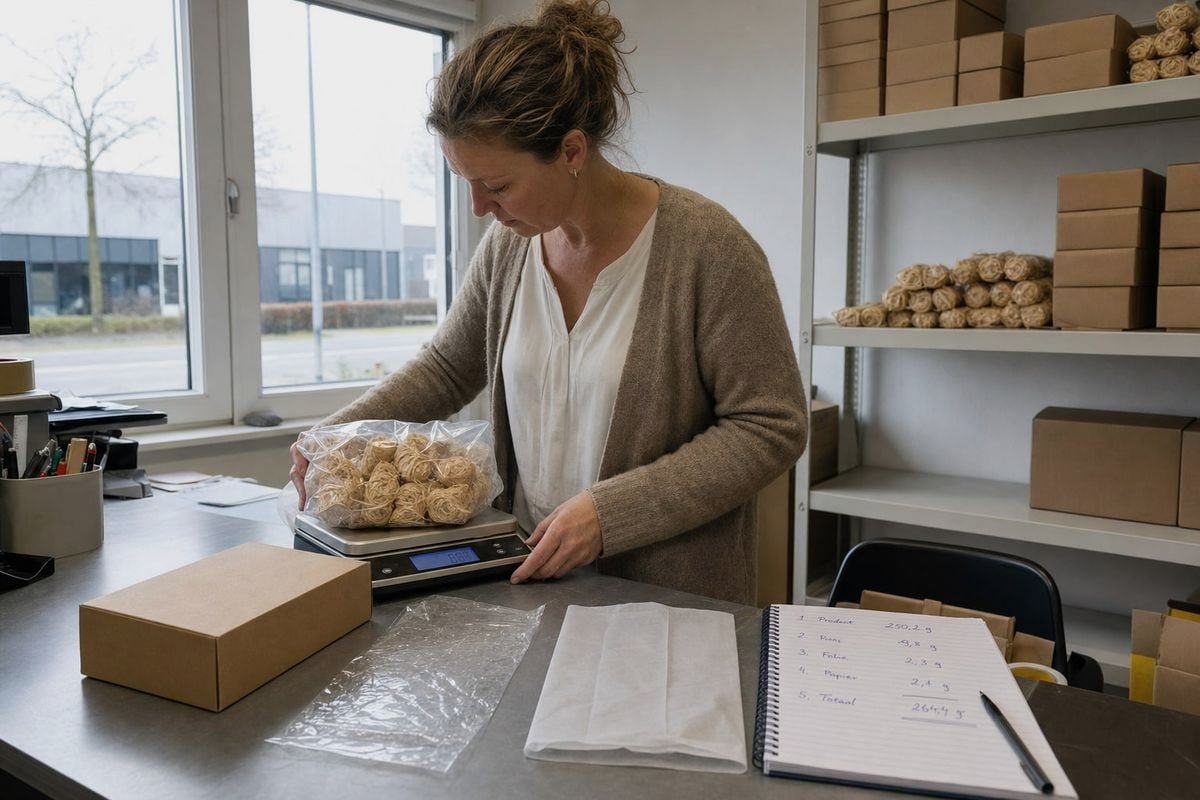
Most sellers underestimate this stage. The registration portals themselves are usually simple web forms. The hard part is the data behind them. In our experience shipping fire starters to Germany, France, the Netherlands, and Poland, buyers who gather everything first finish registration in days. Buyers who improvise stall for weeks.
Company identity documents
Every national register wants proof of who you are. That typically means your legal company name, registered address, trade register number, VAT ID 2, and a named contact person. Some countries also ask for a national tax identifier or a local establishment address. If you sell through a marketplace, keep these details identical everywhere, because platforms cross-check registration numbers against company names.
Packaging data per SKU
This is where fire starters get tricky. A typical retail unit of our wax-dipped wood rolls involves several layers, and each one may count as packaging placed on the market.
| Packaging layer | Example for wood fire starters | Usually EPR-relevant? |
|---|---|---|
| Sales packaging | Printed retail box, plastic jar, kraft bag | Yes |
| Inner wrap | Plastic film bundle, paper wrap | Yes |
| Transport packaging | Shipping carton, dividers | Yes, often reported separately |
| Tertiary packaging | Pallet wrap, strapping | Yes, in many countries |
| Product material | Wax-coated wood wool itself | No — it is the product |
Note the last row. The wood wool in the fire starter is product, not packaging, unless it serves a containment or protection function. Getting that separation right prevents you from over-declaring and overpaying fees. We provide our B2B buyers with a packaging weight sheet for every layer, down to the gram, precisely because registers ask for material-level data.
Authorisation documents
If your company has no legal entity in a Member State where you sell, several countries expect you to appoint an Authorised Representative 3 for EPR duties. Prepare that mandate before you start, not after a portal rejects your application.
Which EU countries require separate EPR registration if I import wood fire starters?
A buyer in Rotterdam once assumed his Dutch registration covered his German Amazon sales too. His German listings were suspended within a month. That call is why I now raise this question with every new European client.
Every EU country where your wood fire starters are first placed on the market requires its own separate EPR registration. There is no single EU-wide registration; Germany, France, Belgium, Italy, the Netherlands, Ireland, Poland, and all other Member States each run national registers or PRO-based schemes.

The legal trigger is simple: whoever first makes packaged goods available in a Member State counts as the producer there. For imported fire starters, that is usually the importer or the cross-border seller, not the factory. When we ship container loads from Ningbo, our EU buyers hold the EPR obligation in each destination country. But because the reporting depends on packaging data, we stay involved by supplying accurate specs for every order.
The registration map
Here are the systems our export customers deal with most often.
| Country | System / Register | Typical route |
|---|---|---|
| Germany | LUCID (Verpackungsregister) 4 | Register in LUCID and contract a dual system |
| France | ADEME-linked eco-organisms 5 | Join an approved PRO, obtain a UIN |
| Belgium | Fostplus / Valipac | PRO membership for household and industrial packaging |
| Italy | CONAI | Consortium membership plus contribution declarations |
| Netherlands | Verpact | Registration and reporting via the scheme |
| Ireland | Repak 6 | PRO membership |
| Poland | BDO register | Government register, often with a scheme |
The pattern matters more than the list. Some countries use a government register plus a separate compliance contract. Others route everything through one PRO. A few require both a registry number and a scheme membership before a single unit ships.
Non-EU and cross-border sellers
If you sell directly from outside the EU, or from one Member State into another, check whether an Authorised Representative is mandatory in the target country. Marketplaces increasingly verify registration numbers at the listing stage, so treat registration as a market-access precondition, not paperwork you can defer. The new Packaging and Packaging Waste Regulation 7 will harmonise formats over time, but it preserves national registration — so plan country by country now.
How do I choose the right packaging category and calculate fees for my wood fire starter products?
Weighing packaging components on a calibrated scale is now a standard step on our Ningbo production line. We added it after a French client's PRO questioned his declared carton weights, and he needed factory evidence within days.
Choose packaging categories by classifying every layer of your fire starter packaging — cardboard box, plastic film, jar, label — by material type. EPR fees are then calculated by multiplying each material's total annual weight placed on that market by the national per-kilogram eco-fee rate.
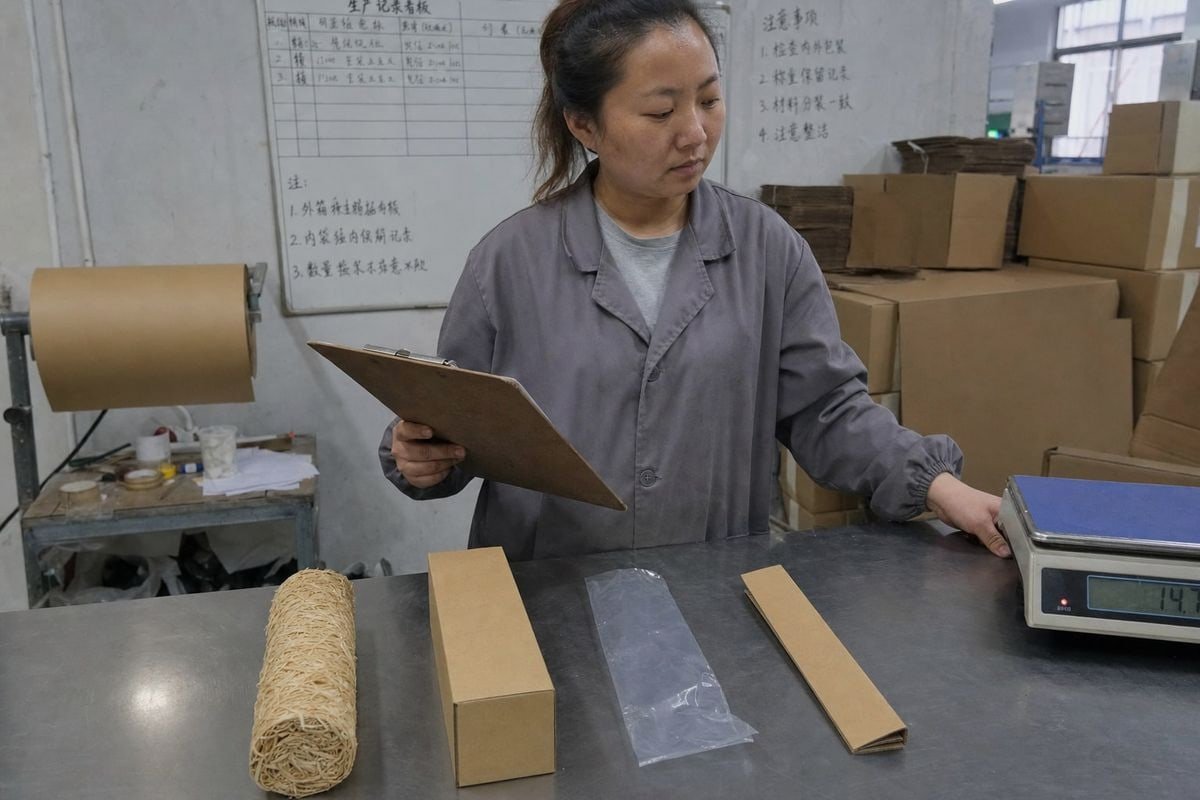
The calculation itself is arithmetic. The judgment lies in classification. Fire starter packaging is often hybrid, and misclassifying a layer can shift you into the wrong fee band or the wrong reporting line entirely.
A simple worked example
Take a retail box of 100 fire starter pucks, similar to our standard display carton. Assume you sell 50,000 boxes into one country in a year.
| Component | Material | Weight per unit | Annual total | Fee basis |
|---|---|---|---|---|
| Retail box | Cardboard/paper | 120 g | 6,000 kg | Paper rate per kg |
| Inner film wrap | Plastic (LDPE) | 8 g | 400 kg | Plastic rate per kg |
| Adhesive label | Paper/plastic laminate | 2 g | 100 kg | Composite or plastic rate |
| Shipping carton (per 12 boxes) | Corrugated cardboard | 450 g | 1,875 kg | Paper rate per kg |
Multiply each material total by the country's published rate, and you have your annual contribution. I deliberately avoid quoting exact rates here, because they differ by country and change yearly. Verify current rates with each PRO before budgeting.
Points that catch fire starter sellers
First, household versus commercial packaging. Retail boxes sold to consumers usually fall under household schemes, while pallet wrap may fall under industrial packaging with a different scheme or rate. Second, plastic typically carries higher eco-fees than paper, which is one commercial reason many of our OEM buyers request kraft bags or cardboard displays instead of plastic jars. Third, seasonality. Fire starters sell heavily in autumn and winter, but many schemes want upfront estimates of annual volumes. Estimate on realistic full-year projections, then true-up in your periodic reports, so a strong Q4 doesn't leave you under-declared.
Accurate factory data makes all of this routine. When your supplier can state that a box weighs 120 grams and is mono-material cardboard, your declarations become defensible in any audit.
Can my supplier help me with compliance labeling and packaging data to simplify EPR registration?
One question we hear from nearly every new European distributor is whether they must generate all the packaging data themselves. After 17 years of exporting fire products to 30+ countries, my answer is always the same: a capable factory should hand you most of it.
Yes. A capable supplier can provide per-SKU packaging weight sheets, material composition breakdowns, recyclability information, and compliant labeling — including sorting symbols, warning labels, and barcodes — which supplies most of the data national registers and PROs require, though the legal registration itself remains your responsibility.
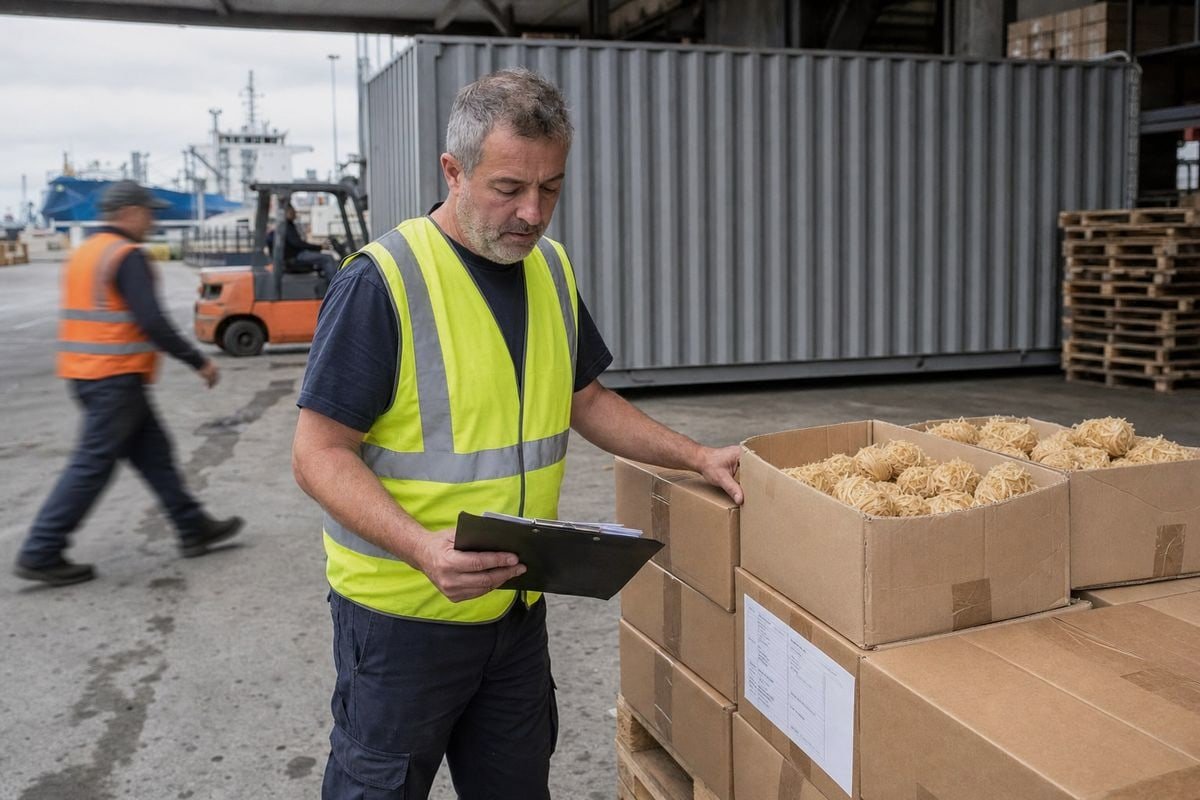
Registration is a legal act tied to your company in each market. No supplier can sign that for you. But the substance behind the registration — the numbers, materials, and labels — is manufacturing information. That is exactly where the right factory partner cuts your workload dramatically.
What a strong supplier should provide
At our facility, EPR support has become part of the standard OEM package for European orders. Here is what a serious fire starter manufacturer should be able to deliver:
- A packaging specification sheet per SKU, listing each component, its material, and its verified weight.
- Material declarations distinguishing product material (wax-coated wood wool) from packaging material (box, film, jar), plus recyclability information.
- Printed compliance elements on the packaging itself — material sorting symbols, country-specific marks like France's sorting info, warning labels, and EAN barcodes 8.
- Certification backup, such as ISO 9001 process documentation and SGS or Intertek test reports, which supports your evidence file if a PRO or marketplace audits your declarations.
- Packaging redesign options that lower fees, for example switching a plastic jar to a kraft bag, or moving to mono-material cardboard displays that attract lower eco-fee rates.
Where the division of responsibility sits
I encourage buyers to think of it as a split: the supplier owns the accuracy of physical packaging data; the importer owns registration, reporting, and fee payment. Many of our clients pair our data sheets with a multi-country EPR service provider that manages registrations across markets from one dashboard. That combination — factory-verified data plus one compliance partner — is the leanest workflow we have seen for cross-border fire starter sales. It also means your first sample and your mass-production packaging match exactly, so the weights you registered stay true batch after batch.
Conclusion
EPR packaging compliance in the EU is a country-by-country registration, reporting, and fee process. Prepare your data, register before launching, and lean on a factory partner who supplies audit-ready packaging specifications.
Footnotes
1. Explains the international barcode standard used for compliant product labeling. ↩︎
2. Explains what a VAT identification number is for company registration purposes. ↩︎
3. Official EU page detailing packaging waste producer obligations and representative requirements. ↩︎
4. Official German packaging register site for verifying LUCID registration requirements. ↩︎
5. French environment agency overseeing eco-organism schemes for packaging producer responsibility. ↩︎
6. Official Irish packaging compliance scheme referenced as a national PRO example. ↩︎
7. Official EU source explaining the harmonised packaging waste regulation referenced in the text. ↩︎
8. GS1 is the authoritative body defining EAN barcode standards mentioned for compliant labeling. ↩︎


 English
  Spanish
  German
  French
  Arabic
  Portuguese
Join the Conversation