







S'inscrire pour la conformité des emballages REP dans l'UE pose des problèmes à de nombreux importateurs d'allume-feu Codes-barres EAN 1. J'ai vu des acheteurs de nos rouleaux de bois trempés dans la cire voir leurs annonces bloquées du jour au lendemain. Un numéro d'enregistrement manquant a gelé toute une saison de lancement. La solution est un plan d'enregistrement clair, pays par pays — et c'est exactement ce que je vais vous expliquer ici.
Pour vous inscrire à la conformité EPR des emballages dans l'UE pour les allume-feux en bois, inscrivez-vous séparément dans chaque pays où vous vendez, soit par l'intermédiaire du registre national des producteurs, soit d'une organisation de responsabilité des producteurs, déclarez vos matériaux d'emballage et leurs poids, puis déclarez les volumes et payez les éco-contributions périodiquement.
Il n'y a pas d'enregistrement unique à l'échelle de l'UE. Chaque pays gère son propre système. Ci-dessous, je décompose le processus en quatre étapes pratiques, basées sur ce que nos clients export traitent chaque saison.
Quels documents dois-je préparer avant de m'inscrire à la conformité emballage REP dans l'UE ?
Lors d'un contrôle avant expédition l'automne dernier, un distributeur allemand nous a demandé le poids exact en grammes de chaque couche d'emballage sur nos cartons d'allume-feu. Cette demande m'a appris à quel point la REP est réellement axée sur la documentation.
Avant de vous inscrire à la conformité EPR pour les emballages dans l'UE, préparez les détails de l'immatriculation de votre entreprise, vos numéros de TVA et de taxe, vos coordonnées, un inventaire complet des emballages par matière et par poids et par référence article, les volumes de ventes annuels estimés par pays, et tout accord de représentant autorisé pour les pays où vous n'avez pas d'entité locale.
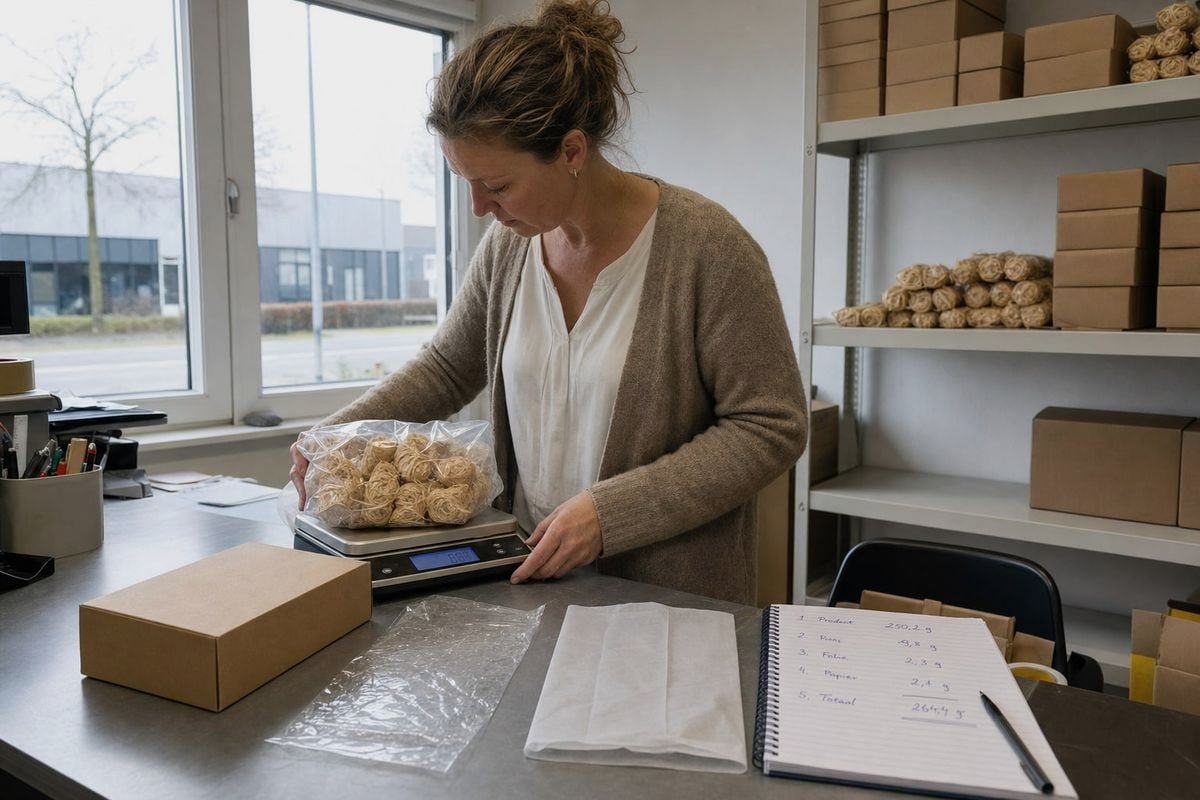
La plupart des vendeurs sous-estiment cette étape. Les portails d'enregistrement eux-mêmes sont généralement de simples formulaires web. La partie difficile, ce sont les données qui se trouvent derrière. D'après notre expérience d'expédition d'allume-feu en Allemagne, en France, aux Pays-Bas et en Pologne, les acheteurs qui rassemblent tout d'abord terminent l'enregistrement en quelques jours. Les acheteurs qui improvisent traînent pendant des semaines.
Documents d'identité de l'entreprise
Chaque registre national veut une preuve de votre identité. Cela signifie généralement le nom légal de votre entreprise, l'adresse enregistrée, le numéro de registre du commerce, Numéro d'identification fiscale 2, et une personne de contact nommée. Certains pays demandent également un identifiant fiscal national ou une adresse d'établissement locale. Si vous vendez via une place de marché, gardez ces détails identiques partout, car les plateformes vérifient les numéros d'enregistrement par rapport aux noms d'entreprise.
Données d'emballage par SKU
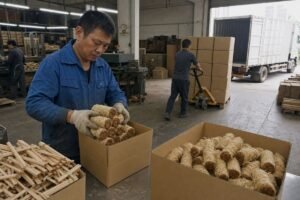
C'est là que les allume-feu deviennent compliqués. Une unité de vente au détail typique de nos rouleaux de bois trempés dans la cire implique plusieurs couches, et chacune peut être considérée comme un emballage mis sur le marché.
| Couche d'emballage | Exemple pour les allume-feu en bois | Généralement pertinent pour la REP ? |
|---|---|---|
| Emballage de vente | Boîte de vente au détail imprimée, pot en plastique, sac en papier kraft | Oui |
| Emballage intérieur | Lot de film plastique, emballage en papier | Oui |
| Emballage de transport | Carton d'expédition, séparateurs | Oui, souvent déclaré séparément |
| Emballage tertiaire | Film de palette, cerclage | Oui, dans de nombreux pays |
| Matériau du produit | Laine de bois enrobée de cire elle-même | Non — c'est le produit |
Notez la dernière ligne. La laine de bois dans l'allume-feu est un produit, pas un emballage, à moins qu'elle ne serve de fonction de confinement ou de protection. Obtenir cette séparation correctement vous évite de sur-déclarer et de surpayer les frais. Nous fournissons à nos acheteurs B2B une feuille de poids d'emballage pour chaque couche, au gramme près, précisément parce que les registres demandent des données au niveau du matériau.
Documents d'autorisation
Si votre entreprise n'a pas d'entité juridique dans un État membre où vous vendez, plusieurs pays s'attendent à ce que vous nommiez un Représentant agréé 3 pour les obligations REP. Préparez ce mandat avant de commencer, pas après qu'un portail ait rejeté votre demande.
Quels pays de l'UE exigent une inscription séparée à la RFE si j'importe des allume-feux en bois ?
Un acheteur à Rotterdam a supposé que son enregistrement néerlandais couvrait également ses ventes allemandes sur Amazon. Ses annonces allemandes ont été suspendues en moins d'un mois. Cet appel est la raison pour laquelle je soulève maintenant cette question avec chaque nouveau client européen.
Chaque pays de l'UE où vos allume-feux en bois sont mis sur le marché pour la première fois nécessite son propre enregistrement REP distinct. Il n'existe pas d'enregistrement unique à l'échelle de l'UE ; l'Allemagne, la France, la Belgique, l'Italie, les Pays-Bas, l'Irlande, la Pologne et tous les autres États membres gèrent chacun des registres nationaux ou des systèmes basés sur les OPR.

Le déclencheur légal est simple : quiconque met pour la première fois des produits emballés à disposition dans un État membre est considéré comme le producteur dans ce pays. Pour les allume-feu importés, il s'agit généralement de l'importateur ou du vendeur transfrontalier, pas de l'usine. Lorsque nous expédions des chargements de conteneurs depuis Ningbo, nos acheteurs européens ont l'obligation REP dans chaque pays de destination. Mais comme la déclaration dépend des données d'emballage, nous restons impliqués en fournissant des spécifications précises pour chaque commande.
La carte d'enregistrement
Voici les systèmes que nos clients export traitent le plus souvent.
| Pays | Système / Registre | Itinéraire typique |
|---|---|---|
| Allemagne | LUCID (Registre des emballages) 4 | S'inscrire dans LUCID et contracter un système dual |
| France | Éco-organismes liés à l'ADEME 5 | Rejoindre un OPR approuvé, obtenir un UIN |
| Belgique | Fostplus / Valipac | Adhésion PRO pour emballages ménagers et industriels |
| Italie | CONAI | Déclarations d'adhésion au consortium et de contributions |
| Pays-Bas | Emballé | Enregistrement et déclaration via le système |
| Irlande | Repak 6 | Adhésion PRO |
| Pologne | Registre BDO | Registre gouvernemental, souvent avec un système |
Le schéma est plus important que la liste. Certains pays utilisent un registre gouvernemental plus un contrat de conformité séparé. D'autres acheminent tout via un PRO. Quelques-uns exigent à la fois un numéro d'enregistrement et une adhésion au système avant que la moindre unité ne soit expédiée.
Vendeurs hors UE et transfrontaliers
Si vous vendez directement depuis l'extérieur de l'UE, ou d'un État membre à un autre, vérifiez si un Représentant Autorisé est obligatoire dans le pays de destination. Les places de marché vérifient de plus en plus les numéros d'enregistrement au stade de la mise en vente, considérez donc l'enregistrement comme une condition préalable d'accès au marché, et non comme une paperasse que vous pouvez reporter. La nouvelle les emballages et les déchets d'emballages 7 harmonisera les formats au fil du temps, mais elle préserve l'enregistrement national — planifiez donc pays par pays dès maintenant.
Comment choisir la bonne catégorie d'emballage et calculer les frais pour mes produits d'allumage de feu de bois ?
Peser les composants d'emballage sur une balance calibrée est maintenant une étape standard sur notre chaîne de production de Ningbo. Nous l'avons ajoutée après que le PRO d'un client français ait remis en question les poids déclarés de ses cartons, et qu'il ait eu besoin de preuves d'usine en quelques jours.
Choisissez les catégories d'emballage en classant chaque couche de votre kit d'allumage — boîte en carton, film plastique, bocal, étiquette — par type de matériau. Les frais REP sont ensuite calculés en multipliant le poids annuel total de chaque matériau mis sur ce marché par le taux national d'éco-contribution par kilogramme.
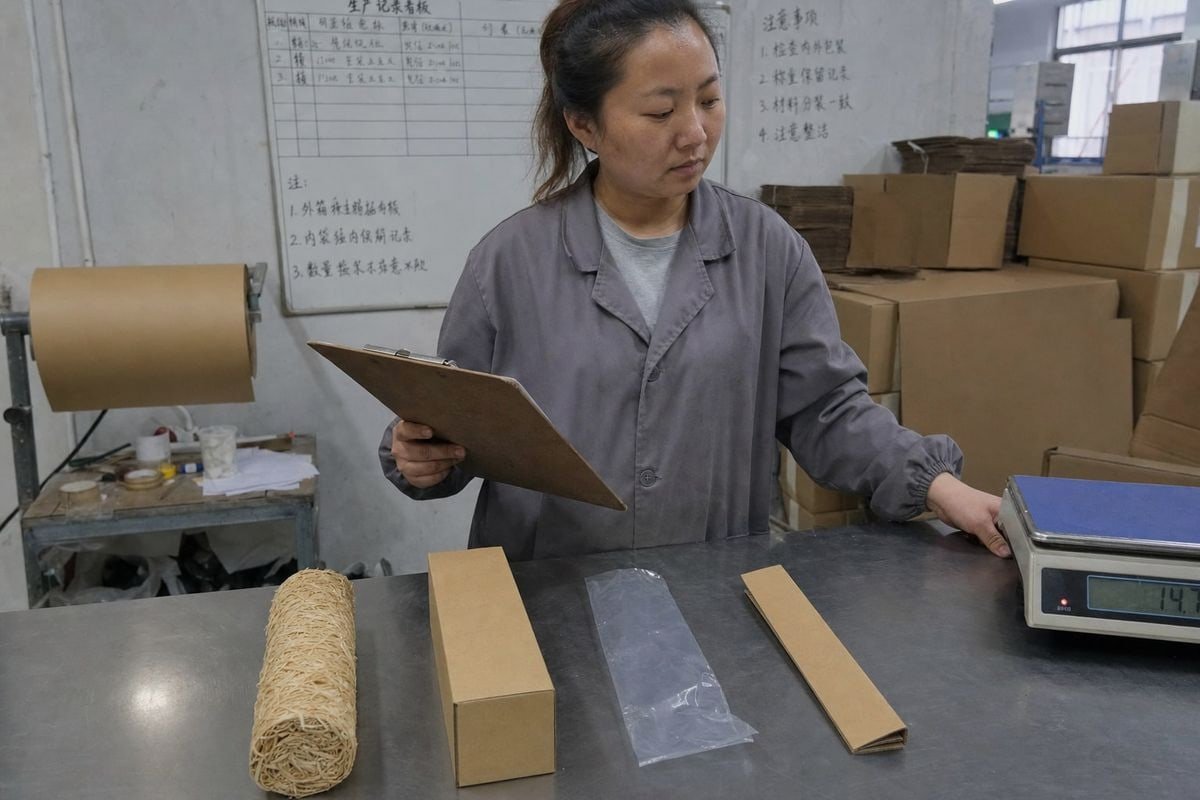
Le calcul lui-même est arithmétique. Le jugement réside dans la classification. L'emballage des allume-feux est souvent hybride, et une mauvaise classification d'une couche peut vous faire basculer dans la mauvaise catégorie de frais ou dans la mauvaise ligne de déclaration.
Un exemple simple et concret
Prenons une boîte de vente au détail de 100 pastilles allume-feux, similaire à notre carton d'exposition standard. Supposons que vous vendiez 50 000 boîtes dans un pays en un an.
| Composant | Matériau | Poids par unité | Total annuel | Base de calcul des frais |
|---|---|---|---|---|
| Boîte de vente au détail | Carton/papier | 120 g | 6 000 kg | Taux par kg pour le papier |
| Film intérieur | Plastique (PEBD) | 8 g | 400 kg | Taux par kg pour le plastique |
| Étiquette adhésive | Stratifié papier/plastique | 2 g | 100 kg | Taux pour les matériaux composites ou plastiques |
| Carton d'expédition (par 12 boîtes) | Carton ondulé | 450 g | 1 875 kg | Taux par kg pour le papier |
Multipliez le total de chaque matériau par le taux publié par le pays, et vous obtenez votre contribution annuelle. J'évite délibérément de citer les taux exacts ici, car ils diffèrent selon les pays et changent chaque année. Vérifiez les taux actuels auprès de chaque PRO avant d'établir un budget.
Points qui piègent les vendeurs d'allume-feux
Premièrement, les emballages ménagers par rapport aux emballages commerciaux. Les boîtes de vente au détail vendues aux consommateurs relèvent généralement des systèmes pour les ménages, tandis que le film de palette peut relever des emballages industriels avec un système ou un taux différent. Deuxièmement, le plastique supporte généralement des éco-contributions plus élevées que le papier, ce qui est une raison commerciale pour laquelle nombre de nos acheteurs OEM demandent des sacs en kraft ou des présentoirs en carton au lieu de pots en plastique. Troisièmement, la saisonnalité. Les allume-feux se vendent beaucoup en automne et en hiver, mais de nombreux systèmes exigent des estimations anticipées des volumes annuels. Estimez sur la base de projections annuelles réalistes, puis ajustez dans vos rapports périodiques, de sorte qu'un solide quatrième trimestre ne vous laisse pas sous-déclaré.
Des données d'usine précises rendent tout cela routinier. Lorsque votre fournisseur peut indiquer qu'une boîte pèse 120 grammes et est en carton monomatériau, vos déclarations deviennent défendables lors de tout audit.
Mon fournisseur peut-il m'aider avec l'étiquetage de conformité et les données d'emballage pour simplifier l'enregistrement REP ?
Une question que nous entendons de presque tous les nouveaux distributeurs européens est de savoir s'ils doivent générer eux-mêmes toutes les données d'emballage. Après 17 ans d'exportation de produits d'allumage dans plus de 30 pays, ma réponse est toujours la même : une usine capable devrait vous fournir la plupart d'entre elles.
Oui. Un fournisseur compétent peut fournir des feuilles de poids d'emballage par SKU, des détails sur la composition des matériaux, des informations sur la recyclabilité et un étiquetage conforme — y compris les symboles de tri, les étiquettes d'avertissement et les codes-barres — ce qui fournit la plupart des données requises par les registres nationaux et les OPR, bien que l'enregistrement légal lui-même reste votre responsabilité.
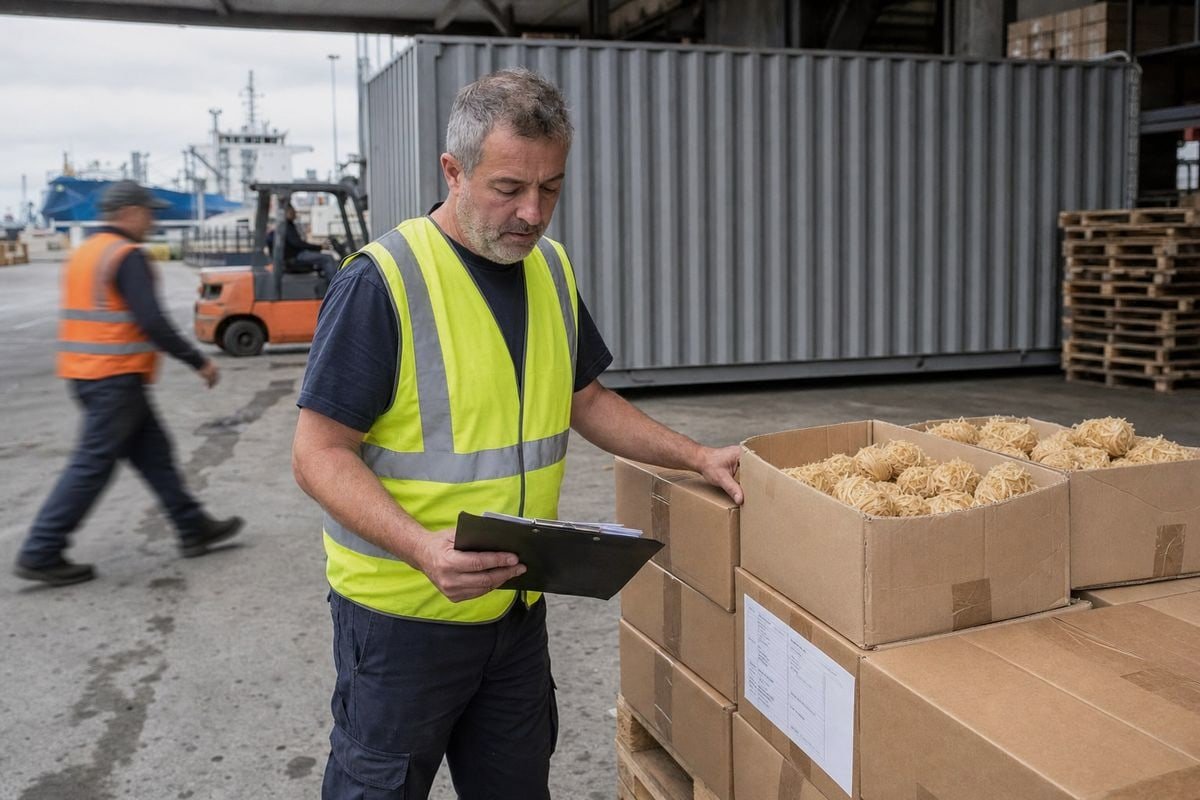
L'enregistrement est un acte juridique lié à votre entreprise sur chaque marché. Aucun fournisseur ne peut le signer pour vous. Mais la substance derrière l'enregistrement — les chiffres, les matériaux et les étiquettes — est une information de fabrication. C'est précisément là qu'un partenaire d'usine adéquat réduit considérablement votre charge de travail.
Ce qu'un fournisseur solide devrait fournir
Dans notre usine, le support REP fait partie du package OEM standard pour les commandes européennes. Voici ce qu'un fabricant sérieux d'allume-feux devrait être capable de fournir :
- Une fiche de spécifications d'emballage par référence, listant chaque composant, son matériau et son poids vérifié.
- Des déclarations de matériaux distinguant le matériau du produit (laine de bois enduite de cire) du matériau d'emballage (boîte, film, pot), plus des informations sur la recyclabilité.
- Des éléments de conformité imprimés sur l'emballage lui-même — symboles de tri des matériaux, marques spécifiques au pays comme les informations de tri françaises, étiquettes d'avertissement, et Codes-barres EAN 8.
- une sauvegarde de certification, tels que la documentation des processus ISO 9001 et les rapports de test SGS ou Intertek, qui soutiennent votre dossier de preuves si un PRO ou une place de marché audite vos déclarations.
- Des options de refonte d'emballage qui réduisent les frais, par exemple en remplaçant un pot en plastique par un sac en kraft, ou en passant à des présentoirs en carton mono-matériau qui attirent des taux d'éco-contribution plus bas.
Où se situe la division des responsabilités
J'encourage les acheteurs à considérer cela comme une division : le fournisseur est responsable de l'exactitude des données physiques de l'emballage ; l'importateur est responsable de l'enregistrement, de la déclaration et du paiement des frais. Nombre de nos clients associent nos fiches de données à un prestataire de services REP multi-pays qui gère les enregistrements sur les marchés à partir d'un seul tableau de bord. Cette combinaison — données vérifiées par l'usine plus un partenaire de conformité — est le flux de travail le plus léger que nous ayons vu pour les ventes transfrontalières d'allume-feu. Cela signifie également que votre premier échantillon et votre emballage de production de masse correspondent exactement, de sorte que les poids que vous avez enregistrés restent constants lot après lot.
Conclusion
La conformité des emballages REP dans l'UE est un processus d'enregistrement, de déclaration et de paiement pays par pays. Préparez vos données, enregistrez-vous avant le lancement, et appuyez-vous sur un partenaire d'usine qui fournit des spécifications d'emballage prêtes à l'audit.
Notes de bas de page
Explique la norme internationale de code-barres utilisée pour l'étiquetage conforme des produits. ↩︎
Explique ce qu'est un numéro d'identification de la TVA à des fins d'enregistrement d'entreprise. ↩︎
Page officielle de l'UE détaillant les obligations des producteurs de déchets d'emballage et les exigences des représentants. ↩︎
Site officiel du registre allemand des emballages pour vérifier les exigences d'enregistrement LUCID. ↩︎
Agence française de l'environnement supervisant les éco-organismes pour la responsabilité des producteurs d'emballages. ↩︎
Schéma de conformité des emballages irlandais officiel référencé comme exemple national de PRO. ↩︎
Source officielle de l'UE expliquant la réglementation harmonisée sur les déchets d'emballage référencée dans le texte. ↩︎
GS1 est l'organisme faisant autorité définissant les normes de code-barres EAN mentionnées pour l'étiquetage conforme. ↩︎

 English
  Spanish
  German
  French
  Arabic
  Portuguese
Rejoignez la conversation