






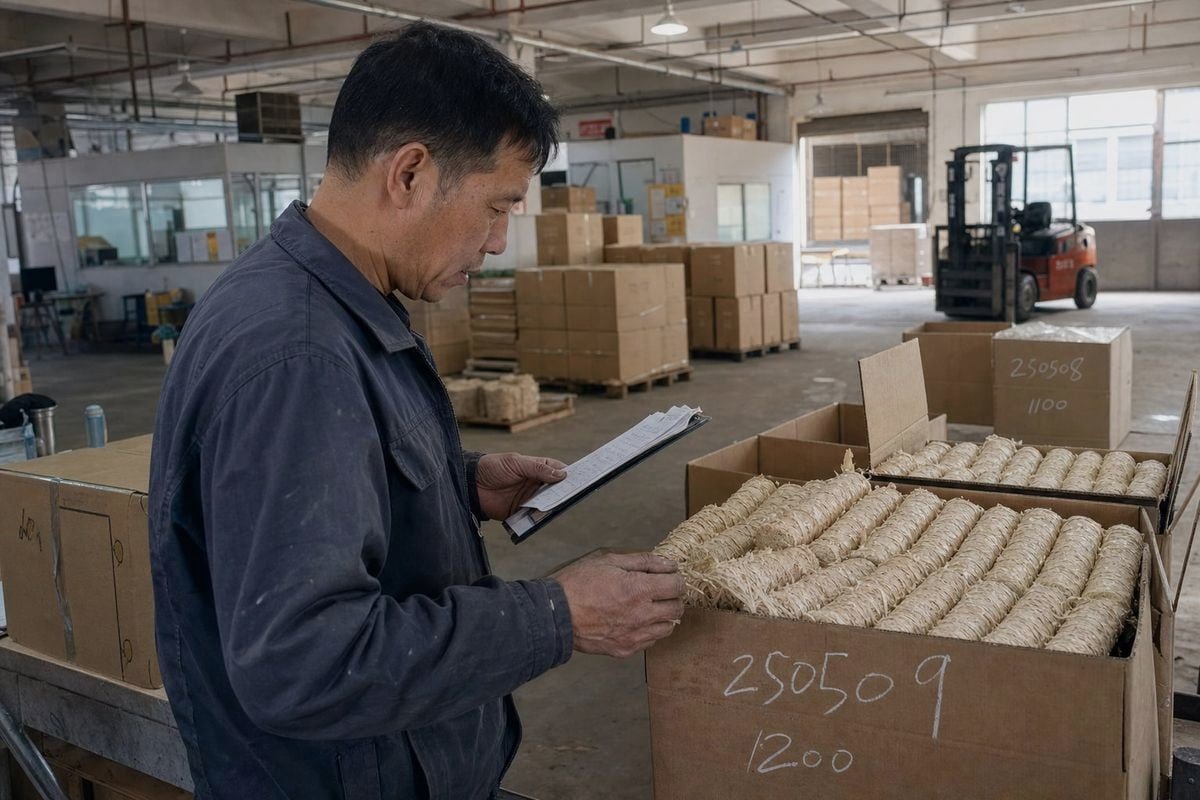
GPSR importer obligations trip up even experienced buyers. On our production line in Ningbo, I've watched shipments stall because one document was missing — and the cost lands on the importer, not the factory.
Under GPSR, the EU importer of wood fire starters from China must verify the manufacturer's risk assessment and technical documentation, ensure correct labeling and traceability, confirm an EU responsible person exists, keep records for 10 years, and take corrective action if a safety risk appears.
That is the short version. The details matter more. Below, I break down each obligation into practical steps you can run before your next shipment leaves China.
What documentation do I need from my Chinese supplier to meet GPSR requirements?
A buyer from Germany once asked us for our "GPSR file" three days before loading. We had it ready. Many factories in our sector would not — and that gap becomes your legal problem.
You need the manufacturer's technical documentation, including a product risk assessment, safety test reports, material composition details, labeling artwork, instructions and warnings, and batch traceability records. As the importer, you must keep a copy of this file for 10 years after placing the product on the market.

The core principle is simple. GPSR expects you, the importer, to verify that the manufacturer did its job before the goods ship General Product Safety Regulation 1. You cannot fix a missing risk assessment after the container clears Rotterdam. In our 17+ years exporting fire-starting goods to Germany, France, the Netherlands, and Poland, the buyers who move fastest through customs and surveillance checks are the ones who lock the document pack down at the purchase-order stage.
The core document pack
Here is what your file should contain for wax-dipped wood fire starters:
| Document | What it proves | Who provides it |
|---|---|---|
| Risk assessment | Fire, ignition, and misuse hazards were analyzed | Manufacturer |
| Test reports (e.g., SGS 2/Intertek) | Burn behavior and composition were verified by a third party | Manufacturer / lab |
| Material composition sheet | What the product contains (e.g., wood fiber, paraffin ratio) | Manufacturer |
| Label and packaging artwork | Warnings, identifiers, and addresses are correct | Manufacturer + importer |
| Instructions for use | Safe use guidance in the target language | Manufacturer + importer |
| Batch/lot records | Which units came from which production run | Manufacturer |
| Supplier declaration of conformity with GPSR safety requirements | The manufacturer accepts its obligations | Manufacturer |
Why composition matters more than you think
Wood fire starters made with paraffin or other accelerants can also touch REACH 3 chemical rules. Our products use eco-friendly materials with no harmful chemicals, and we still document composition in full — because your surveillance authority can ask for it on demand. If your supplier cannot state the exact wood-to-wax ratio in writing, treat that as a red flag. A vague answer on composition usually predicts vague answers everywhere else.
Ask for the full pack before you pay the balance. If the documentation is missing, the shipment is not ready.
Who qualifies as the "importer" under GPSR when I'm sourcing wood fire starters from China?
One question comes up in nearly every first call with a new European distributor: "If your factory made it, why am I liable?" It is a fair question, and the answer shapes your whole compliance setup.
Under GPSR, the importer is the EU-established business that first places a product from a non-EU manufacturer on the EU market. If you buy wood fire starters from a Chinese factory and sell them in the EU, you are the importer — and you carry the legal duties that come with it.
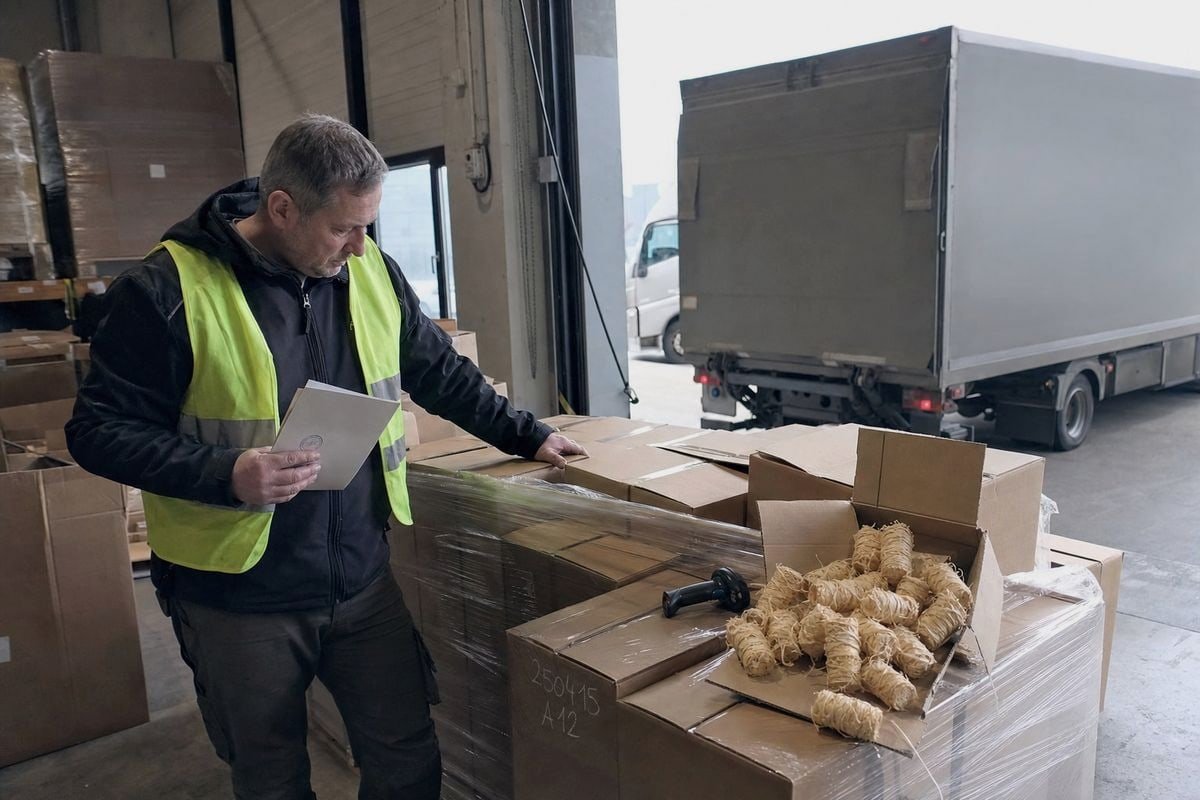
The role is defined by function, not by job title. It does not matter whether you call yourself a distributor, wholesaler, or brand owner. If your company is established in the EU and you bring the goods in from outside the EU for the first time, GPSR treats you as the importer. That makes you the compliance gatekeeper. A Chinese supplier may manufacture, package, and even label the goods, but the EU importer remains responsible for placing them on the market safely.
When you become more than an importer
There is one shift many buyers miss. If you rebrand the fire starters under your own private label, GPSR treats you as the manufacturer. That moves the full conformity burden — risk assessment ownership, traceability documentation, and safety responsibility — onto your company. We run private-label programs constantly, with custom boxes, warning labels, and barcodes, and we always flag this to buyers early. Private labeling is a great commercial move. It just needs to be a deliberate legal decision too.
Importer duties versus manufacturer duties
| Duty | Manufacturer (China) | Importer (EU) |
|---|---|---|
| Design a safe product and run the risk assessment | Yes | Verify it was done |
| Create technical documentation | Yes | Keep a copy for 10 years |
| Affix name, trademark, and contact details | Yes (its own) | Yes (importer's own details too) |
| Instructions and warnings in the right language | Prepare | Verify for the target market |
| Refuse to place non-conforming products on the market | — | Yes |
| Notify authorities of dangerous products | Yes | Yes, and inform the manufacturer |
| Ensure safe storage and transport conditions | Until handover | While under importer's responsibility |
One more duty deserves attention: storage and transport. While the goods are under your responsibility, conditions must not jeopardize safety. Wax-dipped products stored next to heat sources or in a leaking warehouse can degrade. That risk is yours, not the factory's.
What safety testing and risk assessments must I complete before selling these products in the EU?
Early in our export history, we learned that a "simple" product invites the least careful review — and fire starters are anything but simple once you map the hazards. Our QC team treats every batch of wax-dipped wood rolls as a fire product, because that is exactly what it is.
Before selling in the EU, you must verify the manufacturer completed a documented risk assessment covering ignition, burn behavior, misuse, and child access, and confirm third-party test evidence exists. You do not have to test personally, but you must not sell if you doubt conformity.

Let me be precise about the division of labor. GPSR does not force every importer to commission new lab tests. It does require you to verify that the manufacturer has done its job properly — and it forbids you from placing a product on the market if you consider, or have reason to believe, it does not meet the general safety requirement. Verification is active, not passive. Collecting a PDF is not the same as reading it and matching it against the physical goods.
What the risk assessment should actually cover
For wood fire starters, a credible risk assessment addresses these hazard angles:
- Ignition and flame behavior. How fast does the product ignite? How tall is the flame? Does it spit or drip wax?
- Burn duration and residue. A predictable burn time is a safety feature, not just a selling point.
- Misuse scenarios. Indoor use, use with liquid accelerants, or lighting multiple units at once.
- Child access. Fire starters that look like food are a genuine concern. Some of our wood-wool rolls resemble pastry nests at a glance — which is exactly why packaging and warnings must make the product's nature unmistakable.
- Storage hazards. Heat sensitivity of paraffin, and proximity to other combustibles.
What sensible verification looks like
In practice, we recommend our EU buyers do three things. First, review the factory's test reports — we hold SGS and Intertek reports 5 and share them, because our buyers treat certification as a hard requirement, not a nice-to-have. Second, burn-test physical samples against the documented specs before approving mass production. Third, confirm batch-to-batch consistency commitments in writing, so the first sample genuinely reflects what ships. If any of those three steps fails, pause the order. Under GPSR, "I trusted the supplier" is not a defense.
Designing a compliant retail box takes more iterations than most buyers expect. When we build private-label packaging — like a 100-piece fire starter box with composition printing and warning text — the label review round is where GPSR gets very real, very fast.
Ensure the product or packaging shows the manufacturer's and importer's name, postal address, and electronic contact, plus batch identifiers and safety warnings in the target market's language. Products from non-EU manufacturers must have an EU-based responsible person before they can be sold.
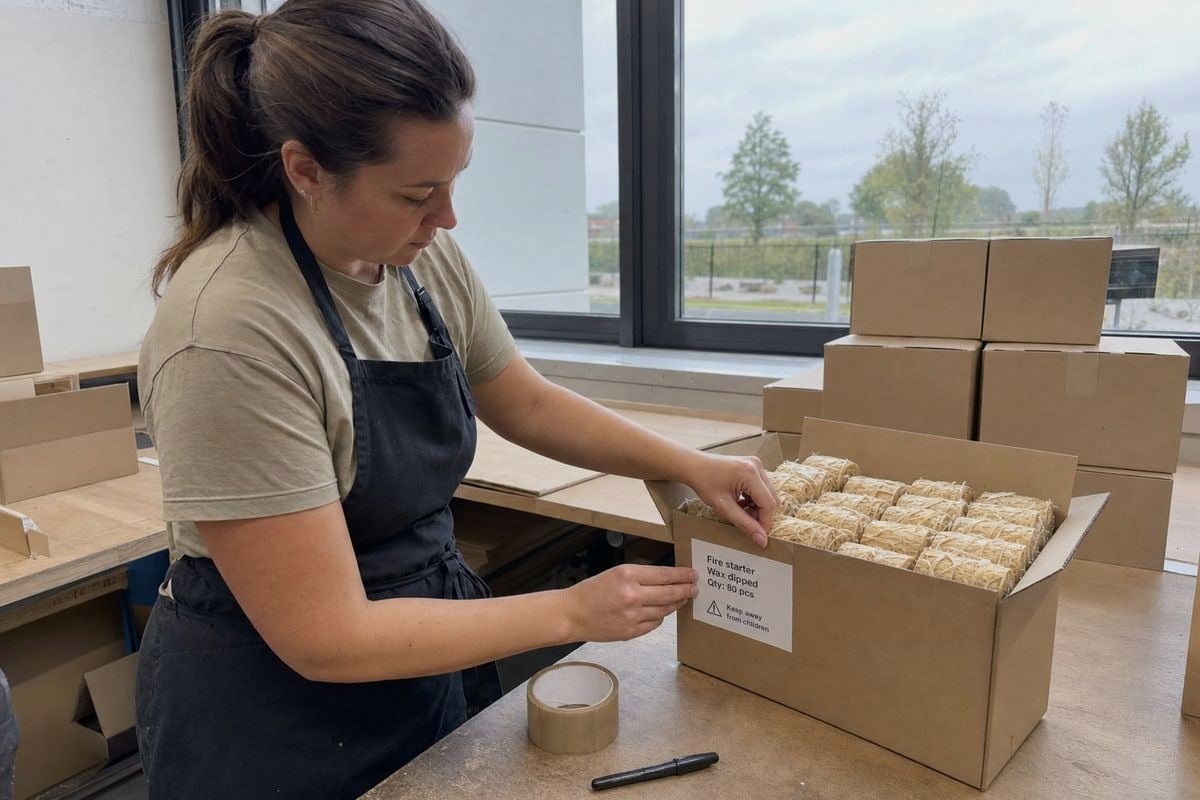
Think of this as three connected systems: identification, traceability, and representation. All three must be in place before the goods ship, because retrofitting labels in an EU warehouse is slow and expensive. We print warning labels, barcodes, and compliance text directly into the packaging artwork at our factory, so buyers receive shelf-ready cartons — but the importer still owns the legal review of that artwork.
The labeling and traceability checklist
| Requirement | Where it goes | Common mistake |
|---|---|---|
| Manufacturer name, trademark, postal + electronic address | Product, packaging, or accompanying document | Only the brand name appears, no address |
| Importer name and contact details | Product, packaging, or accompanying document | Importer assumes the factory's details are enough |
| Batch or lot number | Packaging and shipment records | Batches not linked to specific shipments |
| Safety warnings and instructions | Packaging or insert, in the local language | English-only text for a French or Polish market |
| Product identifier (model/SKU) | Packaging and documentation | Identifier on documents does not match the box |
Why batch-level traceability is not optional
If one production run of fire starters is found unsafe, a recall may need to target only that run product recall 6. Without lot numbers tied to shipments, you must recall everything — at far greater cost. EU customs and surveillance authorities increasingly expect batch-level traceability 7 for combustible goods. Our batch QC records exist for exactly this reason: they let a buyer isolate a question to one production run instead of an entire year of orders.
The EU responsible person requirement
GPSR requires that products from outside the EU have a responsible economic operator established in the EU. In most sourcing setups, the importer itself fills this role. If you sell through marketplaces or fulfillment models where no clear importer exists, you may need to appoint an authorized representative 8. Either way, that EU entity's details must appear on the product or packaging. Do not confuse this with a paperwork shortcut — appointing a representative does not transfer away your importer duties. And prepare for the post-sale side too: serious incidents must be reported through the EU's Safety Business Gateway, and in practice, monitoring complaints and filing reports falls on you, because many Chinese factories are not even aware this channel exists.
Conclusion
GPSR makes you the safety gatekeeper for wood fire starters from China. Verify documentation, secure labeling and traceability, confirm an EU responsible person, and partner with a factory that ships compliance-ready.
Footnotes
1. Background on the EU regulation underlying all importer obligations discussed. ↩︎
2. Third-party testing laboratory named in the article for safety verification. ↩︎
3. Official source explaining REACH chemical regulation referenced for composition compliance. ↩︎
4. EU official page describing market surveillance authorities' role in product safety enforcement. ↩︎
5. Identifies the third-party testing bodies importers rely on for safety verification. ↩︎
6. Background concept on recalls, relevant to batch traceability discussion. ↩︎
7. Links to the official GPSR regulation text underpinning traceability expectations. ↩︎
8. EU official guidance on responsible persons and authorized representatives for non-EU manufacturers. ↩︎


 English
  Spanish
  German
  French
  Arabic
  Portuguese
Join the Conversation