







SDS compliance for Amazon listings trips up more fire starter importers than pricing ever does. On our wax-dipped wood roll production line, we see rejected documents block launches every season.
To confirm SDS compliance for Amazon listings, obtain a current 16-section GHS-format SDS from your Chinese supplier that matches the exact product name, formula, and manufacturer details on your listing, was issued within five years, and supports Amazon's Dangerous Goods review classification.
That sounds simple. In practice, most rejections happen because the document and the product do not match. Let me walk you through exactly what to check, in order.
What documents should I request from my supplier to verify SDS compliance before listing on Amazon?
Last year, a US distributor came to us after Amazon rejected a factory SDS that named a completely different product. Our compliance team rebuilt the full document set for their SKU.
Request the exact SDS for your specific SKU, a full ingredient breakdown with CAS numbers, a product specification sheet, label artwork, the manufacturer's legal name and contact details, third-party lab testing reports, and a batch-specific Certificate of Analysis confirming chemical consistency.
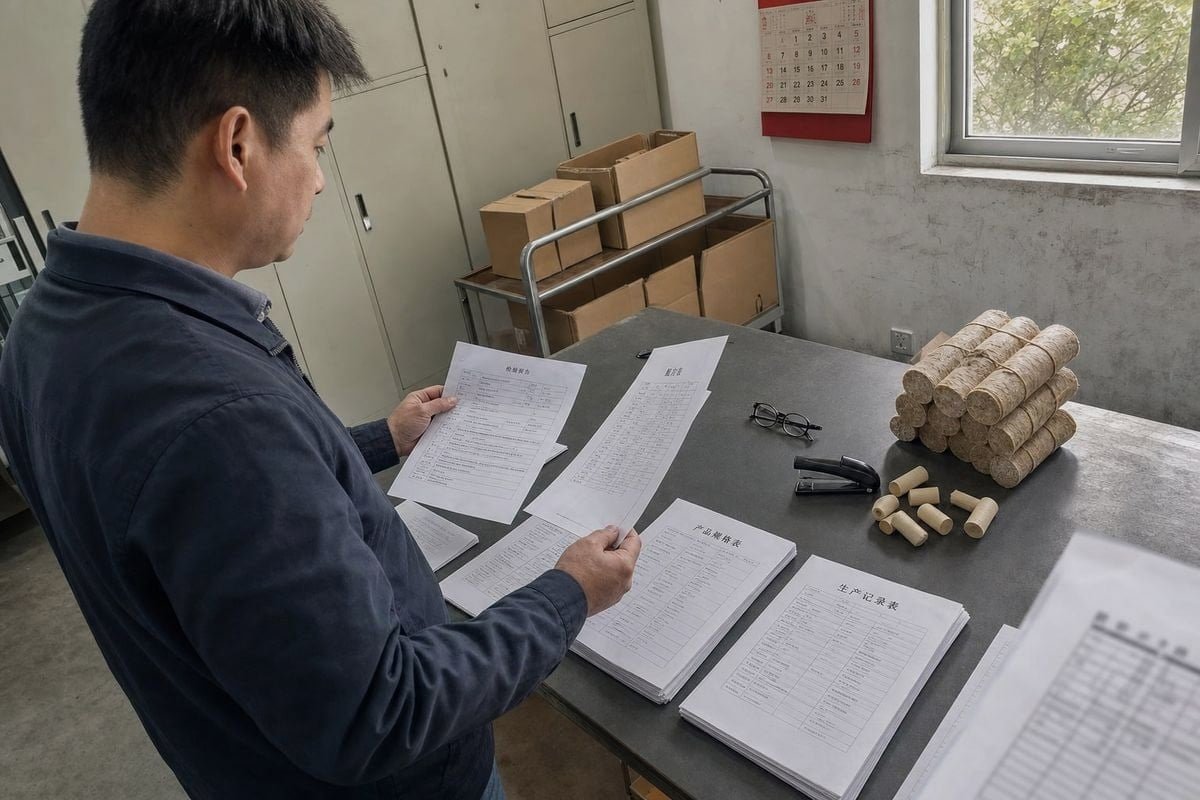
Amazon does not just want "an SDS." It wants a document it can actually use for hazard classification 1 during the Dangerous Goods review. The document must be internally consistent and must describe the exact commercial product you are listing — not a generic factory template. In our seventeen years of exporting fire-starting goods to the US, Germany, the UK, and beyond, the single biggest failure point we see is a mismatch between the SDS and the SKU.
The Core Document Set
Here is the full list I recommend every buyer collect before creating the listing:
| Document | What It Proves | Common Failure Point |
|---|---|---|
| SKU-specific SDS (16-section GHS) | Hazard classification and safe handling | Names a different product or brand |
| Formulation statement | Actual chemical composition (e.g., 50% wood fiber, 50% paraffin) | Vague terms like "natural materials" |
| Product specification sheet | Dimensions, weight, burn time | Missing or outdated versions |
| Label artwork | Consistency between label, listing, and SDS | Manufacturer name omitted |
| Third-party lab testing report | Independent verification of composition | Issued by the factory itself |
| Batch-specific COA | Chemical consistency of the current run | Supplier only has old batch data |
Why the COA Matters
A Certificate of Analysis 2 for the current production batch is often overlooked. Amazon's inbound receiving can flag a safety incident if the physical product behaves differently from what the paperwork describes. A batch COA closes that gap. At our facility in Ningbo, we run batch-to-batch quality control precisely so the sample your team approved matches the container that arrives at the FBA warehouse.
Also verify who issued the SDS. A document authored by an accredited third party — ideally one you can cross-reference through the China National Accreditation Service (CNAS) — carries far more weight than a self-issued factory file.
How do I know if my wood fire starter formula meets Amazon's hazardous material restrictions?
The word "wood" misleads a lot of buyers. Our wax-dipped wood rolls contain paraffin, and that single ingredient changes how Amazon's FBA hazmat program treats the product entirely.
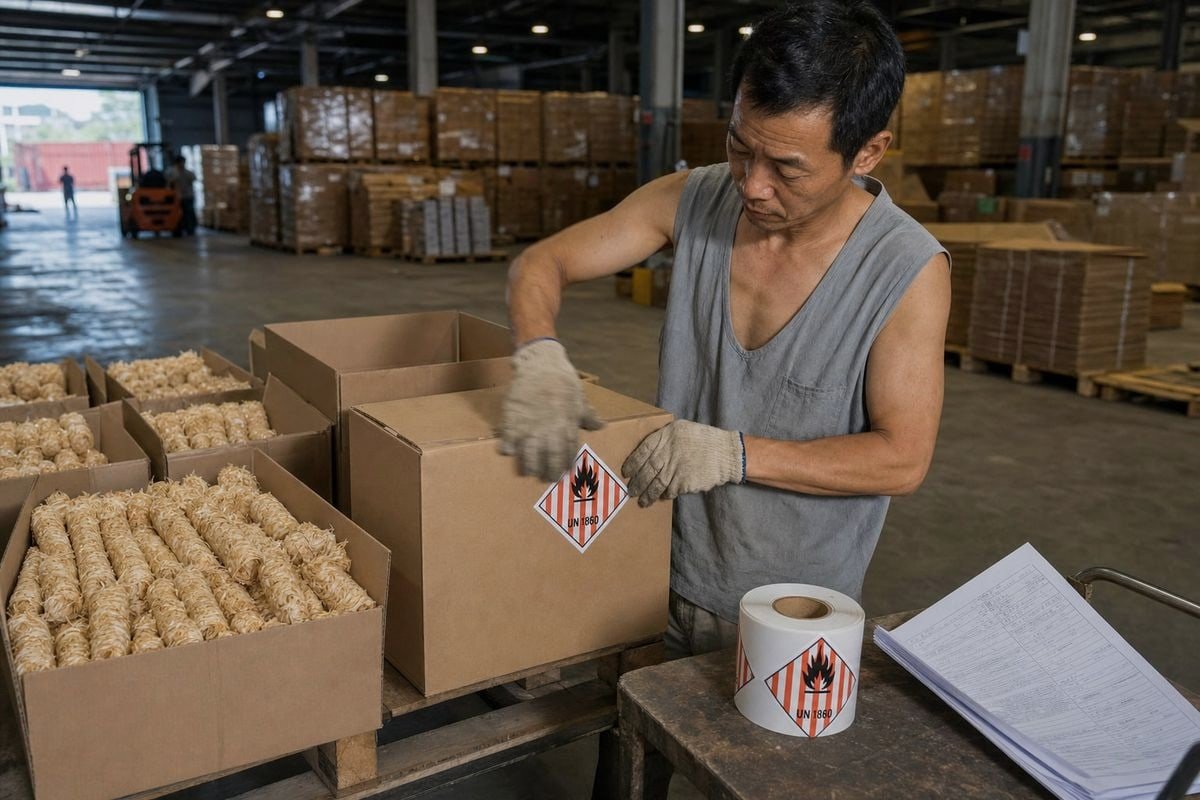
Check your product's exact chemical composition against GHS classification criteria. Wax-coated wood fire starters are typically classified as Division 4.1 flammable solids with an assigned UN number, meaning they enter Amazon's Dangerous Goods review rather than being treated as plain, untreated wood.

The critical question is never "Is it wood?" The critical question is "What is the actual formulation, and does the SDS support it?" Amazon's review process reads the document to decide whether your item is non-dangerous goods, dangerous goods, or prohibited dangerous goods. Your formula determines the path.
The Three Categories of Fire Starters
Not all fire starters carry the same risk profile. Here is how the categories generally break down:
| Product Type | Typical Composition | Likely Amazon Treatment |
|---|---|---|
| Untreated kindling or firewood | 100% raw wood | Often no SDS review required |
| Composite starters (like ours) | Wood fiber plus paraffin or wax binders | Dangerous Goods review; Division 4.1 flammable solids |
| Gel or liquid fuel starters | Petroleum-based accelerants | High scrutiny; may be restricted or prohibited for FBA |
What to Verify in the Formula
Focus your audit on three points. First, get the exact percentage breakdown — our standard fire starter pucks, for example, are stated plainly on the box as 50% wood fiber and 50% paraffin. Second, confirm every binder and wax has a specific CAS number 3 listed in Section 3 of the SDS. Vague entries like "wax blend" trigger undisclosed-hazardous-component flags during Amazon's manual secondary review. Third, check Section 14 for the correct UN number 4 and transport classification.
If you sell in Europe as well, remember that REACH compliance 5 and CLP regulations apply to the same chemical composition data. We prepare our documentation so the same formulation statement supports both the US and EU pathways. Some sellers also add Volatile Organic Compound 6 emission data to the SDS to head off restricted-product blocks in US states with strict air quality rules. It is not always mandatory, but it prevents surprises.
Which certifications should I ask my Chinese manufacturer for besides SDS to avoid listing suspensions?
A German buyer once told me his previous supplier offered a great price but could not produce a single valid test report. His listing was suspended within two months. That conversation shaped how we present our certification package to every new client.
Beyond the SDS, request ISO 9001 quality management certification, BSCI social compliance audits, CE marking where applicable, SGS or Intertek third-party lab testing reports, REACH compliance documentation for EU marketplaces, and an exemption sheet if the product qualifies for reduced dangerous goods handling.
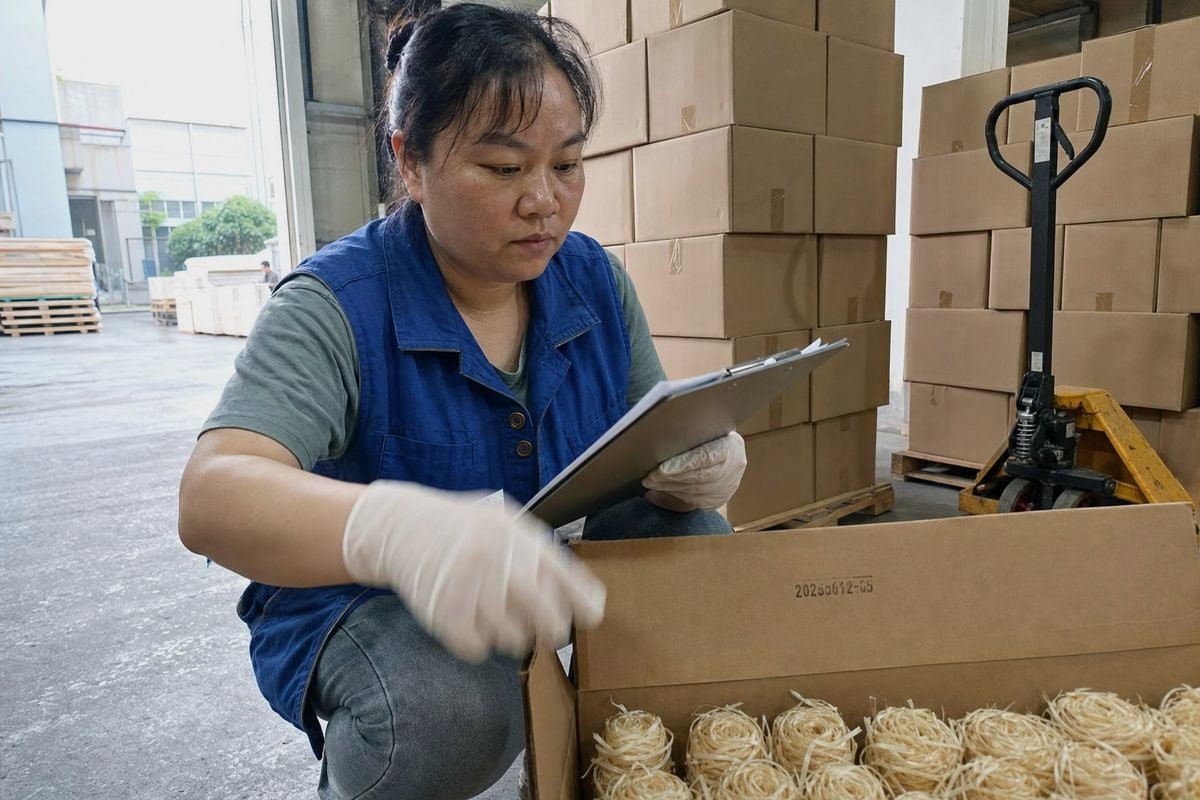
An SDS answers the chemical question. Certifications answer the trust question. Amazon's compliance teams — and increasingly its automated systems — look for evidence that the manufacturer behind the product is a legitimate, audited operation. When we onboard buyers for our color-flame products and wood firestarters, the certification folder goes out before the price sheet does, because for serious importers this is a hard requirement, not a nice-to-have.
Certification Priorities by Purpose
| Certification / Document | Purpose | Priority for Amazon Sellers |
|---|---|---|
| ISO 9001 | Proves consistent quality management system | High — supports batch consistency claims |
| SGS / Intertek test reports | Independent third-party lab testing of composition | High — validates the SDS data |
| BSCI audit | Ethical and social compliance of the factory | Medium — critical for large retail channels |
| CE marking | EU conformity where applicable | High for EU marketplaces |
| REACH documentation | Chemical registration compliance in the EU | High for Germany, France, Netherlands |
| Exemption sheet | Confirms limited-quantity or non-regulated status | Situational — useful in Dangerous Goods review |
How to Verify, Not Just Collect
Do not stop at receiving PDFs. Verify the test report numbers directly with SGS or Intertek 7 through their online verification portals. Confirm the certificate holder's legal name matches your actual manufacturer — a common trick among trading companies is to present certificates issued to a different factory. Ask whether the testing covered your exact SKU and formula, or just a similar product family.
One more practical tip from our export experience across thirty-plus countries: ask your manufacturer whether the same formulation ships to all your marketplaces and across all batches. If the factory quietly changes the wax supplier between orders, your documentation silently becomes invalid. We lock formulations at the specification-sheet level so this cannot happen without a documented change notice.
Can I get help preparing SDS documentation if my supplier hasn't provided one before?
Plenty of smaller Chinese workshops make decent fire starters but have never authored a compliant SDS. When buyers bring us these situations, our compliance staff often rebuilds the documentation from the formulation upward.
Yes. You can commission a qualified SDS authoring service, work with a third-party lab to establish the chemical composition, or partner with an experienced manufacturer whose compliance team prepares SKU-specific, 16-section GHS documents that satisfy Amazon's Dangerous Goods review requirements.
Amazon accepts an SDS from three sources: the manufacturer, the supplier, or a professional SDS authoring service. If your factory cannot produce a usable document, you have options — but each option has trade-offs worth understanding before you spend money.
Your Three Paths to a Compliant SDS
- Push the manufacturer to produce one. This works only if the factory has the formulation data and understands GHS formatting. Many do not. If they hand you an old-style MSDS or a partial document, it will fail Amazon's review.
- Hire an independent SDS authoring service. These firms produce professional documents, but they can only work with the composition data you give them. If your supplier will not disclose the exact chemical composition with CAS numbers, the authoring service is guessing — and a guessed SDS is a liability.
- Switch to a manufacturer with in-house compliance depth. In our case, the SDS, the third-party lab testing, the label artwork, the warning labels, and the barcode work all come from the same production floor. The document matches the product because both come from the same controlled process.
What a Usable SDS Must Contain
Whichever path you choose, hold the finished document to these standards. It must use the full 16-section GHS format with no critical sections marked "N/A" — Amazon's automated systems reject documents with missing safety fields. Section 1 needs the product identity, supplier contact details, and a valid 24-hour emergency telephone number, which often requires a subscription to a professional emergency response provider. Section 3 must list ingredients with concentrations and CAS numbers. Section 14 must carry the correct UN number and transport classification consistent with the hazard identification in Section 2. And the document must be issued in the language required by each marketplace where you sell — one English SDS does not cover a German or French listing.
Finally, plan for the operational side. Upload the SDS through Manage Dangerous Goods, expect possible review delays or reclassification, and keep your backup documentation — spec sheet, COA, test reports — ready in case Amazon requests clarification before FBA inventory check-in.
Conclusion
SDS compliance is a documentation-matching exercise. Prove your listed, labeled, and documented product are identical — and partner with a factory whose compliance depth makes that proof easy.
Footnotes
1. OSHA's Hazard Communication Standard explains the GHS-based classification system Amazon's SDS review relies on. ↩︎
2.



 English
  Spanish
  German
  French
  Arabic
  Portuguese
Join the Conversation