






Supplier test reports for chemical-free wood fire starters are the first thing I check on our production line before any batch ships. Skip them, and a single failed retail audit 1 can freeze your inventory, trigger chargebacks, and damage a brand you spent years building. The fix is simple: request the right documents, verify them properly, and know when to escalate.
To request supplier test reports for chemical-free wood fire starters, ask for a batch-specific lab report, Safety Data Sheet (SDS), Certificate of Analysis (CoA), and ingredient declaration. Confirm the report names an accredited lab, matches your exact SKU, and is less than six months old.
That is the short answer. The longer answer covers which certifications matter, how to spot fake or expired reports, which lab tests actually prove a chemical-free claim, and what to do when a supplier stalls. I will walk through each step below, drawing on what we see from our own export paperwork every week.
What Certifications Should I Ask My Wood Fire Starter Supplier to Provide?
A German distributor once emailed our factory a two-line RFQ and a four-page document checklist. That checklist taught me exactly what serious buyers expect, and I now recommend it to everyone.
Ask your wood fire starter supplier for an SDS, a batch-specific Certificate of Analysis, third-party lab test reports from SGS or Intertek, FSC Certification or wood-origin proof, REACH Compliance confirmation for EU markets, and factory-level certificates such as ISO 9001 and BSCI.

Not every document carries the same weight. Some prove the product is safe. Others prove the factory is stable. You need both, because a good product from an unstable factory will drift in quality between orders. In our 17+ years exporting fire-starting goods to 30+ countries, buyers who separate these two categories negotiate faster and get fewer surprises.
Product-Level Documents
These attach to the actual fire starter, ideally to a specific batch:
| Document | What It Proves | Priority |
|---|---|---|
| Safety Data Sheet (SDS) | Full ingredient disclosure, handling, and hazard data | Mandatory |
| Certificate of Analysis (CoA) | The tested batch matches the agreed formulation | Mandatory for private label |
| Third-party lab report (SGS/Intertek) | Independent verification of safety and composition | Mandatory |
| VOC Emission Testing results | No hazardous fumes released during combustion | Strongly recommended |
| Heavy Metal Analysis | No lead, cadmium, or mercury in wax or fibers | Strongly recommended |
| Product Specification Sheet | Size, burn time, ignition performance tolerances | Recommended |
Factory-Level Documents
These prove the supplier can repeat quality over time. Ask for ISO 9001 2 for quality management, BSCI for social compliance, and CE marking where applicable. For wood sourcing, FSC Certification 3 or an equivalent chain-of-custody record confirms Material Traceability — meaning the wood wool is not recycled from chemically treated or painted timber. For EU buyers, REACH Compliance is not optional; customs and retail auditors both check it.
One practical tip: ask for the certificate scope, not just the certificate. A factory can hold ISO 9001 for one product line and produce your fire starters on another. We attach scope pages by default because buyers burned by this before now demand it.
How Do I Verify a Test Report Is Genuine and Not Outdated?
Early in our export history, a buyer rejected a competitor's quote after finding the "current" SGS report was four years old and covered a different wax. That lesson shaped how we date-stamp everything.
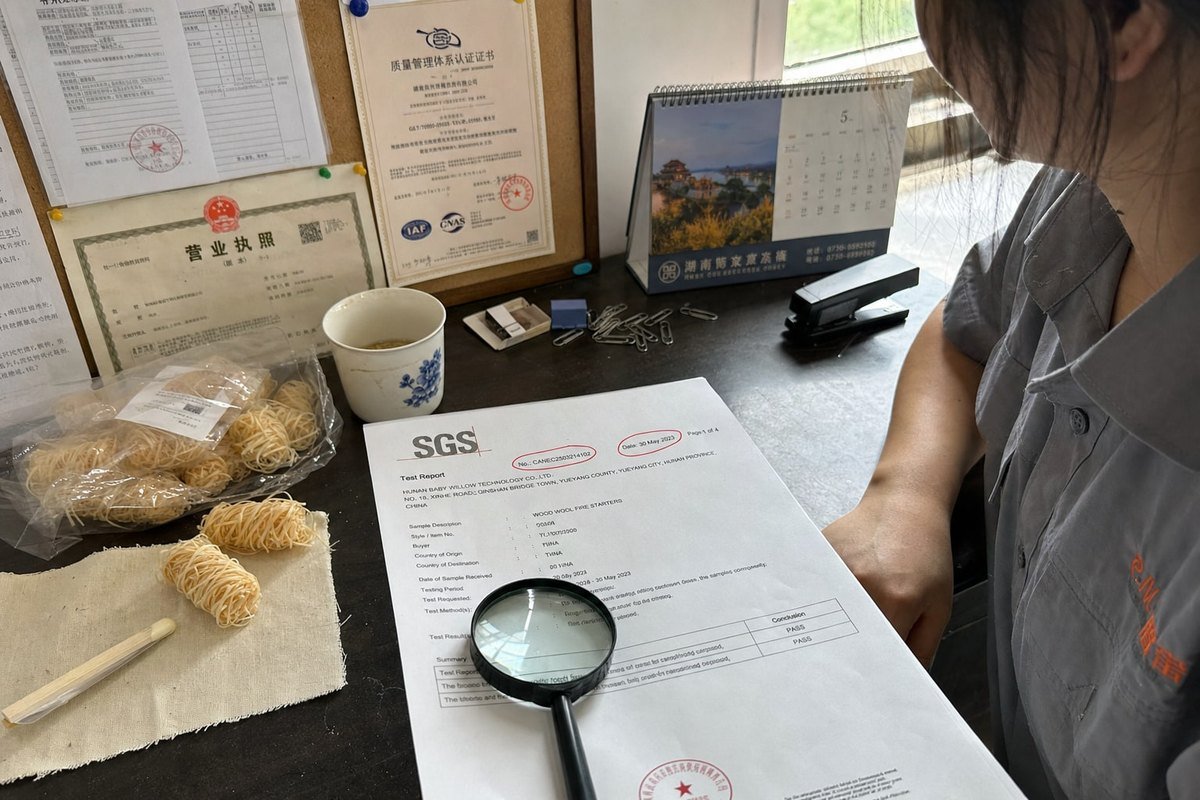
Verify a test report by confirming it names an ISO/IEC 17025 accredited laboratory, carries a unique report number you can check on the lab's online registry, describes your exact product and batch, lists the test methods used, and was issued within the last six to twelve months.

A test report is only as good as its traceability. Fraudulent or recycled reports are common in this category because fire starters look generic. The good news: verification takes about fifteen minutes if you follow a fixed sequence.
A Five-Step Verification Process
- Check the lab identity. The report must show the lab's full name, address, and accreditation. Major labs like SGS and Intertek operate under ISO/IEC 17025, which makes the data legally defensible.
- Verify the report number online. Reputable labs run public verification portals. Enter the report number and issue date. If the supplier's PDF does not match the registry record, walk away.
- Match the sample description to your SKU. The report should describe the material tested — for example, wax-dipped wood wool rolls 4 — not a vague "fire lighter." A report for an uncoated wood product does not cover a wax-coated one.
- Check the date. Compliance guidance in several EU markets recommends reports under six months old. We consider twelve months the absolute ceiling for an active SKU, and we re-test whenever a formulation or wax source changes.
- Read the test methods. A genuine report cites specific standards, such as ASTM Safety Standards 5 or EN methods, with pass/fail criteria. Vague language like "product tested and found safe" is a red flag.
Red Flags at a Glance
Watch for missing report numbers, low-resolution scans, mismatched fonts, a sample description that covers a whole product category, or a lab you cannot find online. Also compare the report against the supplier's own SDS — if the SDS lists paraffin but the report claims a petroleum-free product, someone is not telling the whole story. Supply Chain Transparency starts with documents that agree with each other.
Which Lab Tests Confirm My Fire Starters Are Truly Chemical-Free?
There is a trade-off we weigh on every OEM project: "chemical-free" is a marketing phrase, not a lab term. Even natural wax is technically a chemical. So we translate the claim into testable questions before quoting.
Lab tests that confirm a chemical-free claim include full composition analysis, VOC Emission Testing during combustion, Heavy Metal Analysis, a Total Fluorine screen for PFAS, binder purity analysis to rule out paraffin blending, and smoke or residue evaluation against recognized safety standards.
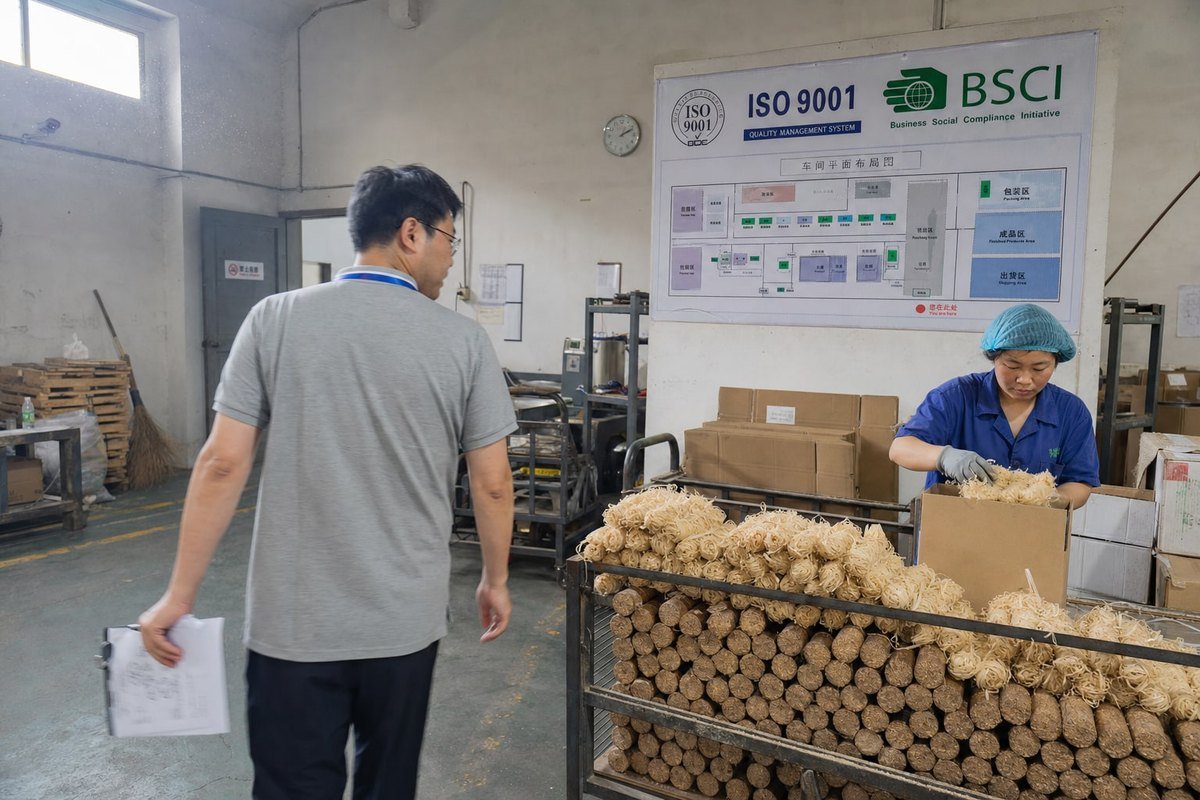
Because "chemical-free" has no single legal definition, you must define it in your purchase contract, then test against that definition. In practice, most of our buyers mean four things: no petroleum accelerants 6, no synthetic binders, no toxic emissions, and no contaminated wood. Each maps to a specific test.
| Buyer Concern | Lab Test | What a Pass Looks Like |
|---|---|---|
| No petroleum accelerants | Composition / solvent screening | No kerosene, lighter fluid, or mineral spirits detected |
| No synthetic binders | Binder purity analysis | Wax or resin identified as natural or food-grade, no industrial oil blending |
| No toxic fumes | VOC Emission Testing during burn | Emissions below recognized indoor-air thresholds |
| No heavy metals | Heavy Metal Analysis (ICP) | Lead, cadmium, mercury, chromium below limits |
| No PFAS contamination | Total Fluorine screening | Supports a signed PFAS-Free Declaration |
| Safe ignition behavior | Burn performance testing | Controlled ignition, burn time, and flame height per spec |
Why Emission Testing Matters Most
Composition tells you what is in the product. Emission testing tells you what your customer breathes. Fire starters used indoors — fireplaces, wood stoves — face the strictest scrutiny from retailers, and a Non-toxic Certification 7 claim on packaging must be backed by combustion data, not just an ingredient list. When we developed our wax-dipped wood rolls, we ran burn tests specifically because indoor-use buyers in the UK and Germany asked about smoke and odor before they asked about price.
Do Not Forget the Wood Itself
Recycled or treated wood waste is the hidden risk in this category. Demand wood-origin documentation and, if the factory also processes treated timber, a production line segregation protocol. Material Traceability protects you from contamination the finished-product test might miss between batches.
Buyers sometimes tell me their previous supplier called test reports "confidential." From our side of the table, that excuse rarely holds up — we share ours before the first sample ships.
If a supplier refuses to share test reports, first request a signed supplier declaration as a minimum, then offer to sign an NDA covering formulation details. If refusal continues, commission independent third-party testing on samples, or switch to a supplier that provides documentation upfront.
A refusal is information. Sometimes it hides a real problem. Sometimes it just reflects a factory that has never exported to regulated markets. Your job is to find out which — quickly and without burning the relationship if it can be saved.
The Escalation Ladder
- Reframe the request. Use routine procurement language: "For our quality assurance and compliance file, please send the current test report, SDS, and certifications for the latest batch." This sounds standard, not accusatory, and it usually works.
- Accept a specific, signed declaration — conditionally. A supplier declaration can serve as interim evidence if it names the exact product, lists what is absent (petroleum accelerants, synthetic binders, PFAS), and is signed by an authorized person. A vague one-line letter does not count.
- Offer an NDA. Some factories protect formulations. A confidentiality agreement removes that excuse. If they still refuse, the formulation is probably not the thing they are protecting.
- Commission your own Third-party Laboratory Verification. For private-label and import programs, paying for an independent test on production samples is cheap insurance against product liability. Test the actual shipment batch, not a golden sample.
- Walk away. Documentation-ready suppliers exist. In our experience exporting to the US, Germany, and the UK, retail sourcing channels increasingly demand a full evidence pack at the RFQ stage. A supplier who cannot produce one now will fail your retailer's audit later.
Protect Yourself Contractually
Whatever path you choose, write documentation into the purchase order: batch-specific CoA with every shipment, re-testing after any formulation change, and the right to third-party inspection. Suppliers who plan long-term partnerships accept these terms without friction — we build them into OEM contracts ourselves because they protect both sides.
Conclusion
Unverified claims put your brand at risk. Demand batch-specific reports, verify labs and dates, test emissions, and escalate refusals. Documentation-first suppliers make compliant sourcing simple.
Footnotes
1. Wikipedia entry explaining the process and importance of retail audits. ↩︎
2. Official ISO page for the quality management standard mentioned. ↩︎
3. Official Forest Stewardship Council page explaining wood sourcing standards. ↩︎
4. Wikipedia page describing wood wool, the primary material in these fire starters. ↩︎
5. ASTM's own standards directory supports the article's reference to recognized test methods. ↩︎
6. Wikipedia entry for accelerants, explaining their use and chemical properties. ↩︎
7. UL Solutions page for non-toxic product testing and certification services. ↩︎


 English
  Spanish
  German
  French
  Arabic
  Portuguese
Join the Conversation