






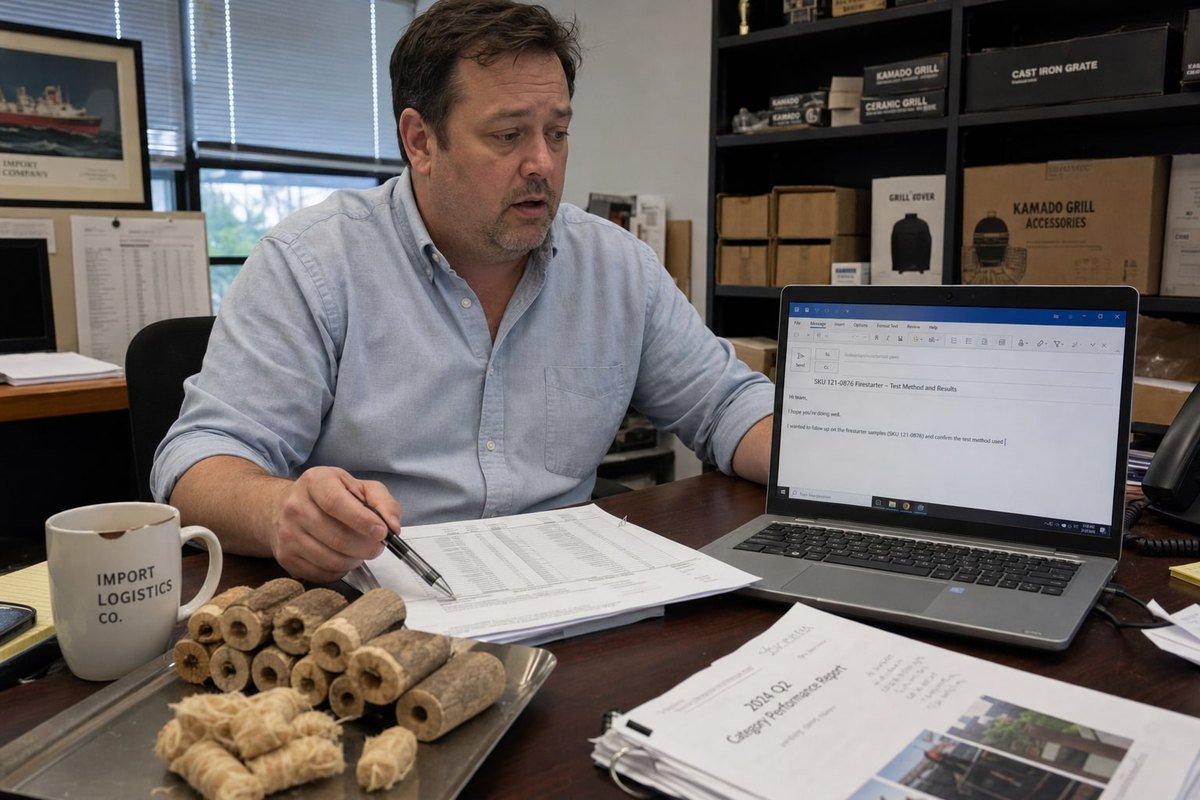
Requesting burn test reports on kamado grill fire starters trips up many buyers. On our production line in Ningbo, I've seen retail deals stall for weeks over one missing document. Without proof of burn performance, your shipment can be rejected at onboarding — after you've already paid.
Ask suppliers for a burn test report by emailing a specific request: name the exact SKU, require the test method (such as EN 1860-3), the lab name, test date, and full results for ignition time, burn duration, and residue — not just a pass/fail certificate page.
That is the short answer. Below, I will break down exactly what data to request, how to verify it, which certifications matter, and which supplier behaviors should worry you.
What Exact Burn Test Data Should I Request from a Fire Starter Supplier?
Early in my export career, a German distributor rejected our first report draft because it lacked batch numbers. That lesson shaped how we now document every wax-dipped wood roll we ship.
Request the product name, SKU, and batch number; the test standard used; ignition time; average burn duration; flame height; residue and ash mass; smoke and odor observations; flash point analysis for wax content; the lab's name and accreditation; and the issue date.
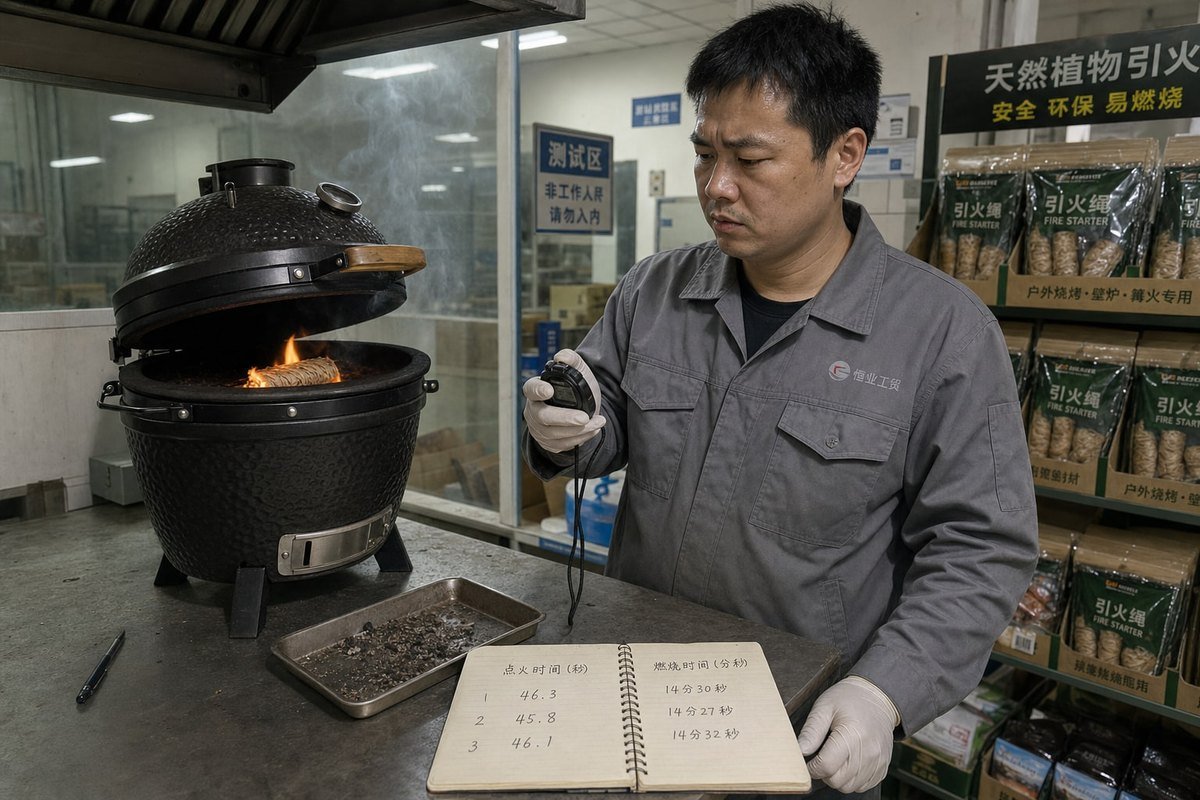
The phrase "burn test report" is not a standardized term. Different labs and suppliers organize this data under different names: a flammability test report, an ignition performance testing summary, or a fire behavior evaluation. So do not ask for a "burn test" in vague terms. Ask for outcomes. In our own compliance file, the documents that satisfy serious buyers always answer the same core questions: How fast does it light? How long does it burn? What does it leave behind?
The Core Metrics That Matter for Kamado Grills
Kamado grills 1 are ceramic and oxygen-restricted. That changes what data matters. A starter that works in an open fire pit may smother in a closed kamado. Ask for restricted airflow performance data if the supplier has it, and confirm the product is free from petroleum distillates 2, which can permanently soak into ceramic pores and taint food.
| Data Point | Why It Matters for Kamado Use |
|---|---|
| Ignition time / success rate | Confirms it reliably lights dense lump charcoal |
| Sustained burn duration | Kamados need 8–15 minutes of steady flame |
| Residue / ash mass | Excess ash blocks the bottom air vents |
| Smoke, odor, soot notes | Ceramic walls absorb chemical residue |
| Flash point analysis | Storage safety for wax-based starters |
| Moisture content | Humidity affects ignition reliability and shelf life |
Match the Report to the Exact SKU
One more point I stress with every buyer: a generic "fire starter" report does not transfer between products. Our natural wood wool firelighters, color-flame pinecones, and wax torches each carry their own documentation, because formulation, wax coating, and packaging all change burn behavior. Ask whether the report covers your exact SKU, current formula, and current factory. If the supplier changed wax suppliers last year, an old report may no longer describe the product in your container.
How Can I Verify a Burn Test Report Is Genuine and Not Fabricated?
A UK buyer once forwarded me a competitor's report to ask if it looked legitimate. The lab logo was real. The certificate number was not. That conversation taught me how common fabricated paperwork is in this category.
Verify a burn test report by checking the certificate number directly with the issuing lab, confirming the lab's accreditation, matching the tested product description to your SKU, checking the test date is recent, and requesting the full multi-page report rather than a single certificate page.
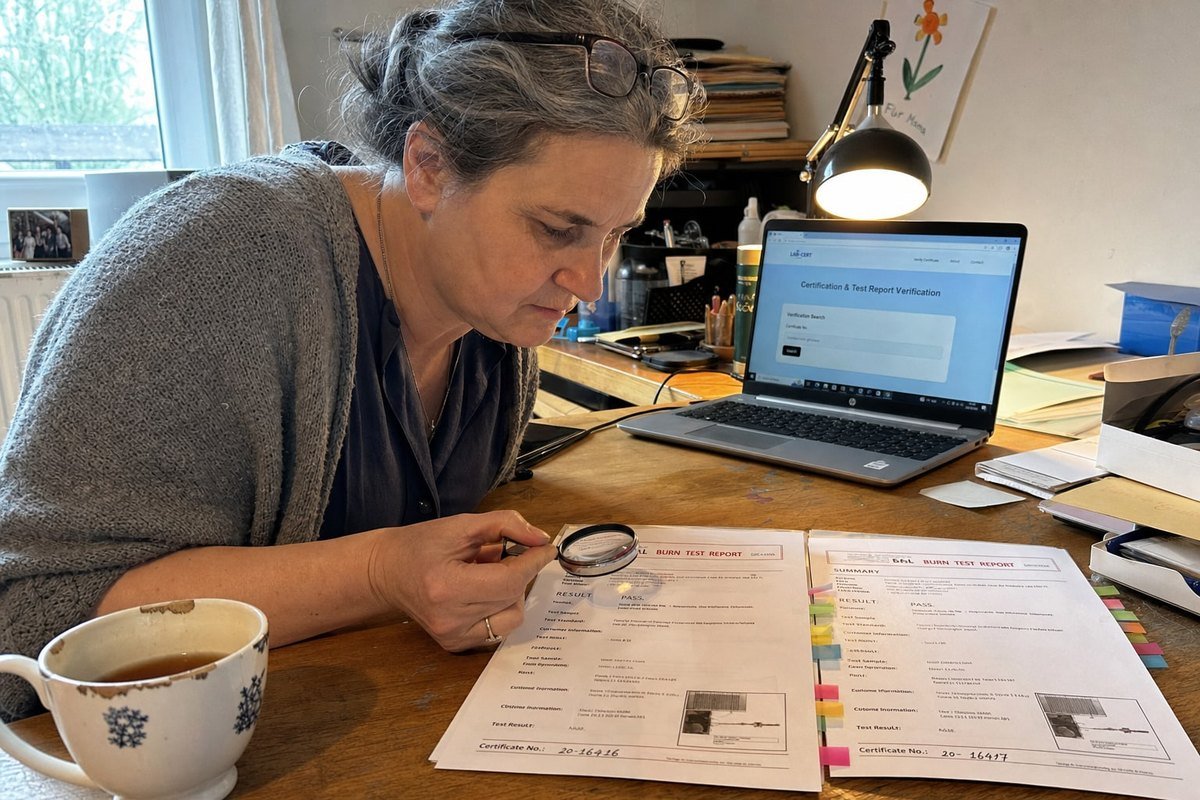
Fabricated or recycled reports are a real risk in fire products. The good news is that verification is straightforward if you follow a process. Third-party labs like SGS and Intertek 3 — the same bodies that test our firestarters — maintain online verification systems or respond to email inquiries about certificate numbers. A genuine supplier will never object to you contacting the lab directly.
A Five-Step Verification Process
- Request the full PDF, not a summary page. Real reports run multiple pages: sample description, method, conditions, raw results, and conclusions. A one-page "certificate" with only a pass stamp is weak evidence.
- Contact the lab. Send the certificate number to the issuing lab and ask them to confirm it was issued for that product and that applicant.
- Check the applicant name. If the report was issued to a different company, your supplier may be a trading company reselling someone else's documentation.
- Match the specimen description. The tested sample's dimensions, weight, and material should match your product. A wax-dipped wood roll report cannot cover a compressed biomass cube.
- Check the dates. Reports older than two or three years may predate formula or factory changes. Ask when the product was last re-tested.
Weak Report Warning Signs
Be skeptical if the report says only "pass" without naming the method, if there is no batch or lot identification, or if measurable values are missing. Lab order forms require detailed product identification and a named test as inputs — so a credible output report should show the same specificity. In our experience exporting to 30+ countries, buyers who insist on full reports catch problems before shipment. Buyers who accept a stamped page catch them at customs.
Which Certifications Matter Most Alongside Burn Test Reports for Kamado Grill Products?
When we prepare a compliance packet for a new European distributor, the burn test report is only one file inside a much thicker folder. Buyers who understand the full document set negotiate from a stronger position.
Alongside burn test reports, prioritize EN 1860-3 compliance for firelighter safety, an SDS for hazard classification, REACH compliance certification for the EU, a Certificate of Analysis per batch, and factory-level credentials like ISO 9001 and BSCI.
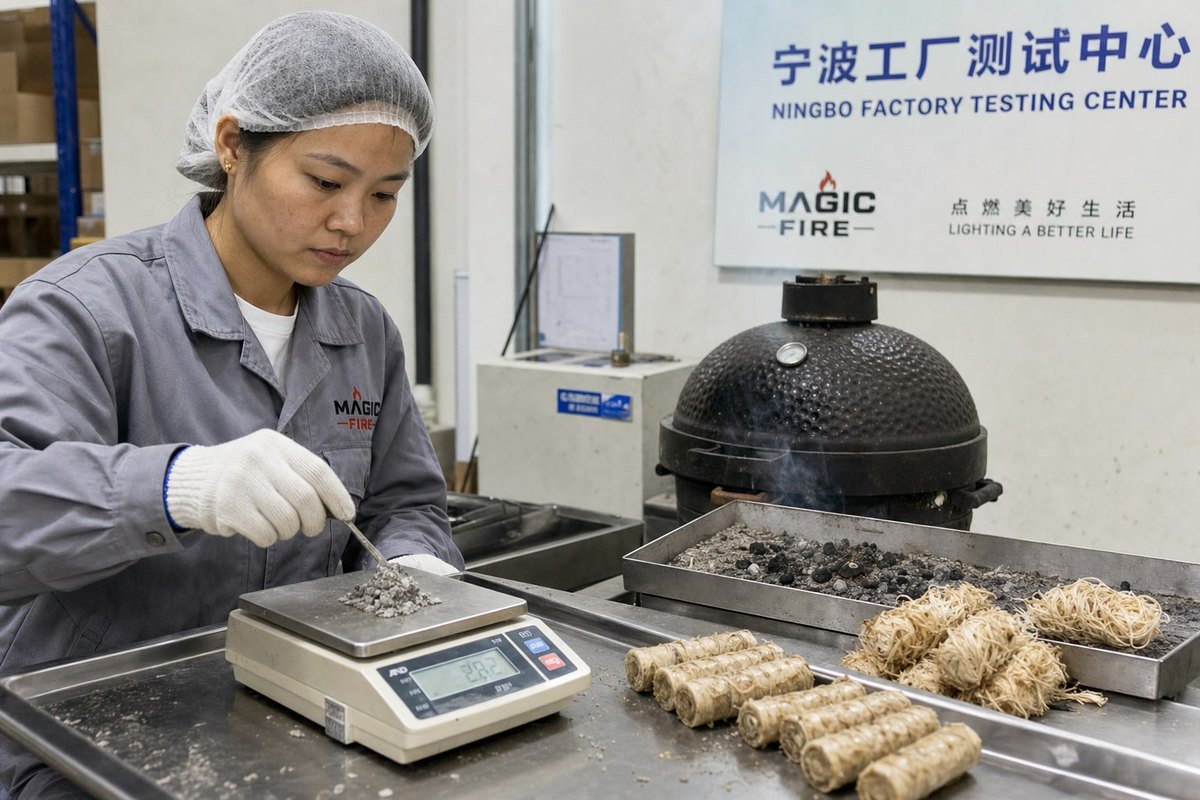
Certifications answer different questions than a burn test does. The test tells you how one sample behaved. Certifications tell you whether the product, its chemistry, and its factory meet ongoing standards. For kamado grill fire starters sold in the US and Europe, I recommend building your request around this stack:
| Document / Standard | What It Proves | Who Asks for It |
|---|---|---|
| EN 1860-3 4 safety standard | Firelighter safety and performance benchmark | EU retailers, importers |
| SDS (Safety Data Sheet) | Hazard data, flammable solid classification, handling | Marketplaces, freight carriers, customs |
| REACH compliance certification | No Substances of Very High Concern above limits | All EU sales channels |
| Certificate of Analysis (CoA) | Batch composition consistency | Private-label brands, big-box retail |
| DIN-Geprüft quality mark 5 | Independent German quality verification | German and DACH-market retailers |
| ISO 9001 / BSCI | Factory quality systems and social compliance | Large retail sourcing programs |
Why the Chemistry Documents Matter for Kamados
Kamado owners are sensitive buyers. Ceramic grills absorb combustion residue permanently, so retailers increasingly ask for confirmation of food-grade wax composition and low VOC emissions 6. This is why our own products use eco-friendly wax and natural wood wool with no harmful chemicals — and why we hold SGS and Intertek reports to prove it, not just to claim it. Ask your supplier whether their SDS confirms the product is free of petroleum distillates. If they cannot answer that in one email, they likely do not control their raw material chain.
Match the Certification to the Sales Channel
Not every buyer needs every document. A US marketplace listing may only need an SDS and a flammability report. A German big-box program may require EN 1860-3, REACH documentation 7, and a DIN-Geprüft quality mark. Define your channel first, then request the matching set.
I weigh one trade-off constantly at our factory: transparency takes staff time, but secrecy loses buyers. Any supplier who treats a standard document request as an intrusion is telling you something important.
Major red flags include offering only an SDS as a substitute for performance data, sending a certificate page without the full report, reports issued to a different company name, refusal to let you contact the lab, expired test dates, and stalling until after deposit payment.

Hesitation is not always dishonesty. Sometimes a trading company genuinely does not have the factory's file. Sometimes the report exists only in Chinese. But you need to distinguish fixable friction from real risk. Here is how I read the common responses:
| Supplier Response | Likely Meaning | Your Move |
|---|---|---|
| "The SDS covers everything" | No ignition performance testing exists | Explain SDS ≠ performance; request a lab test |
| "We can share it after your order" | Report may not exist or may not match | Make documentation a pre-order condition |
| Report in another company's name | Trading company reselling factory goods | Ask who actually manufactures the product |
| "The report is confidential" | Possibly borrowed or fabricated | Offer an NDA; if still refused, walk away |
| Very old test date | Formula or factory may have changed | Request re-testing on the current batch |
| Only in-house test sheets | Weak but honest documentation | Ask if they will commission third-party testing |
A Fair Path Forward
A serious factory can commission a new test if none exists — labs accept order forms with product identification and the specific method requested, and turnaround is usually weeks, not months. When buyers ask us for documents we do not have on file for a custom OEM formulation, we quote the testing timeline upfront rather than dodge. That is the behavior to look for. A supplier who says "we don't have that report yet, but here is how we will get it, and here is the cost and timeline" is more trustworthy than one who instantly emails a suspiciously perfect certificate.
Also watch how they handle the exact-SKU question. If you ask "does this report cover the current formula and packaging?" and the answer is vague, treat the report as unverified. Precision in answers usually reflects precision in production.
Conclusion
Getting burn test reports on kamado grill fire starters protects your listing, your shipment, and your brand. Ask by outcome, verify with the lab, and treat transparency as your top supplier filter.
Footnotes
1. Background on kamado ceramic grill design explains why oxygen-restricted burn data matters. ↩︎
2. Provides background on petroleum-based chemicals that can taint ceramic kamado surfaces. ↩︎
3. SGS official site verifies the accredited testing body suppliers cite for burn test reports. ↩︎
4. Explains the European firelighter safety standard referenced repeatedly for kamado starter compliance. ↩︎
5. DIN's official site explains this German quality certification demanded by DACH-market retailers. ↩︎
6. EPA reference explains volatile organic compound risks relevant to low-emission fire starter claims. ↩︎
7. ECHA's official REACH page clarifies the EU chemical compliance requirement mentioned for exporters. ↩︎

Join the Conversation