






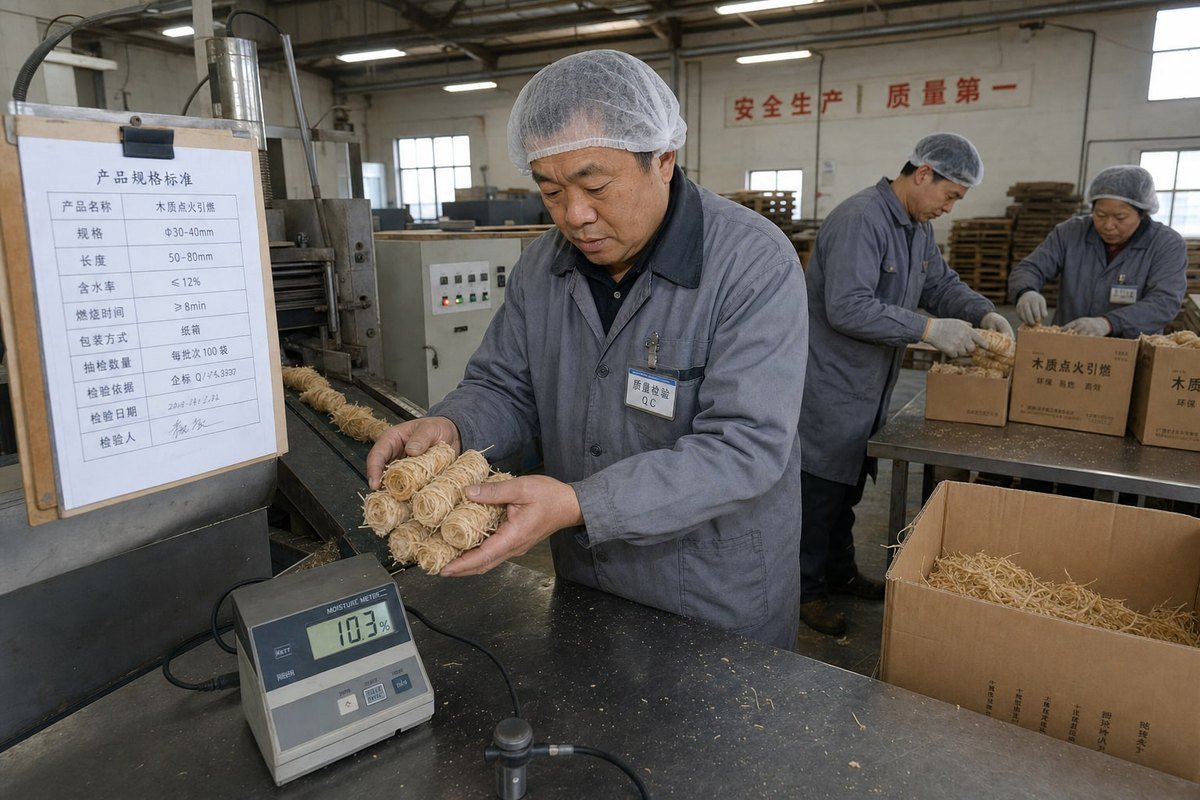
A mid-production inspection for wood fire starters saved one of our buyers from a full-batch failure last year. Skip it, and hidden defects like excess moisture ship straight to your warehouse. Our production line taught us how to catch them early.
A mid-production inspection for wood fire starters means checking raw materials, moisture content, wax coating consistency, ignition performance, burn time, and packaging while the batch is still being made. Buyers should pull random samples, run live ignition tests, verify compliance documents, and require corrective action before production continues.
That is the short answer. Now let me walk you through each step in detail, the same way I would guide one of our own distributors visiting our factory floor.
What Should I Check First During a Mid-Production Inspection for Wood Fire Starters?
A few years back, a German buyer visited our Ningbo facility mid-run. His first question was not about price. It was about moisture. He knew exactly where quality hides.
Check raw materials and moisture content first. Confirm the wood wool matches the agreed specification, verify moisture sits within the target range using a calibrated meter, then inspect wax coating consistency, unit density, and structural integrity by handling random samples pulled from different points on the line.
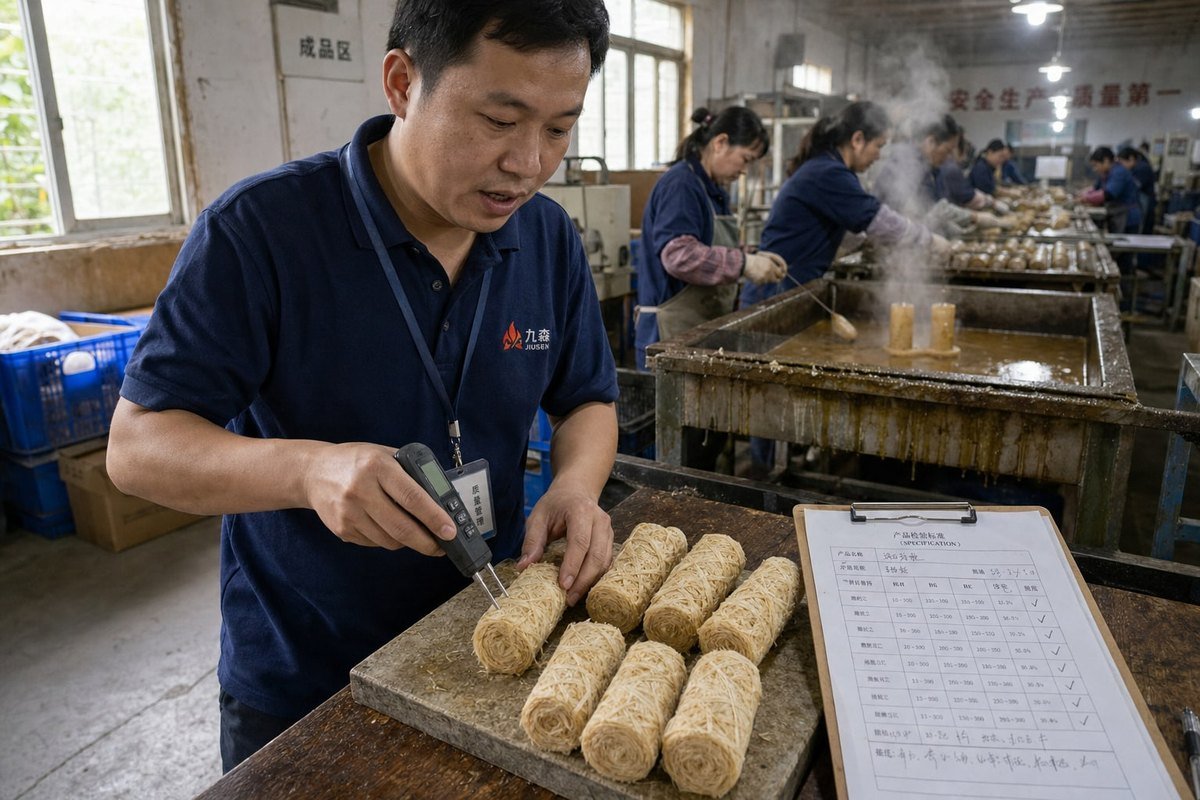
The order of your checks matters. Moisture and materials come first because everything downstream depends on them. If the wood wool production process 1 runs too wet, the finished starter will resist ignition. If it runs too dry, the rolls turn brittle and crumble in transit. In our own drying stage, we hold each batch to a tight moisture window before any wax dipping begins, because we learned early on that no amount of wax can fix a badly dried core.
Start with the Specification Sheet
Before you touch a single sample, review the written product specification. It should state the material type, target weight, dimensions, moisture range, and wax ratio. Every check you make afterward compares reality against this document. Without it, you are inspecting by feel, and feel is not a Quality Control checklist.
Your First-Hour Checklist
| Checkpoint | What to Verify | Common Failure |
|---|---|---|
| Raw material | Wood wool, wax, no hidden fillers | Substituted fibers or synthetic binders |
| Moisture content testing | Within agreed range via calibrated meter | Over-wet cores that will not light |
| Wax coating consistency | Even coverage, no bare patches or drips | Surface-only coating that flakes off |
| Density and shape | Uniform rolls, correct weight | Loose packing causing uneven burn |
| Structural integrity | No crumbling, shedding, or wax leakage | Brittle over-dried units |
Handle at least a dozen units by hand. Squeeze them gently. Roll them between your palms. A well-made wax-dipped wood roll holds its shape without shedding strands. Also ask to see the factory's raw material traceability records at this stage. FSC certification verification, where the buyer requires certified wood inputs, is far easier to confirm mid-run than after the goods are boxed.
Which Compliance and Safety Standards Must My Supplier Meet at This Stage?
In our experience exporting to the US, Germany, and the UK, compliance is never a nice-to-have. Buyers in these markets treat missing test reports as an automatic disqualifier, and rightly so.
Your supplier should hold ISO 9001 for quality management, BSCI for social compliance, CE marking where applicable, and valid third-party test reports from labs like SGS or Intertek. During mid-production, verify certificates are current, lot codes are applied, and packaging and labeling compliance matches your destination market.
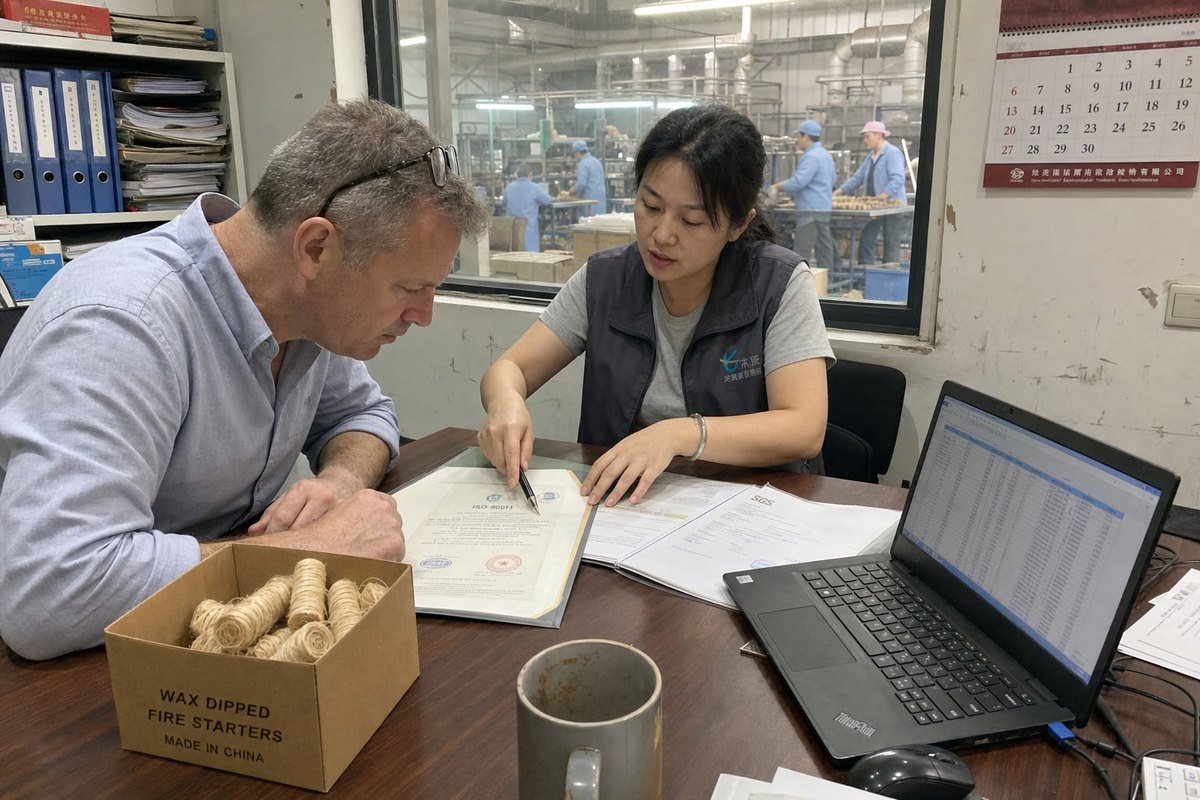
Compliance checks during a mid-production inspection differ from a paperwork review at the quoting stage. At quoting, you see PDFs. Mid-production, you see whether the certified process is actually being followed on the line. Those are two very different things. I have watched buyers discover that a supplier's beautiful ISO certificate 2 belonged to a partner factory, not the site making their goods. Ask for certificates that name the actual production facility, then walk the floor and match what you see against the documented process.
Documents to Verify On-Site
- ISO 9001 certificate naming the producing factory, with a current validity date.
- BSCI audit report if your retail channel requires social compliance, which most large US and EU retailers now do.
- SGS or Intertek test reports covering the specific product family, not a similar item from years ago.
- CE and market-specific documentation for the destination country, including any required safety warnings.
- Material declarations confirming no petroleum distillates, artificial dyes, or prohibited additives if the product is sold as 100% natural.
Labeling Checks During the Run
Pull retail boxes directly from the packing station. Confirm lot codes, barcodes, warning labels, and country-of-origin marks 3 are printed correctly and legibly. At our factory, we print warning labels and barcodes to each client's market requirements, and we run this check ourselves before the client's inspector ever arrives. A labeling error caught mid-run costs a reprint. The same error caught at customs costs the whole shipment. If you cannot travel, third-party inspection services can perform these same verifications on your behalf for a modest fee.
How Do I Verify Consistent Quality Across Batches Before Mass Production Continues?
One trade-off we weigh constantly on our own lines is speed versus sampling depth. Pausing a run to test more units costs time. Shipping an inconsistent batch costs the relationship. We always choose sampling.
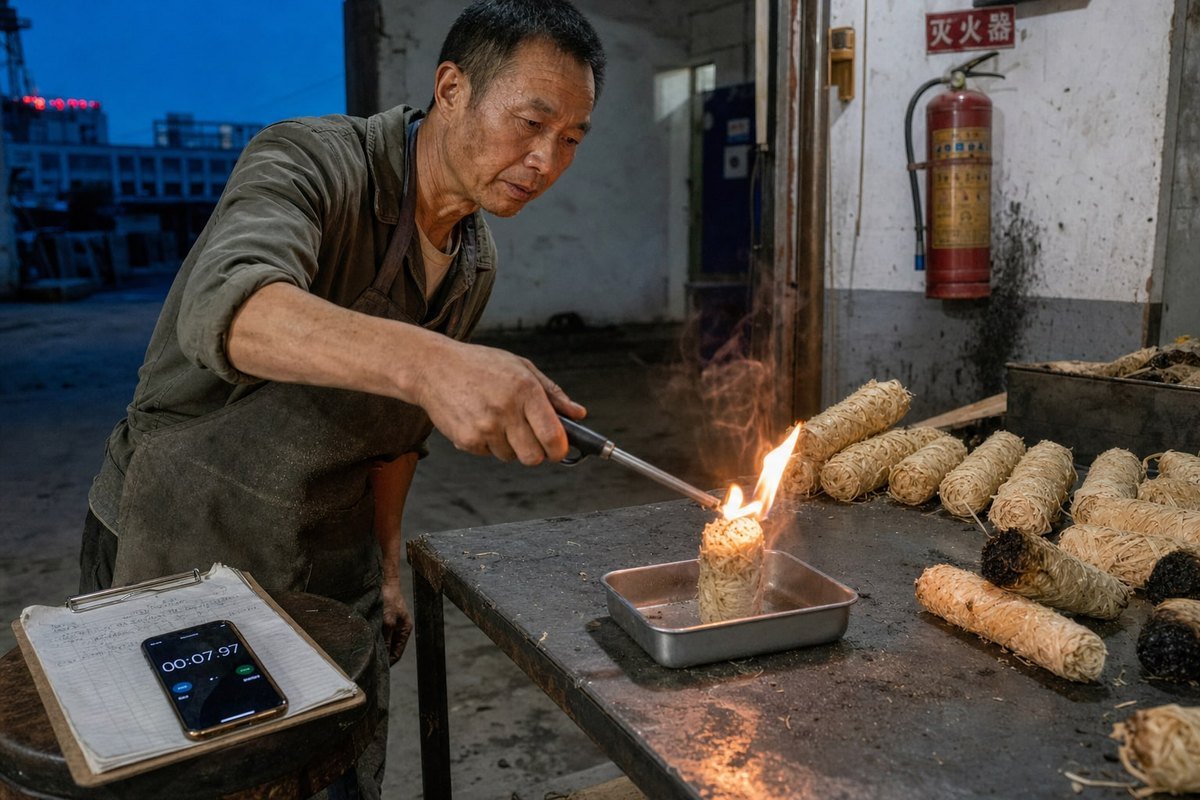
Pull random samples from the start, middle, and current point of the run, then test each group identically: weigh units, measure moisture, ignite on a nonflammable surface, and record burn time. Compare results against Acceptable Quality Level standards agreed in your contract before approving continued production.
Consistency is where genuine factories separate themselves from assemblers. After 17+ years of running strict batch-to-batch quality control 4, I can tell you the secret is boring: sample randomly, test identically, record everything. Bias is the enemy. If you let the factory hand you samples, you will receive the best units in the building. Instead, walk the line yourself and pull units from different cartons, different pallets, and different production hours.
A Simple Live Testing Protocol
Take your samples to a safe, ventilated area with a nonflammable surface. Then run this sequence on each group:
- Weigh and measure every unit against the specification.
- Check moisture with your own calibrated meter.
- Light one unit per group and time the ignition. A common industrial benchmark is catching flame within roughly 3 to 5 seconds, though your contract figure governs.
- Run burn time verification. Many wood wool starters target roughly 8 to 15 minutes; again, treat this as an example benchmark, not a universal rule.
- Observe smoke, odor, residue, and any wax dripping during the burn.
- Photograph every defect next to a compliant unit for comparison.
Reading the Results
| Result Pattern | Likely Cause | Corrective Action |
|---|---|---|
| Slow ignition across all groups | Excess moisture in drying stage | Extend or recalibrate kiln drying |
| Brittle units in one group only | Uneven heat distribution in one batch | Adjust drying uniformity, re-inspect that batch |
| Burn time varies widely | Inconsistent density or wax ratio | Tighten compression and dipping controls |
| Wax flaking off surface | Coating not penetrating fibers | Increase dip time or wax temperature |
Defect rate monitoring across the three sample groups tells you whether problems are isolated or systemic. One brittle unit is noise. Brittle units clustered in a single batch point to a drying fault the factory can still fix. That is the entire value of inspecting mid-production instead of waiting for a pre-shipment check: the manufacturing lead time still has room for correction.
What Documentation Should I Request After the Mid-Production Inspection Is Complete?
A US importer once told me his rule: if it is not written down, it did not happen. We adopted that mindset for every OEM order we run, and it has prevented countless disputes.
Request a signed inspection report with photos, moisture and burn test data, the sampling plan used, defect classifications against AQL standards, corrective action commitments with deadlines, updated certificates and test reports, and written confirmation of packaging, labeling, and remaining production timeline before the run continues.
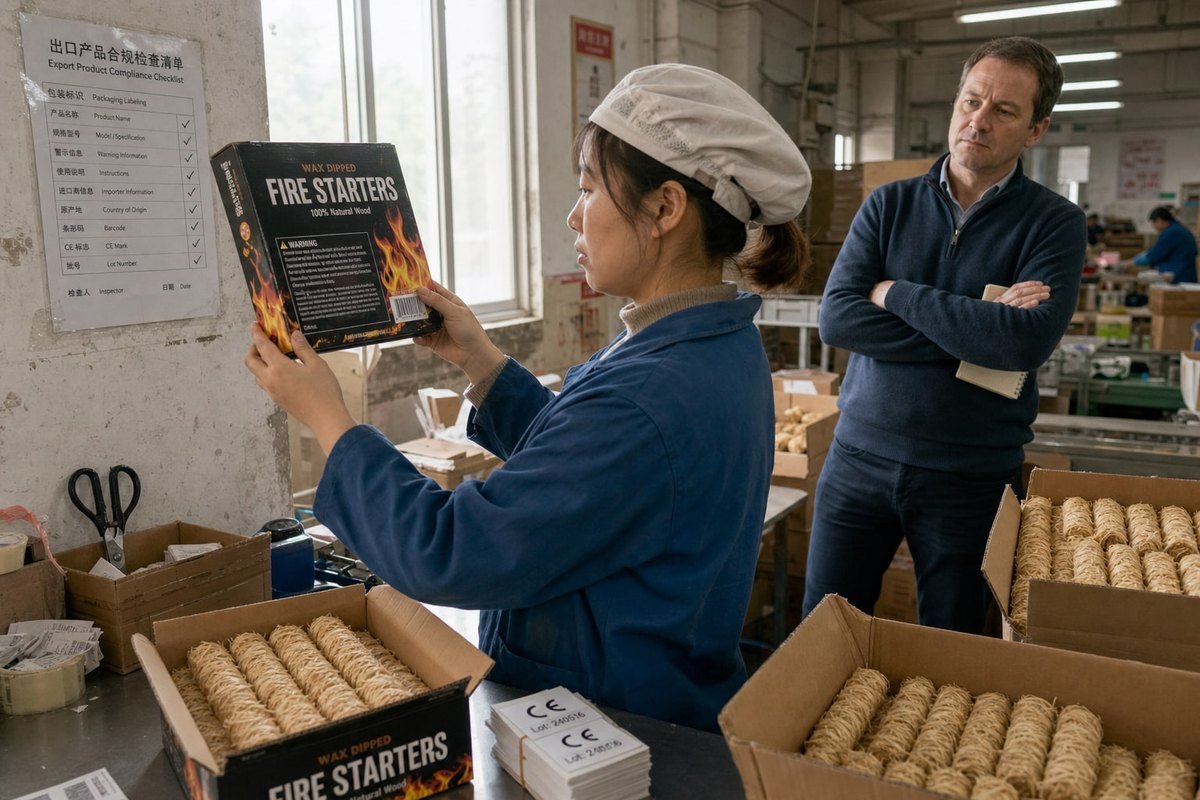
Documentation is your leverage. If defects appear later at the pre-shipment inspection 5 or after delivery, the mid-production paper trail proves what was agreed, what was found, and what the supplier promised to fix. Without it, every dispute becomes your word against theirs. I always tell buyers to leave the factory with a complete package, signed by both sides, on the same day the inspection ends. Memories fade fast once the inspector's flight departs.
The Complete Documentation Package
| Document | Why You Need It |
|---|---|
| Signed inspection report | The official record of findings, sample sizes, and pass/fail results |
| Photo log | Visual proof of defects and compliant references for later comparison |
| Test data sheets | Moisture readings, ignition times, and burn durations per sample group |
| Corrective action plan | Specific fixes, responsible persons, and deadlines in writing |
| Updated certificates | Current ISO, BSCI, and lab reports naming the producing site |
| Packaging sign-off | Approved artwork, barcodes, warning labels, and seal quality confirmation |
| Revised timeline | Confirmed manufacturing lead time reflecting any corrections |
Set the Follow-Up Rules Now
The report should also define what happens next. Agree in writing on the re-inspection trigger if corrective actions are required, the AQL thresholds 6 for the final pre-shipment inspection, and storage conditions for finished goods awaiting shipment. Finished fire starters should sit in a dry, cool, ventilated area, because humid warehousing can undo weeks of careful drying. For long maritime routes 7, some buyers also request mold-risk checks on stored batches. On our side, we archive every order's inspection package so repeat buyers can compare batch data over time. That archive is what makes the first sample reliably reflect mass-production quality, order after order.
Conclusion
A mid-production inspection catches moisture, ignition, and packaging defects while they can still be fixed. Verify materials, test performance, confirm compliance, and document everything before production continues.
Footnotes
1. Technical overview of the manufacturing and properties of wood wool fibers. ↩︎
2. Replaced 403-prone official site with a stable Wikipedia overview of the standard. ↩︎
3. Government regulations regarding the mandatory marking of country of origin on imported products. ↩︎
4. Explanation of quality control systems used in batch manufacturing processes. ↩︎
5. Authoritative guide on final inspection procedures to ensure product quality before export. ↩︎
6. Replaced 403-prone ASQ link with an accessible Wikipedia definition of AQL. ↩︎
7. International standards for ship routing and safety in global maritime transport. ↩︎

 English
  Spanish
  German
  French
  Arabic
  Portuguese
Join the Conversation