







Third-party inspection 1 when purchasing wood fire starters is something I wish more buyers arranged early. Our production line has seen orders delayed simply because nobody booked the inspector in time.
To arrange third-party inspection for wood fire starters, define the inspection scope, appoint an accredited agency like SGS or Intertek, book at least 72 hours ahead when goods are 80–100% complete, provide your PO and specifications, and set clear AQL-based pass/fail criteria.
That is the short answer. But each step hides details that decide whether your container ships on time or sits in a warehouse. Let me walk you through the full process, step by step.
What third-party inspection agencies should I trust for wood fire starter orders?
A buyer from Germany once told me he almost hired his supplier's "recommended inspector." At our Ningbo facility, we welcome any independent agency — that independence is exactly the point.
Trust globally accredited agencies such as SGS, Intertek, TÜV, Bureau Veritas, or QIMA for wood fire starter orders. Choose one with experience in combustible consumer goods, EN 1860-3 knowledge, lab-testing capability, independence from the factory, and fast, photo-rich reporting turnaround.
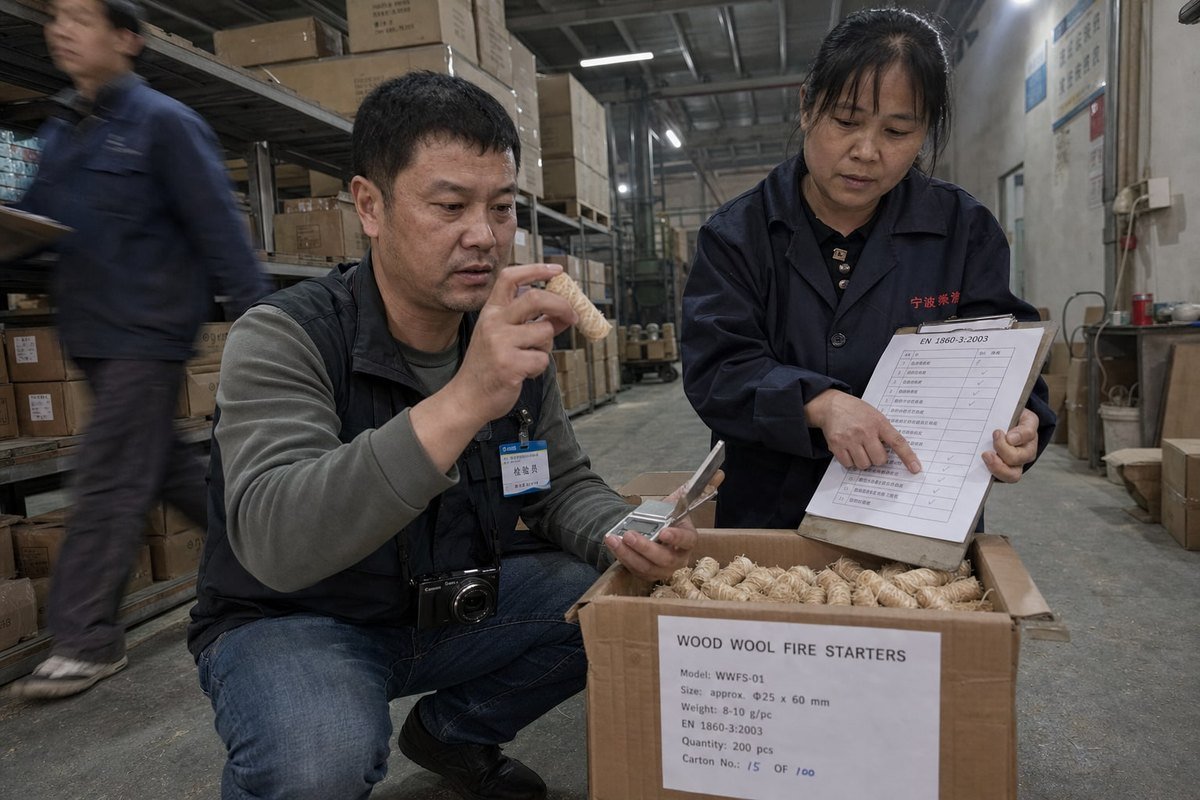
Fire starters are not a generic commodity. They are a combustible consumer product 2 with safety claims, wax composition, and burn performance attached. So the agency you pick needs more than a clipboard and a camera. In our 17+ years exporting fire-starting goods to the US, Germany, the UK, and 30+ other markets, we have hosted inspectors from nearly every major agency. The good ones share the same traits, and the weak ones fail in predictable ways.
The three types of inspection partners
You actually have three options, and they serve different purposes:
| Partner Type | Best For | Limitations |
|---|---|---|
| General inspection company (SGS, Intertek, QIMA) | Pre-shipment inspection 3, quantity checks, packaging, visual defects | May not test chemical composition on-site |
| Accredited testing lab | EN 1860-3 standard testing, REACH compliance 4, composition analysis | Slower; requires sample shipment; no container check |
| Specialist fire-safety consultant | Regulatory disputes, custom safety claims, market-entry advice | Expensive; overkill for routine orders |
For most routine purchase orders, a general agency handles the pre-shipment inspection while a lab validates safety claims once per product version. You do not need lab testing on every shipment if the formula has not changed.
Selection criteria that actually matter
Check these five points before you sign an inspection contract. First, confirm independence — the agency must have no financial relationship with the factory. Second, ask whether their inspectors have handled wax-coated or combustible goods before. Third, verify they can run a burn time verification on-site, not just count cartons. Fourth, confirm they understand your destination market rules, whether CPSC labeling in the US or REACH compliance in the EU. Fifth, demand reports within one working day, because port cutoffs do not wait.
One more tip from our side of the table: a factory that resists third-party inspection is telling you something. We hold ISO 9001 5 and BSCI certifications and carry SGS and Intertek test reports precisely because serious buyers ask for them. A supplier who dodges independent verification is a supplier to avoid.
When during production should I schedule my inspection to avoid shipment delays?
Timing is the trade-off I discuss most with new buyers. Book too early, and the inspector sees half-finished goods. Book too late, and there is no time to fix anything before our container stuffing date in Ningbo.
Schedule your pre-shipment inspection when production is 80–100% complete and at least 80% packed, and book the agency a minimum of 72 hours in advance. This leaves time for rework, relabeling, or re-inspection before the container loading date and vessel cutoff.
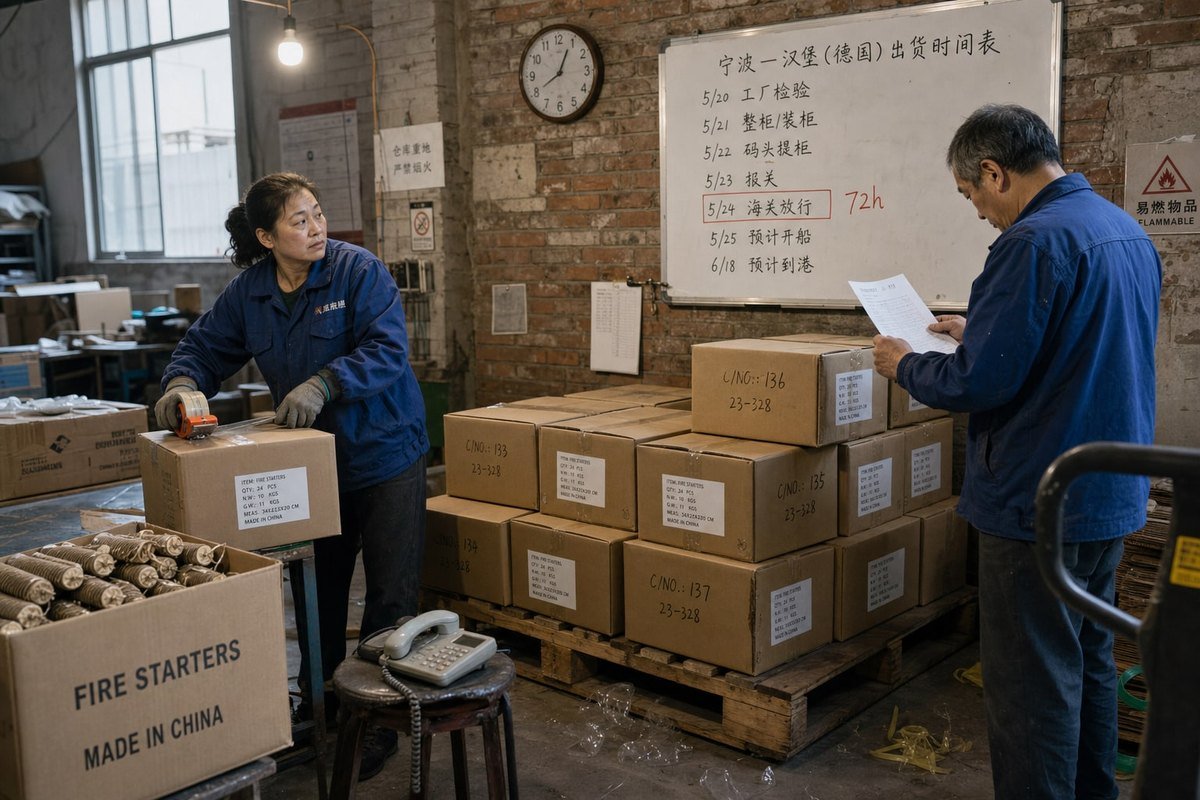
Most inspection agencies require advance notice, and slots fill fast around Chinese holidays and peak shipping seasons. Some published inspection procedures require at least 72 hours' notice, and stricter rule sets impose even earlier written deadlines. Cancellations can also consume your paid inspection slot. So the smart move is to build the inspection into your order timeline from day one, not to bolt it on at the end.
A practical scheduling sequence
Here is the sequence we recommend to our distributors and private-label buyers:
- At order placement: Write the inspection into the purchase order. State that shipment release depends on a passed inspection report.
- Two weeks before estimated completion: Ask the factory for a confirmed production finish date. We update our buyers weekly during the final production phase.
- At 80% completion: Book the inspection agency. Provide the factory address, item numbers, quantities, and your quality control checklist.
- Inspection day: Ensure a knowledgeable factory representative attends. Our QC manager always joins to answer questions and pull cartons on request.
- Within one working day: Receive the report. Approve shipment or trigger corrective action.
- Buffer of 3–5 days: Keep this gap between inspection and container stuffing for possible rework and re-inspection.
Timing traps that cause delays
Watch out for these common mistakes. Buyers forget public holidays — Chinese New Year and Golden Week can freeze both production and inspection availability for one to two weeks. Buyers also forget port cutoffs; a passed report is useless if you missed the vessel. If you ship to Amazon or a retail distribution center, your receiving appointment adds another fixed deadline upstream. And if lab samples must be conditioned or shipped for moisture content testing or burn tests, add that transit time too. Wax-dipped wood rolls need stable conditions before testing, so rushed sampling gives misleading results.
Book early. It costs nothing extra and saves entire shipping cycles.
What quality checkpoints should I ask my inspector to verify before container loading?
During a recent audit of our wax-dipping line, a buyer's inspector spent two hours just on burn tests. I respected that. The checkpoints you specify determine what your inspector actually looks at — leave gaps, and defects slip through.
Ask your inspector to verify quantity against the PO, burn time of 8–12 minutes, moisture content below 20%, golden-sample conformity, wax coating consistency, packaging integrity, safety labeling, ISPM 15 pallet marks, and supporting documents like SDS, FSC certification, and EN 1860-3 test reports.

A vague instruction like "check quality" produces a vague report. Instead, hand the agency a written quality control checklist with measurable acceptance criteria. Base your sampling plan 6 on ISO 2859-1 sampling, and set your Acceptable Quality Level (AQL) in advance — typically AQL 2.5 for major defects and 4.0 for minor defects on consumer goods like fire starters.
The full checkpoint table
| Checkpoint | What to Verify | Method |
|---|---|---|
| Product identity | Correct SKU, roll size, pack count, private-label markings | Compare against sealed golden sample |
| Materials | Wood wool type, wax content, no gasoline/kerosene/methanol accelerants | Visual, odor check, SDS cross-check |
| Moisture | Wood fiber moisture below 20% | Calibrated moisture meter on random samples |
| Performance | Ignition time and 8–12 minute burn duration | On-site burn time verification, multiple samples |
| Packaging | Carton strength, retail box sealing, barcodes, lot codes | Physical check plus drop test where specified |
| Labeling | Safety warnings, country of origin, CPSC or REACH-relevant text | Compare against approved artwork |
| Quantity | Units, inner packs, master cartons, pallet configuration | Full count or statistical sampling |
| Export packaging | ISPM 15 compliance heat-treatment stamps on pallets | Visual verification of WPM marks |
| Documents | SDS, test reports, FSC certification chain-of-custody, supplier declarations | Document review |
Why the golden sample matters most
If I had to pick one checkpoint above all others, it would be the golden sample comparison. Before mass production, you approve a sealed reference sample. The inspector then matches production units against it — wax color, coating weight, fiber density, packaging finish. This single check catches unauthorized material substitution, which is the most damaging defect type in this category. At our factory, the first sample reliably reflects mass-production quality because we run batch-to-batch controls, and we encourage buyers to hold us to that standard with a golden sample on file.
Also insist on a soot and odor assessment. Burning a few samples in a controlled setting reveals hidden chemical accelerants that a visual check never will.
How do I use inspection reports to hold my supplier accountable for defects?
Years of working with importers across the US and Europe taught me a hard lesson: a report nobody acts on is just paper. The report only has power if your purchase contract gives it power.
Make shipment and payment conditional on a passed inspection report in your purchase contract. When defects appear, use the documented AQL results, photos, and nonconformity list to demand rework, replacement, re-inspection at supplier cost, or a negotiated discount before releasing goods.
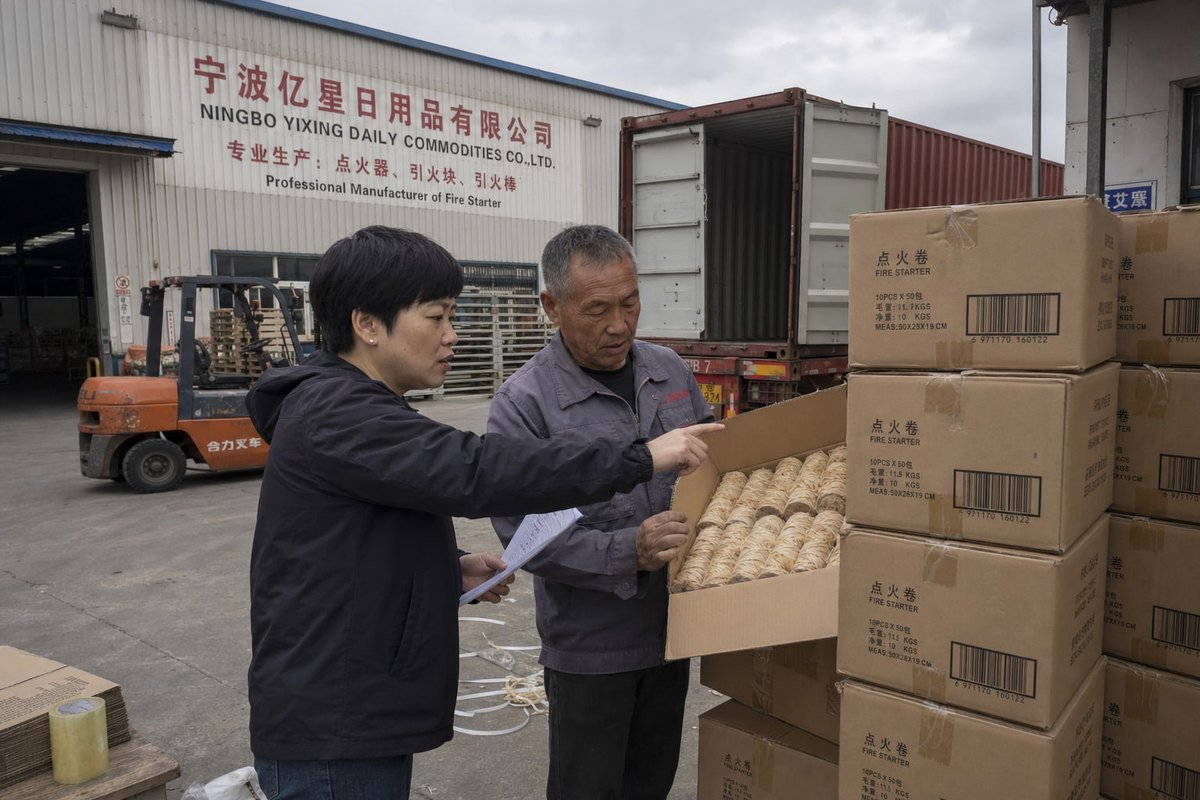
The report is your evidence file. It should include the shipment identification, inspection date and location, the sampling plan used, sample sizes, visual findings with photos, burn test results, pass/fail conclusions against each acceptance criterion, and a list of nonconformities. If any of these elements are missing, push the agency to complete the report before you act on it.
Link the report to your contract terms
Accountability starts before production, not after failure. Write these clauses into your PO:
- Final payment or shipment release is conditional on a passed pre-shipment inspection.
- The AQL levels and the quality control checklist are attached as a contract annex.
- Re-inspection after a failed result is at the supplier's cost.
- The golden sample defines conformity in any dispute.
We accept these terms routinely because we stand behind our production. In my experience, factories that refuse such clauses are pricing in their own defect rates.
The escalation path when a lot fails
| Defect Severity | Example | Recommended Action |
|---|---|---|
| Minor, within AQL | Slight wax color variation on a few units | Accept lot, note in supplier scorecard |
| Major, cosmetic or packaging | Wrong barcodes, damaged retail boxes, missing warning labels | Rework, relabel, re-inspect before loading |
| Major, functional | Burn time below spec, excessive moisture, crumbling rolls | Reject lot, require replacement batch |
| Critical, safety-related | Prohibited accelerants detected, false safety claims | Quarantine lot, demand new batch plus lab retest |
For safety-critical failures, never accept a discount in exchange for shipping the goods. A recalled fire product 7 destroys your brand and your retail relationships. Instead, quarantine the lot and require a fresh production run with corrected inputs.
Finally, use reports over time, not just per shipment. Track defect trends 8 across orders. A supplier whose reports improve is worth a long-term partnership; one whose reports repeat the same defects has a broken process. Serious factories treat your inspection data as free consulting — we certainly do, and it has tightened our own factory audit and QC procedures more than once.
Conclusion
Skipped inspections turn into rejected containers, retail chargebacks, and lost seasons. Arrange third-party inspection early, define clear checkpoints, and partner with factories that welcome scrutiny — ours does.
Footnotes
1. SGS is a globally recognized leader in inspection and verification services for consumer goods. ↩︎
2. The CPSC provides safety guidelines and regulations for combustible products in the United States. ↩︎
3. Wikipedia entry defining the standard pre-shipment inspection process used in international trade. ↩︎
4. Authoritative overview from the European Commission regarding REACH regulations. ↩︎
5. Stable, authoritative alternative to the ISO.org site which frequently blocks automated access. ↩︎
6. Wikipedia overview of acceptance sampling, the statistical method used in AQL-based inspections. ↩︎
7. Official CPSC database for product recalls, highlighting the risks of safety-related defects. ↩︎
8. Provides comprehensive information on the standard tools used to analyze quality and defect trends. ↩︎



 English
  Spanish
  German
  French
  Arabic
  Portuguese
Join the Conversation