






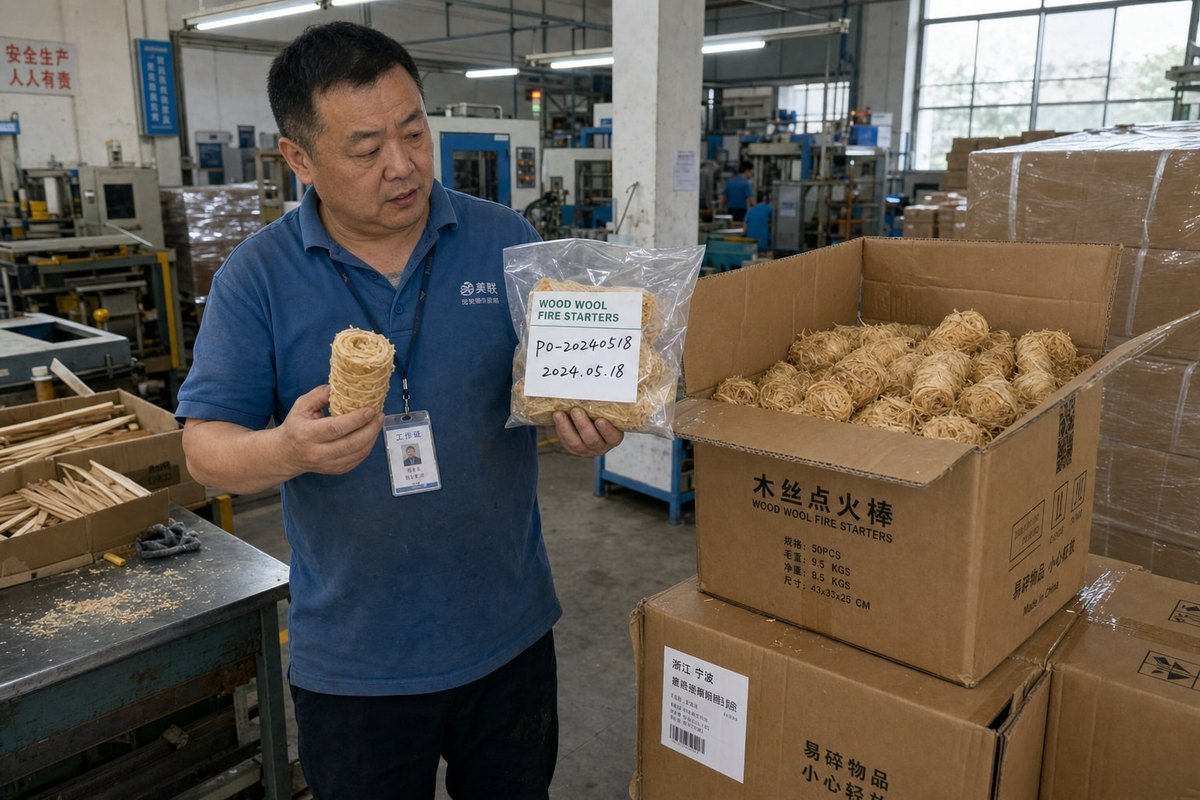
Consistency between samples and bulk production for wood fire starters keeps our production lines honest burn time duration 1. A perfect sample means nothing if the container behind it burns differently, crumbles in transit, or fails your customers.
To ensure consistency between samples and bulk production for wood fire starters, convert the approved sample into written specifications, lock a golden sample, test raw materials, run in-process quality control on moisture and wax ratios, and verify every lot with random batch testing and pre-shipment inspection.
That is the short answer. Now let me show you how each step works in practice, and what you should demand from any supplier before you wire a deposit.
What quality control steps confirm my bulk order will match the approved sample?
A few years back, a German distributor asked me a blunt question during a factory visit: "Your sample is great, but how do I know pallet forty will burn like this one?" Fair point. Our answer was to walk him through our line, step by step corrective action 2.
Five quality control steps confirm bulk matches the sample: golden sample retention, incoming raw material testing, in-process checks on moisture and wax impregnation, random batch testing of ignition and burn time from every production run, and a documented final lot inspection against the written spec.
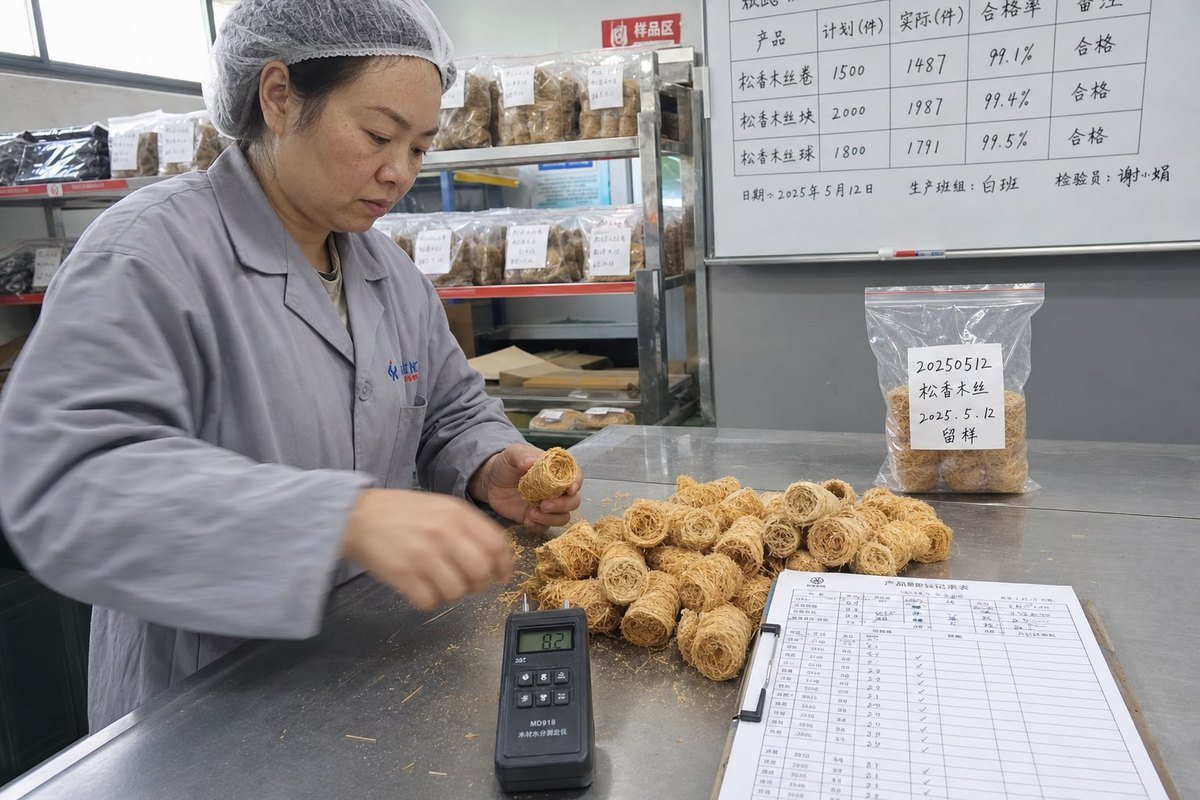
The core idea is simple. A sample is a promise; bulk production is a process. If the process is controlled, the promise holds. If it is not, no amount of sample approval will save your order. In our 17-plus years making wax-dipped wood rolls, we have learned that consistency lives or dies at five control points.
The five control points, in order
First, the golden sample. Once you approve a sample, the factory should seal two or three identical units, label them with the date and your order number, and keep them on file. Every later check compares against these units, not against memory.
Second, incoming material control. Wood wool varies by species, fiber length 3, and moisture. Paraffin varies by melting point. We test raw material procurement lots before they enter production, because variation that enters at the front of the line cannot be fixed at the back.
Third, in-process checks. Moisture content levels are measured before dipping. Wax bath temperature and immersion time are logged so the wax-to-wood ratio 4 stays inside tolerance. Operators follow written SOPs, so "operator style" does not creep into the product.
Fourth, batch testing procedures. From every production run, workers pull random units and actually light them. They record ignition time 5, burn time duration, and structural integrity. One "hero sample" tells you nothing; a statistical pull tells you the truth.
Fifth, final lot inspection against the spec sheet, documented with photos and burn logs.
| Control point | What is checked | How often |
|---|---|---|
| Golden sample | Reference for look, weight, performance | Kept for the full order lifecycle |
| Incoming materials | Wood species, moisture, wax grade | Every material lot |
| In-process QC | Moisture range, wax ratio, dimensions | Continuous, logged per shift |
| Batch testing | Ignition time, burn duration, crumble resistance | Random pulls per run |
| Final inspection | Full spec compliance, packaging, labeling | Before every shipment |
Which certifications should I request to verify consistent production standards?
When we started exporting to the EU and North America, buyers rarely asked for paperwork beyond a sample. Today, purchasing managers at established importers treat certificates and test reports as a hard gate, not a nice-to-have — and they are right to.
Request ISO 9001 for quality management, BSCI for factory audits, CE marking where applicable, third-party SGS or Intertek test reports on burn performance and safety, and EN 1860-3 compliance for barbecue fire lighters sold in Europe. Verify certificate numbers directly with the issuing bodies.
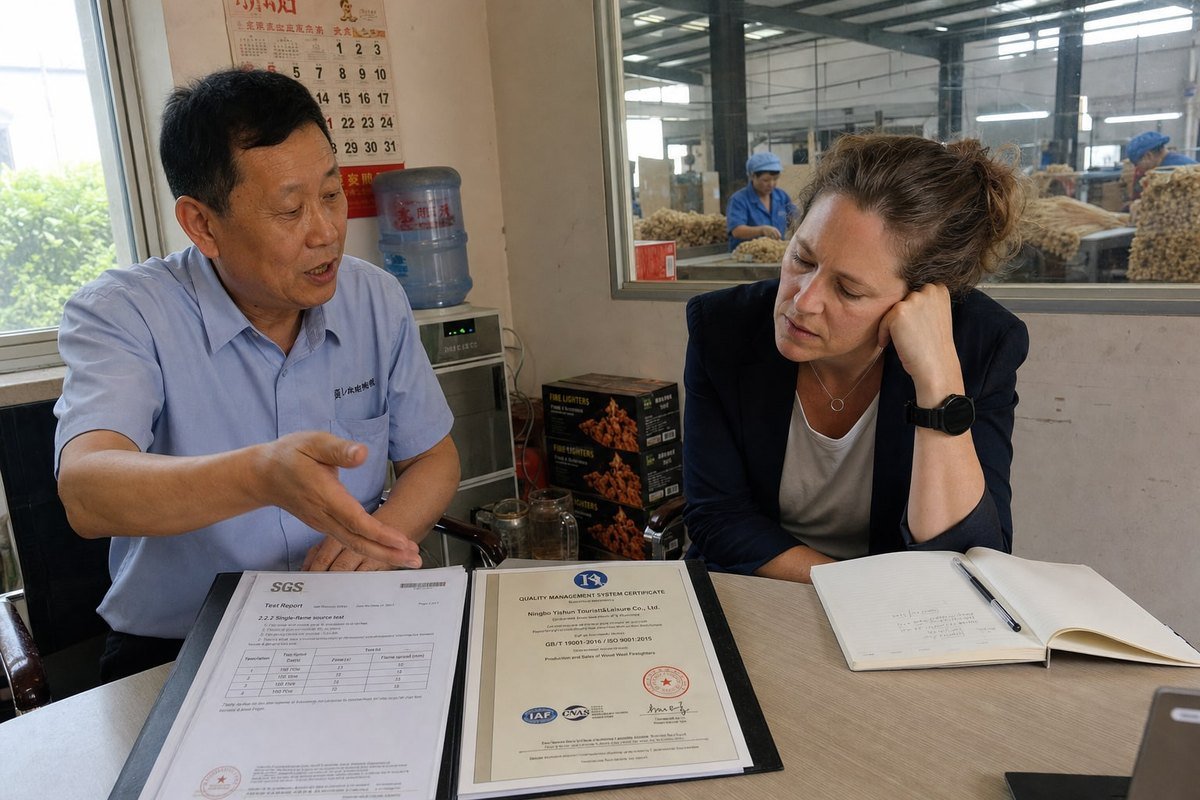
Certificates matter for consistency for one specific reason: they prove the factory runs a documented system, not a workshop that improvises. Anyone can produce one good sample. Only a factory with audited quality control protocols can reproduce that sample ten thousand times.
What each certificate actually tells you
ISO 9001 is the backbone. It certifies that the factory has documented procedures for incoming inspection 7, process control, corrective action, and traceability. When a factory holds ISO 9001 and actually lives by it, the sample-to-bulk gap shrinks because every step has a written standard.
BSCI covers social compliance. It matters for consistency indirectly: audited factories with stable, trained workforces produce more uniform output than factories with high turnover and untrained temporary labor.
SGS and Intertek test reports give you independent, third-party data on the actual product — burn behavior, material composition 8, and the absence of harmful chemicals. Ask that the tested batch is identified by lot number, so the report ties to real production, not a lab-only prototype.
EN 1860-3 compliance is the key European standard for solid fire lighters for barbecues. It sets performance and safety requirements, and buyers selling into Germany, France, or the Netherlands should treat it as non-negotiable.
| Certificate / report | What it verifies | Why it supports consistency |
|---|---|---|
| ISO 9001 | Quality management system | Documented, repeatable processes |
| BSCI | Social compliance and factory audit | Stable, trained production workforce |
| SGS / Intertek reports | Product safety and performance | Independent data tied to real batches |
| CE marking | EU conformity where applicable | Legal market access and defined standards |
| EN 1860-3 | Barbecue fire lighter performance | Standardized burn and safety criteria |
One practical tip from our export experience across 30-plus countries: always ask for the certificate number and check it with the issuer. Fake or expired certificates are common enough that verification of a supplier's production capacity and qualifications is worth ten minutes of your time.
How do I set clear specifications to avoid discrepancies between samples and mass production?
The costliest dispute I ever mediated came down to one missing line on a spec sheet. The buyer assumed a burn time; the old supplier assumed a different one. Nobody had written it down. Since then, our team refuses to start mass production scaling without a signed specification.
Set clear specifications by converting the approved sample into measurable numbers: unit weight and size with tolerances, moisture content range, wax-to-wood ratio, minimum burn time, ignition time limit, acceptable defect rate, and packaging requirements. Both parties sign this document before production begins.
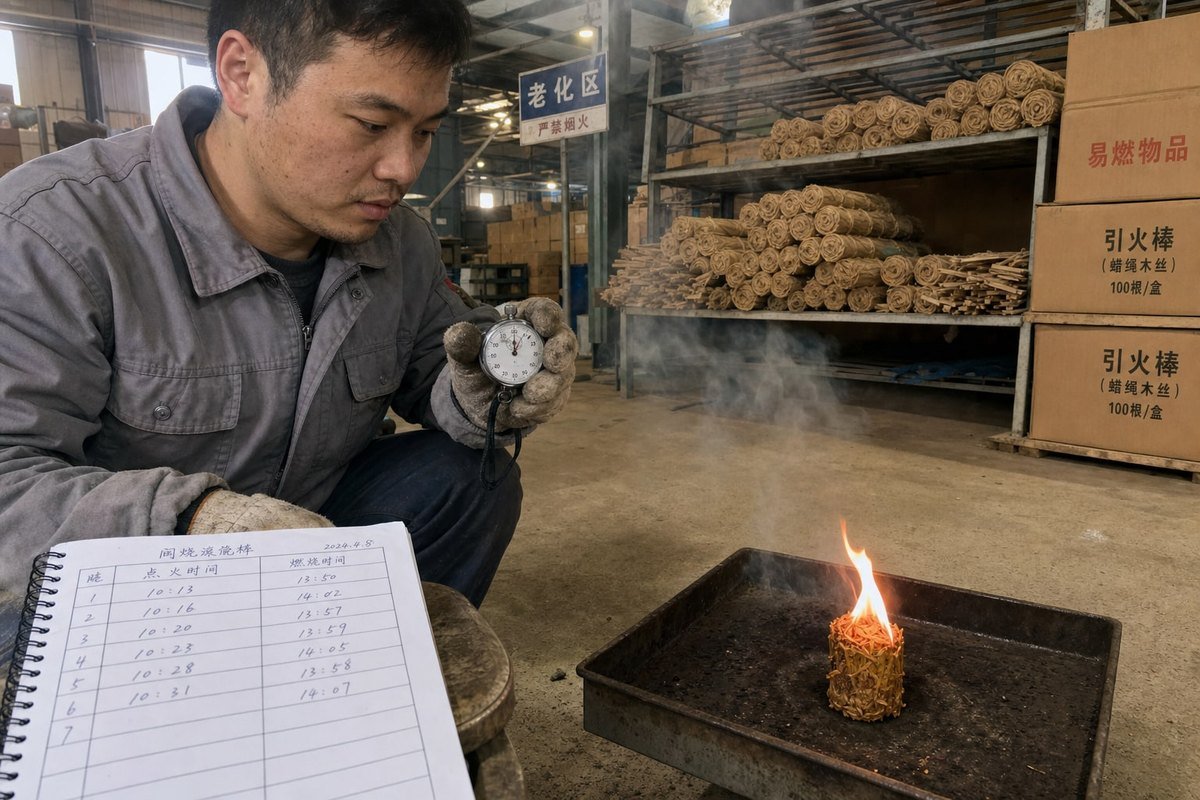
Vague words cause disputes. "Good quality," "burns well," and "similar to sample" mean different things to a buyer in Chicago and a line supervisor in Ningbo. Numbers mean the same thing everywhere. Your job is to turn the sample you approved into a page of numbers with tolerances.
Turn performance into numbers
Start with the attributes your end customer actually experiences. For wax-dipped wood rolls, these are the ones that matter most:
- Ignition time: seconds from flame contact to self-sustaining flame.
- Burn time duration: minimum sustained minutes, enough to light kindling or charcoal.
- Moisture content levels: typically a band around 8% to 12% for the wood base before waxing. Too wet and it will not light; too dry and it turns brittle.
- Wax-to-wood ratio: under-impregnation shortens burn time; over-impregnation adds smoke and cost.
- Weight and dimensions: per unit, with manufacturing tolerances stated as a range, not a single number.
- Smoke, smell, and residue: define what is acceptable, especially for indoor fireplace use.
- Defect rate: an agreed AQL level for crushed, under-waxed, or broken units.
Build in realistic tolerances
Here is a trade-off we discuss openly with buyers. Natural wood wool is not injection-molded plastic. If your tolerances are too tight, the supplier either fails inspections constantly or quietly ignores the spec. If they are too loose, you get visible drift. A workable spec sets a target with a sensible band — for example, unit weight within plus or minus a defined percentage — and a hard floor on burn time, because burn time is what your customer feels.
Finally, add a deviation clause. State in writing what happens if a bulk lot falls outside spec: rework, discount, or replacement. Agreeing on remedies before production is far cheaper than negotiating them after a container lands.
| Spec item | Why it prevents drift |
|---|---|
| Weight and size range | Catches density and forming variation |
| Moisture band | Protects ignition and prevents brittleness |
| Wax ratio target | Locks burn behavior across batches |
| Minimum burn time | Anchors real-world performance |
| Defect rate (AQL) | Defines pass/fail objectively |
| Deviation clause | Sets remedies before problems occur |
What should I include in a pre-shipment inspection to catch inconsistencies before delivery?
One habit our QC team never skips: burning product from the middle of the lot, not just the top cartons. Early in our factory's history, we learned that the easiest cartons to check are also the easiest to make perfect — and the least representative.
A pre-shipment inspection should include random sampling across the whole lot, live ignition and burn-time tests against the golden sample, weight and moisture spot checks, packaging and carton drop tests, batch code and labeling verification, and a documented report with photos before release.
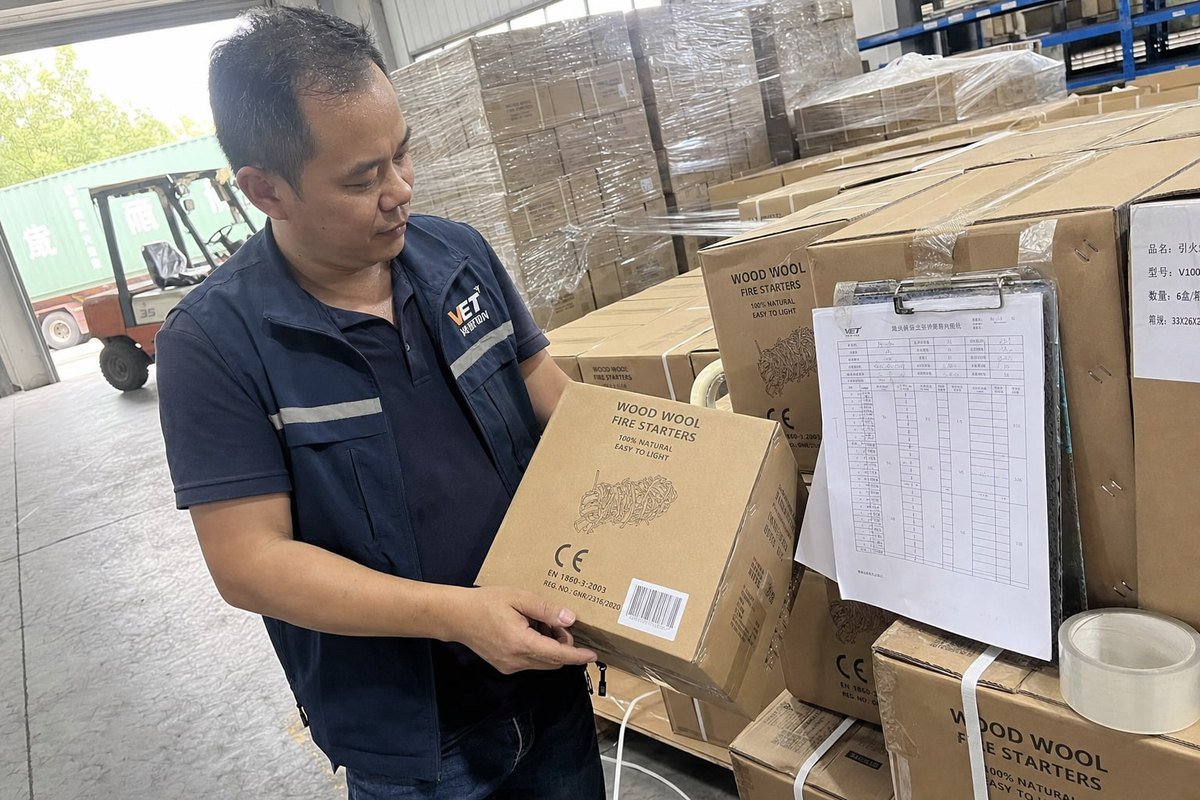
A pre-shipment inspection is your last checkpoint before the goods become your problem. Done well, it catches drift while the factory can still fix it. Done poorly — or skipped — it converts a factory issue into a warehouse full of unsellable stock.
Sample the lot, not the surface
Insist that inspectors pull units from cartons spread across the entire lot: different pallets, different production dates, top and bottom layers. Composite sampling across the shipment is far more reliable than a large pull from one spot, because wood-fiber products can vary run to run. Batch codes and manufacture dates on cartons make this possible; if a lot has no batch traceability, that alone is a red flag.
Test performance, not just appearance
The inspection should repeat the same tests you ran on the approved sample:
- Ignition test — flame contact to self-sustaining flame, compared to the golden sample.
- Burn-time test — full burn of several random units, timed and logged.
- Kindling-transfer check — does the starter actually light representative fuel, not just burn alone?
- Weight and dimension spot checks — against the spec tolerances.
- Moisture spot check — on the wood base where accessible.
- Crumble and compression check — squeeze and handle units to simulate transit stress.
Verify packaging and traceability
Fire starters absorb moisture in transit if packaging fails. The inspector should confirm inner bags or liners are sealed, cartons meet the agreed grade, and a basic carton drop test does not crush or shed the product. They should also verify retail packaging: correct artwork, warning labels, barcodes, batch code, and manufacture date. In our OEM work for camping and BBQ brands, mislabeled retail boxes cause more rejected deliveries than burn failures do — and both are entirely preventable at this stage.
Require a written report with photos and burn logs, and make shipment release conditional on your sign-off.
Conclusion
Consistent wood fire starters come from process, not luck: written specs, golden samples, verified certifications, in-process quality control protocols, and thorough pre-shipment inspection. Demand all five, and your bulk order will match the sample you approved.
Footnotes
1. NIST publication discussing the fire performance and combustion characteristics of wood materials used in production. ↩︎
2. Detailed Wikipedia entry on CAPA, the industry standard for identifying and fixing quality non-conformities. ↩︎
3. Wikipedia entry explaining wood fiber characteristics like length, which affects raw material quality and consistency. ↩︎
4. Wikipedia page describing wax properties, essential for understanding fire starter impregnation ratios and performance. ↩︎
5. Academic resource defining ignition time, a critical performance metric for fire starters and combustion materials. ↩︎
6. Authoritative NIST Engineering Statistics Handbook defining process control and monitoring methods. ↩︎
7. Reliable Wikipedia overview of quality control, including the role of inspection in manufacturing processes. ↩︎
8. Official



 English
  Spanish
  German
  French
  Arabic
  Portuguese
Join the Conversation