






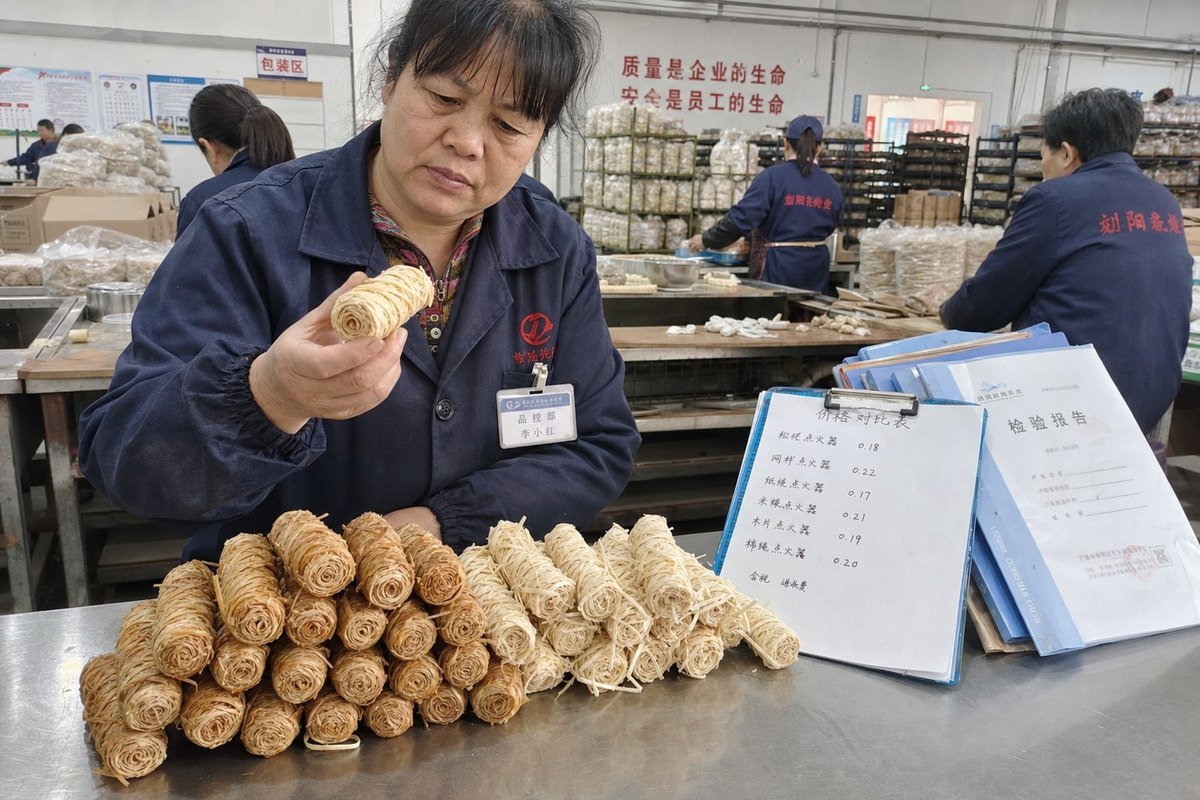
Supplier quotes for wood fire starters can look identical on paper. Yet on our production line, I have seen two "same-spec" rolls burn completely differently. Price alone tells you almost nothing.
To compare quality differences in supplier quotes for wood fire starters, look beyond unit price: verify certifications like EN 1860-3 and ISO 9001, test samples for burn time and moisture resistance, calculate landed cost per fire, and demand evidence of batch-to-batch consistency before ordering.
Below, I break this down into four practical checks. Each one is something a buyer can do before signing a bulk purchase order.
What certifications should I verify before trusting a low quote?
A German distributor once forwarded me a competitor's quote that was 30% below ours. Our export team spotted the problem in minutes: no test reports, no compliance documents, nothing verifiable.
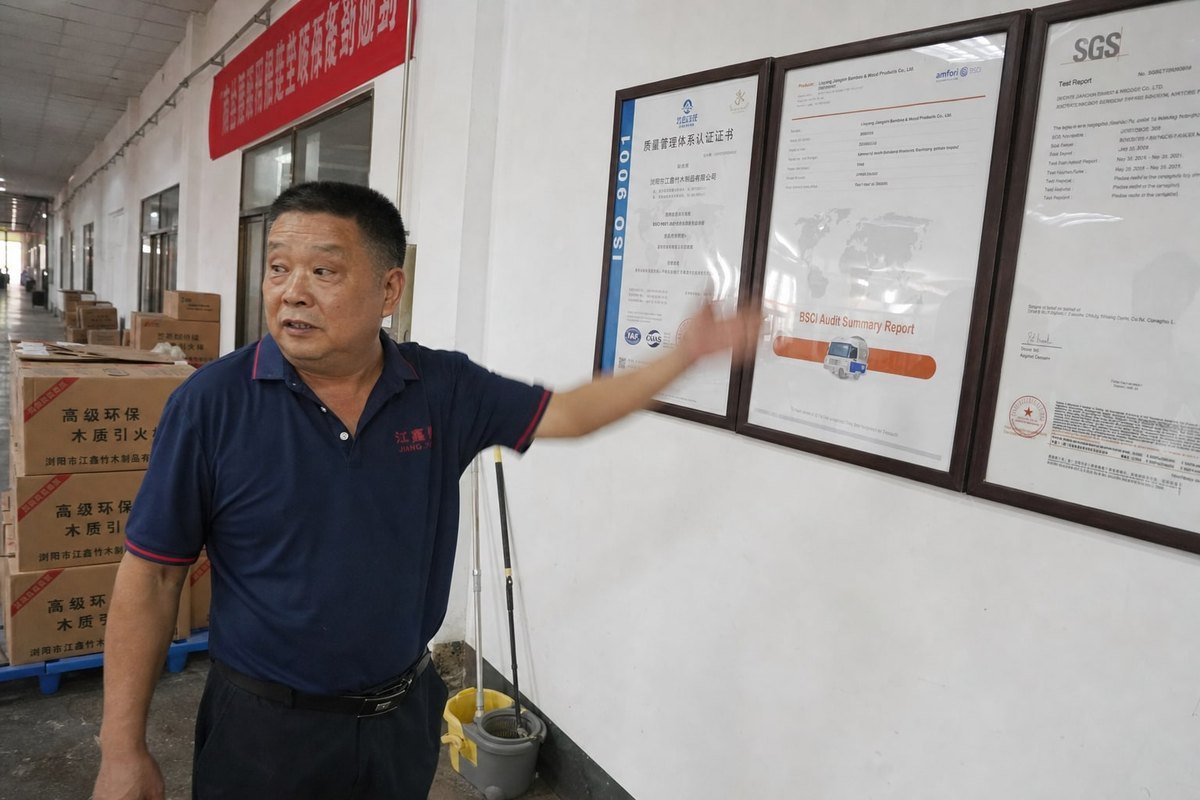
Before trusting a low quote, verify EN 1860-3 for firelighters, ISO 9001 for quality management, SGS or Intertek test reports, BSCI social compliance audits, and FSC certification for wood sourcing. A supplier who cannot show current documents is passing hidden risk to you.

Certifications are not paperwork for its own sake. They are the only way to confirm that a stranger's factory follows real processes. In 17-plus years of exporting fire-starting goods to the US, Germany, the UK, and 27 other markets, I have never seen a serious retail buyer waive compliance. Big-box sourcing channels will simply reject uncertified goods at the door.
The core documents to request
| Certification | What it proves | Why it matters for fire starters |
|---|---|---|
| EN 1860-3 | Firelighter safety and performance standard | Required for BBQ-adjacent sales in much of Europe |
| ISO 9001 | Documented quality management system | Predicts batch-to-batch consistency |
| SGS / Intertek reports | Third-party lab testing of the actual product | Confirms materials match the spec sheet |
| BSCI | Social compliance audit | Protects your brand from supply-chain scandals |
| FSC certified wood | Responsible forestry sourcing | Supports eco-friendly fire starters claims at retail |
| CE marking (where applicable) | EU conformity | Smooths customs clearance and retail listing |
How to verify, not just collect
Ask for certificate numbers and check them with the issuing body. Look at the issue date; an ISO 9001 certificate 1 from six years ago with no renewal is a red flag. Also, confirm the certificate names the actual factory, not a trading company. We keep our SGS and Intertek reports 2 current for exactly this reason: buyers audit us, and they should audit everyone. If a supplier hesitates or offers excuses, the low quote is subsidized by skipped testing. That saving becomes your liability the moment a customs officer, retailer, or insurance adjuster asks for proof.
How can I tell if a cheaper price means lower burn quality?
There is a trade-off we weigh on every quote we issue: wax load versus cost. Cutting the paraffin wax coating by a gram per roll saves real money at scale — and quietly shortens burn time.
A cheaper quote often signals reduced wax content, looser wood wool density, higher moisture content percentage, or filler materials. Compare quotes by cost per burn minute, not cost per piece: a starter that burns eight minutes at $0.15 beats a four-minute starter at $0.10.
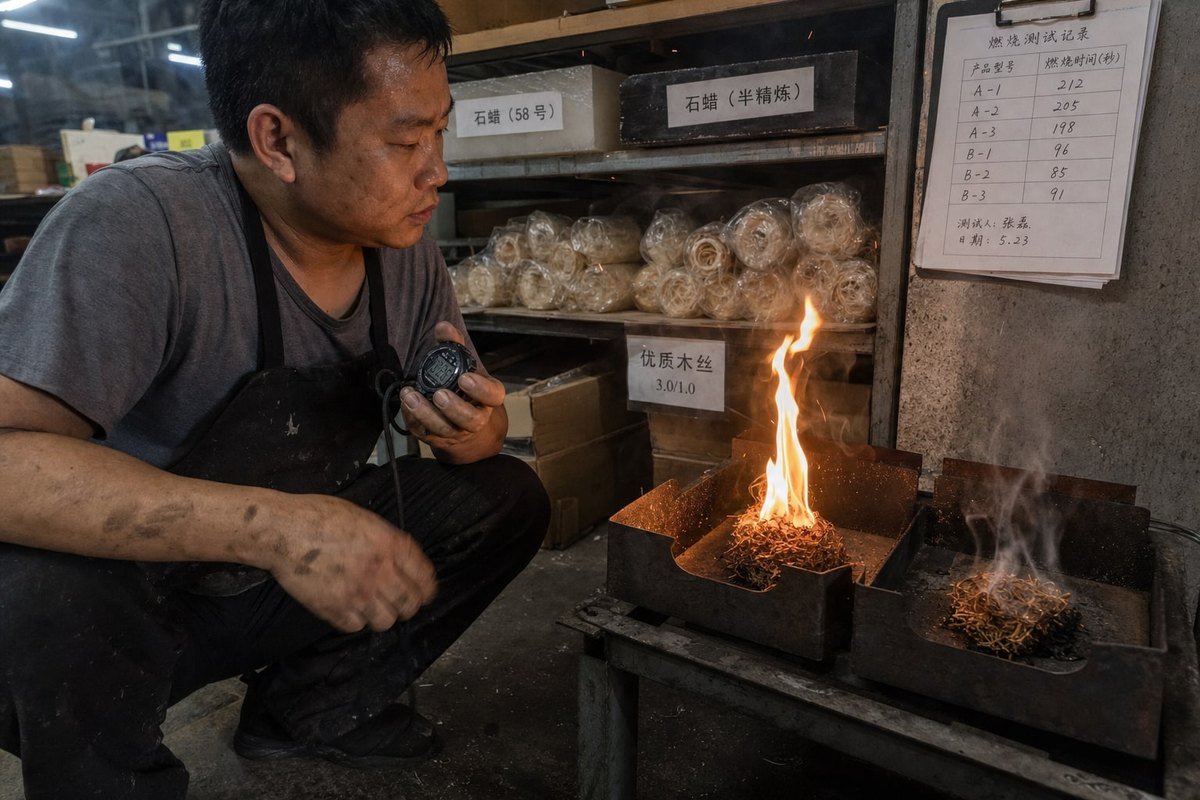
Price differences in this category almost always trace back to materials. Wood fire starters look simple, but four variables drive both cost and performance: fiber quality, wax type and load, density, and moisture. A quote that undercuts the market usually compromises on at least one.
Where cheap quotes hide their savings
- Less wax. A thinner paraffin wax coating cuts burn time duration and weakens moisture protection.
- Loose fiber winding. Low-density wood wool ignites fast but collapses before your kindling catches.
- High moisture. Moisture content percentage above 10% wastes heat evaporating water instead of igniting hardwood.
- Filler content. Sawdust padding or recycled fiber reduces natural resin content and flame stability.
- Product substitution. Understanding wood wool vs fatwood 3 matters here; fatwood relies on natural resin, and inconsistent sap saturation creates dead spots that fail to hold a flame.
Turn price into a value metric
| Quote | Unit price | Average burn time | Cost per burn minute |
|---|---|---|---|
| Supplier A (budget) | $0.08 | 4 minutes | $0.020 |
| Supplier B (mid) | $0.14 | 8 minutes | $0.0175 |
| Supplier C (premium) | $0.20 | 10 minutes | $0.020 |
In this example, the mid-priced quote is actually the best value. Also remember that quoted prices are rarely landed prices. Add freight, duties, and fees to get the true bulk wholesale pricing picture at your warehouse. duties and fees 4 A cheap ex-factory price with poor carton packing can also mean humidity damage in transit — degraded product you paid full freight to import. When we ship to humid markets like Brazil or the Middle East, we seal cartons specifically to hold moisture out, because a fire starter that absorbs water in a container is a fire starter your customer returns.
What sample tests should I request to compare suppliers fairly?
Fair testing is a discipline we push our own buyers toward. When we send samples of our wax-dipped wood rolls, I ask clients to test them side by side with competitors — same kindling, same day, same stopwatch. Anything less produces noise, not data.
Request at least five samples per supplier, then test ignition speed with your intended lighter or ferro rod, time the full burn, run a humidity stress test, check smoke and odor, and inspect ash residue. Score all suppliers on the identical protocol and conditions.
One sample proves nothing. Five samples from the same production run start to show a pattern. Here is the testing sequence I recommend to every purchasing manager, based on how we validate our own batches before export.
A seven-step sample test protocol
- Ignition test. Light each sample with the end customer's likely method — match, lighter, or ferro rod 5. Record ignition speed and whether the flame holds without a second attempt.
- Burn time measurement. Time each piece from ignition to flame-out under similar airflow. Note how evenly the flame spreads; good fiber orientation creates capillary action that pulls the flame through the roll.
- Flame transfer test. Place each starter under identical kindling. The only question that matters: did the fire catch?
- Moisture stress test. Leave samples in a humid space or lightly mist them, wait 24 hours, and retest. Waterproof performance separates camping-grade product from indoor-only product.
- Smoke and odor check. For BBQ and food-adjacent use, low smoke and neutral odor are essential. Petroleum-heavy binders often fail here.
- Ash inspection. Quality starters leave minimal fine ash that will not clump or block airflow in efficient wood stoves.
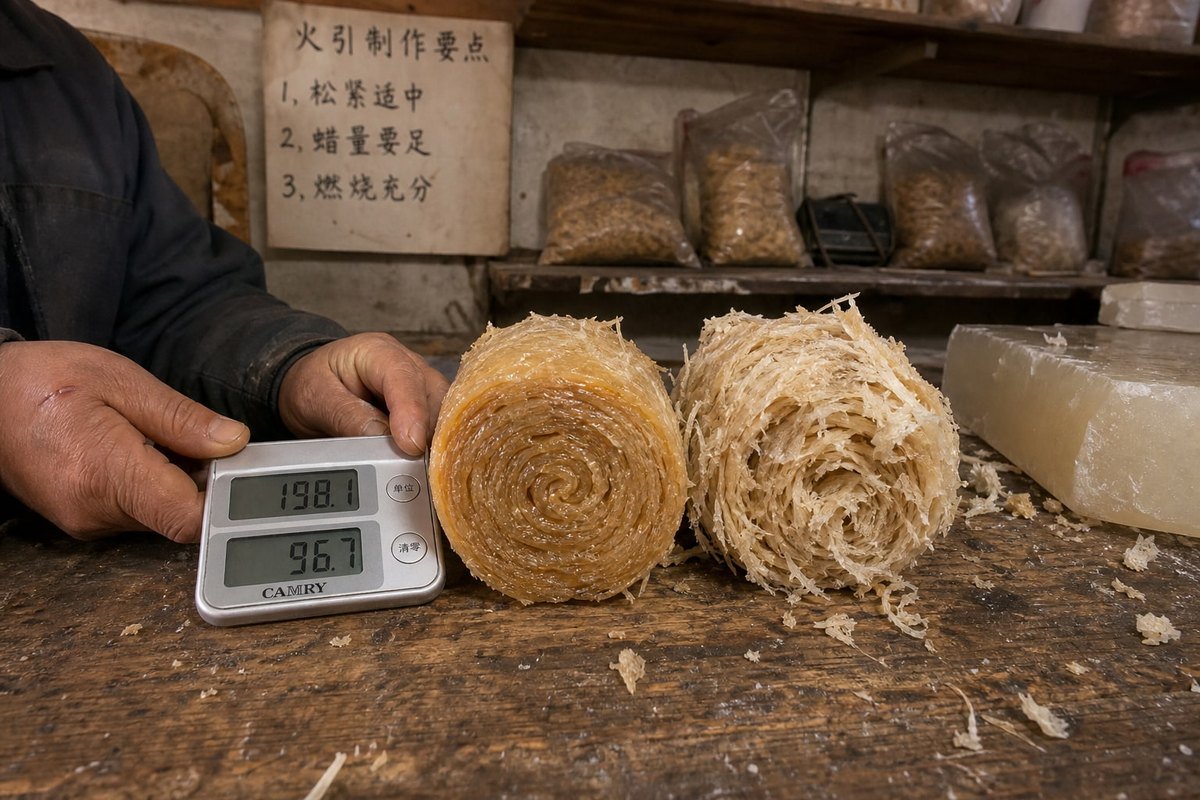
- Physical audit. Weigh and measure every sample. Record wax coverage, winding tightness, and any wax bleeding, then log it all next to the quoted price.
Score what you observe
Weight the results roughly like this: 30% performance, 25% material quality, 15% moisture resistance, 15% compliance documents, 15% landed cost. This forces an honest comparison. In my experience, the cheapest quote rarely wins once burn data sits beside the price column — and buyers who run this protocol almost never regret the order they place afterward.
How do I evaluate a supplier's consistency across mass production batches?
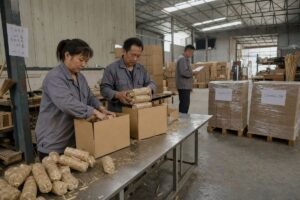
The hardest lesson in this business came early in our factory's history: a beautiful sample means nothing if batch 14 does not match batch 1. That is why we built strict batch-to-batch quality control into our Ningbo production lines management system standards 6 — so the first sample reliably predicts mass-production quality.
Evaluate consistency by requesting multiple samples from different production runs, comparing burn time variance across them, reviewing the supplier's in-line QC records, checking on-time delivery history, and placing a small trial order before committing to full MOQ volumes.
Consistency is where trading companies and weak factories get exposed. A golden sample can be hand-picked. Mass production cannot. So your evaluation should focus on process evidence, not promises.
Signals of real production discipline
| What to check | Strong supplier | Weak supplier |
|---|---|---|
| Samples from different runs | Provides them willingly, burn times within a tight range | Sends one "perfect" sample only |
| QC documentation | In-line checks for wax weight, density, moisture | Vague answers, no records |
| Burn time variance | Small spread across ten pieces | Some pieces burn half as long as others |
| Wax stability | No wax migration in warm storage | Bleeding or sticky cartons in summer |
| Communication | Fast, specific answers in clear English | Slow, evasive, or scripted replies |
| Trial order flexibility | Accepts a smaller first order to prove itself | Pushes full MOQ immediately |
Use a trial order as your final audit
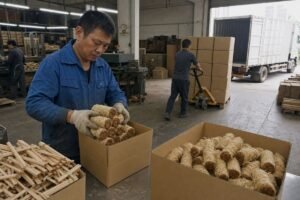
A paid trial order is the cheapest insurance you can buy. Order a modest volume, then randomly pull pieces from different cartons and repeat your burn tests. Compare against your original samples. Check that the private label packaging 7, warning labels, and barcodes arrived exactly as approved — packaging errors are an early warning sign of loose process control. Also stress-test the cartons themselves: moisture-barrier integrity during long-term bulk storage protects the product's performance until it reaches the shelf. When we run OEM programs for outdoor and fireplace brands, we treat the trial shipment as a shared checkpoint. If the trial matches the sample, scale up. If it does not, you lost a small order, not a season.
Conclusion
The cheapest quote is rarely the best one. Compare certifications, tested burn performance, landed cost per fire, and batch consistency — then choose the supplier who proves quality, not just prices it.
Footnotes
1. Official ISO standard reference for verifying quality management certification claims. ↩︎
2. Links to third-party testing body confirming legitimacy of product compliance reports. ↩︎
3. Explains fatwood's natural resin properties relevant to fire starter material comparisons. ↩︎
4. WTO explains import tariffs and duties relevant to calculating true landed cost. ↩︎
5. Background on ferrocerium material used as a common fire starter ignition test tool. ↩︎
6. Stable Wikipedia overview of international management system standards, bypassing the 403 errors on the official site. ↩︎
7. Defines private label concept relevant to verifying packaging accuracy during trial orders. ↩︎

 English
  Spanish
  German
  French
  Arabic
  Portuguese
Join the Conversation