






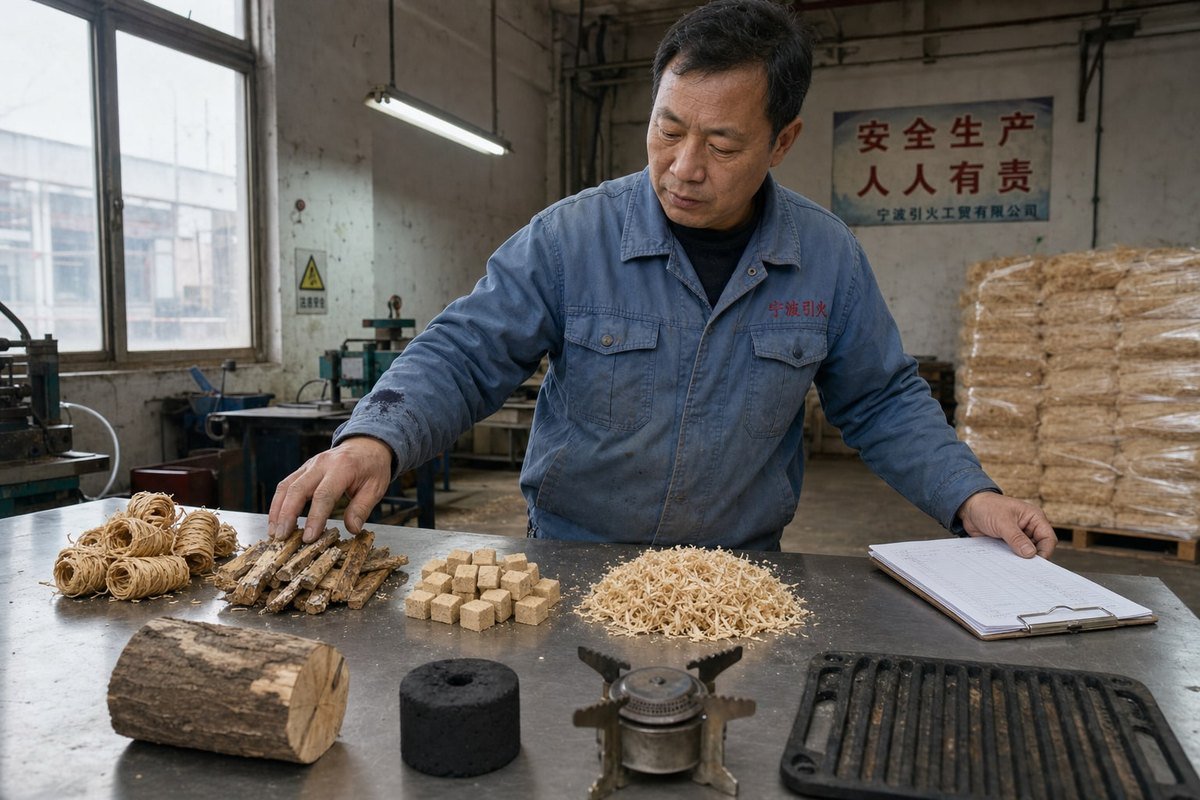
Buyers ask me weekly which wood fire starters they should stock. Many have already lost money on products that failed in damp weather or smoked out a customer's fireplace. On our production line in Ningbo, we have seen why: they chose by price, not by usage scenario. Match the starter to the fire, and returns drop fast.
Choose wood fire starters by matching burn time, weather resistance, and safety to the usage scenario: wax-coated wood wool for fireplaces and grills, resin-rich fatwood for wet outdoor conditions, compact cubes for camping, and chemical-free formats for any cooking application. No single starter fits every scenario.
In this guide, I will break down the four decisions that matter most for B2B buyers: [performance specs](https://sunrichfire.com/how-define-product-specifications-purchasing-wood-fire-starters/), sizing for your channel, certifications, and packaging. Let's start with performance.
What Burn Time and Ignition Speed Do I Need for Different Fire Starter Scenarios?
A German distributor once returned a trial batch to us — not ours, a competitor's — because the starters died in four minutes under oak logs. That lesson shaped how we spec burn time today.
Fire starters need a minimum burn time of 6–8 minutes for dry kindling, 8–15 minutes for dense hardwoods or charcoal chimneys, and even longer for damp fuel. Ignition should catch within 10–20 seconds of match contact; anything slower signals poor wax coverage or high moisture content.
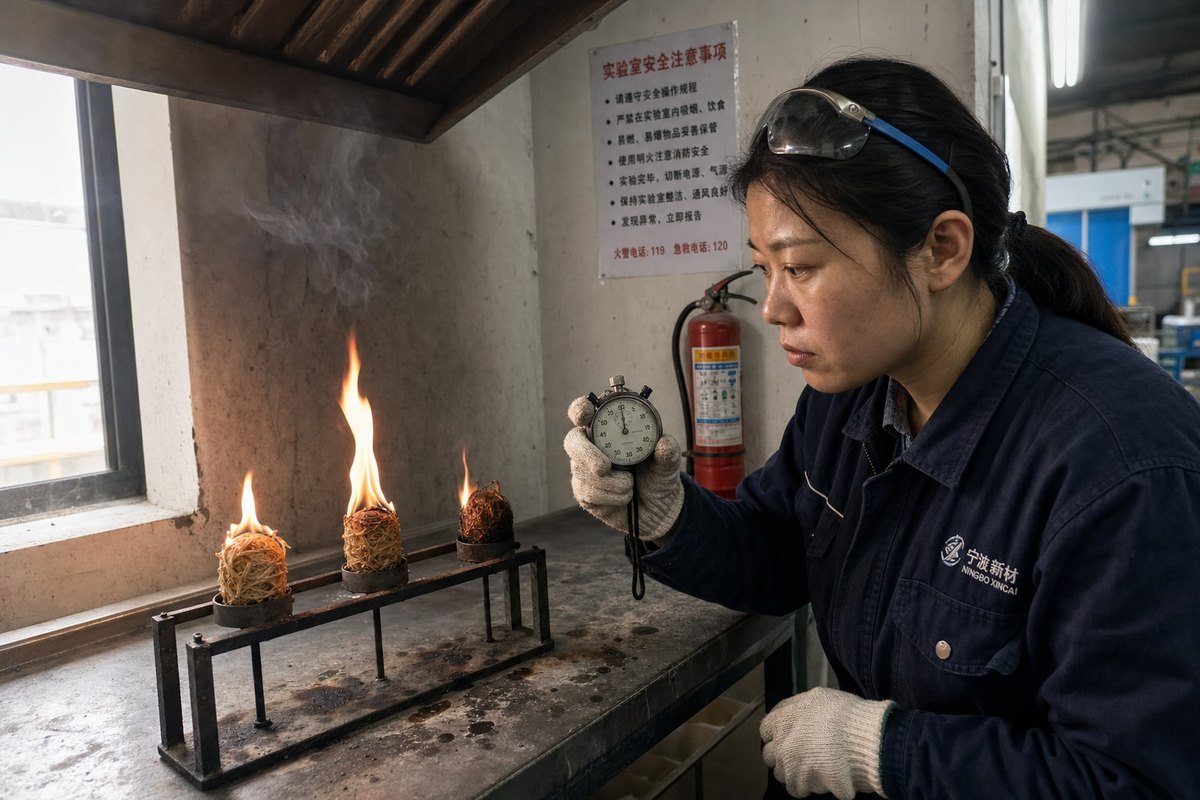
Burn time is not a vanity spec. It is the single number that decides whether a starter transfers enough heat to the next fuel layer. In our factory testing, we time every batch of wax-dipped wood rolls from first flame to burnout, because a starter that ignites fast but dies early is worse than useless — it wastes the customer's kindling and their patience.
Why Fuel Density Changes Everything
High-BTU hardwoods like oak and hickory need sustained heat to reach ignition temperature. Softwoods and dry twigs need far less. Charcoal sits in between, but a chimney starter demands continuous flame from below for the full charge to catch. That is why we tune wax loading differently for fireplace-grade and grill-grade products.
| Scenario | Recommended Burn Time | Ignition Speed Target | Best Format |
|---|---|---|---|
| Indoor fireplace (seasoned firewood) | 6–8 min | Under 15 sec | Wax-coated wood wool rolls |
| Wood stove | 8–10 min | Under 15 sec | Compact wax rolls or compressed sawdust briquettes |
| Charcoal chimney starter 1 | 8–12 min | Under 20 sec | Tumbleweed-style wood wool |
| Fire pit with hardwood logs | 10–15 min | Under 20 sec | Larger wax rolls or fatwood 2 sticks |
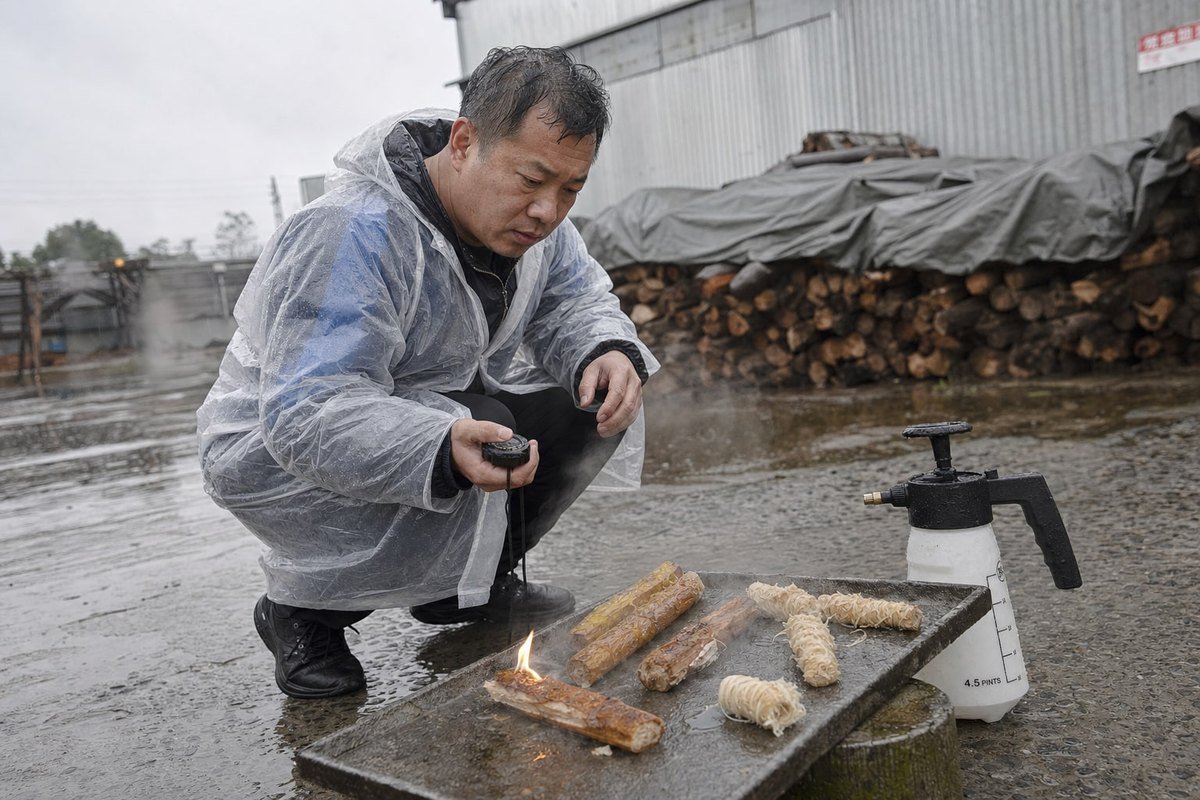
| Wet-weather outdoor use | 12–15+ min | Under 30 sec | Resin-soaked pine or heavy wax coating |
The Moisture Factor
Moisture is the hidden enemy. A starter must not only ignite the fuel; it must first evaporate the water inside it. Damp firewood can double the required burn time. This is why we always advise buyers in rainy markets like the UK and the Netherlands to spec the heavier wax coating, even if unit cost rises slightly. The refund math always favors reliability.
How Do I Match Wood Fire Starter Sizes to Retail vs. Bulk Distribution Channels?
One trade-off we weigh constantly at our Liuyang headquarters: bigger rolls burn longer, but smaller counts sell faster on retail shelves. Getting this balance wrong costs distributors real margin.
Retail channels favor small-count packs of 20–24 compact starters that fit shelf displays and impulse pricing, while bulk distribution suits 100-piece boxes or 144-count cases for fireplace households and hospitality buyers. Roll size should scale up for outdoor and hardwood use, down for camping portability.
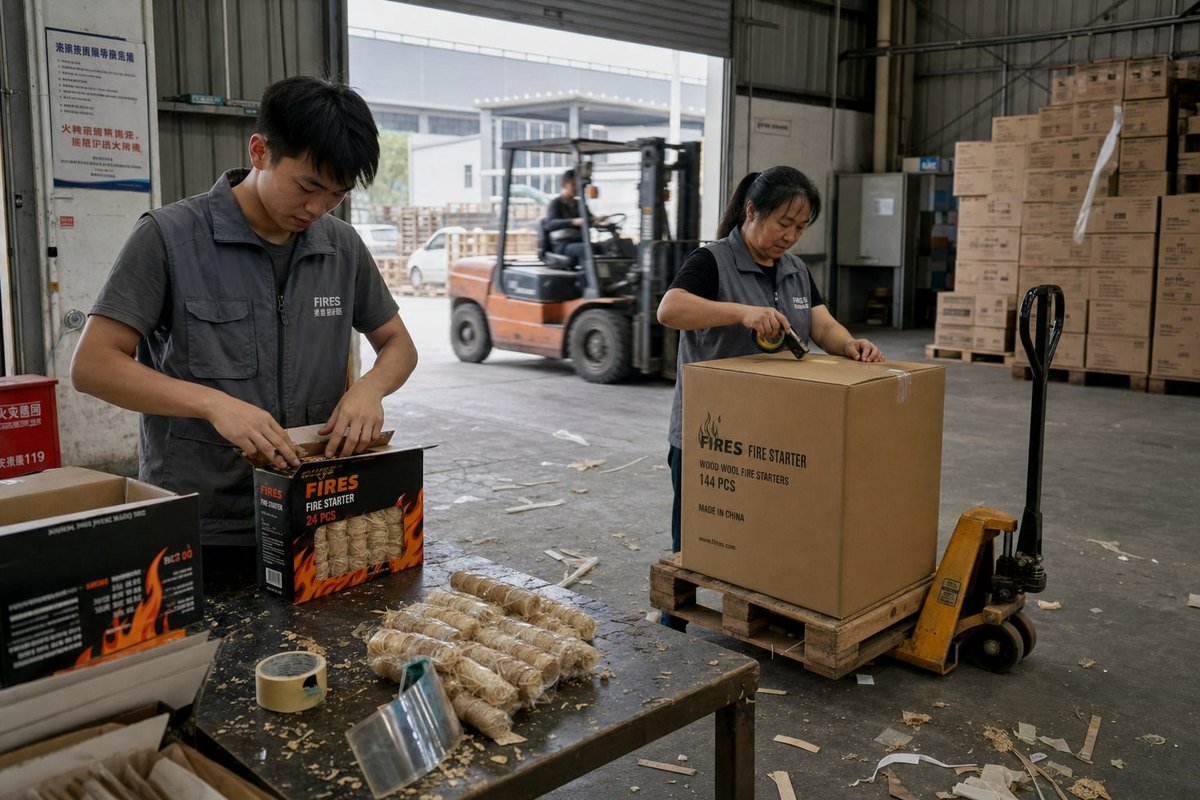
Pack size is a channel decision before it is a product decision. In our experience exporting to 30+ countries, the same wax-coated wood wool roll can succeed or fail purely based on how it is counted and boxed. Let me break down how we advise buyers to think about it.
Retail Shelf Logic
A camping brand buying for outdoor retailers wants a pack that a weekend camper grabs without thinking. That means 20–24 pieces, lightweight, resealable if possible, and priced as an impulse or add-on purchase. The individual rolls should be compact — easy to tuck under a kindling teepee or into a chimney starter. Oversized rolls inflate the pack footprint and push the price point past the impulse threshold.
Bulk and Volume Logic
Fireplace distributors and hospitality suppliers work on different math. A household burning fires weekly through winter goes through 100+ starters a season. That is why our 100-piece boxes are our most requested bulk format. Larger cases also cut per-unit packaging and freight costs, which matters when a Home Depot–type sourcing channel negotiates landed cost per piece.
| Channel | Ideal Pack Count | Roll Size | Typical End User |
|---|---|---|---|
| Camping / outdoor retail | 20–24 pcs | Small, packable | Weekend campers, BBQ hobbyists |
| Grocery / convenience | 24–50 pcs | Standard | Occasional fireplace users |
| Fireplace / stove specialty | 100 pcs | Standard to large | Weekly winter burners |
| Wholesale / importer bulk | 144-count cases and up | Mixed | Distributors, hospitality, resorts |
Trial Orders Matter
We keep MOQs flexible for first orders precisely because channel fit is hard to predict from a spec sheet. Several of our long-term US and Polish partners started with one mixed container to test both retail and bulk formats before committing to a single size strategy.
Which Certifications Should I Verify Before Sourcing Wood Fire Starters for My Target Market?
Early in our export history, a French buyer asked for test reports before even discussing price. That conversation taught us that in Europe, compliance is the entry ticket, not a bonus.
Verify ISO 9001 for quality management, BSCI for social compliance, CE marking for European sale, and third-party SGS or Intertek test reports confirming chemical-free composition. For cooking-adjacent products, demand documentation that the starter contains no petroleum accelerants or synthetic additives that could taint food.
Certifications protect you three ways: they keep your goods clearing customs, they keep retailers willing to list you, and they keep end users safe. I have watched buyers lose entire seasons because a container was held at port over missing documentation. Here is how we recommend structuring your verification process.
A Four-Step Verification Process
- Confirm the factory certificate scope. ISO 9001 3 should cover the actual production site, not a trading office. Ask for the certificate number and verify it with the issuing body. As a factory with production in Ningbo, we hand over these documents on day one because serious buyers always ask.
- Check social compliance. BSCI 4 audits matter to European and North American retailers. If your end customer is a large retail sourcing channel, an unaudited factory can disqualify your listing regardless of product quality.
- Demand product-level test reports. SGS 5 or Intertek reports should confirm the wax and wood composition. This matters most for grill and bbq ignition products, where chemical-free fire lighting is a genuine food-safety issue, not a marketing phrase. Petroleum-based accelerants leave off-flavors and raise contamination concerns.
- Match documentation to the destination market. CE requirements apply to European sale. CE marking 6 US buyers often add warning-label and barcode requirements. We prepare market-specific labeling because a compliant product with a non-compliant label still gets rejected.
The Indoor Air Angle
For fireplace and stove products, buyers increasingly ask about soot and creosote 7. Plant-based waxes and untreated wood wool burn cleaner than heavily petroleum-loaded alternatives, which contribute more chimney buildup over a season. Test reports that document composition give your retail buyers a clean-burn story they can defend.
How Can I Customize Wood Fire Starter Packaging for Camping, BBQ, or Fireplace Buyers?
When we developed our black-and-flame retail box, the design brief came directly from a distributor who needed shelf impact next to established fireplace brands. Packaging is where scenarios become sales.
Customize packaging by scenario: rugged, resealable, weather-resistant packs for camping; food-safe messaging and grill imagery for BBQ buyers; premium boxes with clean-burn claims for fireplace customers. Private-label options should include custom sizes, burn times, warning labels, barcodes, and display-ready cartons.
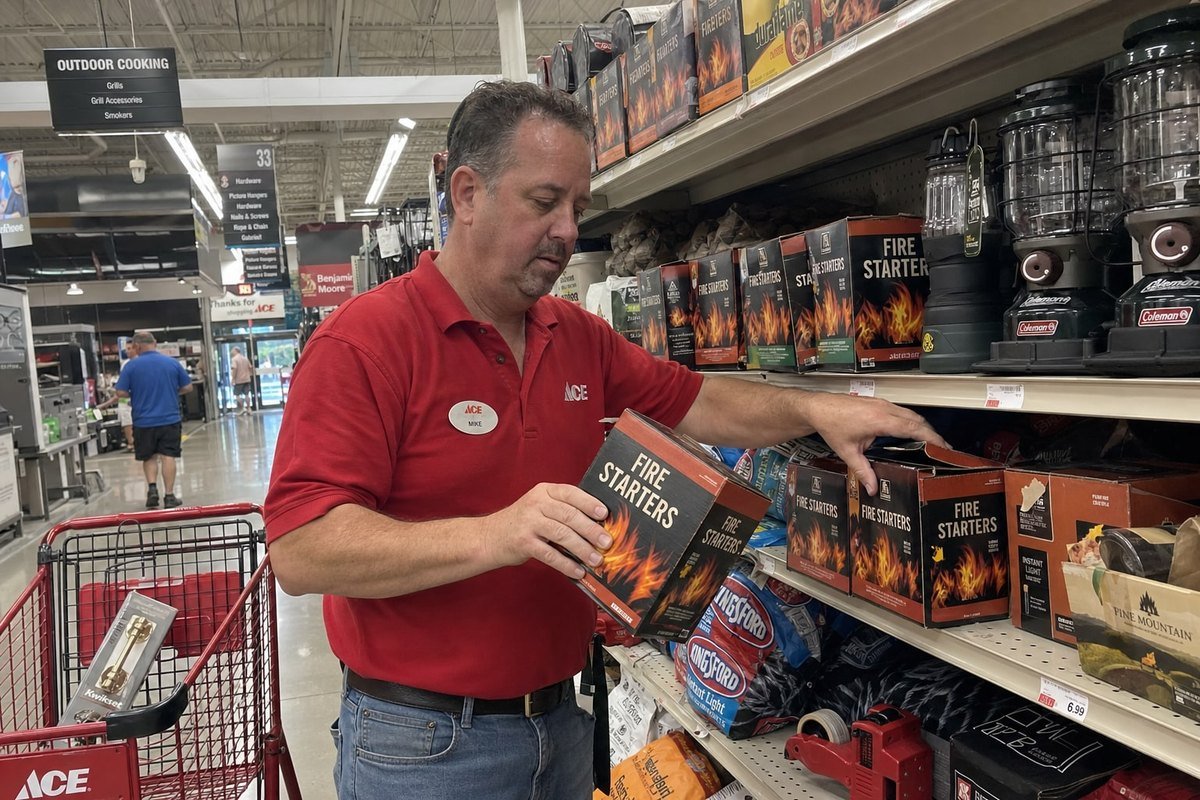
Packaging does two jobs at once. It protects wax-coated wood wool from moisture and crushing during transit, and it tells the end user which fire this product was made for. In our OEM and ODM work, we treat those jobs as inseparable. Here is how the three main buyer scenarios diverge.
Camping and Outdoor Packs
Campers care about weight, weather, and speed. Packaging should be compact, tear-resistant, and ideally resealable so an opened pack survives a damp tent. Kraft-bag formats with clear piece counts work well here. Messaging should lead with fast ignition and wet-weather reliability — the same qualities that make resin-soaked pine and fatwood sticks trusted in this segment.
BBQ and Grill Packs
For grill and bbq ignition, food safety is the headline. The pack must state clearly that the starters are natural and chemical-free, because grillers know lighter fluid taints food. Imagery of a chimney starter or charcoal bed signals the use case instantly. We also recommend printing simple usage steps, since many charcoal users are switching away from fluid for the first time.
Fireplace and Hearth Packs
Fireplace buyers respond to a premium, cozy aesthetic and clean-burn claims. Larger counts, sturdy display boxes, and low-smoke messaging fit this channel. Pairing starters with thin kindling sticks in a gift-style set performs well in Q4, especially in German and UK markets where hearth culture runs deep.
| Buyer Scenario | Packaging Priorities | Key Message | Format We Recommend |
|---|---|---|---|
| Camping | Lightweight, resealable, moisture-resistant | Fast, reliable ignition anywhere | Kraft bag, 20–24 pcs |
| BBQ / grilling | Food-safe claims, usage steps | Chemical-free, no off-flavors | Box or jar, 24–50 pcs |
| Fireplace / hearth | Premium look, display-ready | Clean, low-smoke burn | Retail box, 100 pcs |
Every element — box art, warning labels, barcodes, inner counts — is customizable on our lines, and we hold private-label print quality to the same batch-to-batch tolerance as the product itself.
Conclusion
Mismatched fire starters cost distributors returns, shelf space, and trust. The fix is simple: spec burn time by scenario, size packs by channel, verify certifications, and tailor packaging. After 17+ years supplying compliant, private-label wood fire starters to 30+ countries, we can help you get all four right from the first sample.
Footnotes
1. Background reference explaining the chimney starter device discussed for charcoal ignition. ↩︎
2. Background concept explaining resin-rich fatwood material referenced as a fire starter format. ↩︎
3. Official ISO reference for the quality management certification standard mentioned in article. ↩︎
4. Official body for BSCI social compliance audits referenced for retail sourcing verification. ↩︎
5. Official testing organization referenced for third-party product composition verification. ↩︎
6. Background explanation of CE marking requirement referenced for European market sale. ↩︎
7. Wikipedia background on creosote buildup mentioned regarding chimney and indoor air concerns. ↩︎



 English
  Spanish
  German
  French
  Arabic
  Portuguese
Join the Conversation