







Brand owners often ask us whether GPSR manufacturer safety responsibilities for wood fire starters land on them or on our production line EU Regulation 2023/988 1. Getting this wrong can freeze shipments at EU customs — or worse, trigger a forced recall under your trademark. After 17 years shipping wax 2-dipped wood rolls into Germany, France, and the Netherlands, I can tell you the answer surprises most buyers.
Yes. Under GPSR (EU Regulation 2023/988), a brand owner who sells wood fire starters under its own name or trademark is legally treated as the manufacturer. That means the brand owner — not the factory — carries the core duties: risk assessment, technical documentation, safety labeling, traceability, and incident reporting.
That single legal point changes how you should manage your supplier relationship. Let me walk you through what to demand, verify, and document — step by step.
What GPSR Compliance Documents Should I Require From My Wood Fire Starter Manufacturer?
Last year, a Dutch distributor sent our compliance team a two-page document checklist before placing a trial order of private-label firestarters. Honestly, that checklist was smarter than most contracts I see.
Brand owners should require a product risk assessment, a complete technical file, SGS or Intertek test reports, EN 1860-3 conformity evidence, REACH declarations for waxes and binders, batch traceability records, safety data sheets, and label artwork showing warnings, composition, and the responsible EU contact address.

Here is the practical problem. Under EU Regulation 2023/988 3, if you private-label the product, market surveillance authorities will knock on your door, not your factory's. So every document you collect now is a document you will not scramble for later. When we prepare export files for our wax-dipped wood rolls, we build the package around what German and French authorities actually request during spot checks.
The Core Document Package
Ask for these before your first purchase order, not after:
| Document | What It Proves | Retention Period |
|---|---|---|
| Internal product risk assessment | Ignition, burn, and misuse hazards were analyzed | 10 years minimum |
| Technical documentation (technical file) | Design, composition, test basis for safety | 10 years minimum |
| Third-party test reports (SGS/Intertek) | Independent verification of burn behavior | Duration of sales + 10 years |
| EN 1860-3 4 conformity evidence | Presumption of conformity for firelighters | Ongoing |
| REACH compliance declaration | Wax, paraffin, and binders contain no restricted substances | Ongoing |
| Batch/lot coding records | Traceability 5 from raw material to shipped carton | Per batch |
| Label and packaging proofs | Warnings, composition, and contact details are correct | Per SKU |
Why the Technical File Matters Most
The technical file is the backbone. It should describe the product — for example, wood wool wound rolls dipped in paraffin — list the composition percentages, and reference the standards used for conformity assessment. If an authority in Poland or France asks you to produce it within days, "the factory has it" is not an acceptable answer. You are the manufacturer of record. Insist on receiving a copy you control, in English, updated whenever the formulation or supplier of wax changes.
How Can I Verify My Supplier's Safety Testing Meets EU Market Requirements?
A UK buyer once forwarded us a competitor's "test certificate" and asked if it looked right. It was a one-page scan with no report number, no lab accreditation mark, and no test method cited. That is a red flag we see far too often.
Verify testing by confirming the lab is accredited (SGS, Intertek, TÜV), the report number is traceable directly with the lab, the tested sample matches your actual SKU and formulation, the cited standard is EN 1860-3, and the report date reflects the current production version.

Paper is cheap. Verification is what protects you. When our clients audit us, we encourage them to contact the testing lab directly using the report number — reputable labs confirm authenticity within a day or two. Here is a simple process you can follow with any supplier of wood fire starters.
A Five-Step Verification Process
- Check lab accreditation. The report should come from a recognized body such as SGS or Intertek. Anonymous or in-house-only "certificates" carry no weight with market surveillance authorities 7.
- Trace the report number. Contact the lab and confirm the report exists, is unmodified, and covers the product described.
- Match the sample to your SKU. A report for a 30-gram roll does not cover a 50-gram roll with a different wax ratio. Composition changes — say, from 50% wood fiber and 50% paraffin to a new blend — require retesting.
- Confirm the standard cited. For firelighters, EN 1860-3 is the harmonized reference. Testing to this standard gives a presumption of conformity under GPSR, which meaningfully lowers your legal exposure.
- Check the date and revision. A report from four years ago on a discontinued formulation is stale evidence. Ask when the product was last retested and whether raw material suppliers changed since.
What EN 1860-3 Actually Covers
The standard addresses ignition behavior, burn characteristics, and labeling of solid firelighters. It is not the only relevant framework — REACH compliance for chemical content and general GPSR risk assessment duties still apply on top. A supplier who understands all three layers, not just one, is the supplier you want. In our own factory, we treat batch-to-batch consistency as part of compliance: a passing test report means little if production drifts from the tested sample.
What Liability Risks Do I Take On When Private-Labeling Wood Fire Starters?
There is a trade-off we discuss openly with every OEM client during private-label onboarding: putting your brand on our box gives you margin and market identity, but it also puts your name at the top of the regulatory chain.
Private-labeling makes you the legal manufacturer under GPSR. You assume direct liability for product safety failures, recall costs, incident reporting duties, and regulatory penalties. Contractual indemnity from your factory does not remove this regulatory responsibility — authorities hold the trademark holder primarily accountable.

The most dangerous misconception in this industry is "the factory is responsible, not the brand." Under the GPSR's expanded definition of economic operators, whoever markets the product under their own name or trademark steps into the manufacturer's shoes. Your indemnity clause with a factory in China may help you recover costs in a commercial dispute later — but it does nothing when a German market surveillance authority demands your technical file within 10 days.
Where Liability Sits in Common Business Models
| Business Model | Who Is the Legal Manufacturer? | Your Practical Exposure |
|---|---|---|
| Factory brand, you distribute | The factory | Distributor duties only — verify labeling and traceability |
| Private label under your trademark | You, the brand owner | Full manufacturer duties: risk assessment, technical file, reporting |
| Non-EU brand owner with EU importer | You, plus importer has separate duties | Manufacturer status still attaches to you; importer does not absolve you |
| Marketplace seller under own brand | You | Full manufacturer duties plus platform compliance checks |
The Specific Risks for Fire Starters
Wood fire starters are ignition products. Foreseeable risks include burns during lighting, unexpected flare-up from wax composition, and misuse scenarios — modern product risk assessment must even consider storage near wood-burning stoves or use in poorly ventilated apartments. If an incident occurs and you cannot show a documented risk analysis, your negligence exposure multiplies. Add to that the reporting duty: serious incidents must be notified through the EU Safety Business Gateway, and you need a working consumer complaint channel. We build batch coding into every private-label run precisely so our clients can isolate a single production lot instead of recalling an entire year of inventory.
Which Certifications Should I Confirm Before Importing Fire Starters Into the EU?
Something we learned early in exporting to 30+ EU markets: buyers who confirm certifications before the deposit ship on time; buyers who leave it until pre-shipment inspection lose weeks arguing over labels.
Confirm EN 1860-3 test reports, REACH compliance declarations for wax and binders, accredited third-party reports from SGS or Intertek, the supplier's ISO 9001 and BSCI status, GPSR-compliant safety labeling in local languages, and appointment of an EU-based Responsible Person before importing.
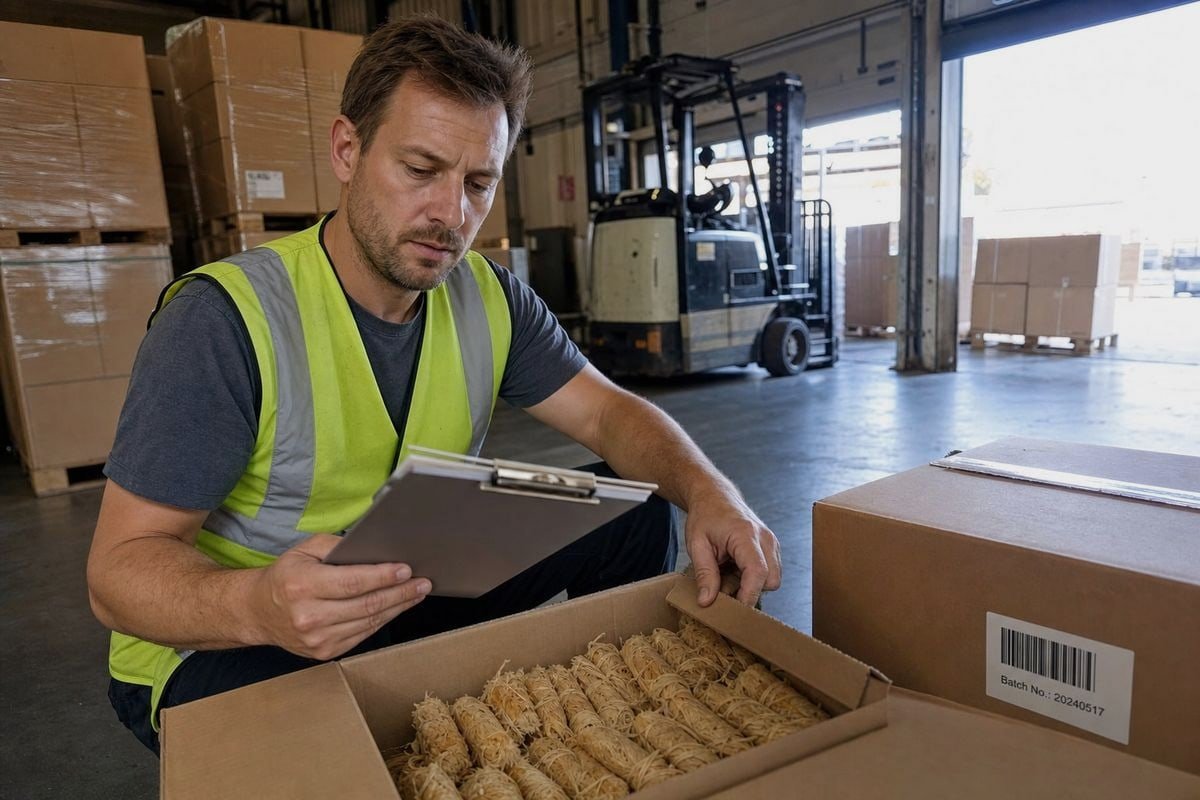
Firelighters are not CE-marked products in the way toys or electronics are, so the compliance picture is easy to misjudge. Instead of a single mark, you are assembling a stack of evidence layers. Each one answers a different question an authority might ask.
The Certification Stack, Layer by Layer
| Layer | Requirement | Question It Answers |
|---|---|---|
| Product safety | EN 1860-3 conformity evidence | Does the firelighter ignite and burn safely? |
| Chemical safety | REACH compliance for paraffin, waxes, binders | Are restricted substances absent? |
| Factory quality | ISO 9001, BSCI audit status | Can the factory produce consistently and ethically? |
| Independent verification | SGS/Intertek test reports | Has an accredited lab confirmed the claims? |
| Labeling | Product safety labeling with warnings, composition, batch code | Can consumers use it safely and can it be traced? |
| Market access | EU Responsible Person appointed and named on packaging | Who answers to authorities inside the EU? |
Three Points Buyers Underestimate
First, language. Safety information must appear in the official language of each Member State where you sell. Selling in Germany, France, and Poland means three language versions — many brands now use QR codes linking to digital multilingual instructions to keep small firestarter packaging clean, though core warnings must still be printed.
Second, "natural" claims. Even eco-friendly, bio-based fire starters made from wood wool and wax face full chemical scrutiny. A "100% natural" tagline does not exempt binders or wax coatings from REACH review.
Third, the Responsible Person. If your company sits outside the EU, GPSR requires an EU-established economic operator — an authorised representative, importer, or fulfilment provider — named on the product before it can be placed on the market. No Responsible Person means no legal market access, regardless of how good your test reports are.
Conclusion
If your name is on the box, GPSR makes you the manufacturer. Demand documentation, verify testing, secure your EU Responsible Person — and partner with a factory that treats compliance as standard.
Footnotes
1. Official EU legal text defines manufacturer duties referenced throughout the compliance document section. ↩︎
2. Background reference on paraffin wax, the key material used in wood fire starter formulations. ↩︎
3. Provides authoritative background on the core GPSR regulation referenced throughout the article. ↩︎
4. CEN publishes the harmonized EN 1860-3 standard governing firelighter safety testing. ↩︎
5. WTO technical barriers to trade page relevant to international product traceability and compliance obligations. ↩︎
6. Wikipedia overview of product safety concepts underlying GPSR obligations discussed in the article. ↩︎
7. EU Commission page explaining the role of market surveillance authorities enforcing product safety rules. ↩︎


 English
  Spanish
  German
  French
  Arabic
  Portuguese
Join the Conversation