







Balance payment terms on wood fire starter orders trip up many first-time importers Bill of Lading 1. I've watched buyers wire deposits, then panic when the balance invoice arrives with no clear trigger date attached.
Schedule balance payment terms by paying a 30–50% deposit via Telegraphic Transfer to confirm the order, then releasing the balance against a clear event—typically a passed pre-shipment inspection or the Bill of Lading copy—rather than a vague calendar date, so payment always matches verified progress.
That single sentence covers the core principle. But the right structure changes with order size, supplier trust, and season Intertek 2. Let me walk you through each decision point.
What Payment Structure Should I Expect for a Wood Fire Starter Order?
A German distributor once asked me why our proforma invoice split payment into two lines. He assumed one lump sum was normal. In our export business, it almost never is.
Expect a two-stage structure: a 30% deposit due when you sign the proforma invoice, and the 70% balance due before shipment or against shipping documents. Custom private-label orders often shift to 50/50 because tooling and printed packaging are produced upfront.

The deposit is not just insurance for the factory. On our production lines in Ningbo, the deposit funds real spending before your goods exist: wood wool, paraffin wax, printed retail boxes, and warning labels. The more customization you request, the more the supplier spends early, and the more front-loaded the schedule becomes. That is why a stock-item order and a private-label order rarely carry identical terms.
Common Structures by Order Type
| Order Type | Typical Deposit | Balance Trigger | Why It Works |
|---|---|---|---|
| Small trial order (stock items) | 100% prepaid | N/A | Low value, not worth split payments |
| Standard wholesale order | 30% T/T | Balance before shipment | Balances risk for both sides |
| Custom / private-label order | 50% T/T | Balance after pre-shipment inspection | Deposit covers custom packaging costs |
| Repeat trusted buyer | 20–30% T/T | Balance against B/L copy or Net 30 | Trust earned through payment history |
Why the Last Line Is Always the Balance
A clean payment schedule ends with one unambiguous line: the balance, stated as an exact amount with an exact trigger. When we issue a proforma invoice, we state the deposit amount, the balance amount, the currency, the bank details, and the event that makes the balance due. Vague wording like "balance later" causes disputes. Precise wording prevents them.
One more point: payment structure and shipping terms interact. Under FOB shipping terms 3, the supplier controls the goods until they are loaded, which is exactly why "balance before shipment" is the most common trigger in this industry. The structure follows the logistics, not the other way around.
How Do I Know When the Balance Payment Is Actually Due?
Early in our export history, we learned a hard lesson: a contract said "balance on completion," and the buyer and our team disagreed on what "completion" meant. We now define triggers in writing, every time.
The balance is due when the contractually defined trigger event occurs—most commonly production completion confirmed by photos, a passed pre-shipment inspection, or presentation of the Bill of Lading copy. The proforma invoice or bulk purchase agreement should name this event explicitly, with a payment window such as 5 banking days.

Ambiguity is the real enemy here, not bad faith. Most payment disputes I have seen in seventeen-plus years of exporting were not about anyone trying to cheat. They were about two parties reading the same sentence differently. So the fix is procedural: pick a trigger, define the evidence, and set a payment window.
The Four Standard Balance Triggers
- Production completion. The supplier sends dated photos or video of finished, packed goods. Balance is due within an agreed number of days. This is fast but relies on trust in the evidence.
- Passed pre-shipment inspection. A third party (SGS 4, Intertek, or your own agent) verifies quality. Balance releases on the inspection report. Strongest option for buyers.
- Bill of Lading copy. The supplier ships under FOB shipping terms, then emails the B/L copy. Balance is due before the original documents or telex release are handed over. This means goods are already on the water before you pay.
- Net terms after delivery. Net 30 credit terms from the invoice date. Common only for established relationships or when a Letter of Credit 5 or trade assurance mechanism backs the transaction.
Match the Trigger to the Season
Wood fire starters are seasonal. Peak retail demand hits September and October in our main markets across the US and Europe. Smart buyers negotiate balance dates that land just before their own revenue season begins, so cash outflow aligns with inflow. We accommodate this when production is booked early, because wholesale manufacturing lead time in July and August is our tightest window of the year. If you want seasonal payment alignment, raise it at the quotation stage, not after production starts.
Whatever trigger you choose, write down three things: the event, the proof required, and the number of banking days you have to pay after the proof arrives. That converts a fuzzy promise into an enforceable schedule.
Can I Tie My Balance Payment to Pre-Shipment Inspection Results?
Buyers sometimes ask this question cautiously, as if it might offend us. It never does. Our QC team actually prefers inspected shipments, because a third-party report protects both sides equally.
Yes, and you should. Structure the contract so the balance becomes due only after a passed pre-shipment inspection, with defined pass/fail criteria such as burn time, wax coating consistency, packaging accuracy, and carton labeling. Reputable factories accept this readily; resistance to inspection is itself a warning sign.

An inspection-linked balance is the cleanest risk control available to an importer of physical goods. But it only works if the inspection criteria are agreed upon before production, not invented on inspection day. When buyers inspect our wax-dipped wood rolls, we agree on checkpoints in advance: ignition reliability, burn duration against the confirmed spec, wax coverage, moisture level of the wood wool, retail box print quality, barcode scannability, and correct warning labels for the destination market.
What a Fire Starter Inspection Should Cover
| Checkpoint | What Is Verified | Why It Matters for Payment |
|---|---|---|
| Ignition and burn time | Sample pieces lit and timed against spec | Core product performance; the reason you bought |
| Wax coating quality | Even paraffin dip, no bare or cracked spots | Affects shelf life and water resistance |
| Packaging and labeling | Artwork, barcodes, warning text, piece count | Retail compliance in the US and EU |
| Carton and pallet condition | Drop-test readiness, correct shipping marks | Prevents transit damage disputes later |
| Quantity verification | Carton count against the proforma invoice | Confirms you pay for what actually ships |
Handbacks and Holdbacks
Some larger accounts negotiate a small performance holdback—typically 5–10% released after goods arrive and pass a receiving check. I will be honest: most factories, ours included, treat holdbacks as negotiable only for significant recurring volume, because they extend our receivable exposure past the point where we control the goods. A passed pre-shipment inspection before balance payment achieves nearly the same protection without the friction. If sustainability documentation matters to your channel, you can also tie balance release to delivery of compliance paperwork, such as chain-of-custody or safety test reports, alongside the inspection certificate.
What Payment Terms Are Realistic for a Trial Order With a New Supplier?
A UK camping brand recently placed its first trial order with us: a few hundred cartons to test sell-through. Their purchasing manager wanted Net 30 immediately. We found middle ground instead.
For a trial order, expect 100% T/T prepayment on very small orders, or 30–50% deposit with the balance due after a passed inspection on larger trials. Net 30 credit terms are unrealistic on a first transaction; deferred terms are earned through several successful orders, not requested upfront.
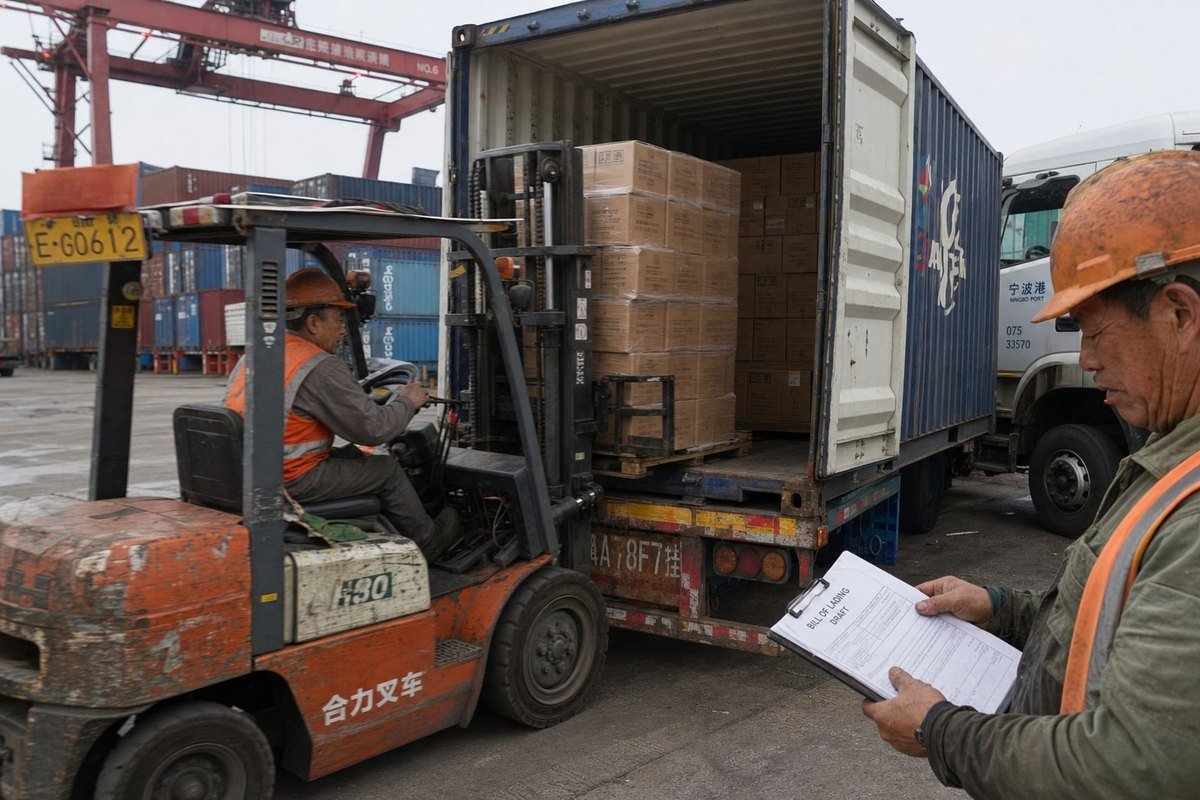
Both sides carry maximum uncertainty on a first order. You do not yet know if the factory's mass production matches the sample. The factory does not yet know if your payments arrive on time. Realistic terms acknowledge that symmetry instead of pretending it away.
A Practical Trust Ladder
Here is the progression we typically follow with new buyers, and it mirrors what most credible factories do:
| Stage | Typical Terms | What Unlocks the Next Stage |
|---|---|---|
| Sample order | 100% prepaid (often small courier value) | Sample approval and clear communication |
| First trial order | 30–50% deposit, balance after inspection, before shipment | On-time deposit and balance payment |
| Orders 2–3 | 30% deposit, balance against B/L copy | Consistent payment behavior, growing volume |
| Established account | Possible Net 30 from invoice date, or L/C for large volumes | Formal credit review, signed bulk purchase agreement |
How to Reduce Risk Without Demanding Credit
If prepaying a trial order makes you uneasy, there are better levers than pushing for net terms. Verify certifications first: we hand new buyers our ISO 9001 6, BSCI, and CE documentation plus SGS and Intertek test reports before any money moves, and you should expect the same from any supplier. Second, keep the trial small enough that the exposure is tolerable—ask about flexible MOQs rather than extended credit. Third, use an inspection-linked balance even on a modest order. Fourth, for larger first transactions, a Letter of Credit or a platform trade assurance 7 program can substitute for trust neither side has earned yet, though bank fees make an L/C impractical below a certain order value.
One caution from experience: a supplier who offers generous credit to a brand-new buyer is not being kind. Either the margin is padded to absorb defaults, or the supplier is desperate for cash. Neither is the partner you want holding your peak-season inventory.
Conclusion
Unclear balance terms create disputes, tied-up cash, and missed seasons. Define the deposit, name the trigger, link it to inspection, and let trust unlock better terms over time.
Footnotes
1. Defines the shipping document commonly used as a balance payment trigger event. ↩︎
2. Global testing and certification provider referenced for supplier compliance documentation. ↩︎
3. Explains the Incoterm governing when supplier control of goods ends, relevant to payment triggers. ↩︎
4. Leading global inspection company named as a verification option for pre-shipment quality checks. ↩︎
5. Background on the trade finance instrument used to secure larger cross-border transactions. ↩︎
6. Authoritative Wikipedia overview; original ISO.org link is currently inaccessible (HTTP 403). ↩︎
7. Official platform program offering buyer protection as a substitute for untested supplier trust.



Join the Conversation