






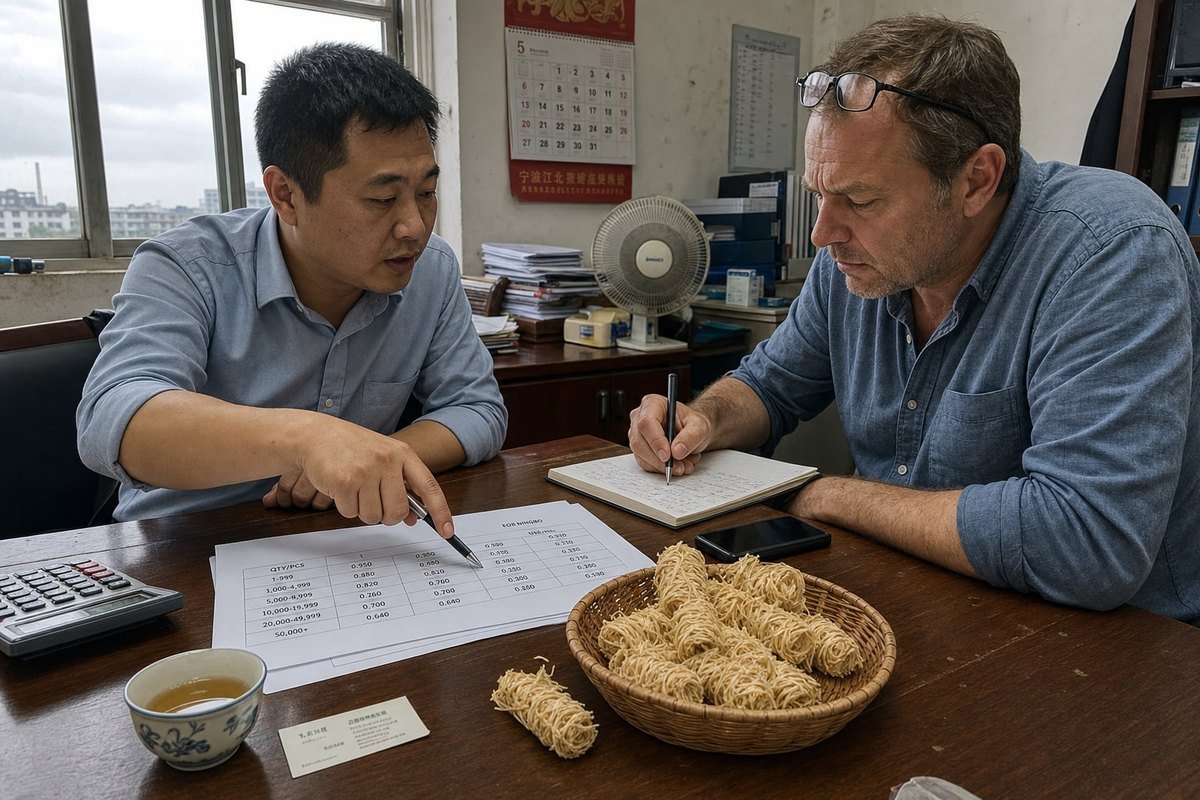
Balancing MOQ and cost when purchasing wood fire starters trips up even seasoned buyers. On our production line in Ningbo, I see importers overcommit, tie up cash, and regret it.
Balance MOQ and cost by choosing the smallest order quantity that still meets your target landed cost, gross margin, and expected sell-through window. Compare quotes at multiple volume tiers, calculate total landed cost per unit, and never buy more inventory than you can sell within one season.
That is the short answer. Now let me walk you through how it works in practice. I will cover typical factory MOQs, negotiation tactics, trial orders, and the hidden costs most buyers miss.
What MOQ Should I Expect When Sourcing Wood Fire Starters from a Factory?
Last autumn, a German distributor asked me why our MOQ was 5,000 pieces while a trading company 1 offered 500. The answer comes down to production setup economics.
Most fire starter manufacturers set MOQs between 1,000 and 10,000 units for standard products, and higher for custom private-label runs. MOQs reflect production setup costs, packaging minimums, and freight economics — a factory needs enough volume to amortize line changeover and material sourcing.
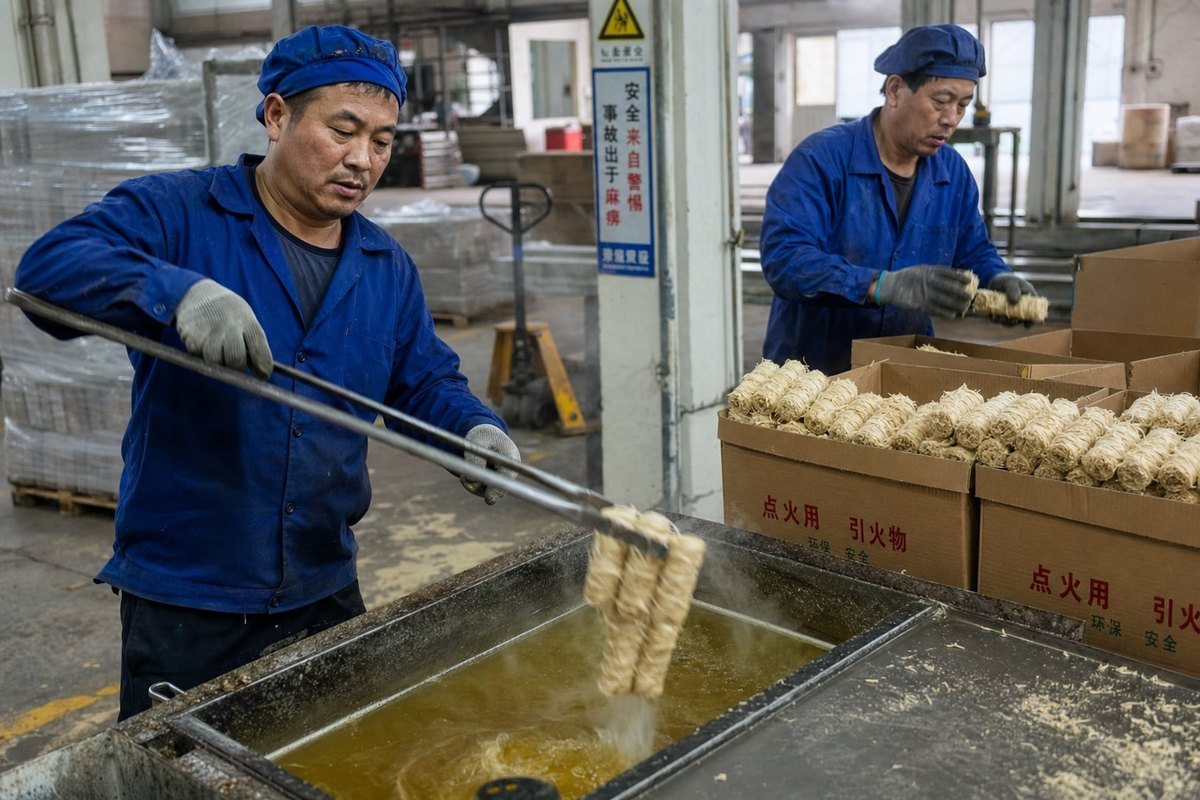
MOQ is not an arbitrary number a supplier invents to pressure you. It is driven by real constraints on the factory floor. When we run a batch of wax-dipped wood rolls, we heat wax tanks 2, calibrate dipping times, and set up packing stations. Those setup costs are the same whether we produce 500 units or 50,000. Small runs simply cannot absorb them.
What Drives MOQ in This Category
Three factors shape the minimum order for wood wool fire starters:
- Raw material minimums. Kiln-dried kindling, excelsior wood wool 3, and food-grade paraffin arrive from our suppliers in bulk lots. We cannot buy half a lot.
- Packaging minimums. Printed retail boxes usually carry their own MOQ from the printing house, often 3,000 to 5,000 pieces per design.
- Freight economics. A partial pallet ships badly. Full pallet and full container quantities keep freight and shipping logistics efficient for both sides.
Typical MOQ Ranges by Product Type
| Product Type | Typical Factory MOQ | Indicative Bulk Price Range |
|---|---|---|
| Basic wax-and-sawdust cubes | 5,000–10,000 units | $0.05–$0.08 per unit |
| Wood wool fire starters (natural wax) | 2,000–5,000 units | $0.10–$0.20 per unit |
| Premium eco-certified starters | 1,000–3,000 units | $0.25+ per unit |
| Custom private-label packaging runs | 3,000–10,000 units | Varies by spec |
In our experience exporting to 30+ countries, buyers who understand these drivers negotiate better. They stop arguing about the number itself and start discussing what flexibility exists around packaging, mixed SKUs, and delivery scheduling. Lead time management 4 matters too: standard production runs take 4–8 weeks, so your MOQ decision locks in cash for at least one full sales cycle. Plan around that reality, not against it.
How Can I Negotiate a Lower MOQ Without Sacrificing Unit Cost?
One trade-off I weigh constantly: a smaller run costs us more per unit to produce, yet a rigid MOQ scares away good long-term buyers. There is a middle ground.
Negotiate a lower MOQ by timing orders in the factory off-season, combining multiple SKUs into one shipment, piggybacking on existing production runs, choosing blank stock over custom packaging, and committing to a phased annual volume. These tactics preserve the supplier's economics while reducing your upfront commitment.
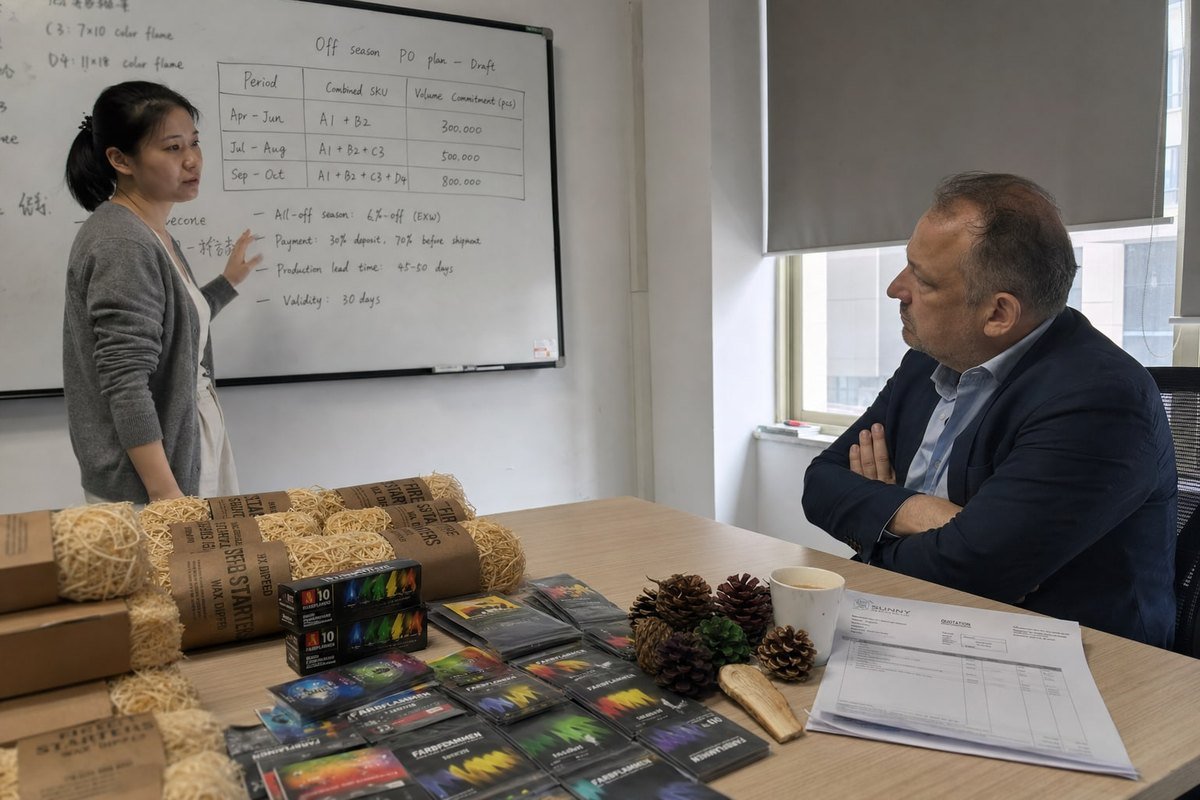
A lower MOQ is easiest to grant when it costs the factory little. So your job as a buyer is to find the angles where flexibility is cheap for us. In seventeen-plus years of OEM/ODM work, I have seen five tactics work again and again.
Five Proven Negotiation Levers
| Tactic | Why It Works | Typical Impact |
|---|---|---|
| Order in the off-season (late spring) | Factories want steady production flow between peaks | MOQ often drops 30–50% |
| Combine SKUs in one shipment | Fire starters, color-flame packets, and pinecones share a container | Meets total value minimums |
| Join a production run notification list | You piggyback on another client's large batch | Bulk pricing tiers at small volume |
| Buy unbranded blank stock | Skips the printed packaging MOQ entirely | Label locally, launch faster |
| Commit to phased annual volume | Supplier gets predictability without one giant PO | Lower per-order minimum |
Protecting Unit Price While You Negotiate
Unit price optimization does not mean squeezing the factory until quality suffers. It means finding the efficiency sweet spot — the tier where setup costs are fully amortized and further volume discounts become marginal. Ask for quotes at three tiers, such as 2,000, 5,000, and 10,000 units. If the price drop from 5,000 to 10,000 is only two percent, the smaller order usually wins once you factor in inventory carrying costs 5.
One more angle worth exploring: partner with a non-competing importer, such as a firewood or charcoal distributor, and co-load a container. You split freight, split the MOQ pressure, and both parties land at full-container rates. We have arranged this for buyers shipping to the same port, and it works well.
Should I Start with a Trial Order Before Committing to Full-Scale MOQ?
A Canadian camping brand once asked us for 30,000 custom units on their first order. I talked them down to a trial run. They thanked me a season later.
Yes — start with a trial order. A pilot run of 500 to 2,000 units at a slightly higher unit price lets you validate burn performance, packaging durability, and real market demand before committing full capital. The small premium you pay is cheap insurance against unsellable bulk inventory.
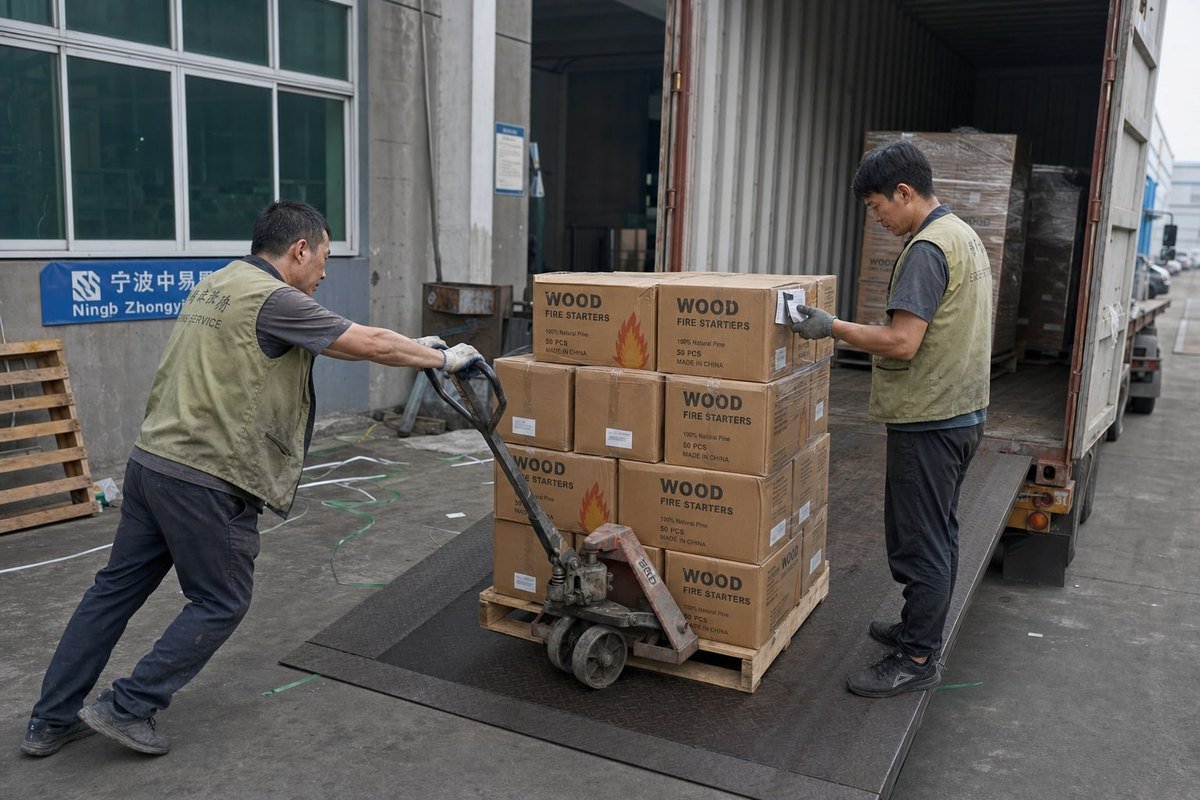
The math on trial orders is simple, but buyers skip it because a higher trial unit price feels like losing. It is not. Think of the premium as the cost of information. A trial order answers three questions no quote sheet can: Does the product perform in your customers' hands? Does the packaging survive your logistics chain? Does the market actually pull the inventory through at your target retail price?
What a Good Trial Order Should Test
- Burn performance. Ignition time, flame duration, ash residue, and smell. We advise buyers to measure cost per successful ignition, not just cost per unit — a cheaper starter that fails one time in ten is more expensive in practice.
- Moisture resistance. High-wax saturation starters hold up over multiple storage seasons. Fire starters are consumables, so shelf stability matters more than it would for durable goods.
- Packaging integrity. Drop-test the retail box. Check that warning labels and barcodes scan correctly in your system.
- Sell-through velocity. Track weeks of inventory on hand. If the trial batch sells in six weeks, you have a data-backed case for the full MOQ.
Structuring the Trial-to-Bulk Path
Agree on the bulk terms before you place the trial. At our factory, we quote trial and volume pricing together, so the buyer knows exactly what tier they unlock after validation. Because our batch-to-batch quality control is strict, the trial sample reliably reflects mass-production quality 6 — that is the whole point of testing with a real factory rather than a trading company. Also confirm that trial quantities count toward your annual volume commitment. Most reasonable suppliers will agree, and it removes the feeling that trial money is wasted.
What Hidden Costs Should I Factor In Beyond the Per-Unit Price?
Early in my export career, a UK buyer chose a competitor over us for three cents per unit. Six months later, demurrage fees and failed compliance tests brought him back.
Beyond unit price, factor in freight and duties, inventory carrying costs, compliance testing and documentation, packaging and labeling, quality failure rates, and cash locked up during 4–8 week lead times. Together these can add 30–60% to the factory price, making landed cost the only number that matters.
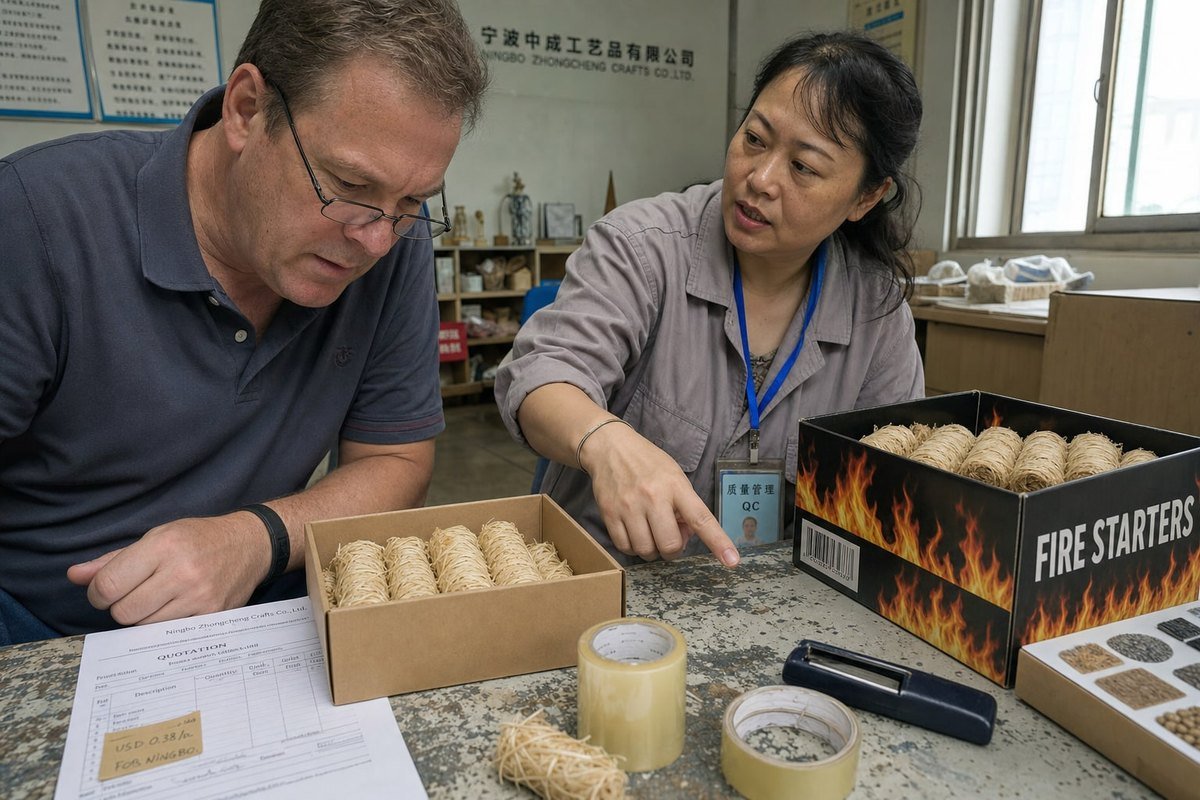
The sticker price on a quote sheet is the beginning of the calculation, not the end. Landed cost is what your finance team actually pays per sellable unit that reaches your warehouse in compliant, retail-ready condition. Here is how the hidden layers stack up.
The Full Landed Cost Stack
| Cost Layer | What It Includes | Common Buyer Mistake |
|---|---|---|
| Freight and shipping logistics | Ocean freight, inland haulage, port fees | Booking LTL when full pallets would negate the savings of a lower MOQ |
| Duties and tariffs | Import duty by HS code, customs brokerage | Assuming the supplier's quote covers destination charges |
| Inventory carrying costs | Warehousing, insurance, capital cost | Ignoring the cash tied up during a full sales cycle |
| Compliance and testing | SGS/Intertek reports, CE marking, safety labels | Discovering missing documents after goods ship |
| Packaging and labeling | Retail boxes, barcodes, warning labels, display packaging | Paying for local rework that private label manufacturing could have handled at source |
| Quality failure cost | Failed ignitions, returns, damaged reputation | Comparing cost per unit instead of cost per successful ignition |
Why Compliance Is a Cost Line, Not an Option
For the US and EU markets we ship into, compliance documentation 7 is a hard requirement. Buyers who source from uncertified suppliers save pennies at the factory and then pay for third-party testing, relabeling, or — worst case — rejected shipments. Our ISO 9001, BSCI, CE, and SGS/Intertek certifications exist precisely so that cost is already built in and predictable.
The Cash-Flow Dimension
Volume discounts look attractive until you model the cash. A 10,000-unit order at $0.12 beats a 5,000-unit order at $0.14 on paper. But if the larger batch takes nine months to sell instead of four, your inventory carrying costs and frozen capital wipe out the savings. Run the numbers per tier, estimate weeks of inventory on hand at realistic velocity, and pick the smallest tier that protects your margin.
Conclusion
Overordering drains cash; underordering kills margin. The fix: compare bulk pricing tiers by landed cost, run a trial order, and partner with a certified factory like ours.
Footnotes
1. Explains the role of trading companies as intermediaries in international trade, contrasting them with direct factory sourcing. ↩︎
2. Provides technical information on paraffin wax, a common material used in the production of wood fire starters. ↩︎
3. Technical overview of wood wool, also known as excelsior, which serves as the primary material for fire starters. ↩︎
4. Authoritative Wikipedia entry defining lead time in manufacturing and supply chain. ↩︎
5. Authoritative Wikipedia entry explaining inventory carrying costs and holding expenses. ↩︎
6. Explains the difference between quality assurance and control, essential for maintaining standards during high-volume manufacturing runs. ↩︎
7. Authoritative resource on international trade regulations and the necessary documentation for cross-border e-commerce compliance. ↩︎



 English
  Spanish
  German
  French
  Arabic
  Portuguese
Join the Conversation