






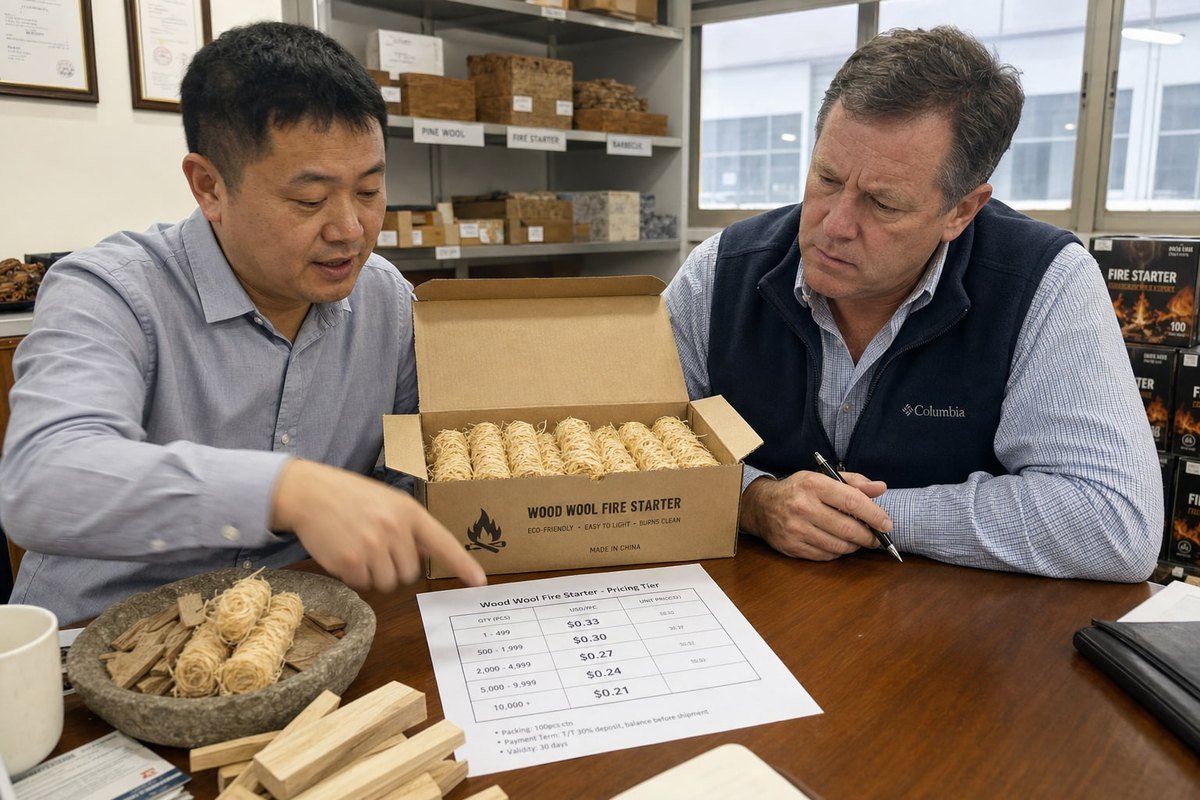
Tiered pricing for wood fire starters 1 confuses many buyers who visit our production line in Ningbo. Quotes look inconsistent, MOQs feel arbitrary, and comparing suppliers becomes guesswork.
Tiered pricing reduces procurement costs for wood fire starters by lowering the wholesale unit price at predefined volume thresholds. Buyers who consolidate orders into higher tiers cut per-unit cost, freight cost per carton, and administrative overhead, often saving 15–30% versus small repeat orders.
Let me walk you through how this works in practice. I will use real examples from our factory quoting process, so you can apply the same logic to any supplier negotiation.
How does tiered pricing for wood fire starters actually work with a manufacturer like Sunrich?
When our sales team prepares a quote for wax-dipped wood rolls, we never send one flat price. We build a ladder. After 17+ years exporting to 30+ countries, we know buyers need to see the full picture.
A manufacturer sets quantity thresholds — for example 10,000, 50,000, and 200,000 pieces — and assigns a lower unit price to each higher band. Larger orders spread fixed costs like setup, labor, and freight across more units, so the factory can pass real savings to the buyer.
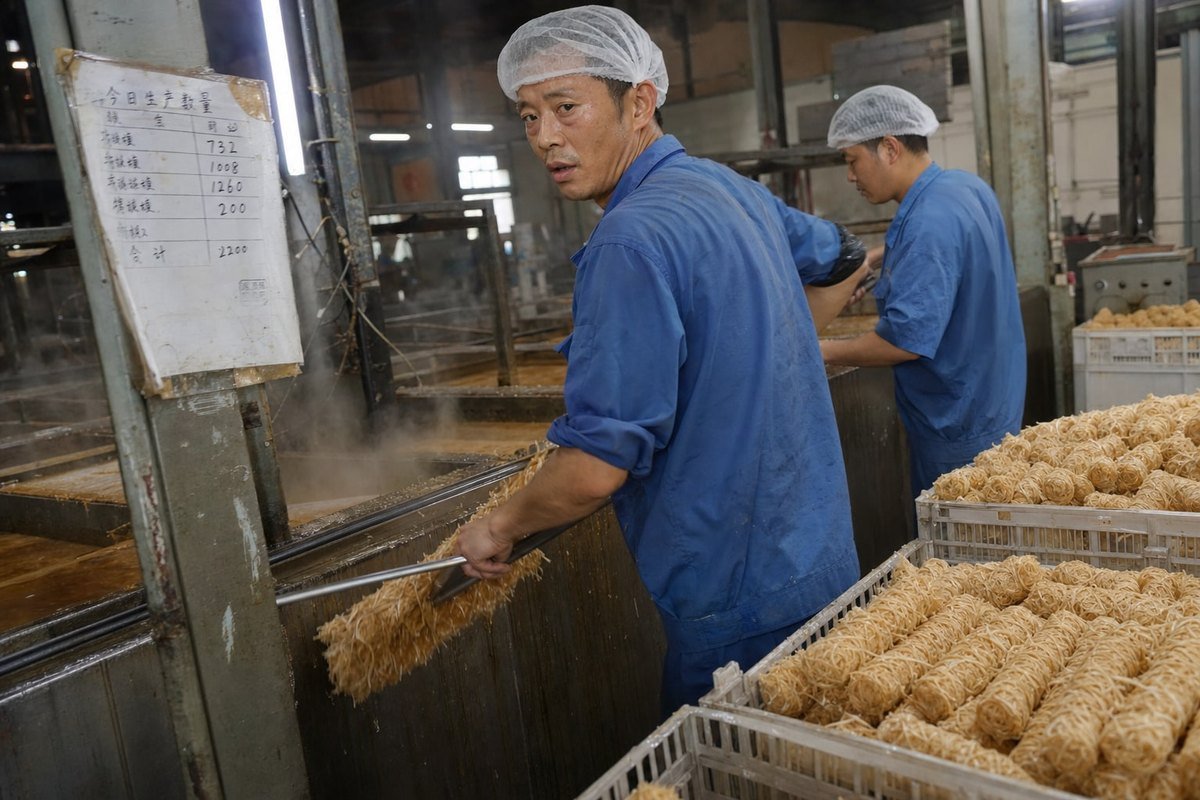
The logic behind tiered pricing is simple: economies of scale. Our production cost 2 per fire starter drops as order volume rises. Wax melting tanks run at the same energy cost whether we dip 5,000 rolls or 50,000. Machine setup, quality inspection scheduling, and packaging line changeovers are all fixed costs. When you order more, those costs get divided across more units.
What a Typical Tier Ladder Looks Like
Here is a simplified version of how we structure quotes for our wood wool fire starters. Exact numbers vary by wax type, burn time, and packaging, but the shape of the ladder stays consistent.
| Tier | Order Quantity (pcs) | Indicative Unit Price | What Changes |
|---|---|---|---|
| Trial | 5,000–10,000 | Highest | Standard packaging, shared production slot |
| Entry | 10,000–50,000 | ~8–12% lower | Dedicated batch, basic private label |
| Mid ("sweet spot") | 50,000–200,000 | ~15–20% lower | Full OEM packaging, optimized cartons |
| Distributor | 200,000+ | ~25–30% lower | Container-load pricing, priority scheduling |
Two Pricing Methods You Must Confirm
Not all suppliers apply tiers the same way. Some use all-units pricing, where crossing a threshold applies the lower price to your entire order. Others use cumulative (graduated) pricing, where each band is priced separately and blended. The difference on a 60,000-piece order can be significant. We use all-units pricing 3 because it is easier for buyers to model, but always ask your supplier which method they use before comparing quotes. A "cheaper" tier ladder using cumulative logic may cost more in total than a slightly higher all-units ladder.
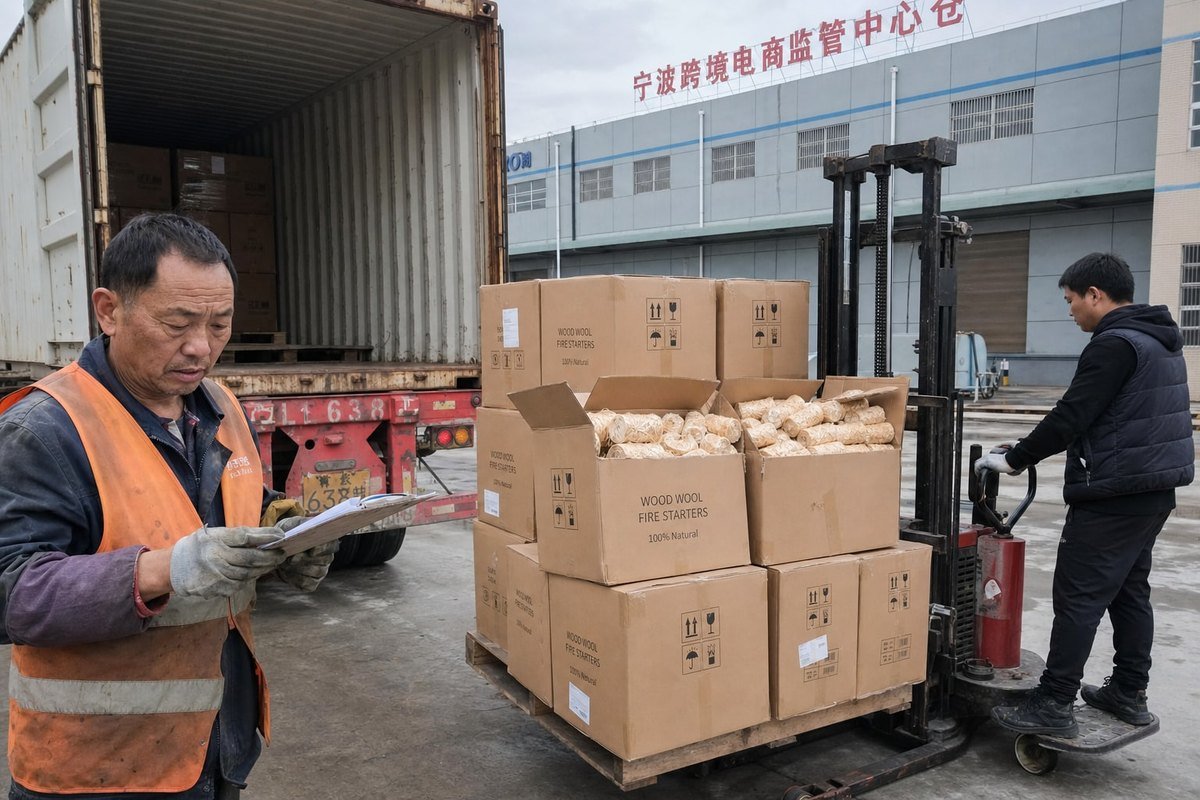
One more point from our experience: tiers should map to shipping reality. We align our breakpoints with carton counts 4 and container capacity, because a tier that fills 92% of a container wastes freight money. Good vendor contract negotiation starts with asking how the tiers were designed, not just what the prices are.
What order volume do I need to reach the next pricing tier?
A German BBQ distributor once asked me to "just tell him the magic number." I understood the frustration. Breakpoints feel hidden, but they follow patterns any purchasing manager can decode and use.
Most fire starter manufacturers set tier breakpoints at roughly 10,000, 50,000, and 200,000 pieces, aligned with carton and container capacity. To reach the next tier efficiently, consolidate quarterly demand into one order or combine SKUs, rather than placing frequent small orders.
The smartest bulk purchasing strategy is not simply "order more." It is ordering the right amount at the right time. Before chasing a breakpoint, you need to know where your current volume sits and what the jump actually saves you.
Calculate the Breakpoint Value First
Run this quick math. Take the price difference between your current tier and the next one. Multiply it by your realistic annual volume. Then compare that saving against the extra cash tied up in inventory and your inventory carrying costs 5 — warehousing, insurance, and capital cost, typically 15–25% of inventory value per year. If the tier saving beats the carrying cost, consolidate. If not, stay where you are.
| Scenario | Annual Volume | Order Pattern | Effective Cost Position |
|---|---|---|---|
| Four small orders | 80,000 pcs | 20,000 × 4 | Entry-tier price, 4× freight and handling |
| Two consolidated orders | 80,000 pcs | 40,000 × 2 | Entry-tier price, halved freight |
| One annual order | 80,000 pcs | 80,000 × 1 | Mid-tier price, lowest freight, higher storage |
| Combined SKU order | 80,000 + colorant packets | Mixed container | Mid-tier price, shared freight |
Three Practical Ways to Reach a Higher Tier
First, consolidate time. If you buy quarterly, ask whether a semi-annual order crosses a breakpoint. Fire starters store well when kept dry, so shelf life 6 rarely blocks this. Second, consolidate SKUs. We frequently let buyers combine wood fire starters with color-flame pinecones or Magic Fire packets in one container, and we count combined value toward tier qualification. Third, negotiate a volume commitment. In our contract terms, a buyer who commits to 200,000 pieces annually can receive distributor-tier pricing on each 50,000-piece release. This is standard vendor contract negotiation, and any established factory should accommodate it. Just get the tier logic written into the contract so invoices follow the agreed bands automatically.
Also watch minimum order quantity (MOQ) traps. A supplier with a low headline price but a rigid 100,000-piece MOQ may force overbuying. Flexible tier structures beat aggressive ones for most importers.
Can I start with a smaller trial order before committing to a bulk tier?
Years of shipping to the US and Europe have taught us one thing: buyers who sample first become long-term partners. That is why we deliberately keep a low-barrier trial tier open, even though small batches earn us little.
Yes. Reputable manufacturers offer trial orders of 5,000–10,000 pieces, or paid sample packs, before bulk commitment. The trial carries a higher unit price, but it lets buyers verify burn time, packaging quality, and compliance documents before scaling into discounted tiers.

A trial order is not a cost. It is insurance. Fire starters are a performance product. A cube that lights slowly, smokes heavily, or crumbles in transit will damage your brand far more than any tier discount can offset. Before you commit six figures of pieces to a container, you need proof.
What to Test During a Trial Order
Here is the evaluation checklist we recommend to every new buyer, based on what our own QC team measures batch by batch:
- Ignition speed — the starter should light from a single match within seconds.
- Burn time — time the flame from ignition to burnout; compare it against the supplier's stated spec.
- Flame height and stability — enough to ignite kiln-dried kindling reliably, without dangerous flare-ups.
- Smoke and odor — natural wood wool with clean wax should burn with minimal smoke and no chemical smell.
- Ash residue — low, light ash indicates clean materials.
- Transit durability — check for wax cracking, fraying, or crushed rolls after shipping.
- Packaging accuracy — barcodes, warning labels, and piece counts must match the spec sheet.
How Trial Orders Fit the Tier Ladder
A fair supplier treats the trial as step one of a relationship, not a one-off sale. In our case, we credit trial volume toward the first bulk order's tier qualification when the buyer scales within an agreed window. We also lock the sample spec: because our production lines run strict batch-to-batch quality control 7, the mass-production goods must match the approved trial sample. That connection matters. A trial order only de-risks your bulk purchasing strategy if the supplier can actually reproduce the sample at scale — which is exactly where trading companies without their own factories tend to fail. Ask directly: will my trial spec be locked in the contract, and does trial volume count toward my next tier? The answers reveal a lot about supply chain efficiency on the other side.
Will lower unit pricing at higher tiers affect certification or quality consistency?
This is the question I respect most, because it shows a buyer thinking past price. In our Ningbo facility, the honest answer depends entirely on why the price drops — and that is worth unpacking.
No — not with a properly certified manufacturer. Legitimate tier discounts come from economies of scale, not material substitution. Certifications like ISO 9001, BSCI, CE, and SGS testing apply to the product specification, so every tier must meet identical quality and compliance standards.
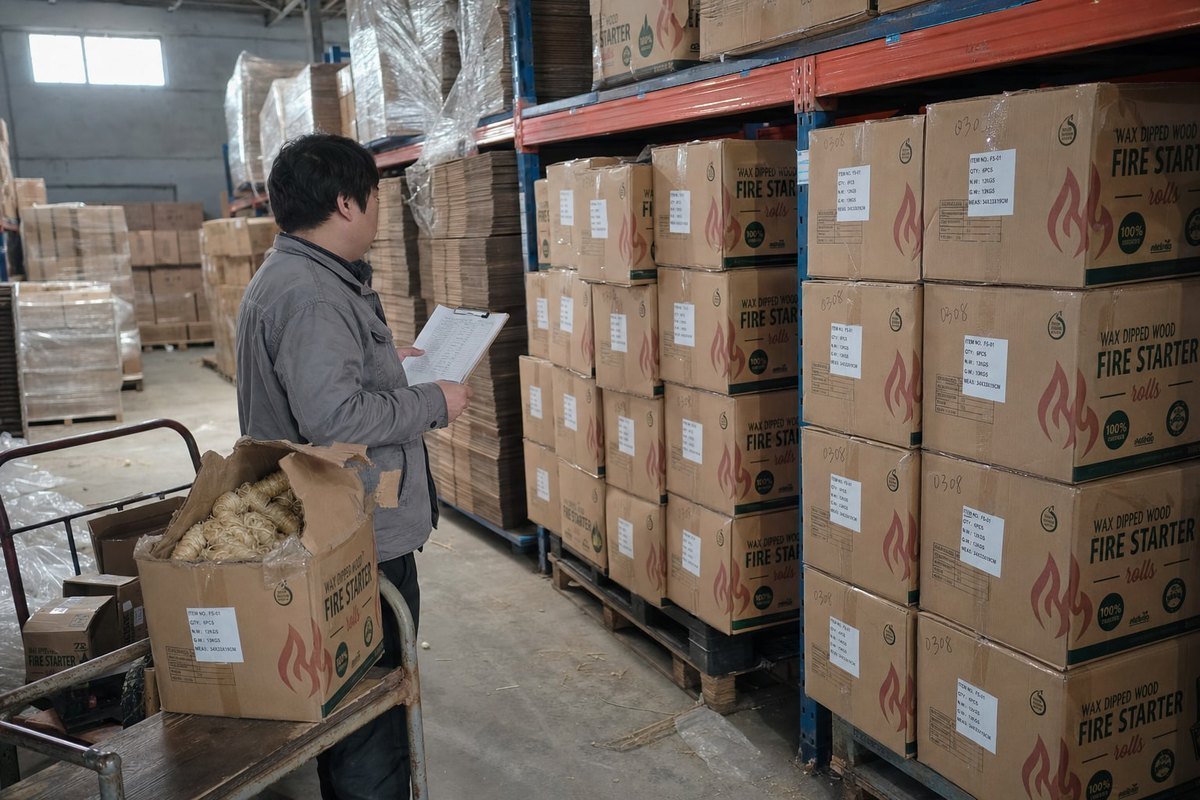
There are two very different ways a supplier can lower a unit price. Understanding the difference protects your brand and your total cost of ownership (TCO).
Good Discounts vs. Dangerous Discounts
| Cost Reduction Source | Legitimate at Higher Tiers? | Risk to Buyer |
|---|---|---|
| Fixed costs spread over more units | Yes | None — this is true economies of scale |
| Optimized carton and container loading | Yes | None — improves supply chain efficiency |
| Fewer production changeovers | Yes | None |
| Thinner wax coating or cheaper wax blend | No | Shorter burn time, weaker ignition |
| Recycled or contaminated wood fiber | No | Smoke, odor, possible compliance failure |
| Skipped batch testing at high volume | No | Certification claims become meaningless |
The first three rows are how we build our own ladder. The last three are how low-price suppliers build theirs. The finished products can look identical in a photo. They do not perform identically in a fireplace.
How to Verify Consistency Across Tiers
Ask for the same three protections we offer our own buyers. First, a locked technical specification in the contract: wood fiber type, wax content, piece weight, and target burn time, applied to every tier. Second, batch-level test documentation. Our SGS and Intertek reports tie to production batches, so a 200,000-piece distributor order gets the same testing rigor as a 10,000-piece entry order. Third, a retained golden sample. We keep the approved sample physically on file and check mass production against it. If a supplier hesitates on any of these, their tier discount is probably funded by quality erosion.
One more practical note for US and EU importers: compliance is not tier-dependent, but documentation workload is. Higher tiers actually reduce your compliance cost per unit, because one inspection, one test report set, and one customs entry cover far more product. That is a hidden procurement saving most buyers never model.
Conclusion
Tiered pricing rewards buyers who plan volume intelligently. Consolidate demand, verify quality through trials, lock specifications in contracts, and compare landed cost — not just the lowest quoted unit price.
Footnotes
1. Authoritative overview of fire lighting methods and materials used in fire starters. ↩︎
2. Authoritative Wikipedia definition of unit production costs and their calculation in business. ↩︎
3. Wikipedia entry explaining quantity discount models, including all-units and incremental pricing. ↩︎
4. Authoritative overview of carton types and standards in industrial packaging. ↩︎
5. Standard Wikipedia reference for inventory carrying costs and their impact on business finances. ↩︎
6. Scientific definition and factors affecting the shelf life of commercial products. ↩︎
7. Comprehensive Wikipedia overview of quality control processes and international standards like ISO 9000. ↩︎


 English
  Spanish
  German
  French
  Arabic
  Portuguese
Join the Conversation