






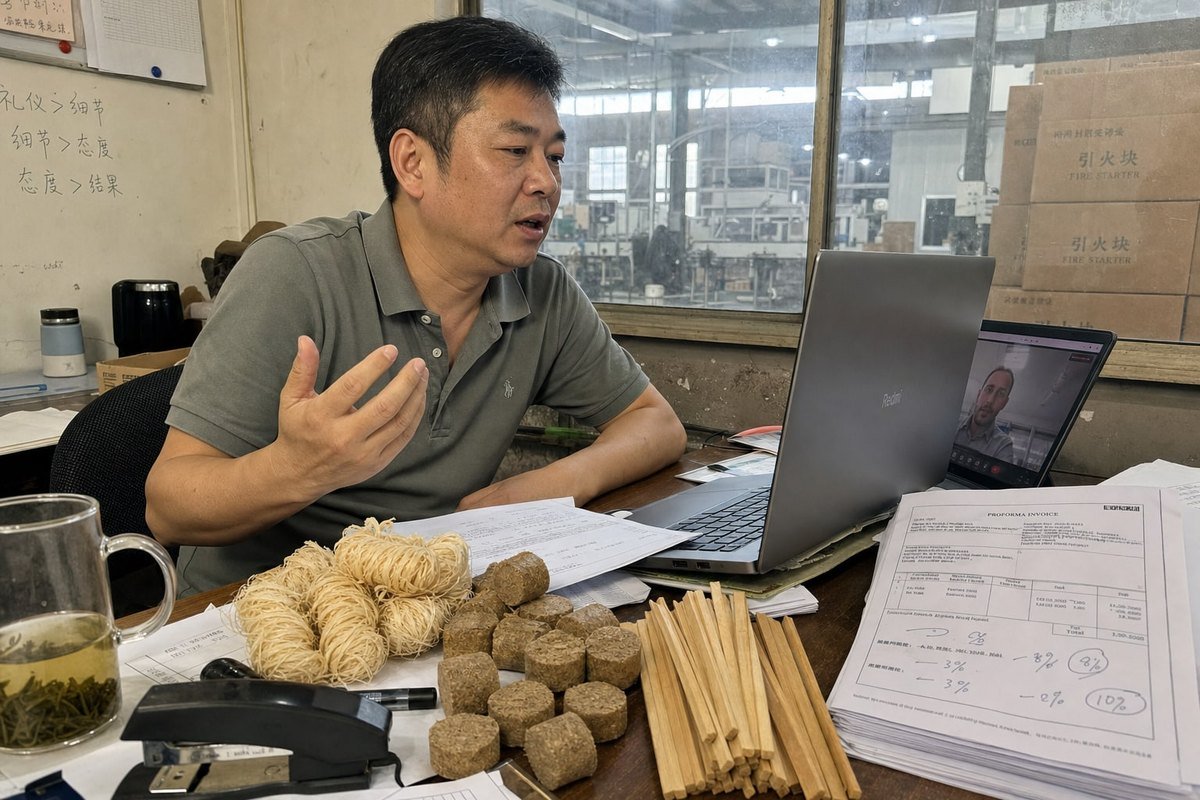
Every week, buyers ask our factory the same question about deposits for wood fire starters. Pay too much, and your cash is exposed. Pay too little, and no serious supplier will start production.
For wholesale wood fire starters, a 30% deposit with 70% balance before shipment is the standard arrangement. Trial orders may require 50% or full payment, while custom private-label orders often need 30%–50% upfront because branded packaging cannot be resold to other clients.
That is the short answer. But the right deposit depends on your order size, customization level, and payment method. Let me walk you through how we structure this on our side, so you can negotiate with confidence.
What deposit percentage is standard when ordering wood fire starters from a Chinese manufacturer?
A purchasing manager from Germany once told me he had been quoted everything from 20% to 100% upfront by different suppliers. He asked me which number was real. My honest answer: all of them, depending on the order.
The standard deposit for wood fire starters from a Chinese manufacturer is 30% of the total order value, paid against a proforma invoice, with the 70% balance due before shipment or against the bill of lading copy. Custom-branded orders typically push the deposit to 40%–50%.
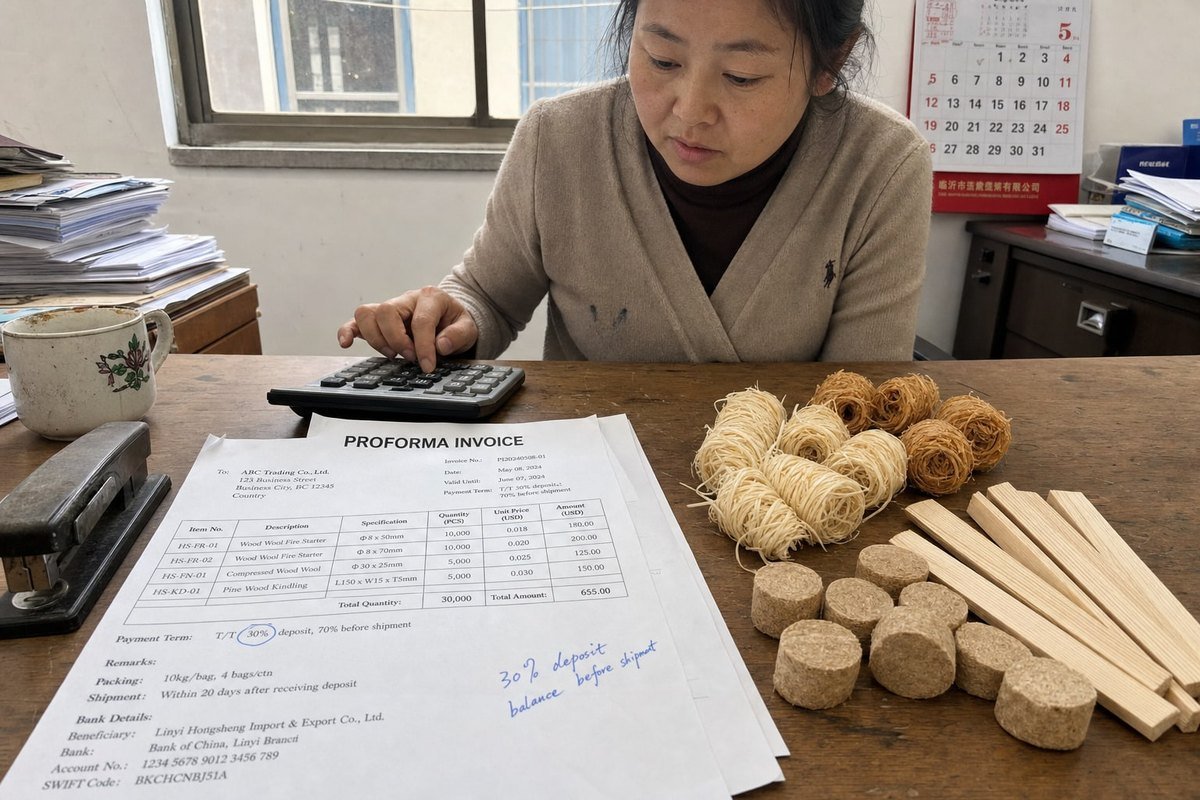
There is no single legal standard, but the 30/70 split has become the default in our industry for a simple reason. It shares risk fairly. The deposit covers our raw materials — kiln-dried kindling, wood wool, and paraffin or soy wax — plus a portion of labor. The balance protects you, because we only get paid in full once the goods are produced, inspected, and ready to ship.
How order type changes the deposit
Here is how deposit expectations typically break down by order type:
| Order Type | Typical Deposit | Why |
|---|---|---|
| Standard stock product, repeat buyer | 20%–30% | Low risk; goods are resellable |
| Standard product, first-time buyer | 30%–50% | Supplier has no payment history with you |
| Private-label / custom packaging | 40%–50% | Branded boxes and labels cannot be resold |
| Small trial order below MOQ | 50%–100% | Setup costs are high relative to order value |
| Established buyer with credit terms | 0% (Net 30) | Trust built over multiple successful orders |
Why customization raises the number
When we run a private-label order — custom display boxes, warning labels, barcodes, your brand on everything — that inventory has exactly one buyer: you. If the order is cancelled mid-production, we cannot sell those goods to anyone else. That unrecoverable cost is why deposits on OEM/ODM orders sit higher than deposits on stock goods. It is not greed. It is risk allocation. A useful mental rule: the deposit should roughly cover the supplier's unrecoverable costs — materials already purchased, custom packaging, and a share of labor — not an arbitrary round number.
Seasonality matters too. During Q4 peak demand, some suppliers ask for higher deposits to guarantee delivery windows, because production slots are genuinely scarce. If you order in the off-season, you have more room to negotiate both the deposit and the bulk order pricing itself.
How can I make sure my deposit is protected if production or quality issues arise?
Years of exporting to the US, Germany, and the UK have taught me one thing: buyers who lose deposits almost never lose them to bad luck. They lose them to vague paperwork.
Protect your deposit by signing a detailed proforma invoice or purchase agreement that specifies product specs, quality standards, lead times for delivery, and refund conditions. Add a pre-shipment inspection clause, verify the supplier's certifications, and pay only to the company's verified corporate bank account.
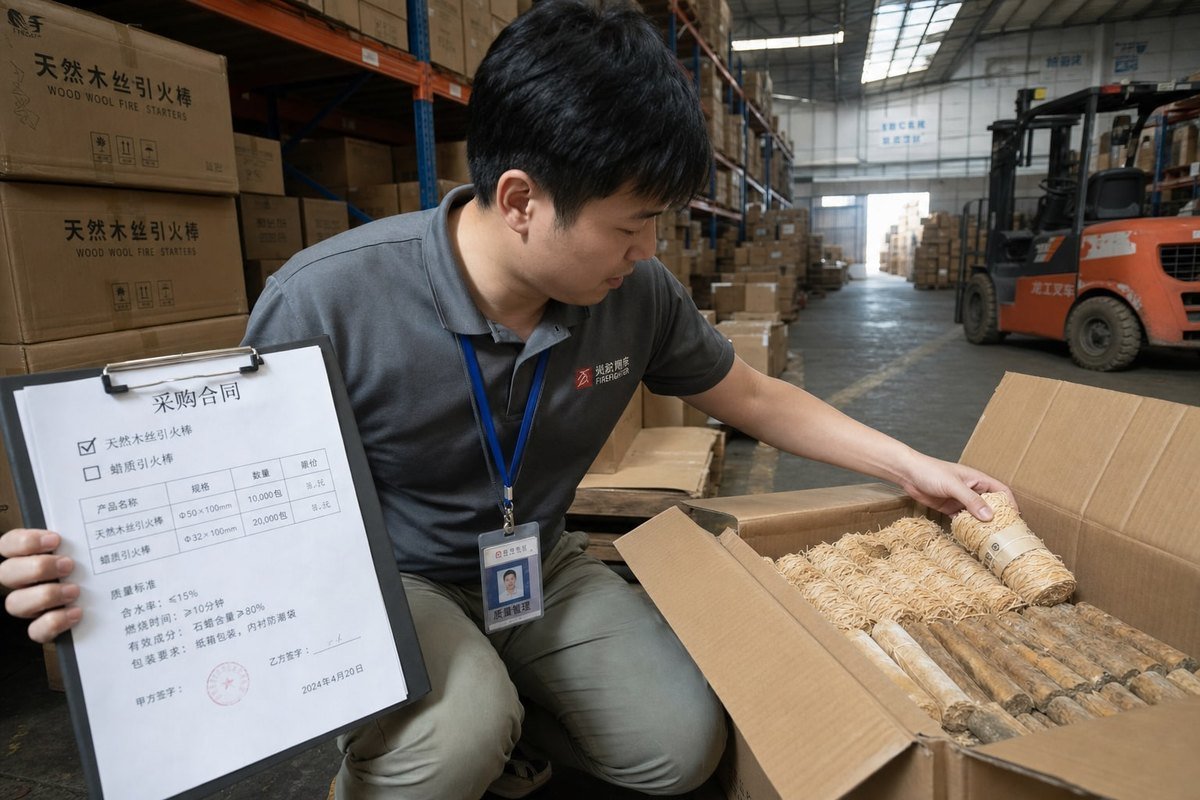
Your deposit is only as safe as the document behind it. A one-line invoice that says "fire starters, 10,000 pcs" protects nobody. A proper purchase agreement protects both sides, because it defines exactly what "acceptable goods" means before money moves.
What your purchase agreement terms should cover
Before wiring anything, make sure these points are in writing:
- Exact product specifications — dimensions, burn time, wax type, wood wool density, and pack count. For eco-friendly firelighters, specify the sustainable wood sourcing requirement and any "no harmful chemicals" claim you plan to make on shelf.
- Quality benchmarks tied to a sample — the golden sample you approved should be referenced by number. In our factory, we keep sealed reference samples for every OEM order so batch-to-batch quality can be checked against something physical, not a memory.
- Compliance documentation — require test reports (SGS or Intertek 1) and relevant certificates like ISO 9001 2, BSCI, and CE where applicable. For fire products entering the EU or North America, this is a hard requirement, not a nice-to-have.
- Inspection rights — a third-party pre-shipment inspection clause 3, with the balance payment conditional on a passed inspection.
- Refund and remedy terms — what happens if goods fail inspection: rework, replacement, discount, or deposit refund, and within what timeframe.
- Delivery terms — confirmed lead times for delivery, the Incoterm (FOB, CIF, DDP) 4, and who bears shipping and handling fees.
Red flags that put your deposit at risk
Watch for suppliers who refuse third-party inspections, ask you to pay a personal bank account instead of the registered company account, or cannot show original test reports. A real factory with 17+ years of production history will welcome an audit; a trading company reselling someone else's goods often cannot. Ask for a video call from the production floor. It takes ten minutes and removes most of the doubt.
What payment methods are safest for paying a deposit on a wholesale wood fire starter order?
One of our Dutch distributors once insisted on paying his first deposit through a marketplace escrow service 5. I did not mind at all — in fact, I respected it. First orders are exactly when payment structure matters most.
Bank wire transfer (T/T) to a verified corporate account is the standard and safest common method for deposits, especially with a 30/70 split. For first orders, trade assurance or escrow services add buyer protection, while letters of credit suit large contracts above roughly $50,000.
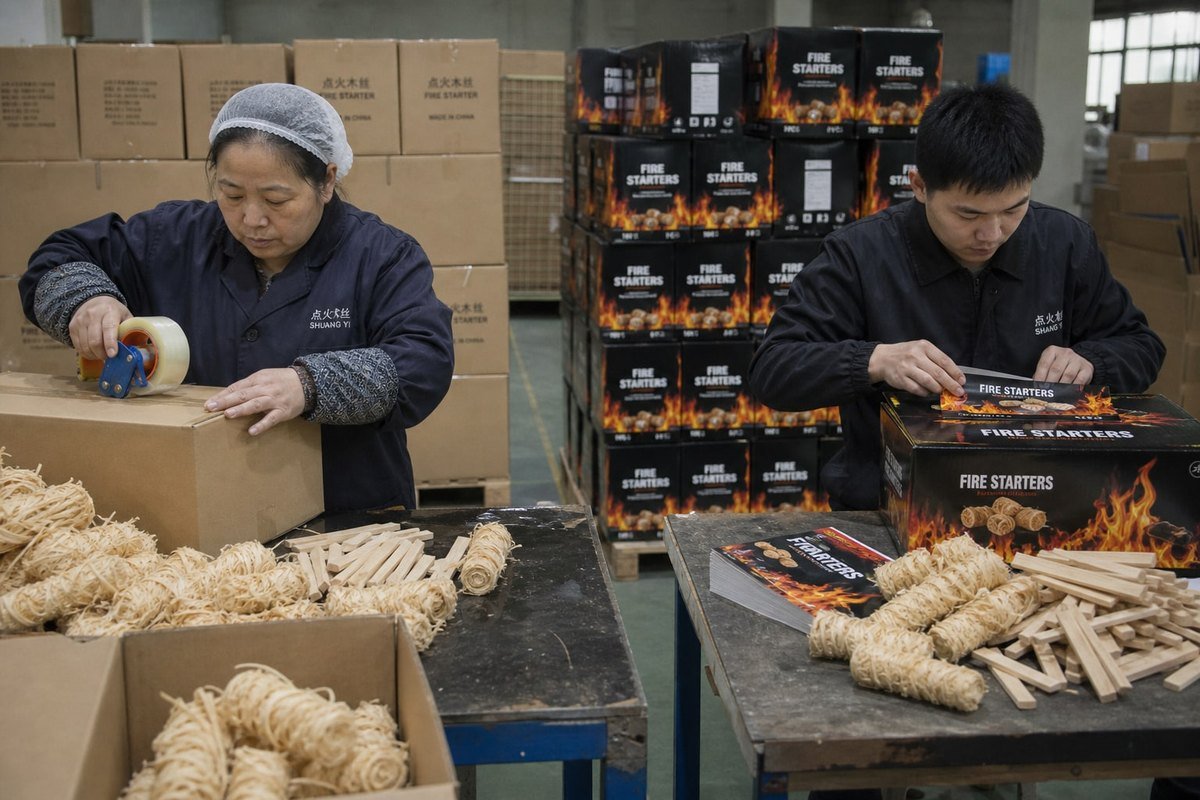
No payment method is perfectly safe on its own. Safety comes from combining the right method with the right payment structure and the right documentation. Here is how the main options compare for a wholesale fire starter order:
| Payment Method | Buyer Protection | Cost | Best For |
|---|---|---|---|
| T/T bank wire (30/70 split) | Moderate — balance held until inspection | Low bank fees | Most wholesale orders |
| Trade assurance / platform escrow | High — funds released on confirmed delivery | Platform fees may apply | First orders with a new supplier |
| Letter of credit (L/C) | High — bank releases funds against documents | High bank fees, paperwork | Large contracts, $50k+ |
| PayPal / credit card | High chargeback rights | 3%–5% fees | Small trial or sample orders |
| Western Union / crypto | Very low — nearly untraceable | Varies | Avoid for deposits |
Practical rules we recommend to buyers
First, always pay against a proforma invoice 6, never a casual email quote. The proforma invoice locks in the price, quantity, specs, Incoterm, and payment schedule in one document. Second, confirm the beneficiary name on the bank details matches the company name on the invoice and the export license 7. Payment redirection fraud — where a hacked email sends you "updated" bank details — is the single most common way importers lose deposits. Verify any bank detail change by phone or video call, never by email alone.
Third, match the method to the order size. For a sample order worth a few hundred dollars, PayPal's fees are worth the chargeback protection 8. For a container-load order, T/T with an inspection-linked balance is efficient and safe. For six-figure annual contracts, an L/C or documented wholesale payment terms with staged payments makes sense. On our side, we accept all of the standard structures because flexible, transparent payment terms are part of being a long-term partner, not just a one-time seller.
Can I negotiate a lower deposit or flexible payment terms for a trial order?
The trade-off I weigh on every trial order request is simple: setup cost versus relationship value. A 500-carton trial run still needs a production slot, wax calibration, and packaging setup — but a good trial buyer may become a ten-year account.
Yes, deposits are negotiable, especially for trial orders. Reasonable asks include a 30% deposit instead of 50%, a reduced minimum order quantity, staged payments, or inspection-linked balance terms. Established repeat buyers can often progress to Net 30 invoicing after several successful orders.
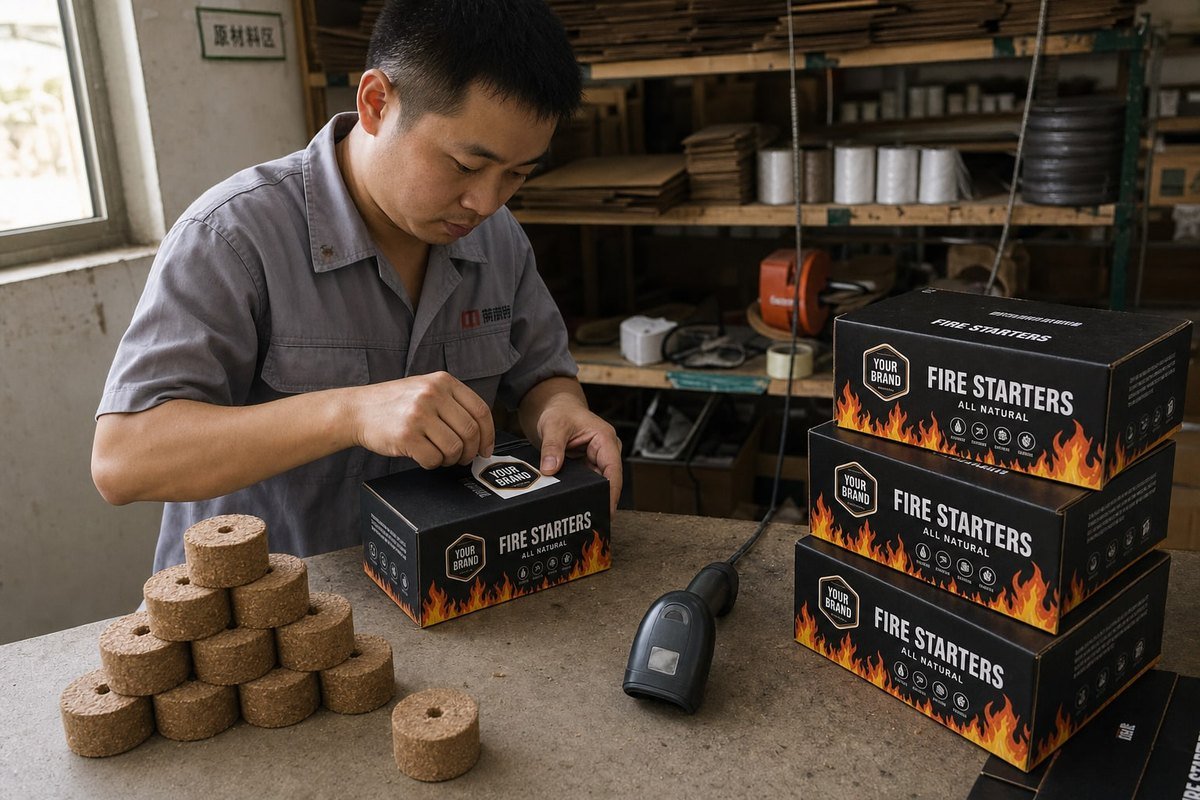
Negotiation works best when you understand what the supplier is protecting. On a trial order, the supplier's real concern is not profit — it is covering setup costs and avoiding a cancellation after materials are bought. If your negotiation addresses that concern directly, you will get flexibility. If you simply demand "lower deposit," you will get resistance.
What is realistically negotiable
| Ask | Likelihood of Success | What Makes It Work |
|---|---|---|
| 30% deposit instead of 50% on a trial | High | Ordering standard specs, not full custom |
| Reduced minimum order quantity | Moderate–High | Accepting stock packaging or mixed SKUs |
| Balance against bill of lading copy | High | Standard practice for reputable factories |
| Deposit credited toward a larger reorder | Moderate | Signaling a genuine annual volume forecast |
| Net 30 terms on a first order | Low | Almost never granted without payment history |
How to strengthen your negotiating position
Share your annual volume forecast honestly. When a buyer tells us they plan three container orders per year and shows us their retail channel, we treat the trial order as an investment, not a transaction — and the deposit terms reflect that. Second, reduce the supplier's risk yourself: choose standard sizes and burn times for the trial, and save the full private-label customization for the second order. Stock goods carry lower unrecoverable cost, which directly justifies a lower deposit.
Third, build a terms ladder into your relationship. A structure we often agree with distributors: 50% deposit on order one, 30% on orders two and three, then a discussion about credit terms once trust is established. This progression protects both sides and gives you a clear roadmap. Finally, remember that a supplier who instantly agrees to zero deposit and rock-bottom pricing is often the one to worry about. Sustainable terms come from suppliers with real margins, real compliance costs, and a real interest in your reorder — not from whoever quotes lowest.
Conclusion
Deposit anxiety is real, but it is solvable. Anchor on the 30/70 standard, document everything in a proforma invoice, pay through verified channels, and negotiate terms that grow with trust.
Footnotes
1. SGS is a leading third-party inspection and testing company named directly in the article. ↩︎
2. Authoritative .gov source from NIST providing a reliable overview of ISO 9001 for manufacturers. ↩︎
3. Intertek's inspection services page explains how pre-shipment inspections protect buyers' deposits. ↩︎
4. ICC's official Incoterms rules page defines the shipping terms mentioned in the article. ↩︎
5. Background explanation of escrow arrangements used to protect buyer deposits in trade. ↩︎
6. Explains the document type buyers are advised to use to formalize deposit terms. ↩︎
7. U.S. government trade authority resource on export licensing and international trade compliance. ↩︎
8. Background on chargeback rights that make card payments safer for small trial orders. ↩︎



 English
  Spanish
  German
  French
  Arabic
  Portuguese
Join the Conversation