






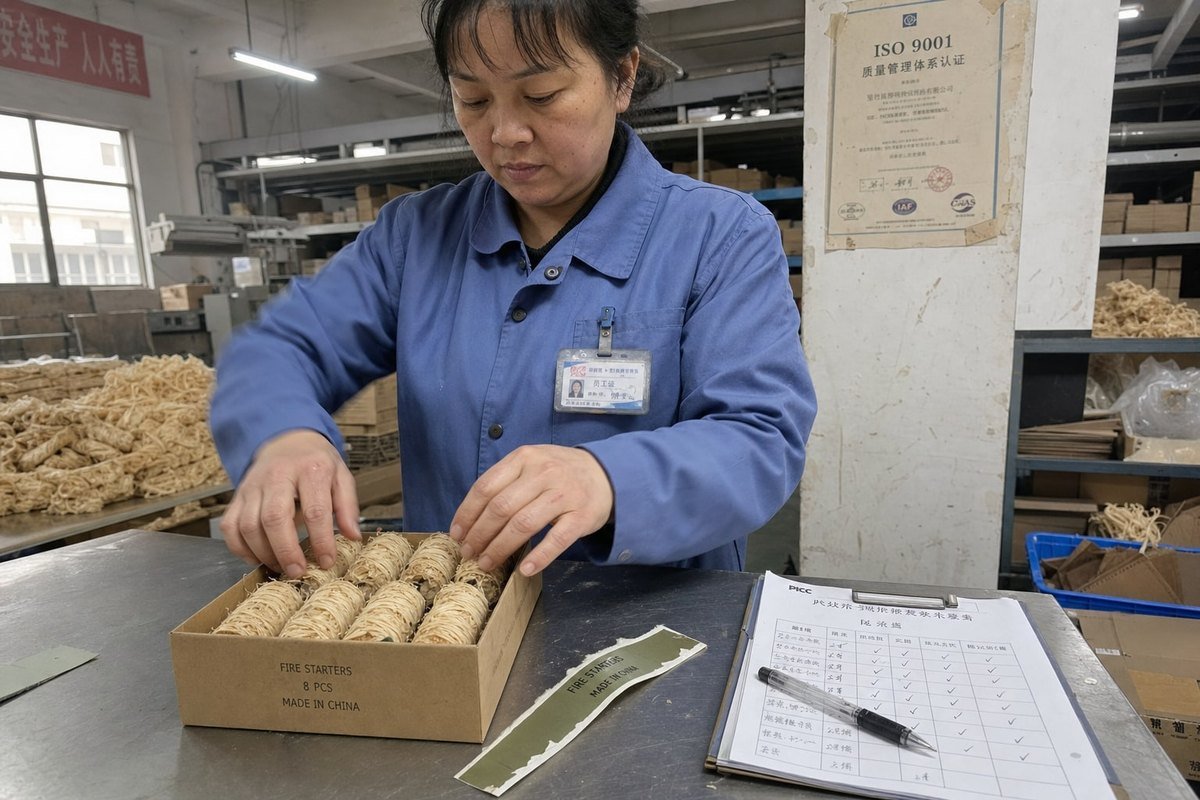
Requesting wood fire starter samples sounds simple, yet on our production line we constantly see buyers get burned — literally and commercially — by skipping proper sample evaluation before ordering.
To request and evaluate wood fire starter samples, send suppliers a written spec sheet, ask for 3–5 units per specification, test ignition speed, burn time, smoke, residue, and packaging integrity, verify certifications like ISO 9001 and SGS reports, then approve only a final pre-production sample.
A sample is not a formality. It is a mini quality audit. Below, I will walk you through the exact process we recommend to our own B2B buyers.
What Should I Look for When Evaluating a Wood Fire Starter Sample's Quality?
A German distributor once returned our wax-dipped wood rolls with a full test log — timings, ash notes, photos Safety Data Sheet 1. That level of rigor taught me what serious evaluation looks like.
Evaluate a wood fire starter sample on five points: ignition speed under ten seconds, a burn time of eight to ten minutes, low smoke and neutral smell, minimal non-corrosive ash, and consistent performance across multiple units, plus packaging that survives transit without crumbling.
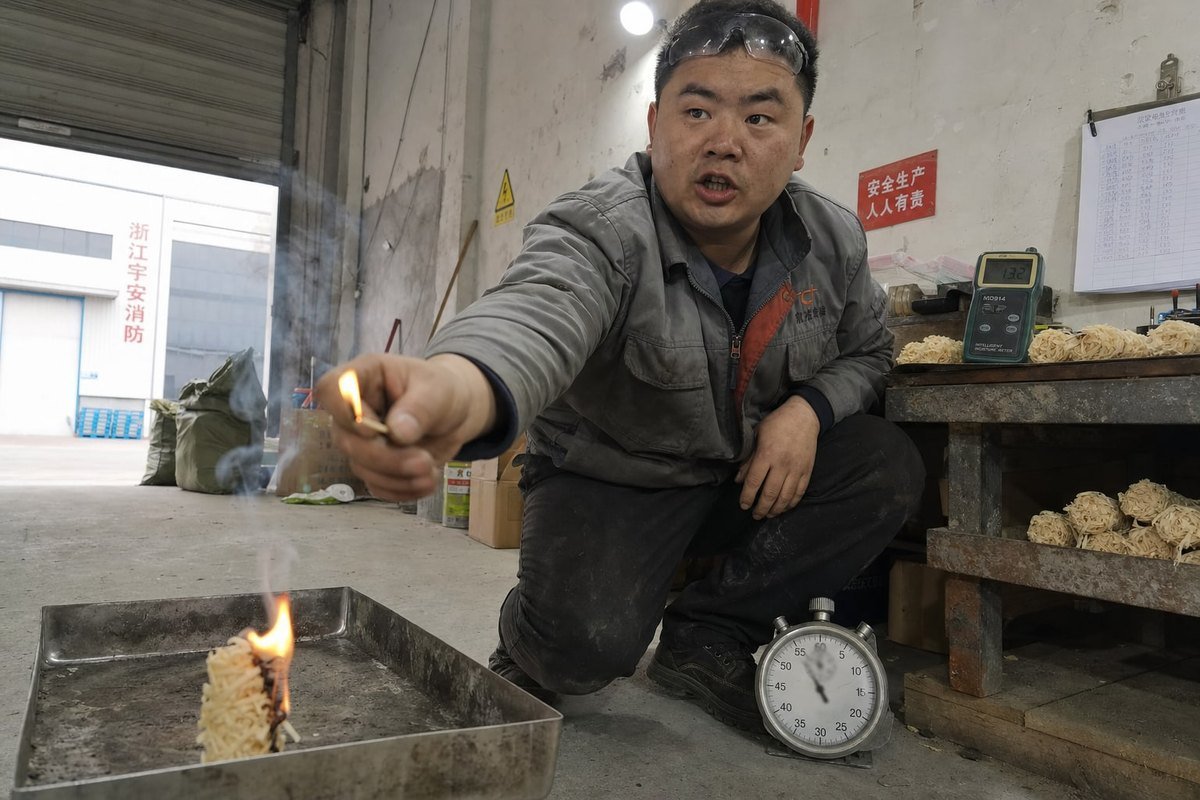
Let me break this down the way our own QC team does it CE marking 2. Wood fire starters are performance products. A nice-looking sample means nothing if it fails in a cold fire pit. So your evaluation must be functional first, cosmetic second.
Run a Structured Burn Time Test
Light each sample with a single match. Time two things: strike-to-flame speed and total burn duration. A good wood wool firelighter should catch within seconds and hold a steady flame long enough to ignite dense hardwood or charcoal without secondary kindling. In our factory, we run this burn time test on random units from every batch, because a single impressive unit proves nothing. Consistency is the real signal.
Check Physical and Material Quality
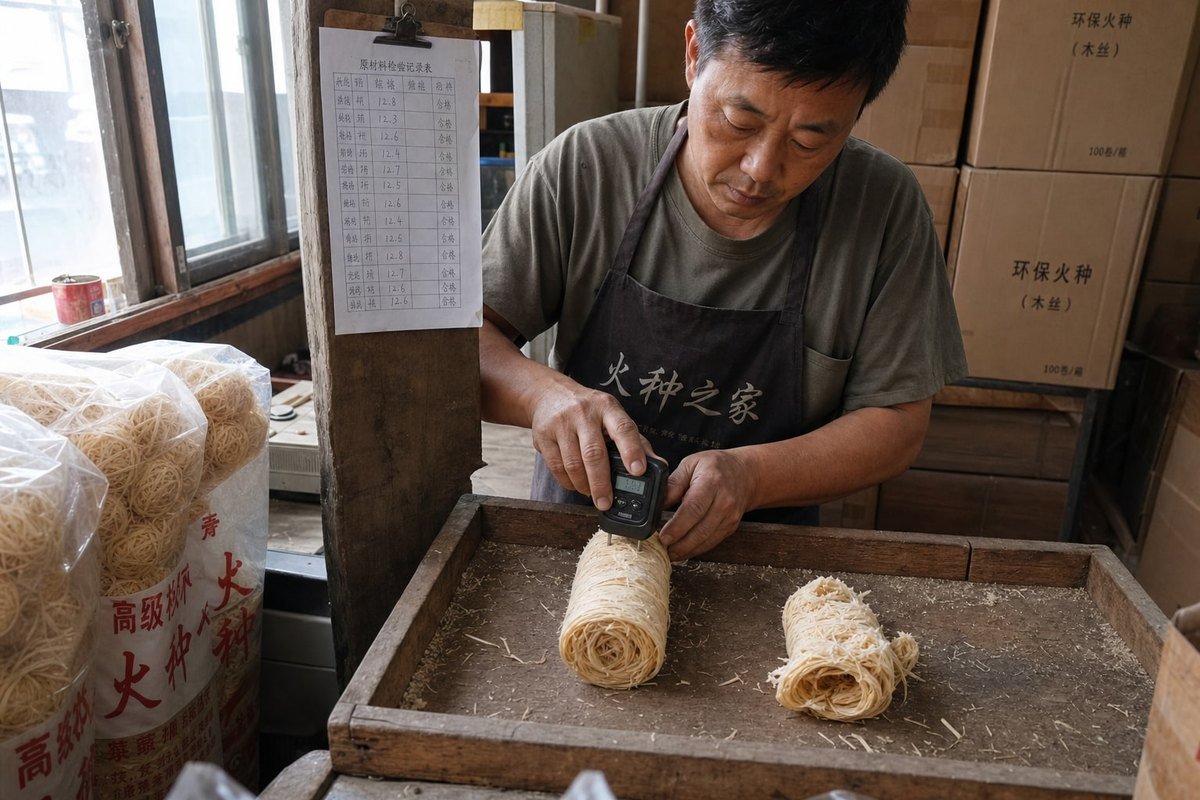
Look at wax saturation on wood wool products. It should be even, not blotchy. If you are sourcing fatwood instead, check the fatwood resin content — richer resin means faster ignition. Then run a moisture content analysis 3. Wood above 20% moisture smokes heavily and creosotes stoves. A pin-style meter gives you a quick answer. Also do a simple crush test: squeeze the roll. If it crumbles into dust, it will not survive bulk ocean freight.
Here is the scorecard framework I suggest to buyers:
| Test Criterion | Target Benchmark | How to Test |
|---|---|---|
| Ignition speed | Flame within 5–10 seconds | One match, no accelerant |
| Burn duration | 8–10+ minutes | Stopwatch, outdoor conditions |
| Smoke and smell | Low smoke, neutral odor | Indoor fireplace simulation |
| Ash residue | Minimal, non-corrosive | Visual check after full burn |
| Moisture content | Below 20% | Pin-style moisture meter |
| Crush resistance | No crumbling under hand pressure | Manual squeeze test |
| Consistency | All units within similar range | Test 3–5 units, compare logs |
Finally, run a shelf-life check if you can. Store one sample in a humid room for a few weeks. Watch for mold or wax bleeding that could ruin retail packaging. Eco-friendly fire starters made from chemical-free materials should still hold up under humidity if produced correctly.
How Do I Request Samples That Truly Reflect Mass-Production Standards?
The trade-off I weigh every week is speed versus accuracy. Buyers want samples fast, but a rushed hand-made sample tells you little about what our full production lines will actually ship.
Request production-line samples, not hand-made prototypes. Send a written brief covering materials, dimensions, burn time, packaging, and labeling, ask for written confirmation of the exact version sampled, and require a final pre-production sample pulled from standard tooling before approving bulk fire starters.
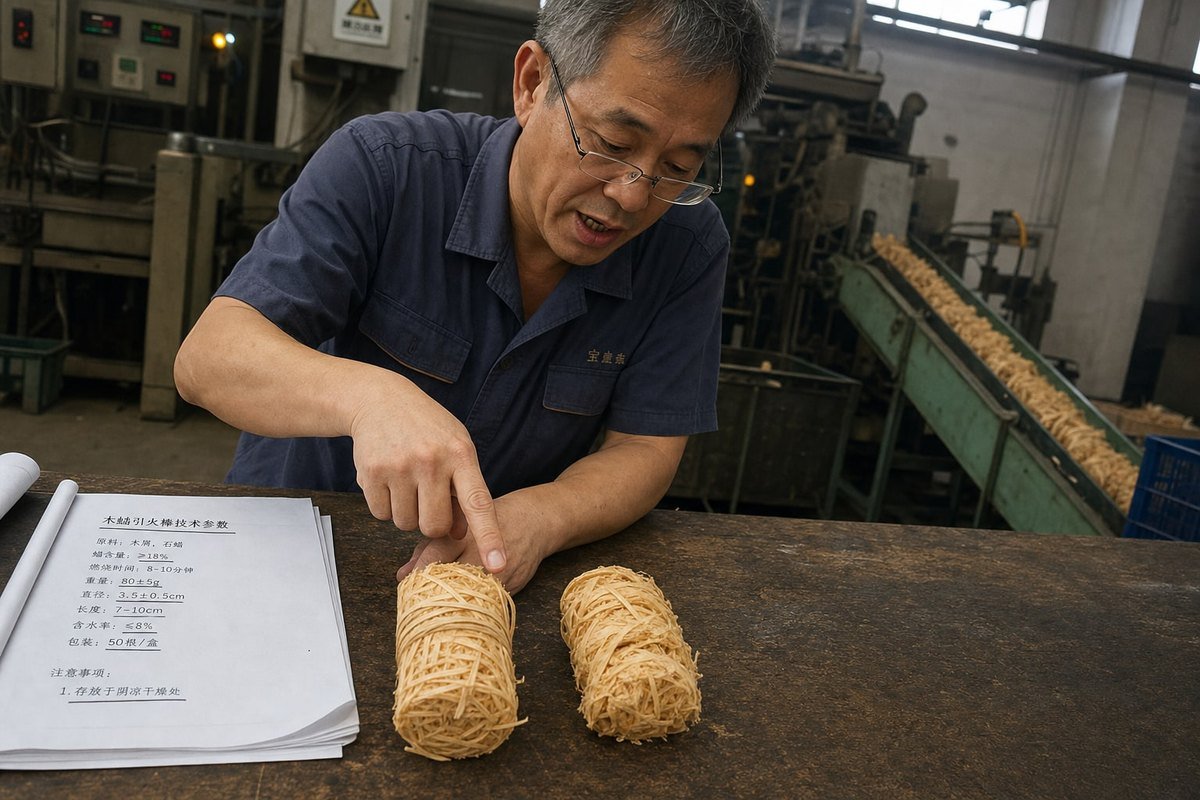
The biggest risk in sourcing is the gap between a golden sample and mass production. Some wholesale kindling suppliers make samples by hand, with extra care, then produce bulk orders on a different process entirely. Your job is to close that gap in writing before money moves.
Treat the Sample Request Like a Mini-RFQ
Do not send a vague "please send me a sample" email. Send a structured brief. Include product type, wood material, dimensions, unit weight, target burn time, wax type, packaging format, labeling, intended market, sample quantity, shipping address, and your delivery timeline. When we receive briefs like this at our Ningbo facility, we can quote and sample accurately on the first try. Vague requests create revision loops that waste weeks.
Ask the Questions That Expose Production Gaps
Before samples ship, ask these directly:
- Is this sample pulled from your standard production line or made by hand?
- Can you produce this exact version at scale, with identical packaging and labeling?
- What is the minimum order quantity 4 and lead time if I approve this sample?
- Will the unit price change if I request revisions?
- What shipping method, incoterm 5, and tracking will you use for the sample?
Clarify shipping terms up front. Many buyers request DDP or express courier with tracking so sample costs and arrival timing stay predictable. Also expect to pay for samples on custom or private label manufacturing projects. Paid samples are a normal qualification cost, not a red flag. A factory that invests real production time in your sample is signaling seriousness — and you should signal it back.
One more point from experience: how a supplier handles your sample request predicts how they will handle your bulk order. Slow replies, dodged questions, or specs that drift from your brief are early warnings. Responsive English communication during sampling usually carries through to production.
What Certifications and Test Reports Should I Ask the Supplier to Provide with Samples?
Compliance questions come up in nearly every buyer call we take, especially from US and EU importers. In our 17-plus years exporting to over 30 countries, documentation has shifted from a nice-to-have to a hard gate.
Ask for ISO 9001 quality certification, BSCI social compliance audits, CE marking where applicable, third-party test reports from SGS or Intertek, a Safety Data Sheet for wax components, and FSC certified wood documentation if your retail channel requires sustainable sourcing claims.
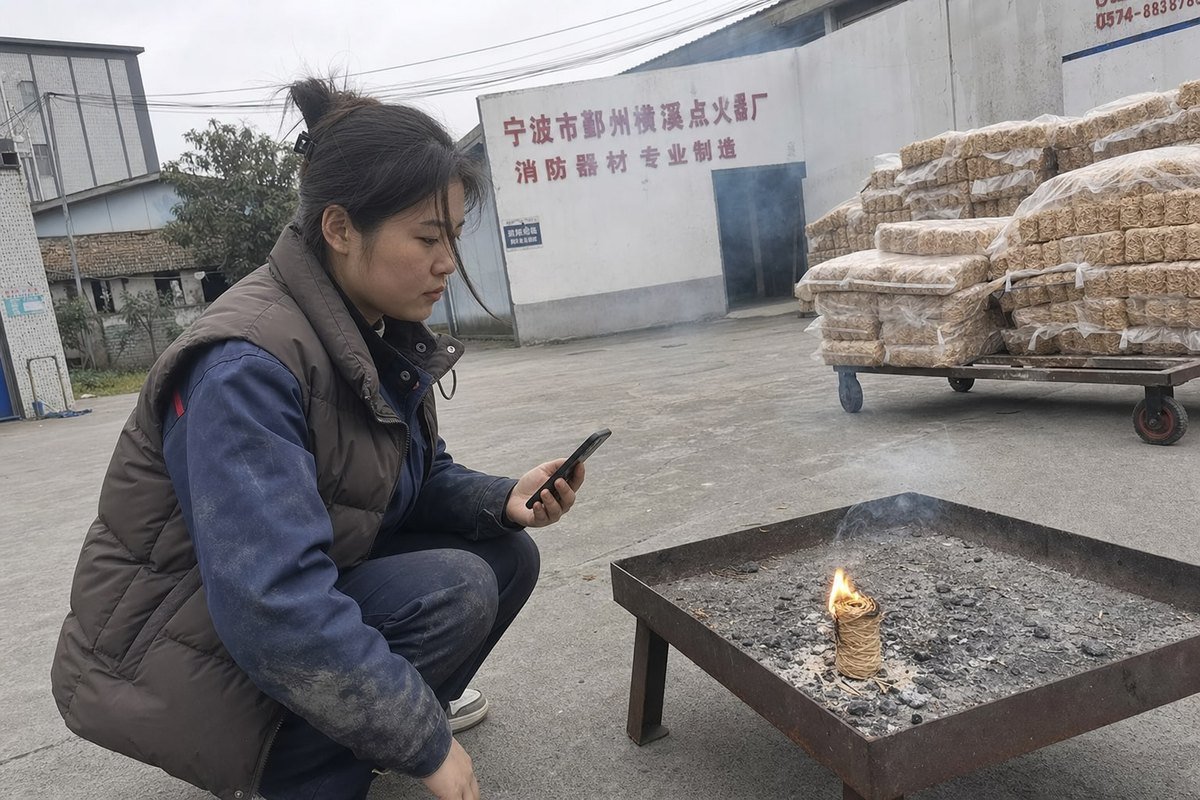
Documentation protects you twice. First, it screens out trading companies posing as factories. Second, it protects your brand when retailers, customs officers, or end customers ask hard questions. For fire-starting products sold into camping, BBQ, and fireplace channels, safety claims on packaging must be backed by real reports.
The Core Document Checklist
| Document | What It Proves | When to Request |
|---|---|---|
| Business license | Supplier is a legal, registered factory | Before sampling |
| ISO 9001 6 certificate | Documented quality management system | Before sampling |
| BSCI audit report | Ethical labor and factory conditions | Before sampling |
| SGS / Intertek test report | Third-party verified product safety | With the sample |
| SDS / MSDS | Safe composition of wax and materials | With the sample |
| CE documentation | EU market conformity where applicable | Before bulk order |
| FSC certified wood 7 chain of custody | Sustainable wood sourcing | If retail channel requires it |
Match Documents to Your Sales Channel
Not every buyer needs every document. A private-label camping brand selling on Amazon needs an SDS and safety test reports. A large retail chain like a home-improvement channel will additionally demand social audits and often FSC certified wood traceability. If you market chemical-free firelighters or eco-friendly fire starters, ask the supplier to prove the claim with composition data, not marketing copy. We provide our own SGS and Intertek reports up front precisely because serious buyers verify them before the sample even ships.
One practical tip: cross-check the certificate numbers directly with the issuing body. Fake or expired certificates circulate more often than most buyers expect. Verification takes ten minutes and can save you a container-load of unsellable inventory.
How Long Should Sampling and Lead Times Take Before I Place a Bulk Order?
A UK fireplace distributor once told me their previous supplier quoted two weeks for samples and delivered in seven. That single delay pushed their whole winter launch back a season.
Expect 3–7 days for standard sample preparation, 5–10 days for express shipping, one to two weeks per revision round, and 25–40 days for bulk production after approval. Plan the full journey from first sample to delivered bulk fire starters at roughly 8–14 weeks.
Timing matters enormously in this category. Fire starters are seasonal. Miss your autumn shelf date, and you carry inventory until next year. So build a realistic sampling calendar and hold both sides to it.
A Realistic Timeline From Sample to Shipment
| Stage | Typical Duration | What Happens |
|---|---|---|
| Sample brief and quote | 2–5 days | Spec sheet sent, supplier confirms feasibility |
| Initial sample production | 3–7 days | Standard product pulled or produced to spec |
| Express shipping | 5–10 days | Courier with tracking, DDP preferred |
| Testing and feedback | 5–7 days | Burn tests, scorecard, written feedback |
| Revision sample (if needed) | 7–14 days | Adjusted formulation, size, or packaging |
| Final pre-production sample | 7–10 days | Full packaging, labels, barcodes included |
| Bulk production | 25–40 days | Depends on order size and season |
| Ocean freight | 25–40 days | Varies by destination market |
Do Not Approve Too Early
The discipline that separates smooth orders from disasters is the three-stage sample path: initial sample, revised sample, final pre-production sample. Request at least three units of the final version — one to keep as your golden reference, one for inspection comparison, and one for product photography. Custom private label manufacturing projects need the full path. Off-the-shelf wood wool firelighters may only need one round, which shortens your timeline meaningfully.
Also factor in seasonality. Factories serving the fire-products category run at full capacity from late summer through autumn. If your minimum order quantity trial ships in peak season, add buffer weeks. Our own production planning in Ningbo fills fastest for Q3 shipments, so we push buyers to finalize samples by late spring. Skipping sample rounds to save two weeks is a false economy when a failed batch costs you an entire selling season.
Conclusion
Treat every sample request as a quality audit. Test rigorously, verify documents, demand pre-production samples, and partner with certified factories — that discipline protects your brand and your season.
Footnotes
1. EPA reference page explaining Safety Data Sheets required for wax chemical documentation. ↩︎
2. Official EU page explaining CE marking conformity requirements mentioned for European market compliance. ↩︎
3. Background reference explaining wood moisture measurement relevant to fire starter quality testing. ↩︎
4. Trade.gov resource clarifying MOQ concept relevant to bulk ordering decisions after sampling. ↩︎
5. Wikipedia explanation of Incoterms shipping terms referenced for sample delivery arrangements. ↩︎
6. Official ISO standard page defining the quality management certification referenced throughout the article. ↩︎
7. Wikipedia background on the FSC certification system for sustainable wood sourcing claims. ↩︎


 English
  Spanish
  German
  French
  Arabic
  Portuguese
Join the Conversation