






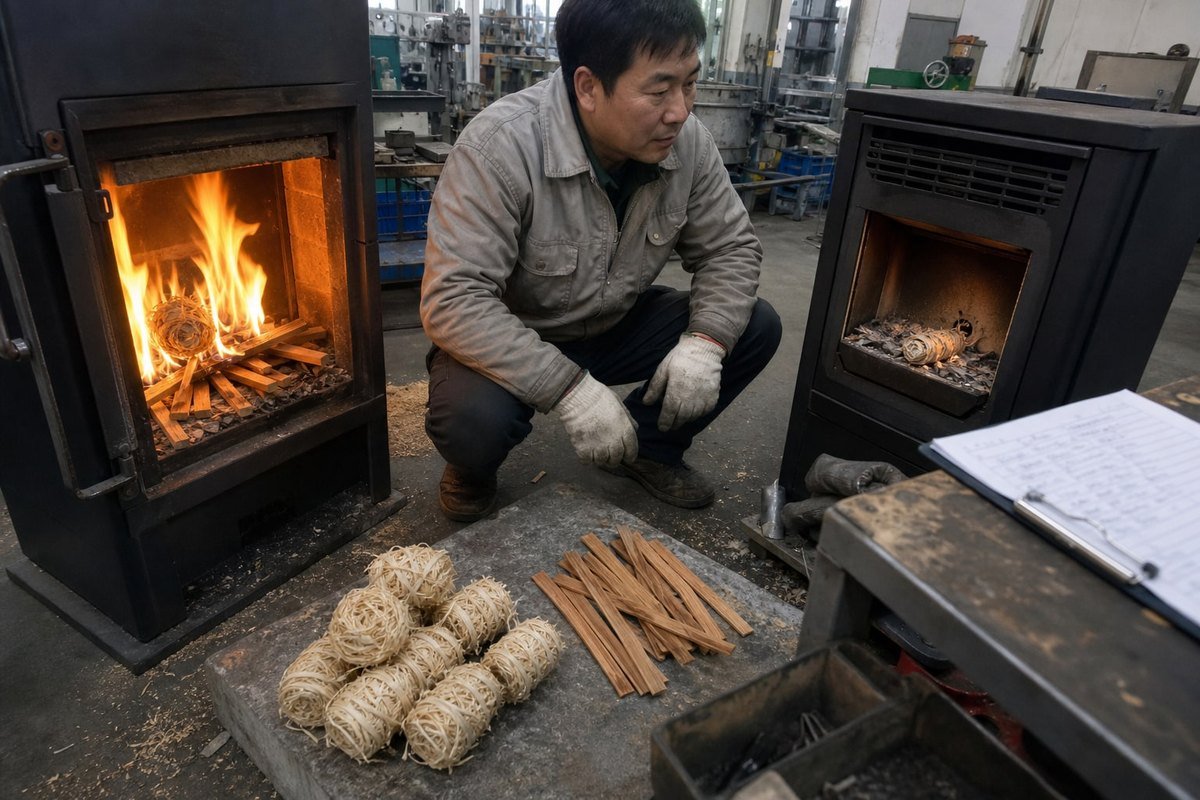
Buyers ask me this weekly: are wood fire starters truly safe across stoves and fireplaces? On our production line 1, we've seen how one wrong assumption can cost a distributor an entire season of returns. The wrong starter in the wrong appliance means clinkering, complaints, and lost shelf space. The fix is knowing exactly which starter type matches which appliance — and that's what I'll break down here.
Wood fire starters are suitable for open fireplaces and wood stoves when made from natural wood fiber and wax. Pellet stoves are the exception: only starters explicitly labeled for pellet use, typically gel formats, should go in a burn pot. Always confirm with the appliance manual first.
That short answer hides real nuance. Each appliance ignites fuel differently. Let me walk you through the differences, the certifications that matter, and how to source the right product.
Do Wood Fire Starters Perform Differently in Pellet Stoves Compared to Traditional Fireplaces?
During a QC burn test at our Ningbo facility last winter, we ran the same wax-dipped wood roll in an open firebox and a pellet burn pot 2 side by side. The results were completely different — and that difference is the whole story.
Yes, they perform very differently. In fireplaces and wood stoves, wood fire starters ignite kindling from below or above with open airflow. Pellet stoves use a small burn pot with forced air, where high-wax starters can melt, fuse with ash, and block airflow — so only pellet-approved starters belong there.
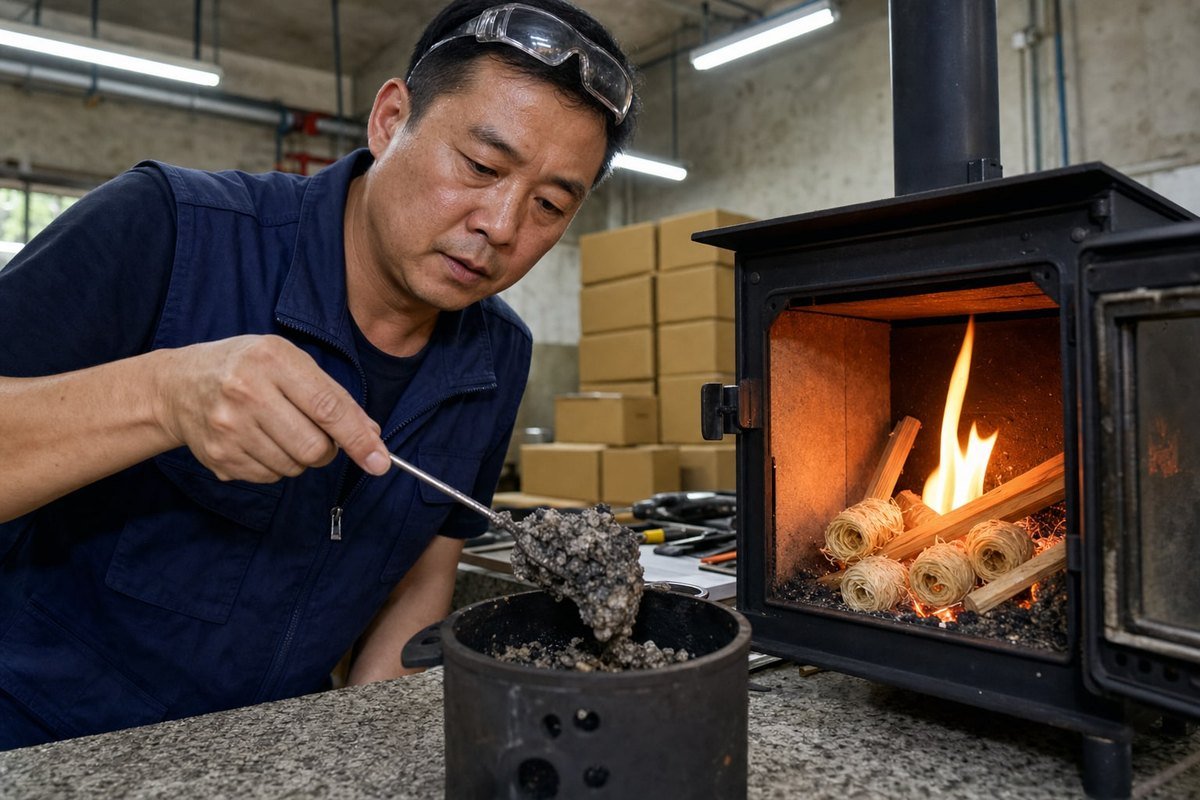
The reason comes down to combustion design. An open fireplace relies on natural draft. You place a starter under dry kindling 3, the flame rises, and the chimney pulls air upward. A wood stove 4 works similarly but in a sealed box, so a hot, fast ignition matters even more. It shortens the smoky startup phase and helps reduce creosote buildup in the flue.
A pellet stove is a different machine entirely. It feeds compressed pellets into a small metal burn pot, then pushes air through precise holes to sustain combustion. Most models ignite automatically with an electric element. When the igniter fails, users sometimes reach for a manual backup — and this is where problems start. A high-wax starter can melt into liquid paraffin, pool in the pot, and fuse with ash into hard clinkers. Those clinkers block the airflow holes and choke the burn cycle. That's why pellet stove gel exists as a separate category: it burns off cleanly without leaving fused residue.
Compatibility at a Glance
| Appliance | Wood Wool / Wax Starters | Fatwood | Pellet Gel |
|---|---|---|---|
| Open fireplace | Excellent | Excellent | Works, but unnecessary |
| Wood stove | Excellent | Very good | Works, but unnecessary |
| Pellet stove | Not recommended unless labeled | Not recommended | Designed for it |
| Fire pit / grill | Excellent | Very good | Acceptable |
Why Placement Also Matters
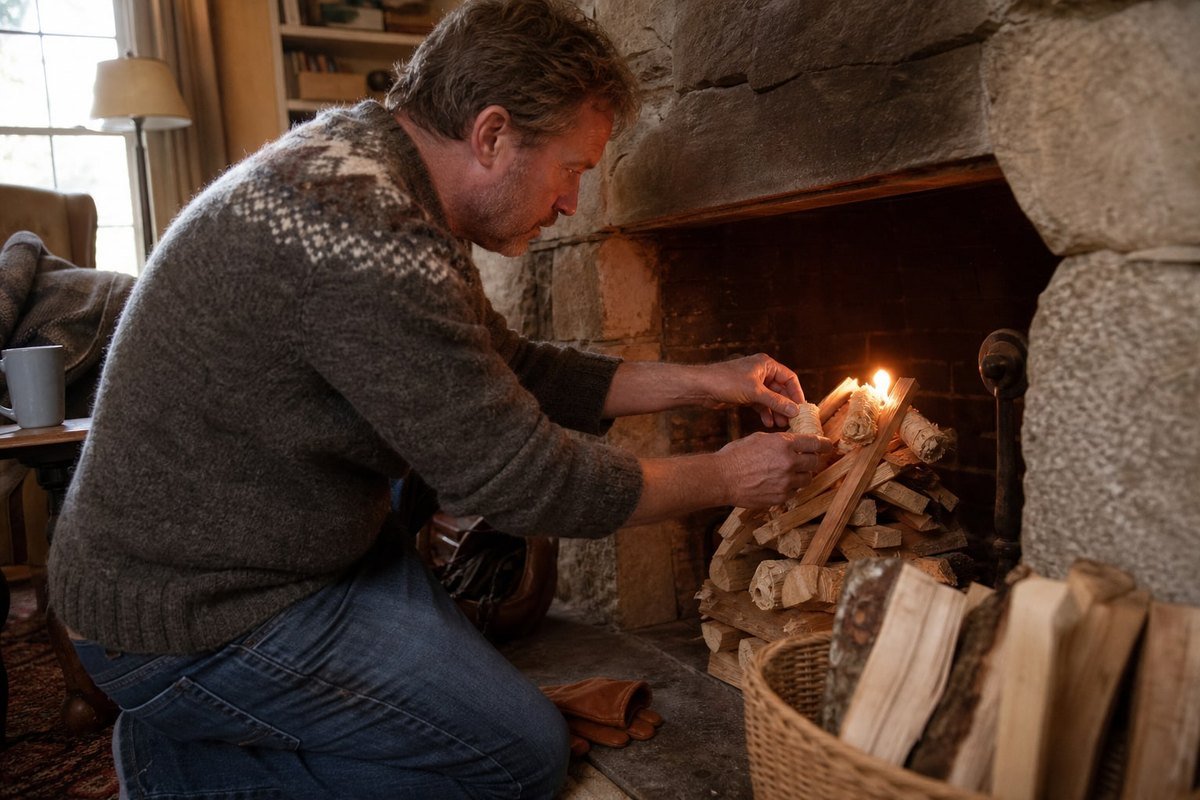
In fireplaces, the top-down lighting method has changed starter placement. Putting the starter on top of the fuel stack heats the flue faster, establishes draft sooner, and prevents the cold-hearth smoke spillage that frustrates so many first-time stove owners. Our wood wool starters were shaped specifically to sit stable on top of split logs for this method. In a pellet burn pot, there is no stack to place anything on — which is exactly why the two use cases should never be treated as interchangeable.
What Certifications Should I Look for to Ensure Wood Fire Starters Are Safe for Enclosed Stoves?
One lesson we learned early in our 17-plus years of exporting: a European fireplace distributor 5 once rejected an entire competitor shipment at customs — not for quality, but for missing test documentation. Paperwork is not optional in this category.
Look for SGS or Intertek test reports confirming non-toxic, low-smoke combustion, CE compliance for the European market, and factory-level ISO 9001 and BSCI certification. For enclosed stoves, documented natural composition — wood fiber and food-grade paraffin — matters most for indoor air safety.

Enclosed stoves concentrate whatever a starter releases. In an open fireplace, minor odor drifts up the chimney. In a sealed wood stove, residues can coat the glass, the baffle, and — most critically — the catalytic combustor 6 in catalytic models. Low-quality starters with synthetic binders leave microscopic deposits on those combustors and shorten their working life. That is why serious buyers ask about composition before price.
Here is what I tell purchasing managers to verify, in order of priority:
- Third-party lab reports. SGS or Intertek testing confirms the product is a non-toxic firelighter with no harmful chemicals. Ask for the actual report, not just a claim on the packaging.
- CE marking for Europe. Firelighters sold in the EU need compliant labeling, warning text, and conformity documentation. We handle this on every European order.
- ISO 9001 at the factory. This proves the maker controls batch-to-batch consistency — critical because ignition temperature and burn time must not drift between production runs.
- BSCI social audit. Large retail channels increasingly require it before listing any product.
- Composition transparency. A clean formula — typically around 50% wood fiber and 50% paraffin — should be printed on the box, along with clear usage instructions.
Why Composition Affects Stove Health
| Starter Quality Factor | Effect on Enclosed Stoves |
|---|---|
| Natural wood fiber + clean paraffin | Clean burn, minimal ash, no toxic vapors |
| Synthetic binders or fillers | Residue on glass and catalytic combustors |
| High moisture content | Weak ignition, excess smoke, more creosote buildup |
| Consistent wax coating | Predictable burn time and moisture resistance in storage |
One more point on chimney flue safety: a certified, clean-burning starter helps establish draft quickly, which shortens the low-temperature startup phase where most creosote forms. Certification is not just a customs formality. It is a proxy for combustion quality your end customers will feel every time they light a fire.
Can I Get Wood Fire Starters Customized in Burn Time and Size for Different Stove Types?
A German BBQ distributor once asked us for a starter that burned eight minutes for stoves and a smaller five-minute version for grills — same brand, two SKUs. That request is far more common, and more achievable, than most buyers assume.
Yes. Burn time, roll diameter, length, and wax ratio can all be customized. Manufacturers adjust the wood wool density and wax coating to hit target burn times — typically 5 to 12 minutes — matching small stoves, large fireplaces, grills, or damp outdoor conditions.
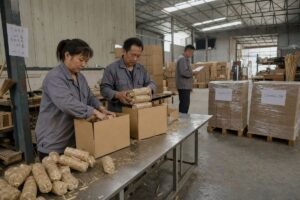
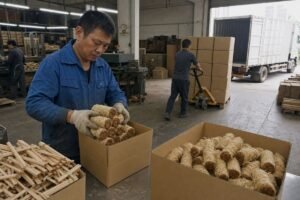
Customization in this category is real engineering, not marketing. Our wax-dipped wood rolls start as loose wood wool wound into cylinders. Two variables control performance: the density of the winding and the depth of the wax dip. Denser rolls with heavier wax burn longer and resist ambient moisture better. Looser rolls ignite faster but burn out sooner. Getting a repeatable burn time means controlling both variables on every batch — which is exactly what our QC team measures with timed burn tests during production.
Matching Specifications to Appliances
Different appliances genuinely need different specs, and a smart product line reflects that:
| Target Appliance | Recommended Size | Target Burn Time | Design Priority |
|---|---|---|---|
| Small wood stove | Compact roll | 6–8 minutes | Fast, hot ignition to establish draft |
| Large open fireplace | Standard or long roll | 8–12 minutes | Sustained flame for top-down lighting |
| High-efficiency smokeless stove | Dense, compact roll | 7–10 minutes | High caloric density, low flame profile |
| BBQ grill / fire pit | Small roll | 5–7 minutes | Quick charcoal or kindling ignition |
That third row deserves a note. Modern EPA-certified and smokeless stoves 7 rely on a precise secondary airflow balance. A starter with a tall, aggressive flame can disrupt that balance during startup. So for those markets, we build denser rolls that deliver heat without a dramatic flame profile — better combustion efficiency, cleaner glass, happier end users.
Beyond Burn Time
Customization also extends to packaging and branding. We regularly produce private-label boxes, display-ready packaging, custom warning labels private-label products 8, and barcodes for retail channels. A distributor can run a trial order with flexible MOQs, confirm the spec against the sample, and scale up knowing the mass-production batch will match. That sample-to-production consistency is, frankly, where 17 years of process discipline shows.
How Do I Source a Reliable Manufacturer for Wood Fire Starters That Work Across Multiple Heating Appliances?
Trade-offs drive every sourcing decision I see. Buyers want low price, full compliance, fast lead times, and flexible MOQs — but no supplier delivers all four equally, so knowing which questions expose the truth is everything.
Source from an actual factory — not a trading company — with ISO 9001, BSCI, CE, and SGS or Intertek documentation, proven multi-appliance product knowledge, transparent composition, private-label capability, and batch-consistent samples. Verify test reports directly and confirm the factory understands pellet stove restrictions.
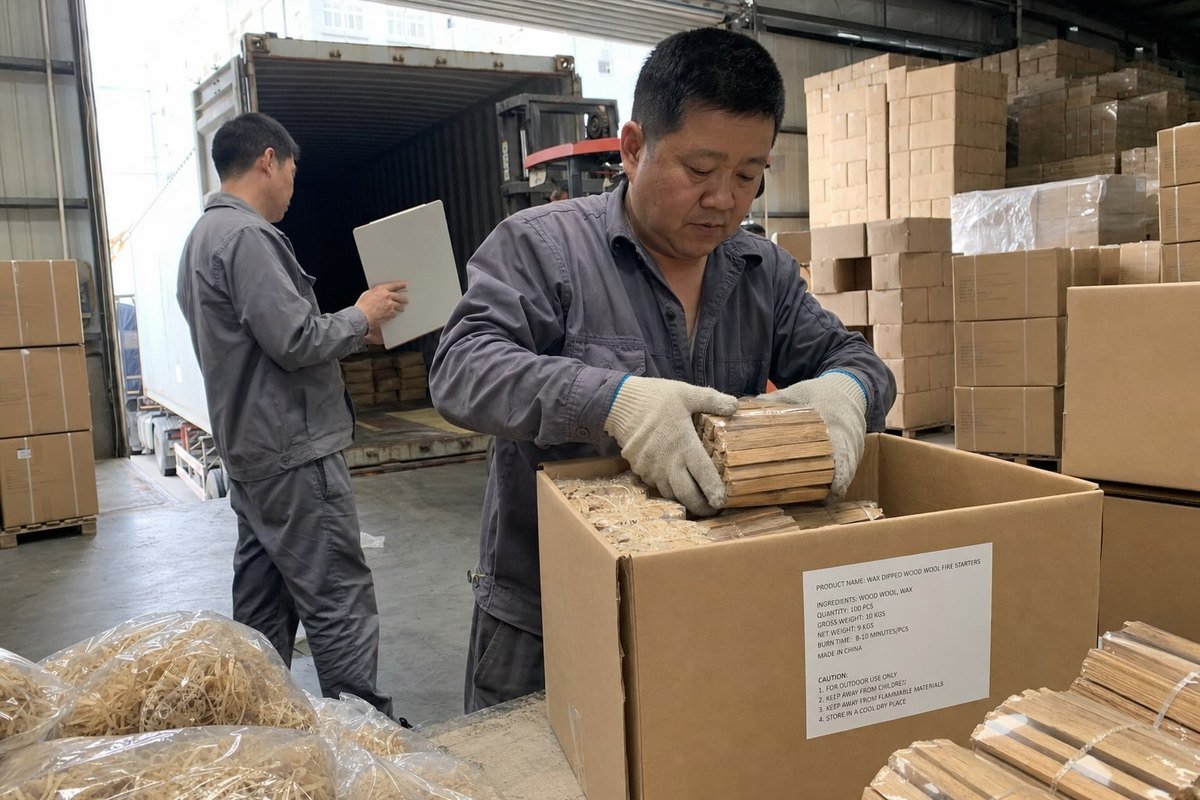
The single biggest sourcing mistake I see is treating fire starters as a commodity. They are a regulated combustion product going into people's homes. A supplier who cannot explain why wax-based firelighters should not go in a pellet burn pot — or who labels everything "universal" — is telling you they do not understand their own product. That knowledge gap becomes your liability when returns and complaints land on your desk.
Here is the vetting process I recommend, based on how our best long-term buyers evaluated us:
- Confirm factory status. Ask for production photos, video calls from the floor, and audit reports. We host buyers at our Ningbo production site precisely because seeing the line removes doubt. Trading companies cannot control batch consistency; factories can.
- Request documents, not claims. ISO 9001, BSCI, CE files, and SGS or Intertek test reports should arrive within a day of asking. Slow or evasive responses are a red flag.
- Test samples against your appliances. Burn samples in an actual wood stove and fireplace. Check ignition speed, burn time, odor, ash residue, and how the starter handles storage in a damp garage — moisture resistance matters for real-world retail.
- Probe appliance knowledge. Ask directly: "Can this go in a pellet stove?" The right answer acknowledges the restriction and offers correct labeling guidance. The wrong answer is an unqualified yes.
- Start with a trial order. Reasonable MOQs for a first run let you validate quality, packaging, and logistics before committing a full season's volume.
- Evaluate communication. Responsive English communication during sampling predicts how problems get solved later. It always does.
A reliable partner also helps you build the product line correctly — for example, positioning resin-rich fatwood and wood wool starters for fireplace and wood stove customers, while steering pellet stove owners toward appropriate labeling. Getting that segmentation right on the shelf protects your brand far better than any disclaimer after the fact.
Conclusion
Wrong starter, wrong appliance — that mistake costs distributors sales and trust. The solution: match wood fire starters to fireplaces and wood stoves, reserve gels for pellets, and source from certified factories.
Footnotes
1. Authoritative Wikipedia overview of ISO 9001 quality management standards used in manufacturing. ↩︎
2. Technical overview of pellet stove components, including the burn pot where fuel ignition occurs. ↩︎
3. Wikipedia's definition of kindling and its role in establishing a fire in stoves and fireplaces. ↩︎
4. Wikipedia article detailing the history, design, and operation of traditional wood-burning stoves. ↩︎
5. Official European Commission page detailing CE marking compliance and distributor responsibilities. ↩︎
6. Official EPA Burnwise guide explaining catalytic stove technology and efficiency requirements. ↩︎
7. EPA resources explaining the benefits of using smokeless or

 English
  Spanish
  German
  French
  Arabic
  Portuguese
Join the Conversation