






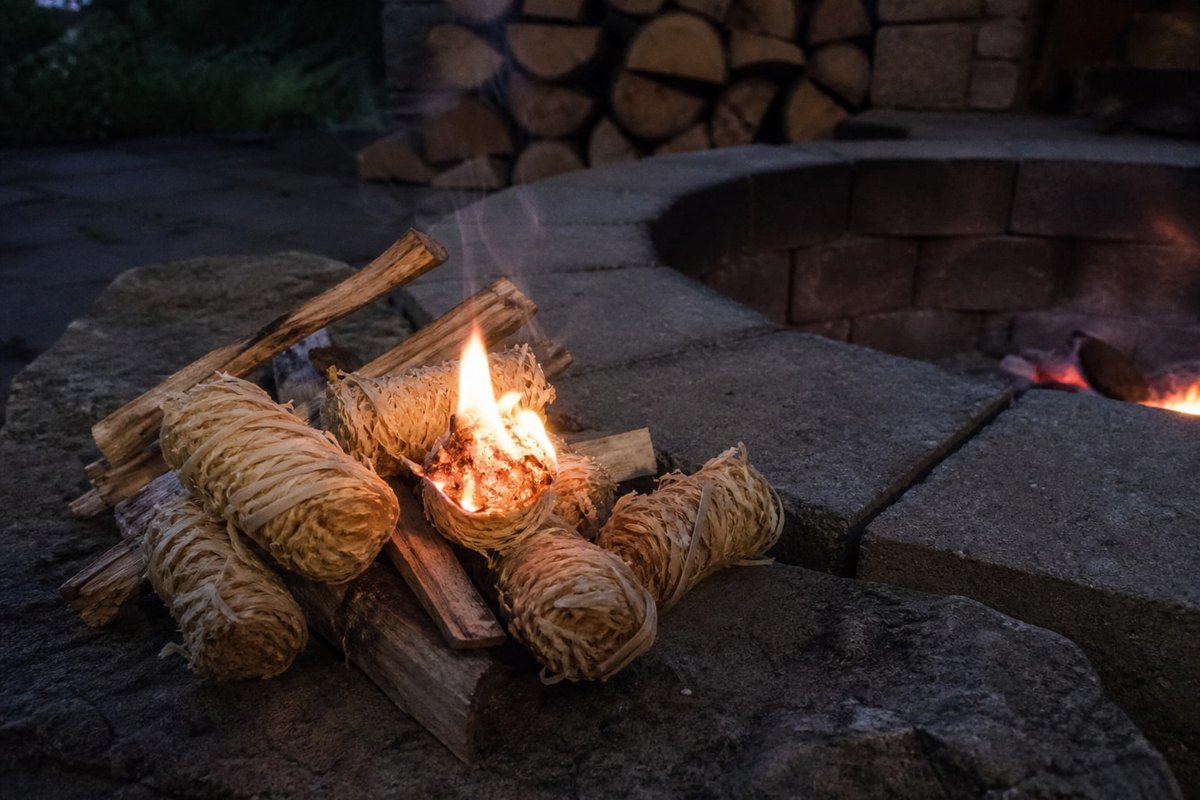
Wood fire starters that fail to catch quickly frustrate customers and trigger returns hygroscopic degradation 1. I have watched buyers reject entire samples over slow ignition. On our production line, we treat ignition speed as a core spec — and here is what the numbers should actually be.
Quality wood fire starters should ignite within 1 to 5 seconds of direct flame contact and self-sustain within 10 seconds. Just as important, they must burn for 5 to 10 minutes afterward, because a fast catch without lasting burn duration cannot ignite kindling and logs.
That single number hides a lot of detail. Ignition speed depends on material, moisture, and testing method. Let me walk you through what to expect, how to test it, and how to verify it before you commit to a bulk order.
What Ignition Time Should I Expect From a Quality Wood Fire Starter?
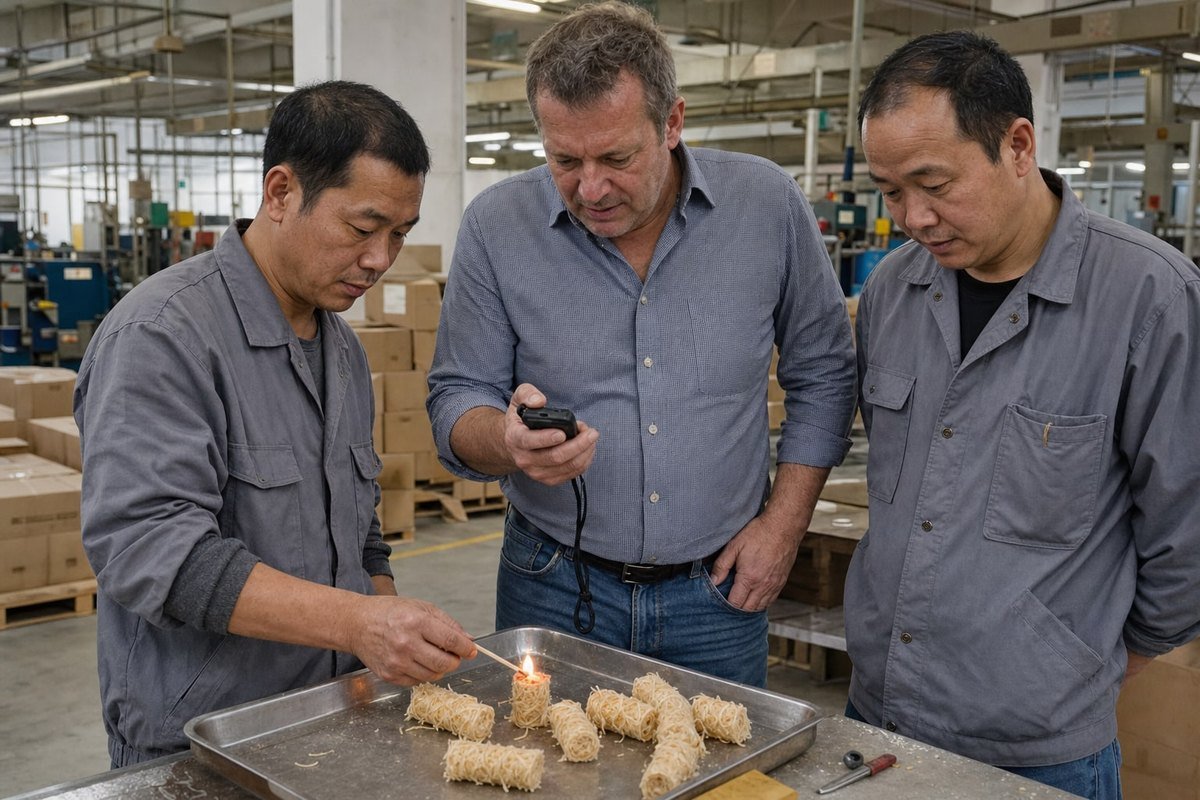
During a factory audit last year, a German distributor timed our wax-dipped wood rolls with a stopwatch. He expected marketing fluff. Instead, our samples caught in under three seconds, every single time.
Expect a quality wood fire starter to catch flame in 1 to 5 seconds and hold a self-sustaining flame within 10 seconds. Anything slower than 20 seconds in calm, dry conditions signals poor material blending, excess moisture content, or inconsistent wax coverage.
The "seconds" question is really two questions. First, how fast does the starter itself catch? Second, how long does it burn afterward? Both matter, and buyers who only measure the first one get burned — figuratively — later.
Ignition Speed vs. Burn Duration
A starter that lights in one second but dies in thirty is useless for a wood fire. Lighter fluid proves this point. It ignites almost instantly, yet burns for only about 30 seconds to a minute. That is not enough time to bring kindling wood past its flash point 2 and into sustained combustion. Independent product testing has found that fire starters need to stay lit for roughly 5 to 9 minutes minimum to fully ignite logs, with typical products burning anywhere from 3 to 15 minutes.
Here is how common starter types compare:
| Starter Type | Typical Ignition Time | Typical Burn Duration | Best Use |
|---|---|---|---|
| Wax-dipped wood wool rolls | 1–4 seconds | 8–12 minutes | Fireplaces, fire pits, camping |
| Fatwood sticks | 5–10 seconds | 5–8 minutes | Wood stoves, outdoor fires |
| Compressed paraffin blocks | 5–15 seconds | 10–15 minutes | Charcoal grills, damp conditions |
| Lighter fluid | Under 1 second | 30–60 seconds | Charcoal only, not wood fires |
| Loose tinder bundle | 1–2 seconds | 1–3 minutes | Survival, bushcraft |
Why Surface Area Decides the Catch
The surface-area-to-volume ratio 3 controls catch speed. Shredded wood wool ignites almost instantly because thin fibers heat past their flash point fast. Dense wax blocks need a pre-heating phase before the paraffin wax vaporizes and feeds the flame. Our 50% wood fiber, 50% paraffin blend exists precisely to balance both: fibers give the instant catch, and wax gives the endurance.
How Do I Test Ignition Speed Before Placing a Bulk Order?
One trade-off we discuss with every new buyer is sample testing depth versus timeline pressure. Rushing past ignition tests to hit a shipping date almost always costs more later.
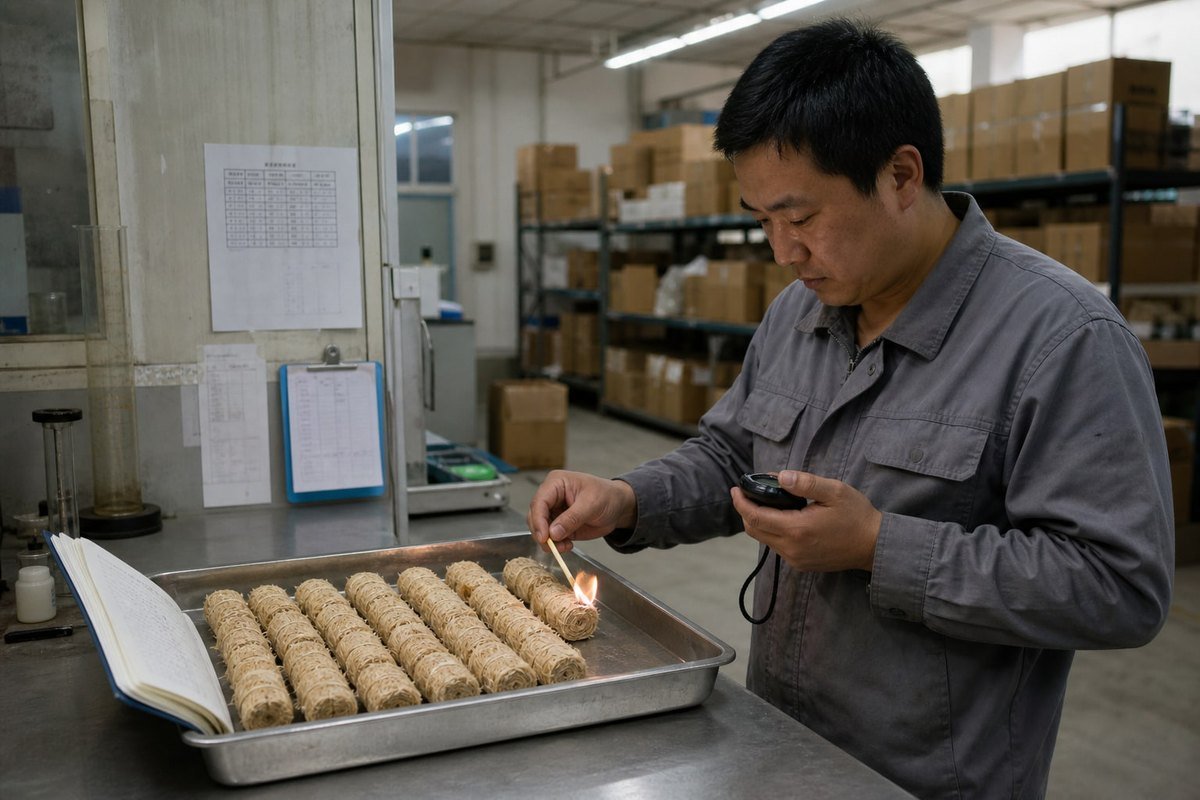
Test ignition speed by timing 10 to 20 random samples with a single match in calm, dry air at room temperature. Record time to first flame and time to self-sustained burn. Reject batches averaging over 8 seconds or showing wide variation between pieces.
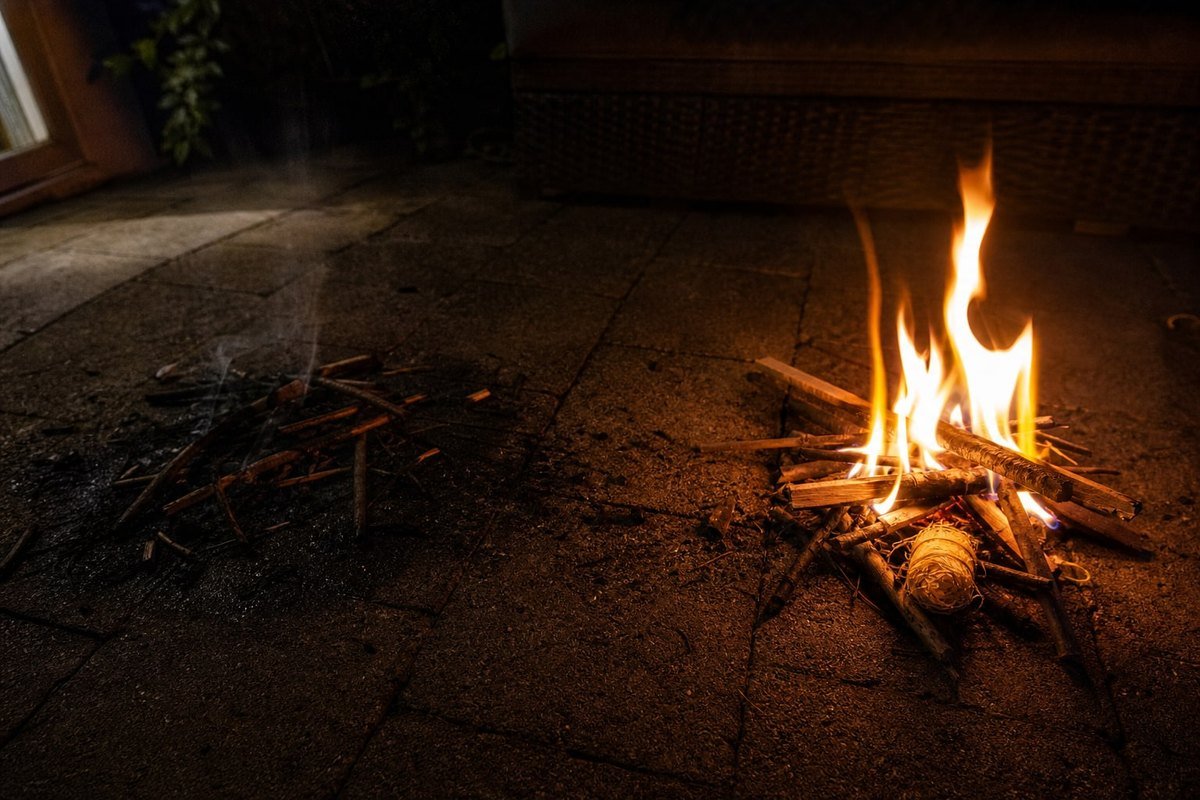
I always tell purchasing managers the same thing: do not test one sample and call it done. One good piece proves nothing. Consistency across a random pull is what predicts container-level quality. When we prepare samples in Ningbo, we pull them from a live production run, not a hand-picked showcase batch, because our first sample must reflect mass production. Buyers who test properly can hold us to that standard — and should.
A Simple 5-Step Sample Test Protocol
- Condition the samples. Store them at room temperature, out of humidity, for 24 hours. This removes storage-related moisture variables.
- Time the first flame. Touch a match to each piece and start a stopwatch. Note the second the material catches.
- Confirm self-sustainment. Remove the match at 5 seconds. The flame should grow, not shrink. If it dies, the piece fails.
- Measure total burn duration. Let each piece burn out completely. You want 8 minutes or more for wood fires.
- Run a real-world transfer test. Place one starter under kindling wood in a fire pit or wood stove. The kindling should hold flame before the starter dies.
Pass/Fail Benchmarks to Put in Your Purchase Agreement
| Metric | Acceptable | Marginal | Reject |
|---|---|---|---|
| Time to first flame | ≤5 seconds | 6–8 seconds | >8 seconds |
| Self-sustained flame | ≤10 seconds | 11–20 seconds | >20 seconds |
| Burn duration | ≥8 minutes | 5–7 minutes | <5 minutes |
| Piece-to-piece variance | Under 2 seconds | 2–4 seconds | Over 4 seconds |
Write these thresholds into your order terms. A serious factory will accept them without hesitation. In our 17+ years exporting to 30+ countries, the buyers who define benchmarks up front have the smoothest reorder cycles.
What Factors Affect Consistent Burn and Ignition Performance Across Batches?
A lesson we learned early in our Ningbo facility: two batches made from the same recipe can behave differently if wax temperature drifts during dipping. Batch control is a discipline, not an accident.
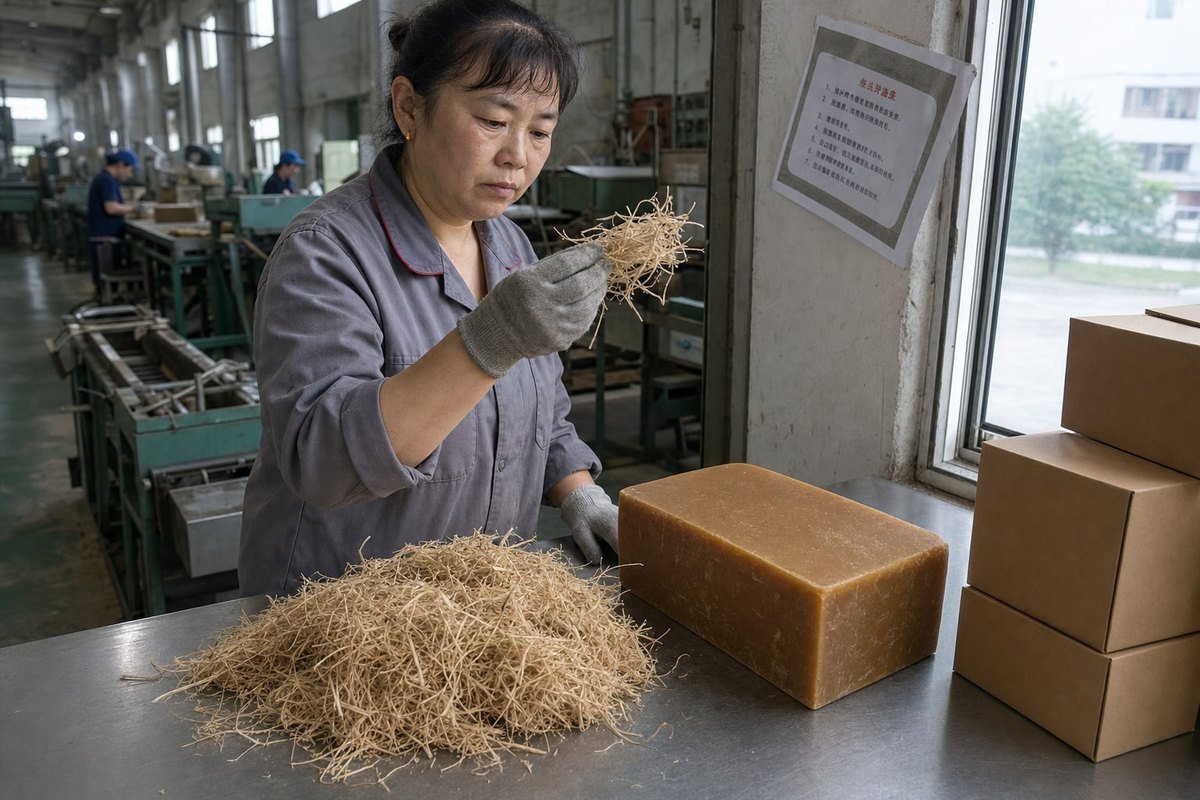
Batch consistency depends on wood fiber moisture content, paraffin wax ratio and dipping temperature, piece density, storage conditions, and environmental testing variables. Controlling raw material specs and process parameters keeps ignition times within a 1 to 2 second range across production runs.
Consistency is the difference between a product that builds a brand and one that generates complaint tickets. A starter that lights in 3 seconds today and 15 seconds next month will get one-star reviews even if both pieces technically "work." So let me break down where variation actually comes from.
Raw Material Variables
Moisture content 4 in the wood fiber is the biggest factor. Fiber stored in humid conditions absorbs micro-moisture through hygroscopic degradation 5. The piece can look bone dry and still take twice as long to ignite. That is why we test incoming fiber lots before they reach the dipping line, and why we specify moisture-barrier packaging for sea freight. Eco-friendly firelighters made from natural fiber and food-grade paraffin — the only kind we produce — are just as vulnerable to humidity as any other, so packaging discipline matters even more.
The wax ratio matters too. Too much paraffin wax and the piece needs a longer pre-heat before catching. Too little and burn duration collapses. Our 50/50 fiber-to-wax blend is held to tight tolerances at the dipping stage precisely because a few percentage points shift both numbers.
Environmental and Use Variables
Even a perfect batch performs differently in the field:
- Cold fireboxes rob heat. A cold cast-iron wood stove or stone hearth acts as a heat sink and delays the starter reaching combustion temperature.
- Wind and sub-zero temperatures can stretch required flame-contact time dramatically — by as much as triple in harsh conditions.
- Poor airflow chokes the flame. Oxygen supply is most critical in the first 30 seconds, and a weak chimney draft can make a good starter smolder.
- Wet firewood shifts the burden to burn duration. Logs above 20% moisture content 6 may need a starter burning well past 15 minutes, or a second starter.
Your customers will blame the product for all of these. Clear usage instructions on the packaging — something we build into every private-label design — reduce that friction before it starts.
How Can I Verify Ignition Time Meets Safety and Compliance Standards?
A UK buyer once asked us for test reports before he would even open our price sheet. That order of priorities was exactly right, and it is how we advise every importer to operate.
Verify ignition performance through third-party lab reports from bodies like SGS or Intertek, confirm the factory holds ISO 9001 and relevant CE documentation, and require batch-level QC records showing ignition and burn-time data. Marketing claims alone are never sufficient evidence.
Fire products sit in a regulated category in the US and Europe, and retailers know it. Big-box sourcing teams will not stock firelighters without documented testing, correct warning labels, and traceable batch records. Wood stove safety guidance in several markets also pushes retailers toward solid starters and away from liquid accelerants, which is good news for wood-and-wax products — but only if your paperwork holds up.
What Documentation to Demand From Any Supplier
| Document | What It Proves | Red Flag If Missing |
|---|---|---|
| SGS or Intertek test report | Independent verification of composition and burn behavior | Claims rest on the factory's own word |
| ISO 9001 certificate | A functioning quality management system | No systematic batch control |
| BSCI audit report | Ethical, audited production conditions | Risk for retail-channel compliance |
| CE-related documentation | Suitability for the European market | Customs and retailer rejection risk |
| Batch QC records | Ignition and burn duration tracked per run | No traceability when complaints arise |
Verification Steps That Actually Work
First, ask for reports issued to the factory's own name — not a trading company's — and check dates. Stale reports from years ago tell you little about current production. Second, cross-check the report number directly with the lab; SGS and Intertek 7 both allow verification. Third, request the factory's internal QC procedure for ignition testing. At our plant, ignition-time checks are part of routine batch release, and we share those records with buyers because compliance is a hard requirement for our customers, not a nice-to-have.
Finally, make sure retail packaging carries proper warning labels, composition disclosure, and barcodes for your market. We handle this within our OEM/ODM process — custom boxes, display packaging, and market-specific labeling — because a compliant product in non-compliant packaging still gets pulled from shelves.
Conclusion
Slow ignition kills reorders. Inconsistent batches kill brands. Demand starters that catch in 1–5 seconds, burn 8+ minutes, and come with verified compliance documents — then partner with a factory that proves it batch after batch.
Footnotes
1. Explains the scientific concept of hygroscopic materials absorbing ambient moisture, supporting the storage claim. ↩︎
2. Explains the combustion threshold concept referenced when discussing kindling ignition. ↩︎
3. Background on the physics principle that explains why thinner material ignites faster. ↩︎
4. EPA program on efficient wood burning, directly relevant to moisture and combustion quality. ↩︎
5. Defines the moisture-absorption process affecting wood fiber ignition performance. ↩︎
6. EPA's Burn Wise program confirms seasoned wood below 20% moisture burns most efficiently and cleanly. ↩︎
7. Authoritative testing lab referenced for verifying product ignition and safety claims. ↩︎


 English
  Spanish
  German
  French
  Arabic
  Portuguese
Join the Conversation