






ters?

Vague product specifications for wood fire starters cause most import disputes I see. In our 17 years producing wax-dipped wood rolls, unclear specs have cost buyers entire seasons.
To clearly specify wood fire starters, define material composition, wax type and coating ratio, minimum burn time, unit dimensions, pack count, packaging format, safety labeling, and required certifications like SGS test reports and MSDS compliance — all in one written spec sheet the supplier signs before production.
A [precise spec sheet](https://sunrichfire.com/how-define-product-specifications-purchasing-wood-fire-starters/) protects your budget, your retail relationships, and your brand. Below, I break down exactly what to write, what to measure, and what to verify.
What Specifications Should I Include in My Wood Fire Starter Purchase Order?
A German distributor once sent us a purchase order that simply said "natural fire starters, 100 pcs per box." Our team sent back a two-page questionnaire before quoting.
A complete purchase order should specify base material, wax type, unit size and weight, minimum average burn time, moisture content percentage, pieces per pack, retail packaging format, barcode requirements, safety warnings, and the compliance documents you need for your target market.

Most spec problems start with the product definition itself. "Wood fire starter" can mean fatwood sticks, wood wool bundles, compressed sawdust pucks, or wax-dipped rolls. Each behaves differently. Your purchase order must remove that ambiguity in writing.
Start With Product Identity and Use Case
State the intended use first: fireplace, wood stove, fire pit, charcoal grill, or camping kit. This single line shapes everything else. A BBQ starter must be odorless and non-toxic so it never taints food. An indoor fireplace product needs low smoke. A camping product needs strong moisture resistance. We adjust our paraffin wax infusion levels depending on which use case the buyer names.
The Core Spec Fields
Here is the structure I recommend every buyer put on page one of the purchase order:
| Spec Category | What to Define | Example Entry |
|---|---|---|
| Material | Wood type, wax type, additives | Kiln-dried wood wool, food-grade paraffin, no chemical accelerants |
| Performance | Average burn time, ignition reliability | Minimum 8 minutes, lights with one match |
| Dimensions | Unit size, weight per piece | 50 mm x 30 mm roll, 18 g ±2 g |
| Quantity | Pieces per pack, packs per carton | 100 pcs per box, 12 boxes per carton |
| Packaging | Retail box, label copy, barcode | Full-color box, EAN barcode, English/German warnings |
| Compliance | Documents required | MSDS, SGS report, CE where applicable |
Separate Performance From Marketing Claims
Do not accept "easy to light" or "long burning" as spec language. Those are marketing claims. Replace them with numbers: burn time in minutes, ignition attempts allowed, moisture content percentage 1 after conditioning. In our experience with bulk wholesale procurement, buyers who write measurable specs receive quotes they can actually compare — and shipments they can actually inspect.
How Do I Confirm Burn Time and Wax Coating Ratios Match My Requirements?
Burn time is where we spend the most calibration effort on our production line in Ningbo. A few grams of wax, more or less, changes real-world performance noticeably.
Confirm burn time by requiring a written test protocol: sample size, ignition method, ambient conditions, and pass threshold. Confirm wax ratio by specifying wax weight as a percentage of total unit weight, then verify both through third-party lab testing before mass production.
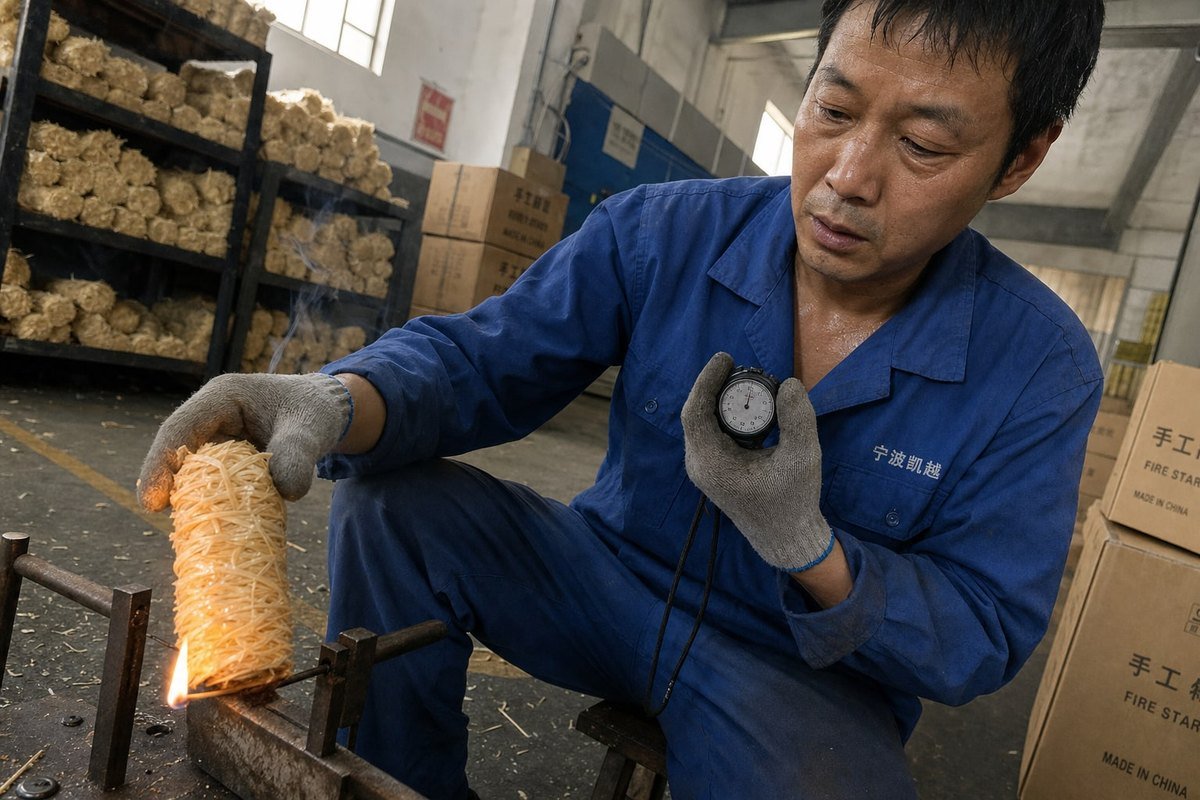
Burn time claims are meaningless without test conditions. A wood wool roll burns differently in still indoor air than in a windy fire pit. So your spec must define how burn time gets measured, not just the number.
Define the Test Protocol, Not Just the Number
A workable burn-time clause looks like this: "Average burn time of 10 randomly selected units shall be no less than 8 minutes, ignited with a single match, tested indoors at room temperature." Now both sides can run the same test and get comparable results. Many supplier guides suggest 8+ minutes as a benchmark, but treat this as a starting point, not a universal standard — your use case may need more.
Why Wax Ratio Matters So Much
The paraffin wax infusion level controls three things at once:
| Wax Ratio Effect | Too Little Wax | Too Much Wax |
|---|---|---|
| Burn time | Short, inconsistent | Long but slow to ignite |
| Moisture resistance | Poor in damp storage | Excellent |
| Ignition speed | Fast but fragile | Can require multiple matches |
| Unit cost | Lower | Higher |
Specify wax as a percentage of finished unit weight, with a tolerance. For example: "Wax content 45% ±5% of total unit weight." Also specify the wax melting point or flash point temperature range if your goods will sit in hot warehouses or containers crossing the equator. Soft wax that melts in transit ruins retail packaging.
Verify Before You Commit
Ask for a batch test report. On our lines, we weigh rolls before and after dipping, so the wax ratio is documented per batch. Any serious factory can show you this data. If a supplier cannot explain how they control coating weight, their burn time will drift between shipments — and your customer reviews will show it.
Which Certifications Should I Request to Ensure Compliance in My Target Market?
Compliance questions come up in almost every first call we have with US and EU buyers. For established importers, documentation is a hard gate — no papers, no purchase order.
Request an MSDS/SDS in the 16-section GHS format, third-party test reports from labs like SGS or Intertek, factory certifications such as ISO 9001 and BSCI, and market-specific items like CE marking, FSC certified timber claims, or California Prop 65 assessment where relevant.
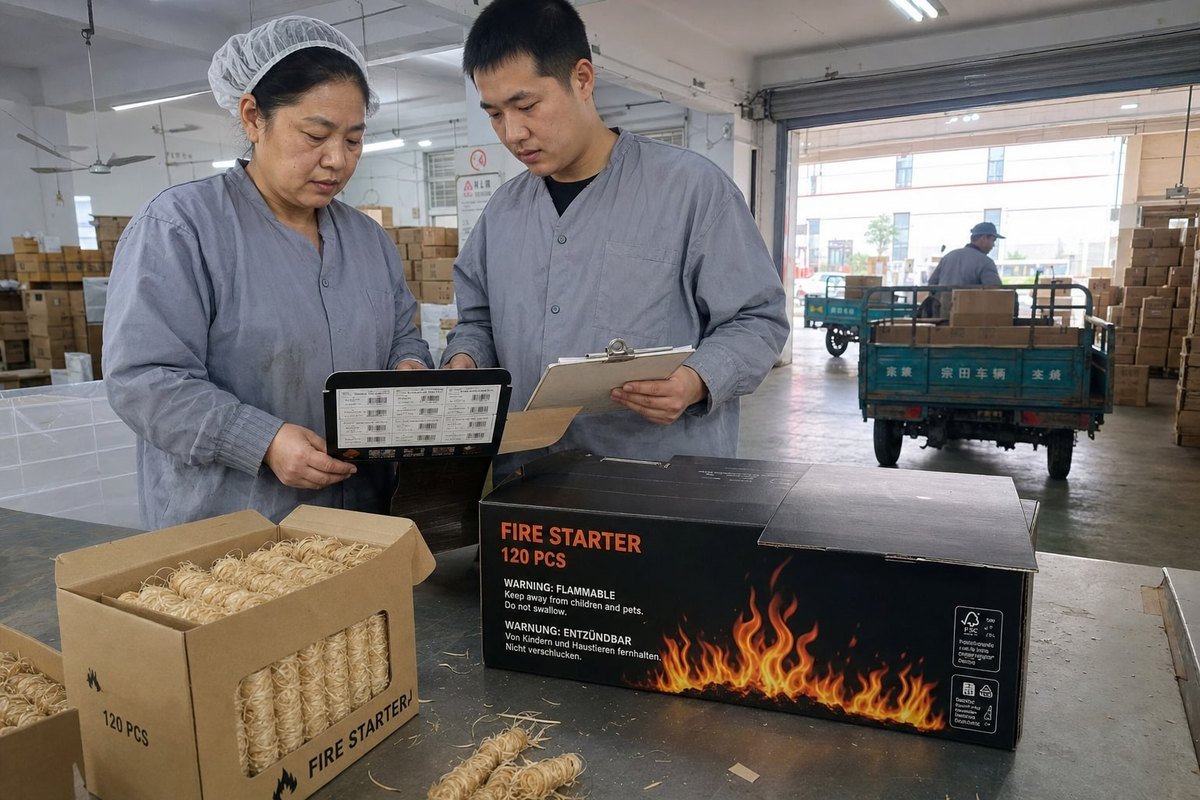
Different markets demand different paperwork, and retailers add their own layer on top. In our export experience across 30+ countries, the buyers who list required documents in the purchase order clear customs and retailer onboarding without drama. The ones who ask afterward often face delays measured in months.
The Document Stack, Layer by Layer
Think of compliance in three layers:
- Product-level documents. An SDS/MSDS in proper 16-section GHS format 2 is the baseline. Add flammability or ignition test reports from an accredited lab. If you make chemical-free ignition claims or advertise a product as odorless and non-toxic, ask for test data that supports the claim.
- Factory-level certifications. ISO 9001 3 shows a working quality system. BSCI covers social compliance, which many European retailers now require from every vendor. Ask for current certificates with valid dates, not expired scans.
- Market-level requirements. The US may trigger Prop 65 evaluation 4 if listed chemicals are present. The EU expects CE-relevant assessment and multilingual labeling. Retailers like Walmart require GS1-registered GTINs 5; most big-box channels require UPC or EAN barcodes plus safety warnings printed on retail packaging.
Sustainability Claims Need Paper Too
If your brand positioning depends on eco-friendly messaging — FSC certified timber 6, resin-rich pine from managed forests, or bio-based content verified under standards like ASTM D6866 7 — write those requirements into the spec. "Natural" is not a defined term. Certificates are. We supply supporting documentation for our eco-friendly material claims because we learned early that European buyers will ask, and they will check.
How Can I Verify That Sample Specifications Will Match Mass Production Quality?
The gap between a golden sample and a mass-production carton is where most sourcing relationships break. I have watched buyers approve a beautiful sample, then open containers of something visibly different.
Verify sample-to-production consistency by requiring a signed golden sample, batch-level QC records, defined AQL defect limits, a pre-shipment inspection with burn testing, and evidence of in-process controls like per-batch wax weight logs and moisture checks.

A sample proves a factory can make one good unit. It does not prove they can make 200,000 identical ones. Your job is to test the production system, not just the product.
Ask How the Factory Controls Consistency
Real consistency comes from process controls, not final inspection alone. Ask the supplier specific questions: How do you control moisture content percentage before wax dipping? How do you weigh wax pickup per batch? How do you sample-test burn time during a run? At our factory, batch-to-batch quality control is why the first sample reliably reflects mass production — every batch has a weight log and a burn-test record. A trading company reselling from unknown workshops usually cannot answer these questions, and that silence tells you everything.
A Practical Verification Sequence
| Step | What You Do | What It Proves |
|---|---|---|
| 1. Golden sample | Both parties sign and retain sealed samples | Fixed physical reference for disputes |
| 2. Spec sign-off | Supplier signs the full written spec sheet | Contractual commitment to numbers |
| 3. Pilot batch | Order a small first run, test randomly | Production process matches sample |
| 4. AQL agreement | Set defect classes and acceptance limits | Objective pass/fail at inspection |
| 5. Pre-shipment inspection | Third-party inspector burns random units | Final goods meet burn time and packaging specs |
Include Functional Testing in Inspections
Most pre-shipment inspections only check appearance, quantity, and packaging. For fire starters, that is not enough. Instruct the inspector to ignite a random sample of units and time the average burn time against your spec. Also have them check wax coverage, fibrous roll integrity, and carton labeling. This adds minimal cost and catches the failures that actually generate returns. For trial orders, negotiate a flexible MOQ so you can run this full sequence once at low risk before committing to full bulk wholesale procurement volumes.
Conclusion
Clear wood fire starter specifications prevent quality disputes, compliance failures, and retail rejections. Define materials, burn time, wax ratio, packaging, and certifications in writing — then verify everything before shipment.
Footnotes
1. General background on moisture content measurement relevant to wood fire starter quality control. ↩︎
2. Background explanation of the GHS chemical labeling standard referenced for MSDS documentation. ↩︎
3. Authoritative Wikipedia entry that provides a stable, accessible overview of the ISO 9001 standard. ↩︎
4. Official California site explaining Prop 65 chemical warning requirements referenced for US market compliance. ↩︎
5. GS1 is the authoritative body defining global trade item numbers required by major retailers. ↩︎
6. Forest Stewardship Council is the authoritative source for verifying sustainable timber certification claims. ↩︎
7. ASTM is the standards body that publishes D6866 for testing bio-based content claims. ↩︎



 English
  Spanish
  German
  French
  Arabic
  Portuguese
Join the Conversation