






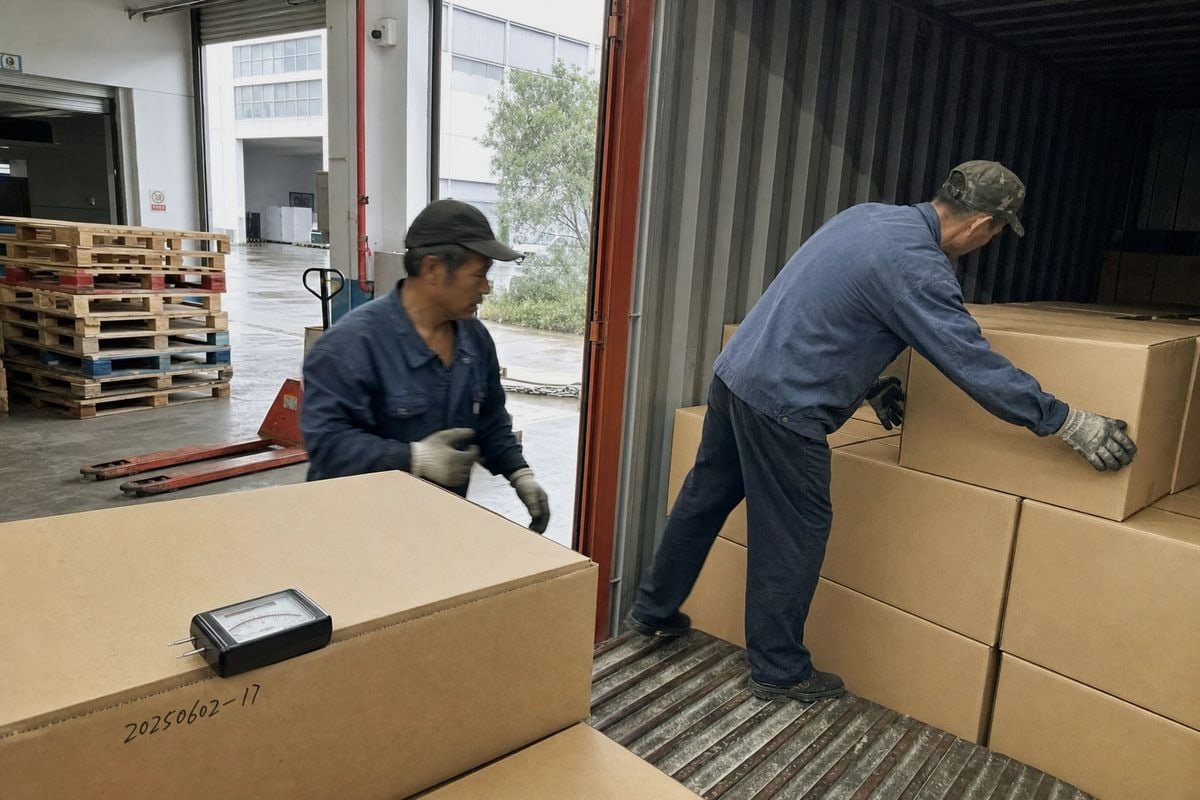
Container loading for fireplace colored pine cones frustrates many buyers I meet. Freight costs climb, cartons arrive half-empty, and cones get crushed. Our export team has spent years solving exactly this problem.
Optimize container loading for fireplace colored pine cones by standardizing carton dimensions to match container internals, calculating CBM per master carton, choosing floor loading for maximum cube, keeping moisture below 10%, and confirming weight distribution, documentation, and phytosanitary compliance with your supplier before booking.
That is the short answer. Now let me walk you through each step, using real numbers and the trade-offs we see on actual shipments.
What packaging design changes can help me fit more colored pine cones into each container?
A buyer from Germany once showed me his old supplier's cartons. Each box held cones loosely, with nearly 30% air inside. We redesigned his inner packs at our Ningbo facility and cut his freight bill sharply.
Switch to standardized double-walled cartons sized to container internal dimensions, use interstitial nesting to fill gaps between cones, add honeycomb inserts for crush protection, and compare mesh bag vs carton packing by product finish. These bulk packaging solutions can recover 15–25% of wasted space.
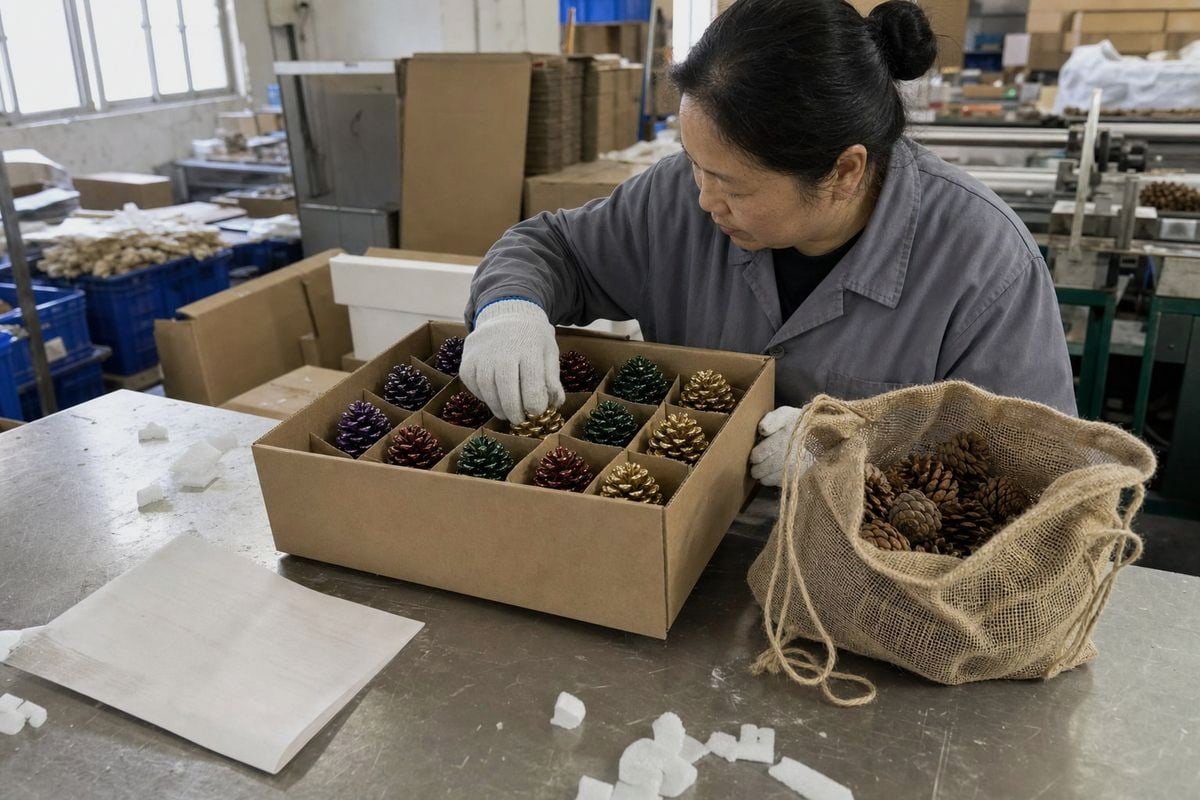
Packaging design is where most of the savings hide. Pine cones are irregular. They leave voids no matter how you stack them. But smart design shrinks those voids without crushing the product.
Start with the inner pack
Colored pine cones are not commodity filler. Ours are treated with color-changing flame chemicals and often finished with a wax coat. That finish can smudge, stick, or deform under pressure. So the inner pack must do two jobs: protect the coating and minimize air.
We use three main formats, and each suits a different product line:
| Inner Pack Format | Space Efficiency | Protection Level | Best For |
|---|---|---|---|
| Mesh bag (bulk fill) | High | Low | Uncoated or lightly treated cones |
| Kraft stand-up pouch | Medium | Medium | Retail-ready camping products |
| Molded tray in carton | Lower | High | Waxed, gold-tipped decorative cones |
Mesh bag vs carton packing is a real decision, not a detail. Mesh bags let cones nest into each other, which fills gaps naturally. But painted cones with metallic tips need trays or dividers, or the finish rubs off in transit.
Use interstitial nesting
Here is a technique we recommend for bulk orders. Mix cone sizes within one carton. Smaller cones settle into the air gaps between larger premium cones. This alone can lift carton density noticeably without adding crush risk.
Match the carton to the container
Avoid oversized cartons with dead air. An irregular void inside a carton can cause collapse when cartons stack six or seven high. Double-walled corrugated board 1 gives the stacking strength you need for a full ocean transit. For retail-ready packaging, internal honeycomb supports carry the vertical load so the fragile cone scales do not.
How do I calculate the right carton size and pallet configuration to maximize container volume?
Numbers settle most loading debates faster than opinions do. When our logistics team plans a shipment from Ningbo, we run the same cubic meter (CBM) calculation for every carton option before we quote a buyer.
Calculate carton CBM (length × width × height in meters), divide the container's usable internal volume by that figure, then subtract a 5–8% buffer for dunnage and variation. Compare floor loading against palletization, since floor loading typically adds up to 20% more usable cubic capacity.
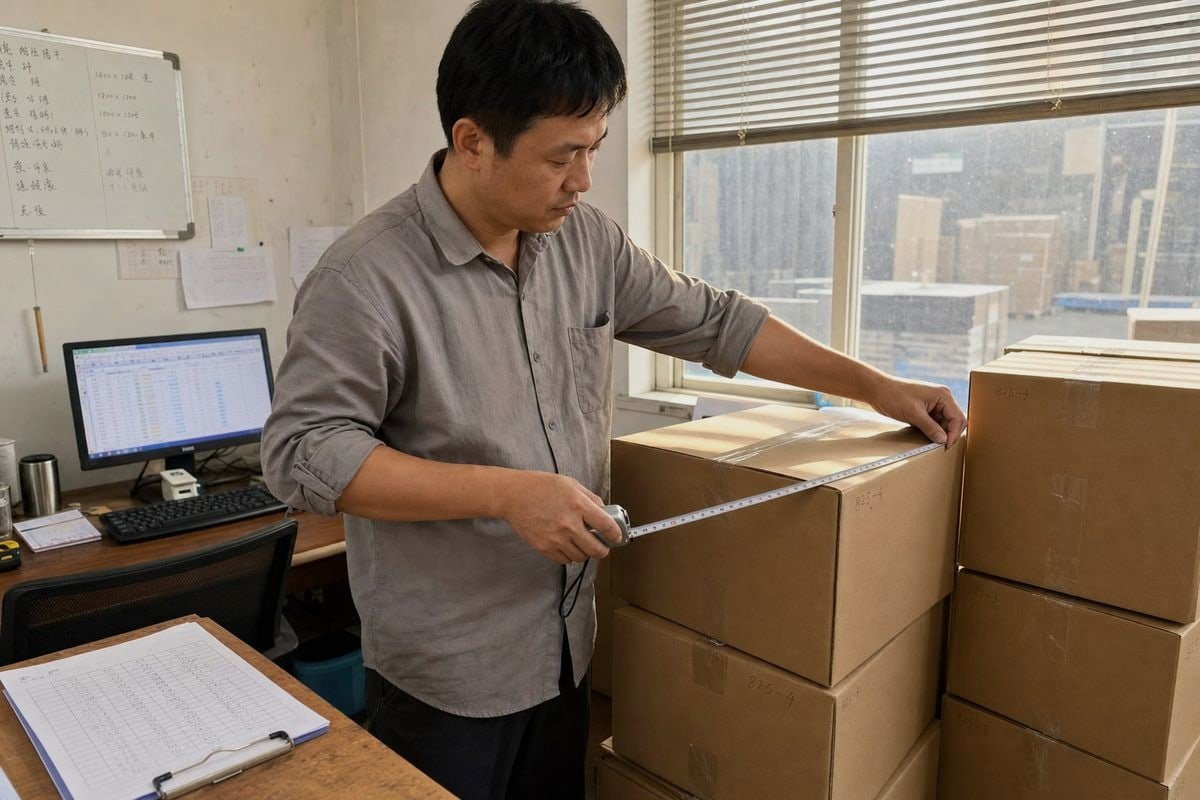
The math is simple. The discipline is what buyers skip. Let me lay out the process we use, step by step.
The core calculation
First, measure the actual packed carton, not the nominal size. Cartons bulge. A carton listed at 60 × 40 × 40 cm often measures 61 × 41 × 41 cm when filled. That small difference compounds across hundreds of cartons.
Second, know your container internals. Here are the working figures we plan against:
| Container Type | Internal Volume | Practical Usable Volume | Max Payload |
|---|---|---|---|
| 20-foot standard | ~33 CBM | ~28 CBM | ~28,000 kg |
| 40-foot standard | ~67 CBM | ~58 CBM | ~26,500 kg |
| 40-foot High Cube | ~76 CBM | ~68 CBM | ~26,500 kg |
Colored pine cones are lightweight and bulky. Volume constrains you long before weight does. That is why we usually steer buyers toward the 40-foot High Cube. The extra vertical foot adds roughly 10% more volume for the same base freight class, which directly improves shipping container utilization and freight cost per unit.
Floor load or palletize?
This is the classic trade-off. Some buyers insist on maximum protection. Others chase maximum cube. Both positions have merit, but the product decides.
- Floor loading eliminates pallet footprints and vertical gaps. It can add up to 20% cubic capacity. Choose it for sturdy bulk cartons of standard cones.
- Palletization strategy speeds up warehouse unloading and reduces handling damage. Choose it for waxed, retail-boxed, or display-ready cones where crushing kills sellable value.
- A hybrid works too: floor-load bulk cartons deep in the container, and palletize retail displays near the doors.
If you co-load fireplace accessories, place heavy items like cast iron tools on the floor and top-load the lightweight cone cartons above them. This hybrid density approach uses payload and volume together.
Sanity-check with a test carton
Before we confirm any full load plan, we pack one master carton, weigh it, measure it, and drop-test it. One hour of testing prevents weeks of dispute later.
Can working with a factory that offers custom packaging really reduce my shipping costs per unit?
Skepticism is fair here. A UK distributor once told me custom packaging sounded like a way for factories to charge more. Six months later, his redesigned cartons fit his container so tightly that his landed cost per bag dropped below his old quote.
Yes. A factory offering true OEM/ODM packaging can size cartons to your exact container, standardize pack counts, integrate retail-ready inserts, and pre-plan the load. Buyers commonly recover 10–20% in freight cost per unit compared with generic off-the-shelf cartons.
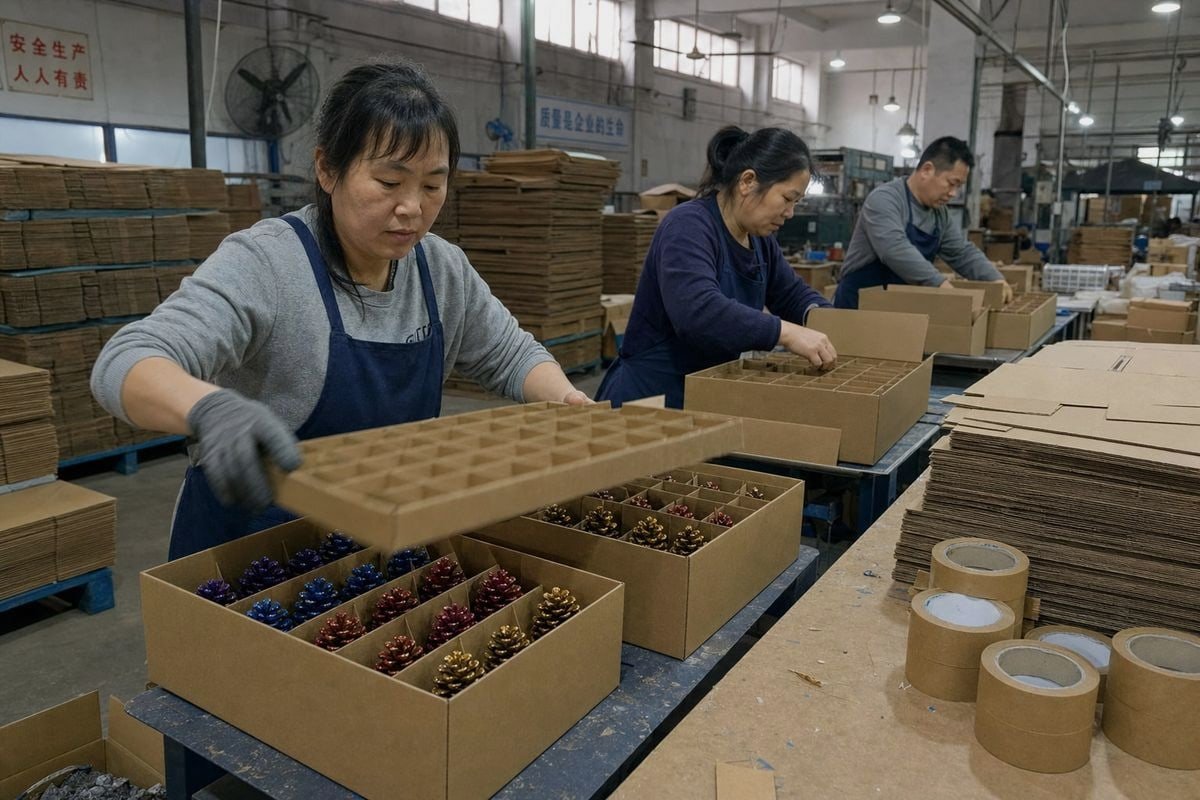
The logic is straightforward. A trading company resells whatever cartons its suppliers already use. A real factory can change the carton itself. That difference shows up in three places.
Where custom packaging saves money
First, dimension matching. Our packaging line in Ningbo can adjust carton dimensions 2 in small increments. We design cartons so a whole number of them fits across the container width, with minimal edge gap. Generic cartons almost never achieve this.
Second, pack standardization. When every master carton holds the same count, same weight, and same dimensions, your load plan becomes predictable. Your receiving warehouse also unloads faster, which cuts labor cost on your side.
Third, packaging that does double duty. We produce kraft stand-up pouches 3, drawstring burlap sacks, and plastic jars for our Magic Fire color-flame lines. When the retail unit itself is designed to nest efficiently inside the master carton, you stop paying to ship air twice — once inside the retail pack, and again inside the carton.
A worked comparison
| Factor | Generic Cartons | Custom-Sized Cartons |
|---|---|---|
| Container fill rate | 70–80% | 90%+ |
| Cartons per 40' HQ | Baseline | Typically 15–25% more |
| Damage and returns | Higher | Lower with fitted inserts |
| Retail readiness | Repack needed | Shelf-ready on arrival |
One caution from experience: custom packaging pays off at volume. For a small trial order, the tooling and setup may not justify itself yet. That is why we support flexible MOQs 4 for trial runs using our standard formats first, then move buyers to custom cartons once repeat volume is confirmed. Honest suppliers will tell you which stage you are at.
What loading and logistics details should I confirm with my supplier before placing a bulk order?
The most expensive mistakes happen after the price is agreed. I have watched a competitor's shipment sit in customs for weeks over missing plant-product paperwork, and the buyer paid for every day of it. A short pre-order checklist prevents almost all of this.
Confirm phytosanitary certification and heat-treatment documents, MSDS for the flame-coloring chemicals, moisture content below 10%, carton compression strength, the exact load plan with counts and orientation, container type, weight distribution, and lead time in writing before you place any bulk order.

Colored pine cones sit at the intersection of two regulated categories: plant material 5 and chemically treated fire products. Your checklist must cover both, plus standard loading discipline.
Documentation to demand upfront
Phytosanitary certification is non-negotiable for botanical goods 6 entering most markets. Ask how the cones are treated and what certificate accompanies each shipment. If wooden pallets are used, they must carry ISPM 15 heat-treatment marks, or customs can order fumigation of the entire container at your expense.
Ask for the Material Safety Data Sheet (MSDS) 7 covering the color-changing flame chemicals. Serious buyers in the US and EU treat this as a hard requirement, and so do we. Our products carry ISO 9001, BSCI, CE, and SGS/Intertek test reports, and we provide these documents before production starts, not after a dispute begins.
Physical loading details to verify
- Moisture content control. Cones should be kiln-dried below 10% moisture. Damp cones grow mold during humid sea transit and can degrade the chemical salts that create the colored flame.
- Cure state. Wax coatings must be fully set. A tacky carton at loading becomes a fused block at arrival.
- Stacking pattern. Ask for a cross-stacking or brick-layer pattern so cartons interlock and resist shifting in ocean turbulence.
- Weight distribution. Heavier, stronger cartons go on the floor, spread evenly, never concentrated at the doors.
- Load documentation. Require a load plan showing carton count, layers, and orientation, plus loading photos before the container seals.
- Monitoring for premium orders. For high-value seasonal shipments, humidity and temperature sensors inside the container flag moisture spikes before they ruin inventory.
We also run a pre-loading QC gate at our factory: verify cones are fully dry and open, check pack counts against the packing list, inspect for staining or loose residue, and reject any crushed or damp cartons before staging. Ask your supplier to describe their equivalent process. If the answer is vague, that tells you something.
Conclusion
Poor container loading quietly inflates every landed cost. Standardize cartons, run the CBM calculation, choose the right load style, and verify documentation upfront — then work with a factory partner who plans logistics with you, not after you.
Footnotes
1. Technical overview of corrugated fiberboard construction and its structural properties for shipping. ↩︎
2. Authoritative source for corrugated packaging standards and international carton dimensioning codes. ↩︎
3. Technical details on the construction and use of stand-up pouches in packaging. ↩︎
4. Explanation of minimum order quantity (MOQ) concepts in manufacturing and supply chain management. ↩︎
5. US Customs and Border Protection regulations regarding the import of agricultural plant material. ↩︎
6. Official USDA guidelines for the importation of plant-based botanical goods into the United States. ↩︎
7. OSHA's official resource on hazard communication and safety data sheets for chemical products. ↩︎



 English
  Spanish
  German
  French
  Arabic
  Portuguese
Join the Conversation