







Mixing SKU sizes in a container changes wood fire starter pricing in ways many buyers miss less-than-container load 1. I have watched importers lose margin on our loading dock because of blended quotes.
Mixing SKU sizes in a container affects wood fire starter pricing mainly through freight cost allocation, container fill factor, and MOQ tiers. A well-planned mix lowers landed cost per unit by 5–15%, while a poorly matched mix raises per-unit costs through wasted cube space and handling surcharges.
Let me break down exactly where the savings come from, where the hidden costs hide, and how to plan your next mixed container the right way.
What Discounts Can I Expect When I Mix SKU Sizes in a Single Container?
A buyer from Germany once asked me why his blended quote looked worse than three separate quotes BSCI audits 2. The answer sat in how we structure our discount tiers.
Most factories grant volume discounts based on total container value or total unit count, not per-SKU quantity. Expect 3–8% off blended pricing when your mixed order fills a full container, plus bulk shipping discounts of 10–20% versus splitting the same SKUs across LCL shipments.

In our export operation, we quote mixed containers to buyers in the US, UK, and Netherlands every week. The discount logic depends on how the supplier treats your order. Some factories treat each SKU as its own production run. Others treat the whole container as one order. That single policy difference can swing your wood fire starter pricing more than any negotiation tactic.
How Suppliers Structure Mixed-Order Discounts
There are three common models. First, per-SKU MOQ pricing. Each size must hit its own quantity tier to earn its discount. Second, aggregate-value pricing. The total order value sets one discount rate across all SKUs. Third, hybrid pricing. The fastest-moving SKU anchors the price, and smaller SKUs ride along at a modest premium.
Here is how those models play out on typical wood fire starter price bands:
| Product Tier | Typical Bulk Price | Mixed-Container Impact |
|---|---|---|
| Basic wax-and-sawdust cubes | $0.05–$0.08/unit | Small discount; already near cost floor |
| Wood wool with natural wax | $0.10–$0.20/unit | Best discount leverage in a mixed load |
| Certified eco-friendly premium | $0.25+/unit | Often subsidizes the logistics of the mix |
The practical lesson is simple. Ask your supplier which model they use before you compare quotes. When we prepare OEM quotes at our Ningbo facility, we always show the allocation method line by line. If a quote hides it, the "discount" may just be freight shifted from one SKU to another.
Also remember that a full container load unlocks bulk shipping discounts that no LCL split can match. One 40-foot container of mixed fire starters almost always beats two half-full shipments on landed cost per unit.
How Do Packaging Formats Affect Per-Unit Costs When I Combine Multiple SKUs?
During a packaging trial last year, our line team discovered that switching one SKU from jars to kraft bags freed nearly two pallet positions in a test load.
Packaging format drives per-unit costs through packaging volume efficiency and carton density. Compact formats like kraft bags or shrink-wrapped bundles ship 20–40% more units per cubic meter than rigid jars or display boxes, directly lowering the freight share each unit carries in a mixed container.
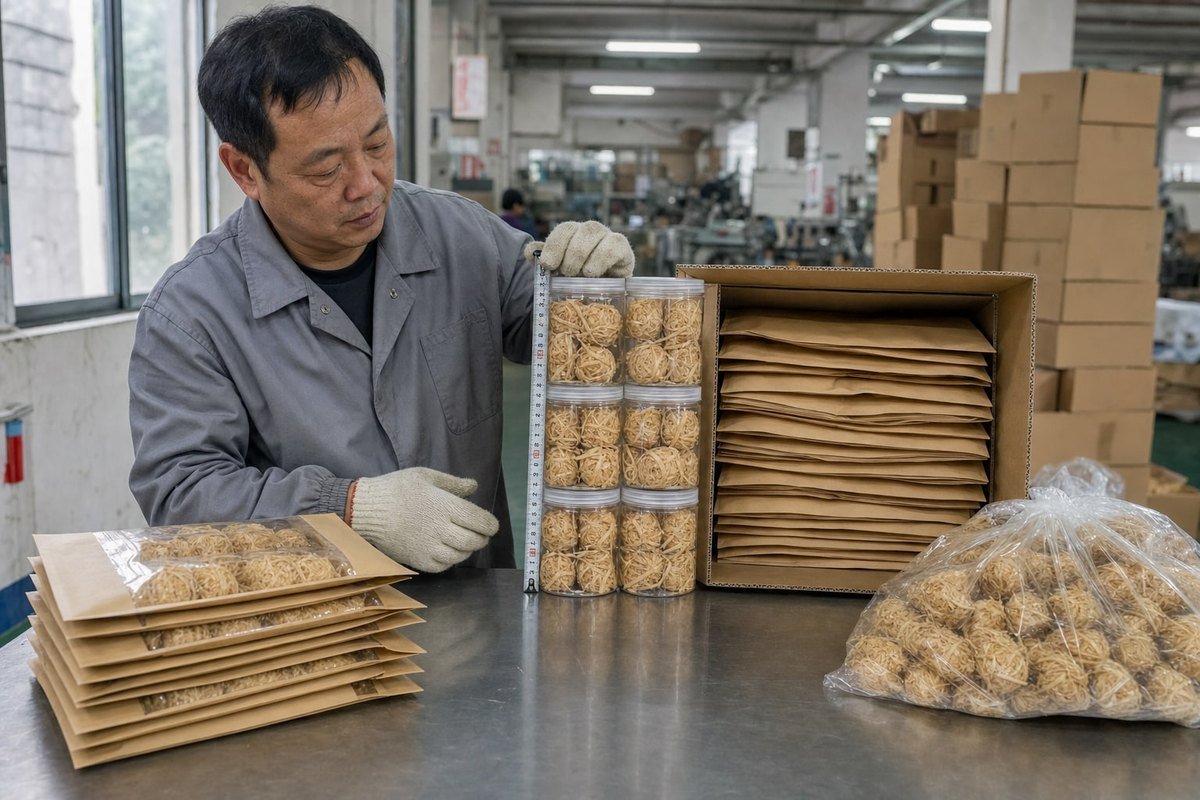
Wood fire starters are volume-limited cargo, not weight-limited cargo. Wood wool rolls are light and bulky. So the container hits its cubic limit long before its weight limit. That means freight is best apportioned by cubic meter, and CBM optimization becomes the real pricing lever when you combine multiple SKUs.
Why CBM Beats Weight for Fire Starter Freight
When we allocate freight by CBM at our factory, the bulky SKU carries its fair share. When a supplier allocates by unit count instead, small dense SKUs look expensive and big airy SKUs look cheap. Neither picture is real. Dimensional weight pricing 3 works the same way with carriers. They charge for the space you occupy, not the grams you ship.
Compare typical formats we produce:
| Packaging Format | Units per Carton | Relative CBM per 1,000 Units | Freight Share per Unit |
|---|---|---|---|
| Bulk poly bag (loose rolls) | 500 | Low | Lowest |
| Kraft bag retail pack | 200 | Medium | Moderate |
| Plastic jar | 48 | High | High |
| Retail display box (100 pcs) | 100 | Medium-high | Moderate-high |
The Nesting Advantage
Smart mixing exploits nesting. Small retail bags can fill the air pockets around larger cartons. Some of our clients even use retail-ready bags as functional dunnage. They stabilize the load and convert void fill into sellable inventory. That is real packaging volume efficiency. It turns wasted cube into revenue and pushes the landed cost per unit down for every SKU in the container.
One warning. Different packaging formats mean different carton sizes, and awkward carton combinations break clean pallet layers. Mixed SKU palletization done poorly can waste 8–12% of your cube. Always ask your supplier for a load plan before you confirm the mix.
Will Mixing SKU Sizes Extend My Lead Time or Complicate Quality Control?
The trade-off I weigh most often on the production floor is line-changeover time versus shipment consolidation. Both affect your calendar, but in opposite directions.
Mixing SKU sizes typically adds 5–10 days of lead time because each size requires separate production runs, QC checks, and labeling. However, a single consolidated shipment usually still arrives faster overall than staggering multiple separate LCL shipments across different sailing dates.
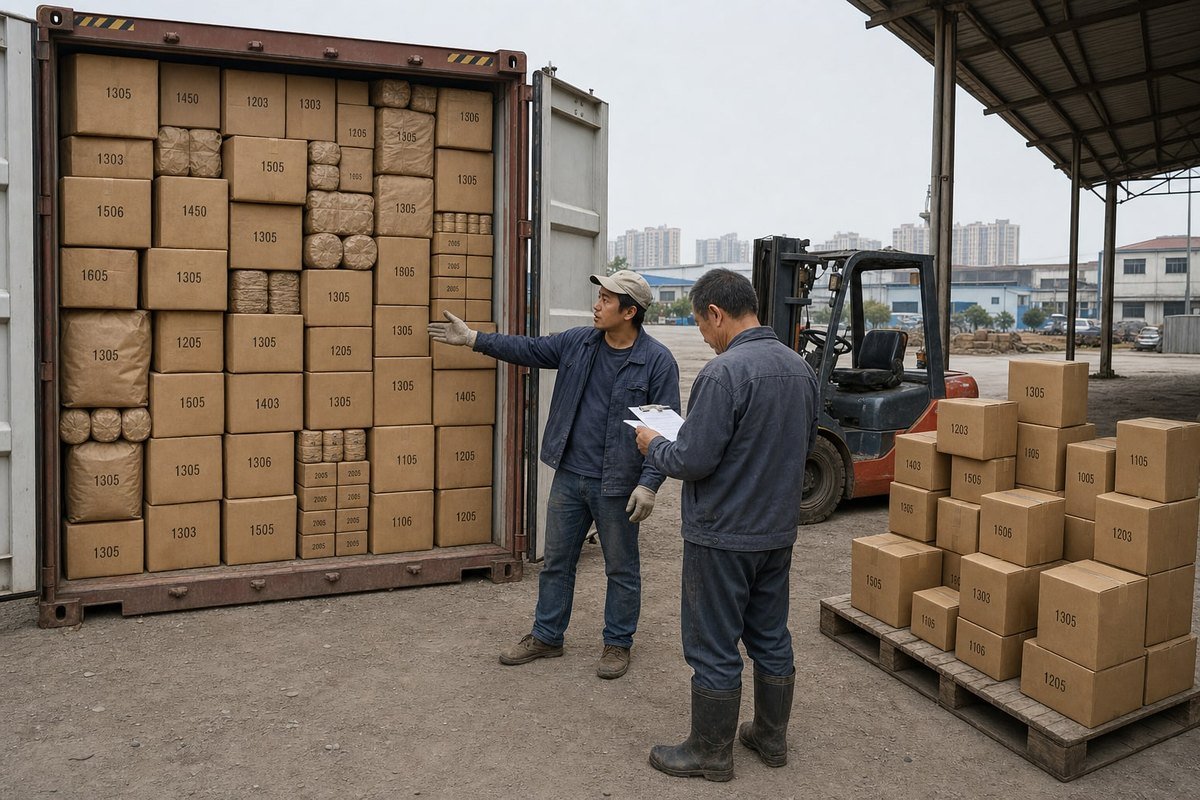
In our 17-plus years producing fire-starting goods, we have refined a batch-to-batch quality system precisely because mixed orders demand it. Every SKU size in a mixed container is a separate production batch. Each batch gets its own burn-time verification, wax-coating check, and moisture reading. That discipline is why our first sample reliably matches mass production. But it does take time, and buyers deserve honesty about that.
Where the Extra Days Come From
The added lead time is not mysterious. It comes from four specific steps:
- Line changeovers between roll diameters and wax dip settings.
- Separate packaging runs for each format, including barcodes and warning labels.
- Per-SKU QC sampling and burn tests instead of one pooled inspection.
- Load planning and mixed SKU palletization at the warehouse.
Quality Risks Specific to Mixed Loads
Two QC issues matter for fire starters in mixed containers. First, moisture migration. Kiln-dried premium starters can absorb residual moisture from less-seasoned wood products packed nearby, which degrades their quick-start performance. We prevent this with sealed inner packaging and moisture-barrier liners for humid destination markets. Second, labeling errors. When five SKUs share one container, a mislabeled carton creates receiving chaos and 3PL handling fees on your side. Our compliance workflow, backed by ISO 9001 4 and BSCI audits, includes carton-level scan verification before loading.
Customs adds one more wrinkle. Wax-dipped starters and untreated kindling can fall under different HTS codes 5. Precise line-item documentation keeps duties accurate and prevents clearance delays. We prepare split commercial invoices 6 as standard practice for exactly this reason.
How Can I Optimize My Container Load to Balance Variety and Cost Savings?
A Canadian distributor taught me a useful habit. Before every order, he asks one question: which mix gives the most sellable units per dollar of landed cost?
Optimize a mixed container by anchoring 60–70% of the cube with your best-selling SKU, filling remaining space with complementary sizes, and comparing all SKUs on landed cost per unit and cost per burn minute. This preserves volume discounts while protecting container fill factor.
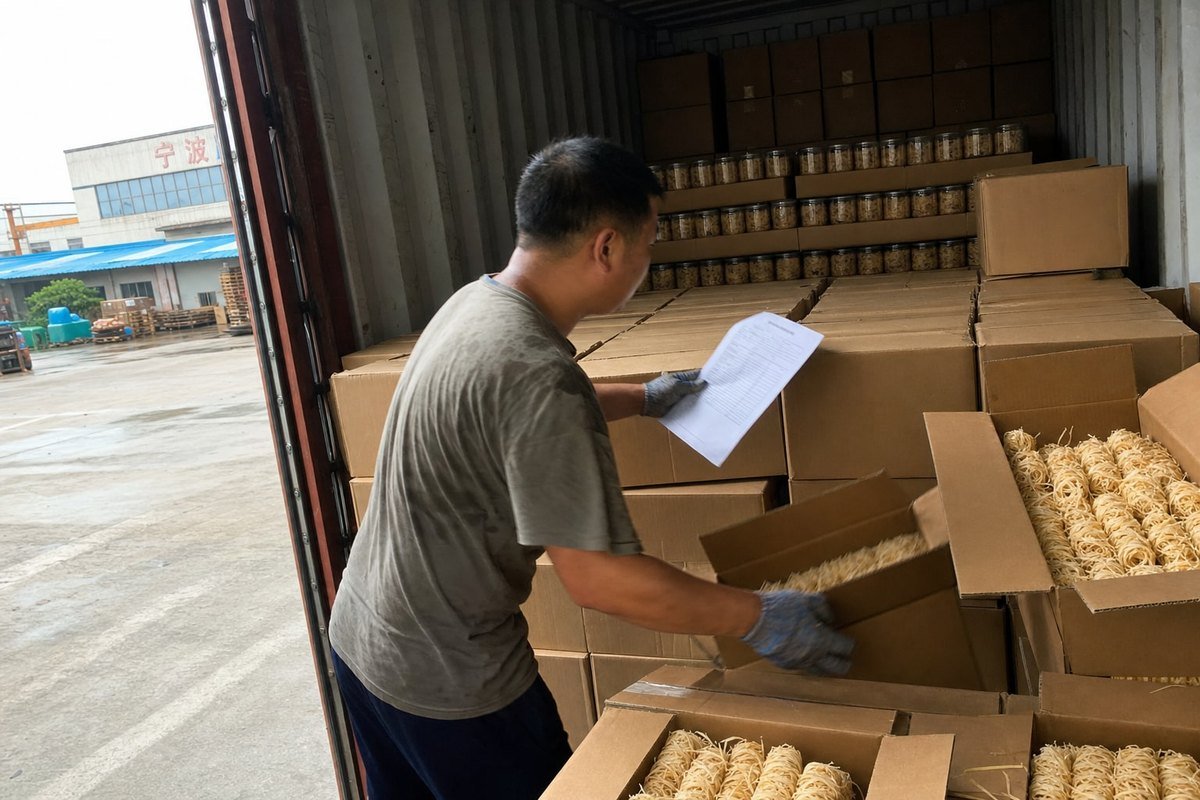
When we run load plans for OEM clients across 30-plus countries, the best-performing mixes follow the same logic. The anchor SKU earns the volume discount and holds down freight cost allocation per unit. The secondary SKUs add assortment for retail shelves without dragging down the container fill factor. The mistake we see most often is the opposite approach: an even five-way split that leaves every SKU below its discount tier.
A Simple Optimization Process
Follow these steps and you will avoid most costly errors:
- Rank your SKUs by proven sell-through, not by gut feel.
- Assign 60–70% of container CBM to the top seller.
- Choose secondary SKUs whose cartons nest cleanly with the anchor's pallet pattern.
- Confirm each SKU still clears its MOQ pricing tier.
- Recalculate landed cost per unit for every SKU using CBM-based freight allocation.
- Normalize the comparison with cost per burn minute across sizes.
Compare on the Right Metric
Piece price misleads. A small starter at $0.08 that burns 8 minutes is not cheaper than a large one at $0.18 that burns 22 minutes. Here is the math that actually guides good decisions:
| Metric | Small Starter | Large Starter | Better Value |
|---|---|---|---|
| Factory price per unit | $0.08 | $0.18 | Small |
| Landed cost per unit (CBM freight) | $0.11 | $0.23 | Small |
| Burn time | 8 min | 22 min | Large |
| Landed cost per burn minute | $0.0138 | $0.0105 | Large |
Also factor in downstream costs. Slow-moving sizes inflate inventory placement costs at your warehouse or fulfillment network. A slightly less "efficient" container that matches real demand often beats a perfectly cubed container full of stock that sits for two seasons. We help clients model both scenarios before production starts, because a container plan is a merchandising plan, not just a freight plan.
Conclusion
Mixed containers can cut costs or hide them. Blended quotes blur real economics fast. Anchor your best seller, allocate freight by CBM, and judge every SKU by landed cost per burn minute.
Footnotes
1. Wikipedia background on LCL shipping method mentioned repeatedly as alternative to full container. ↩︎
2. Official amfori BSCI solution page detailing social compliance and auditing standards. ↩︎
3. Explains the freight pricing concept referenced for carrier billing by volume versus weight. ↩︎
4. Authoritative Wikipedia entry providing a stable, accessible overview of the ISO 9001 quality management standard. ↩︎
5. Official source for Harmonized Tariff Schedule codes governing customs classification. ↩︎
6. Trade.gov guidance on commercial invoices used for customs documentation in export shipments. ↩︎



Join the Conversation