







Mixed-SKU loading quantity is a question I answer weekly at our factory 40ft container's usable volume 1. Get it wrong, and you pay for empty air — or your container gets rejected for being overweight at the port.
To calculate mixed-SKU loading quantity for wood fire starters in a 40ft container, compute each SKU's carton CBM (L×W×H×quantity ÷ 1,000,000 in cm), sum all volumes, then verify the total against roughly 60–67 CBM usable volume and a 26,500–28,000 kg payload limit — whichever fills first sets your quantity.
The math itself is simple. The hard part is turning a spreadsheet of cartons into a safe, efficient stowage plan 2. Let me walk you through exactly how we do it.
How Do I Calculate Container Volume When Mixing Multiple Wood Fire Starter SKUs?
Last year, a German distributor sent us an order mixing wax-dipped wood rolls, color-flame pinecones, and retail display boxes. Our export team modeled it line by line — and found nearly 4 CBM of hidden waste before production even started.
Calculate Cubic Meter (CBM) per SKU using outer carton dimensions: length × width × height × carton count ÷ 1,000,000 (in centimeters). Sum every SKU's CBM, add a 10–15% broken stowage factor for air gaps, then compare against the 40ft container's usable volume of roughly 60.4 m³.
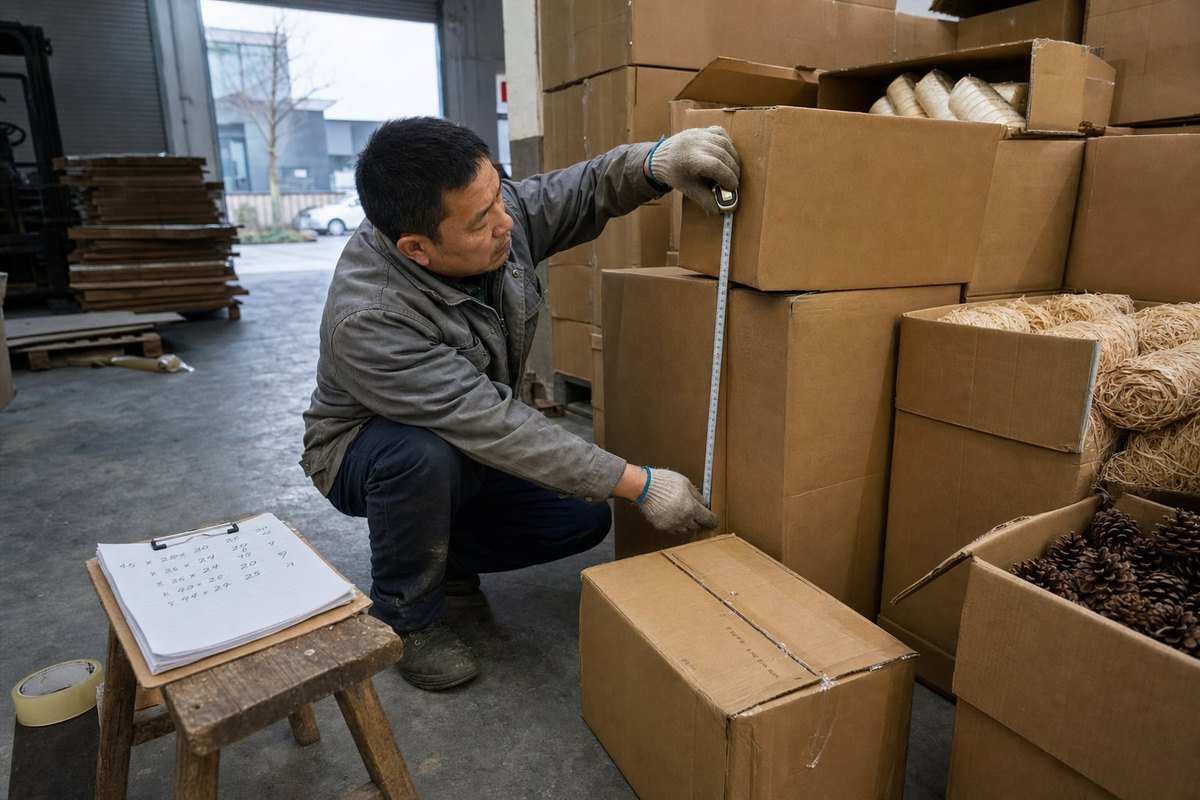
The most common mistake I see from new buyers is using product dimensions instead of outer carton dimensions. Your fire starter roll might be 8 cm in diameter, but loading is based on the master carton's external size — including flaps, tape bulge, and any pallet overhang. Always standardize your data first. In our export spreadsheets, we lock everything to centimeters and kilograms so nobody mixes millimeters and inches halfway through a quote.
Step-by-Step CBM Calculation
Here is the exact workflow our logistics team uses for every mixed order:
- List each SKU with its outer carton dimensions, gross weight per carton, and carton quantity.
- Calculate carton CBM per SKU: L × W × H ÷ 1,000,000 (cm).
- Multiply by carton count to get SKU CBM.
- Sum all SKU CBM lines for the total load volume.
- Apply a 10–15% broken stowage factor 3 for non-uniform cartons.
A Worked Example With Four Fire Starter SKUs
This is a realistic mix based on orders we ship from our Ningbo production site:
| SKU | Carton Size (cm) | Carton CBM | Cartons | SKU CBM | Gross Wt/Carton | Total Weight |
|---|---|---|---|---|---|---|
| Wax-dipped rolls, 100pc retail box | 60 × 40 × 40 | 0.096 | 280 | 26.88 m³ | 14 kg | 3,920 kg |
| Wood wool rolls, bulk pack | 58 × 38 × 42 | 0.093 | 180 | 16.66 m³ | 9 kg | 1,620 kg |
| Color-flame pinecones, display box | 50 × 40 × 35 | 0.070 | 120 | 8.40 m³ | 11 kg | 1,320 kg |
| Kindling stick bundles | 55 × 35 × 30 | 0.058 | 90 | 5.20 m³ | 16 kg | 1,440 kg |
| Total | — | — | 670 | 57.14 m³ | — | 8,300 kg |
At 57.14 m³ raw, plus a 10% stowage allowance, this load sits right at the practical limit of a standard 40ft container. That is why we model every line separately. A single "average carton size" would have hidden the problem until loading day.
What Factors Should I Consider When Combining Different Packaging Types in One 40ft Container?
A US buyer once asked us why his shipment of retail jars and kraft-bag firestarters could not simply "fill the box to 67 CBM." The answer involved weight, pallets, and one heat-sensitive detail specific to wax products.
Consider five factors: maximum payload weight versus volume, pallet dimensions and stacking limits, carton crush strength across packaging types, ISPM 15 heat treatment for wooden pallets, and thermal protection for wax-coated products. The tightest constraint — not total CBM — determines your real loading quantity.
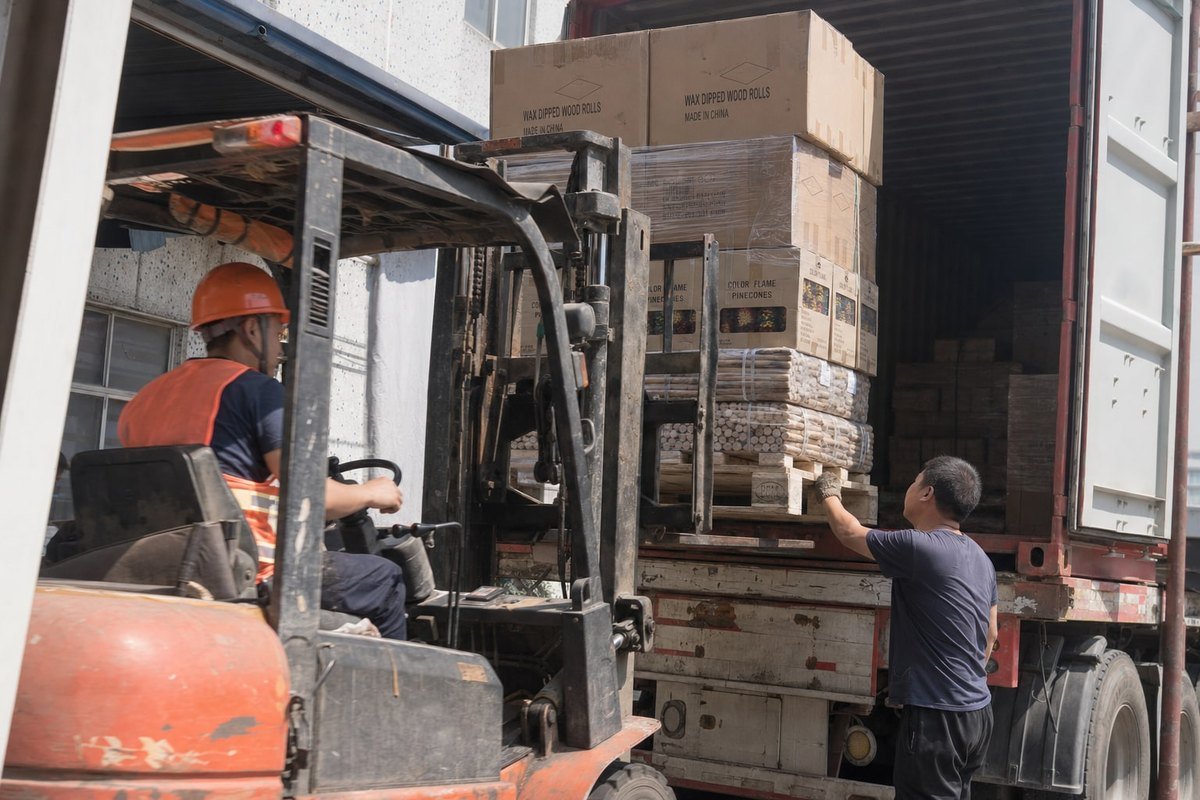
Weight is the constraint buyers forget most often. Wood-based fire products are denser than they look, especially compressed items and wax-heavy retail packs. A standard 40ft container typically carries a maximum payload weight 4 of about 26,500–28,000 kg. Your load can pass the volume check and still fail the weight check. We always run both, and we also flag volumetric weight calculation 5 for any buyer topping off the container with LCL air-freight samples, because carriers charge on whichever figure is higher.
The Five Constraints That Actually Decide Your Quantity
| Factor | Why It Matters for Fire Starters | Our Recommendation |
|---|---|---|
| Payload vs. volume | Dense wax-dipped rolls can hit weight limits before 60 CBM | Check both totals on every quote |
| Pallet standard | Euro pallets vs. standard pallets change container fit dramatically | Confirm pallet dimensions and stacking rules with your warehouse first |
| Crush strength | Retail display boxes crush under heavy bulk cartons | Assign heavy SKUs to bottom layers only |
| ISPM 15 heat treatment 6 | Untreated wooden pallets get quarantined at destination customs | Use only stamped, heat-treated pallets and dunnage |
| Heat exposure | Container walls can exceed wax softening temperatures in summer transit | Keep wax-impregnated SKUs away from steel walls |
Compliance Details Buyers Often Miss
Two paperwork items deserve attention. First, confirm the correct fire starter HS code 7 with your broker before booking, because misclassification delays clearance and can trigger inspections. Second, verify the ISPM 15 stamp on every pallet. In seventeen-plus years of exporting to the US, Germany, and Australia, we have seen quarantine holds cost buyers two to three weeks — always over pallets, never over the product itself. Australia is especially strict on wood-based cargo, so our QC team photographs pallet stamps before every container is sealed.
How Can I Avoid Wasted Space When Loading Mixed Cartons of Wax-Dipped Wood Rolls?
The trade-off we weigh on every wax-dipped wood roll order is floor loading vs palletized shipping. Floor loading recovers 10–15% more volume, but many US distribution centers now refuse floor-loaded containers entirely.
Avoid wasted space by pairing dense SKUs with light space-filling ones, standardizing carton footprints to pallet dimensions, rotating cartons where stacking rules allow, filling voids with soft-pack SKUs, and leaving a small vertical buffer so cartons do not burst from humidity swelling during ocean transit.

Container volume utilization is where good planning turns into real money. Every unused cubic meter in a 40ft container is freight you paid for but did not use. With mixed fire starter SKUs, waste hides in three places: gaps between mismatched carton footprints, unusable height under the ceiling, and void pockets at the door end.
Density Pairing: Our Core Technique
Wood wool rolls are light and bulky. Wax-dipped rolls are heavier and denser. We deliberately pair them in the same container. The heavy SKUs push the load toward the weight limit while the light SKUs fill remaining volume, so both constraints get used efficiently instead of one maxing out early. When we plan a mixed load, heavy cartons go on the floor layer for a low center of gravity, and wood wool products go on top where crush risk is highest.
Practical Void-Control Rules
- Design master cartons so two or three orientations tile cleanly onto standard pallet footprints — we adjust carton dimensions at the OEM stage for exactly this reason.
- Alternate rough kraft cartons with slicker laminated retail boxes between layers; the friction contrast reduces load shifting without extra bracing.
- Leave a 2–3% vertical buffer in each stack. Wood fiber absorbs moisture in humid maritime zones, and swollen cartons that were packed dead-tight can split.
- Keep about 6 inches of headspace and modest side clearance so destination warehouses can unload safely and air can circulate.
- Place wax-impregnated SKUs in the thermal core of the load, shielded from radiant heat off the container walls. We learned this after a summer shipment to the Middle East arrived with softened wax on wall-adjacent cartons — the centered cartons were perfect.
If your shipment must be palletized, accept the volume loss and optimize within it. A High Cube (HC) container 8 capacity of roughly 76 m³ often recovers what palletization costs you, and for tall retail display cartons the HC upgrade usually pays for itself.
Can My Supplier Provide a Loading Plan for Mixed-SKU Orders Before Production?
One lesson from our early exporting years reshaped how we quote: a buyer once booked a container based on our CBM total alone, and the last 30 cartons did not fit. Since then, every mixed order we confirm includes a stowage plan before production begins.
Yes — a capable factory should provide a mixed SKU stowage plan before production, including per-SKU CBM, total weight versus payload, pallet counts, a 3D loading diagram from load plan software, and the recommended container type. Request it at the quotation stage, not after booking.
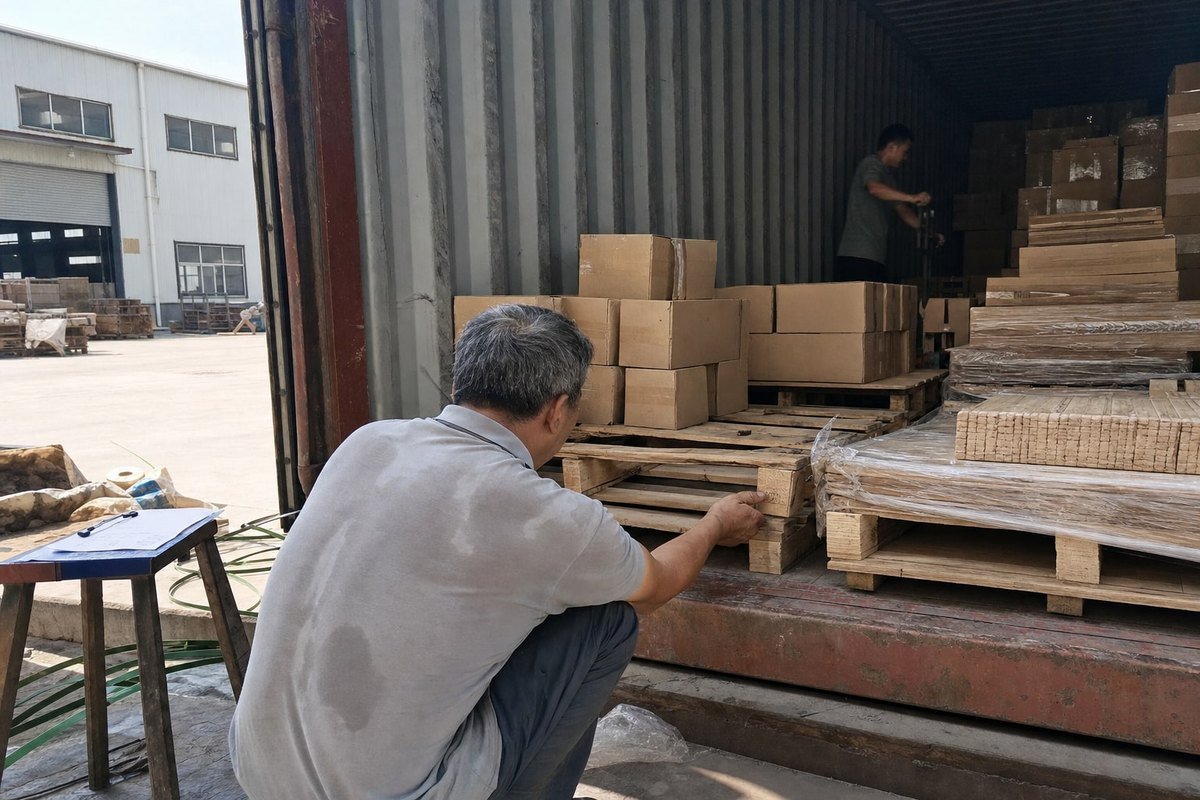
A pre-production loading plan does two things. It confirms your order actually fits the container you booked, and it lets you adjust quantities per SKU while adjustment is still free. Once cartons are printed and goods are packed, every change costs money and time.
What a Proper Loading Plan Should Include
| Deliverable | What It Tells You | When to Request It |
|---|---|---|
| Per-SKU CBM and weight table | Which line items drive volume and weight | With the quotation |
| 3D load diagram | Visual stacking sequence and void locations | Before order confirmation |
| Pallet map | Cartons per pallet, pallets per container | Before booking the container |
| Container recommendation | Standard 40ft vs. HC vs. splitting into two containers | Before deposit |
| Weight distribution note | Left-right balance and axle-legal road weight | Before loading day |
How We Build These Plans
Our export team runs every mixed order through load plan software with 3D auto-arrange, then a senior planner reviews the output by hand. Software is excellent at geometry but blind to product logic — it does not know that wax rolls should sit in the thermal core, or that display boxes crush under bulk cartons. The human pass catches that. We then share the diagram with the buyer, and quantity adjustments happen in a day or two by email. Because we control our own production lines rather than brokering from other factories, the carton dimensions in the plan are the carton dimensions that ship. That consistency is exactly why our buyers in the US and Europe treat the pre-production stowage plan as a standard part of working with us, alongside our ISO 9001 and BSCI documentation.
If a supplier cannot or will not provide this before production, treat it as a signal. It usually means they are a trading company that has never loaded a container themselves.
Conclusion
Guessing container capacity risks overbooking, wasted freight, or port rejection. Calculate per-SKU CBM, check payload, plan pallets, and demand a pre-production stowage plan — that is the whole solution.
Footnotes
1. Authoritative overview of standard intermodal container dimensions and usable capacities. ↩︎
2. Corrected Wikipedia URL for the comprehensive guide on container ship stowage planning. ↩︎
3. Technical definition of the broken stowage factor used in maritime logistics calculations. ↩︎
4. Authoritative Wikipedia section detailing ISO container weight specifications and payload limits. ↩︎
5. Logistics authority explaining how volumetric weight affects shipping costs and capacity. ↩︎
6. The official international standard for regulating wood packaging material in international trade. ↩︎
7. Government resource explaining the Harmonized System codes for international product classification. ↩︎
8. Stable Wikipedia reference explaining High Cube container dimensions and height variations. ↩︎



 English
  Spanish
  German
  French
  Arabic
  Portuguese
Join the Conversation