






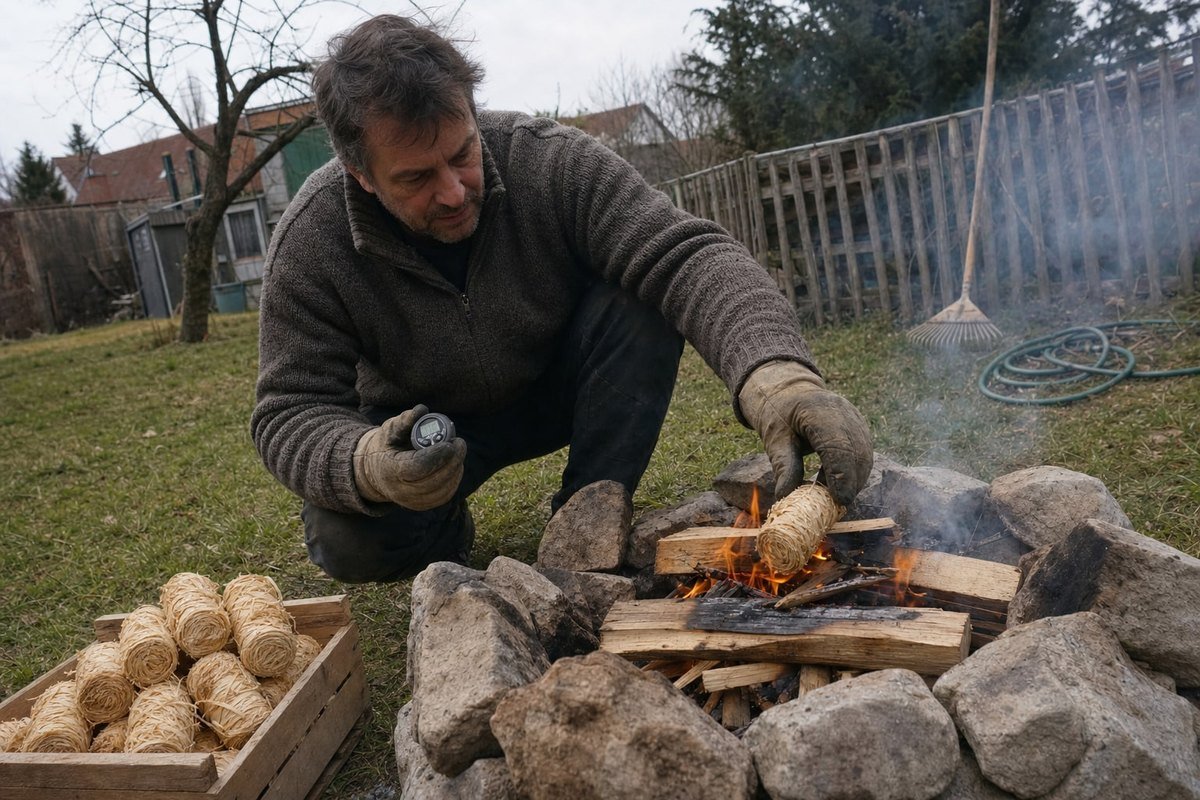
Buyers ask me one question about wood fire starters more than any other: how long should they burn? Getting the answer wrong means returns, bad reviews, and lost shelf space.
Wood fire starters should burn 8 to 12 minutes to reliably ignite a firewood stack. Five minutes is the bare minimum with dry kindling; 15 minutes provides a safety margin for damp wood, wind, or cold starts. Burn time must outlast the ignition of the first split logs.
That range sounds simple. But behind it sit real variables: wood moisture, airflow, stack design, and product formulation. Let me walk you through what actually matters when you source these products for resale.
What Burn Time Should I Look for When Sourcing Wood Fire Starters for My Market?
Last winter, a German distributor sent our factory a competitor's sample that burned barely four minutes. His customers were complaining. That conversation shaped how I explain burn-time targets today.
Source wood fire starters with an 8–12 minute burn time for general fireplace and stove markets. Choose 10–15 minutes for outdoor, camping, or wet-climate regions. Anything under 5 minutes risks ignition failure with seasoned hardwood logs and will generate customer complaints.
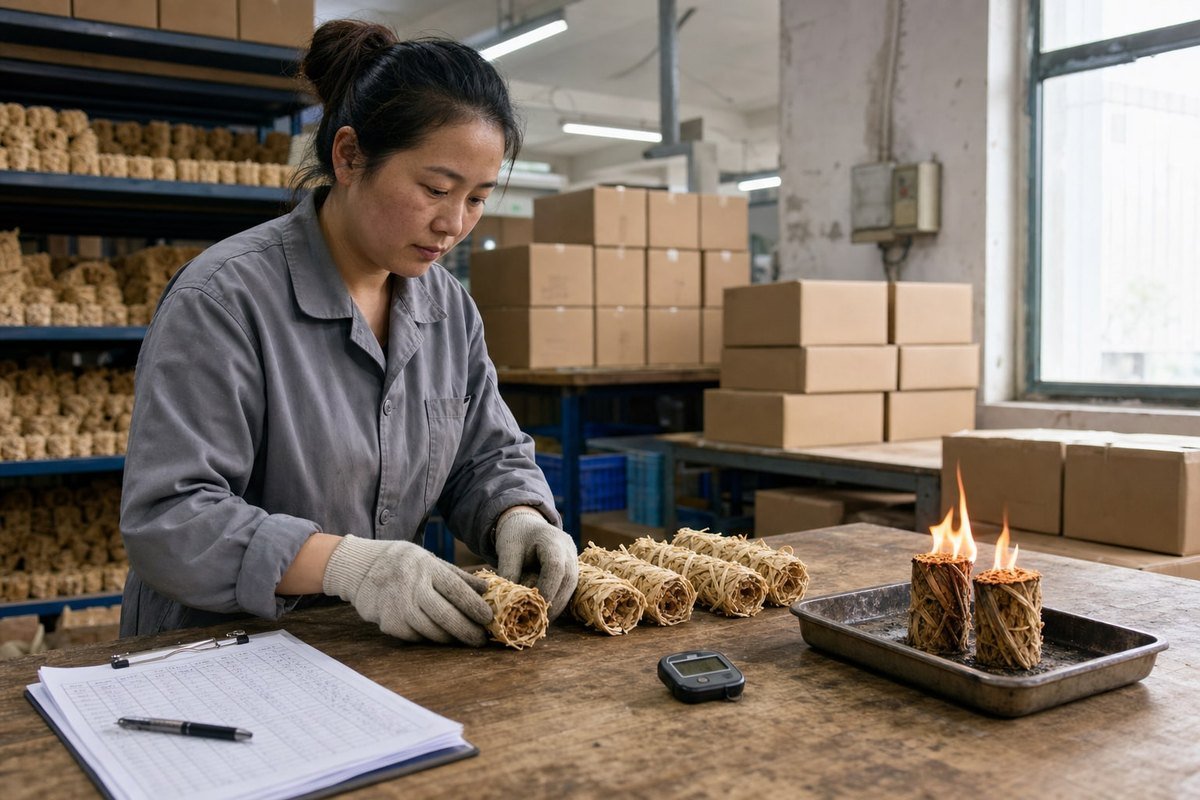
The physics is straightforward. Wood does not burn directly. Heat drives off moisture, then releases flammable gases 1 from the fibers. The starter's flame must sustain that process until the tinder and kindling reach roughly 300°C. If the flame dies before that threshold, the wood cools, smolders, and fails.
In our production line in Ningbo, we formulate wax-dipped wood rolls at a 50/50 wood fiber and paraffin ratio 2. That blend gives a steady wicking flame rather than a fast flash. It matters because a sustained flame in contact with the fuel outperforms a brief, tall burst every time.
Match Burn Time to Your End Customer
Your market determines the target. A fireplace user in a dry US home needs less burn time than a camper in the Scottish Highlands.
| Market Segment | Recommended Burn Time | Why |
|---|---|---|
| Indoor fireplace / wood stove | 8–10 minutes | Controlled airflow, dry wood, sheltered |
| BBQ and charcoal grilling | 8–12 minutes | Charcoal needs sustained contact heat |
| Camping and firepits | 10–15 minutes | Wind, humidity, variable fuel |
| Wet or cold climates (Nordics, Canada) | 12–15+ minutes | Heat loss to environment doubles demand |
Why Density Matters Too
High-density hardwoods like oak and hickory resist heat penetration. Their tight cell structure demands longer, hotter contact than softwoods. If your customers burn seasoned hardwood logs 3, lean toward the upper end of the range. BTU heat output per starter matters as much as raw minutes; a weak 15-minute glow can lose to a strong 10-minute flame.
How Can I Verify a Supplier's Burn-Time Claims Before Placing a Bulk Order?
A purchasing manager from the Netherlands once told me he had been burned—literally and figuratively—by a supplier whose "12-minute" starters averaged seven. Verification is not optional in this category.
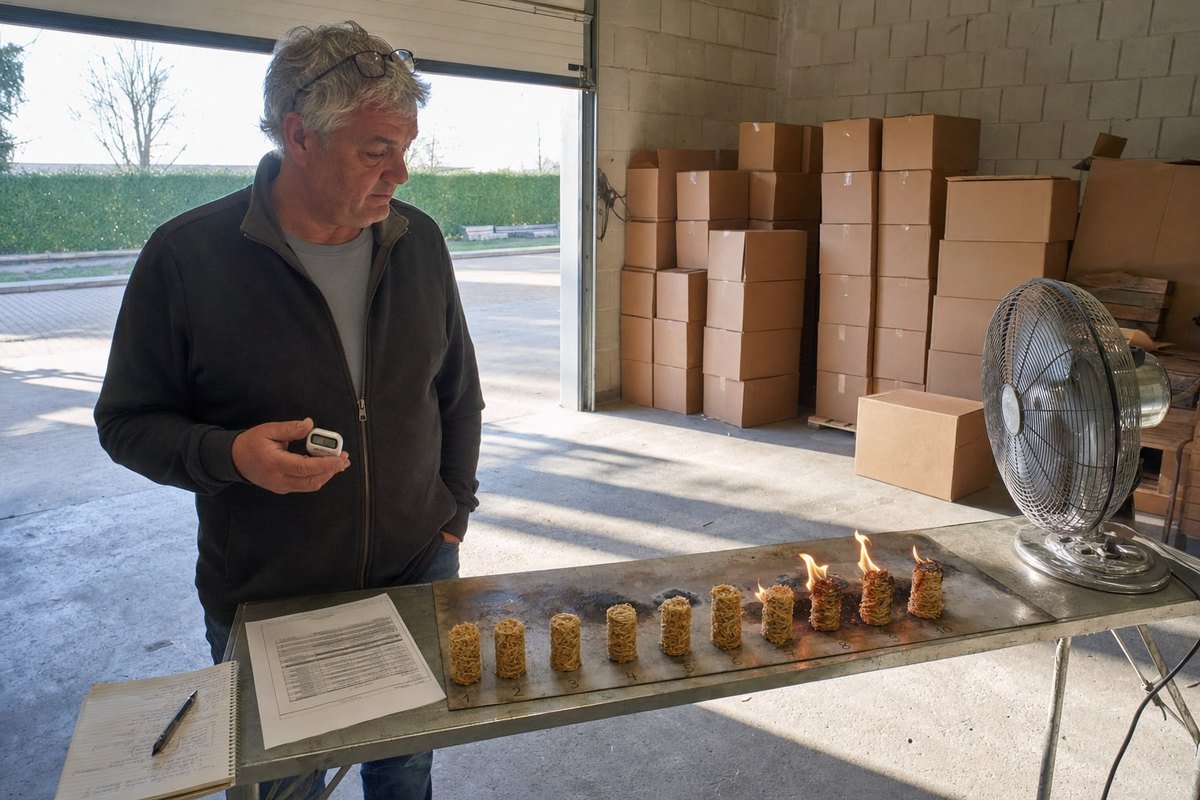
Verify burn-time claims by requesting third-party SGS or Intertek test reports, then conducting your own timed sample tests: burn 10 units from different production batches, record each duration, and check the variance. Reliable suppliers show consistent results within a one-to-two-minute spread.
Never rely on a datasheet alone. Burn time depends on wax loading, fiber density, and roll tightness. Any of these can drift if a factory cuts corners between the sample stage and mass production. In our 17-plus years shipping to more than 30 countries, we have seen buyers switch to us precisely because a previous supplier's bulk shipment did not match the approved sample.
A Simple Verification Protocol
Here is the process I recommend to every new buyer, and the one we invite buyers to run on our own samples:
- Request samples from at least two different production batches, not just one polished sales sample.
- Weigh each unit. Weight variance above roughly 10% signals inconsistent wax dipping.
- Burn 10 units in still air. Time from ignition to flame-out.
- Burn 3 more units outdoors or near a fan to simulate airflow and ventilation stress.
- Compare your results against the supplier's claimed range and any SGS or Intertek report.
What the Paperwork Should Show
| Document | What It Proves |
|---|---|
| SGS / Intertek burn test report | Independent confirmation of burn time and behavior |
| ISO 9001 certificate | A quality system exists to keep batches consistent |
| BSCI audit report | The factory is a real, audited production site |
| Material composition sheet | Wax-to-fiber ratio matches what was tested |
Also ask how the supplier controls moisture during storage. Wood wool lighters 4 absorb humidity, and damp fiber shortens effective burn time. Our factory stores finished goods in sealed cartons for exactly this reason.
Can Burn Duration Be Customized to Match My Brand's Packaging and Use Case?
One of the more interesting OEM projects we ran involved a UK fireplace brand that wanted a compact starter for its premium gift box—but insisted on keeping a full 12-minute burn. It took three formulation rounds, and we got there.
Yes. Burn duration is fully customizable by adjusting wax-to-fiber ratio, unit size, roll density, and wax type. Experienced factories can engineer wood fire starters anywhere from 5 to 20 minutes, then align unit count, box size, and private-label packaging to your target market.
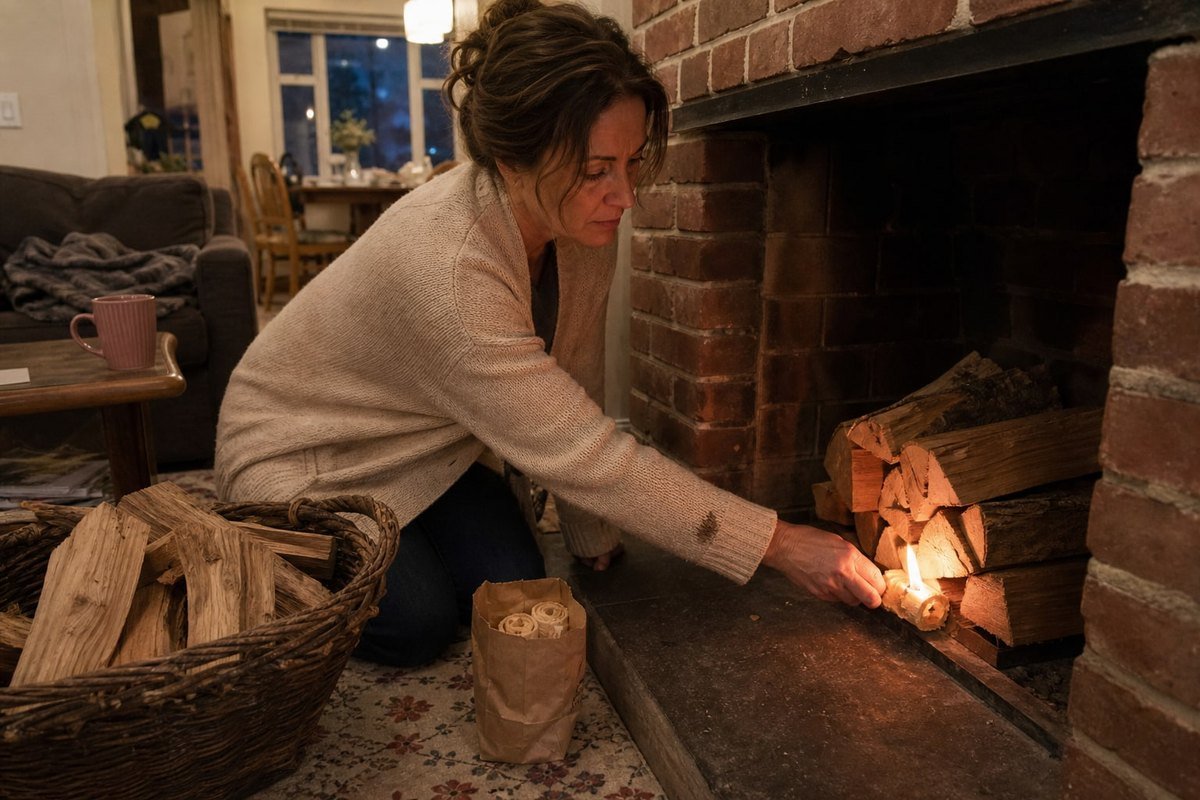
Burn time is an engineering output, not a fixed property. On our lines, we control four levers. First, the paraffin percentage: more wax extends duration and raises BTU heat output. Second, physical size: a longer or thicker roll simply carries more fuel. Third, fiber density: a tighter wind burns slower and steadier, like a candle wick. Fourth, wax type and dip depth, which shape how the flame spreads across the surface.
Common Customization Requests We Handle
- Short-burn units (5–8 minutes) for BBQ brands where charcoal chimneys concentrate heat and need less duration.
- Standard units (8–12 minutes) for fireplace distributors and retail multipacks.
- Extended-burn units (12–15+ minutes) for camping brands selling into wet or windy markets, positioned as an upgrade over fatwood resin sticks.
- Format changes, such as switching from cylindrical wood rolls to wax-based fire cubes for a different shelf presence.
Packaging follows function. A 100-piece bulk box suits hardware channels. A 24-piece kraft box with a rope handle suits gift and lifestyle retail. We routinely produce custom boxes, display packaging, warning labels, and barcodes so the product arrives shelf-ready. For buyers marketing the top-down fire method—where the starter sits on top and burns downward—we recommend a slightly longer burn spec, since ignition travels against the natural chimney effect.
One practical note from our export experience: always finalize burn time before packaging artwork. Printing "burns up to 15 minutes" on a box locks you into a spec your factory must then hold on every batch.
What Certifications Should I Request to Confirm Consistent Burn Performance Across Batches?
The hardest lesson I learned early in our export business was that certificates open doors, but batch consistency keeps them open. A US retail buyer will forgive a late email; they will not forgive carton three burning differently from carton one.
Request ISO 9001 for quality-system control, SGS or Intertek test reports for verified burn time and material safety, BSCI for audited factory conditions, and CE marking where applicable. Together, these confirm the supplier can hold burn performance stable across every production batch.

Each certificate answers a different buyer risk. Understanding what each one actually covers helps you ask sharper questions during sourcing.
What Each Certification Actually Tells You
| Certification | Risk It Addresses | Question to Ask the Supplier |
|---|---|---|
| ISO 9001 | Process drift between batches | How do you sample and burn-test each production run? |
| SGS / Intertek reports | Unverified burn-time and safety claims | Is the report for this exact formulation and size? |
| BSCI | Trading companies posing as factories | Can I see the audited site address and visit it? |
| CE / market compliance | Import rejection and labeling issues | Do warning labels meet my destination market's rules? |
Certificates Alone Are Not Enough
Ask how the quality system translates to daily practice. In our factory, batch control means checking raw wood fiber moisture with a moisture content meter 5 before winding, verifying wax bath temperature during dipping, and pulling finished units from each run for timed burn tests. If a batch drifts outside its burn-time tolerance, it does not ship. That discipline is why the first sample a buyer approves reliably reflects mass-production quality.
There is also a downstream reason consistency matters: clean, complete combustion. A properly formulated starter with natural wood fiber and paraffin burns fully and supports creosote buildup prevention 6 in stoves and chimneys, unlike chemical accelerants or treated scrap. Buyers serving the wood stove market 7 should ask for composition documentation confirming no harmful chemicals—something our eco-friendly material specs and test reports cover as standard.
Finally, insist that test reports match the exact SKU you are ordering. A report for a 30-gram unit does not validate a 20-gram unit. Serious factories re-test when specifications change; that is a hard requirement for our own retail-channel customers, not a nice-to-have.
Conclusion
Target 8–12 minutes for most markets, 15 for harsh conditions. Verify claims with batch testing and certified reports, and partner with a factory that holds that spec every run.
Footnotes
1. Explains the chemistry behind wood releasing flammable gases during ignition. ↩︎
2. Background on paraffin wax properties relevant to fire-starter formulation ratios. ↩︎


Join the Conversation