






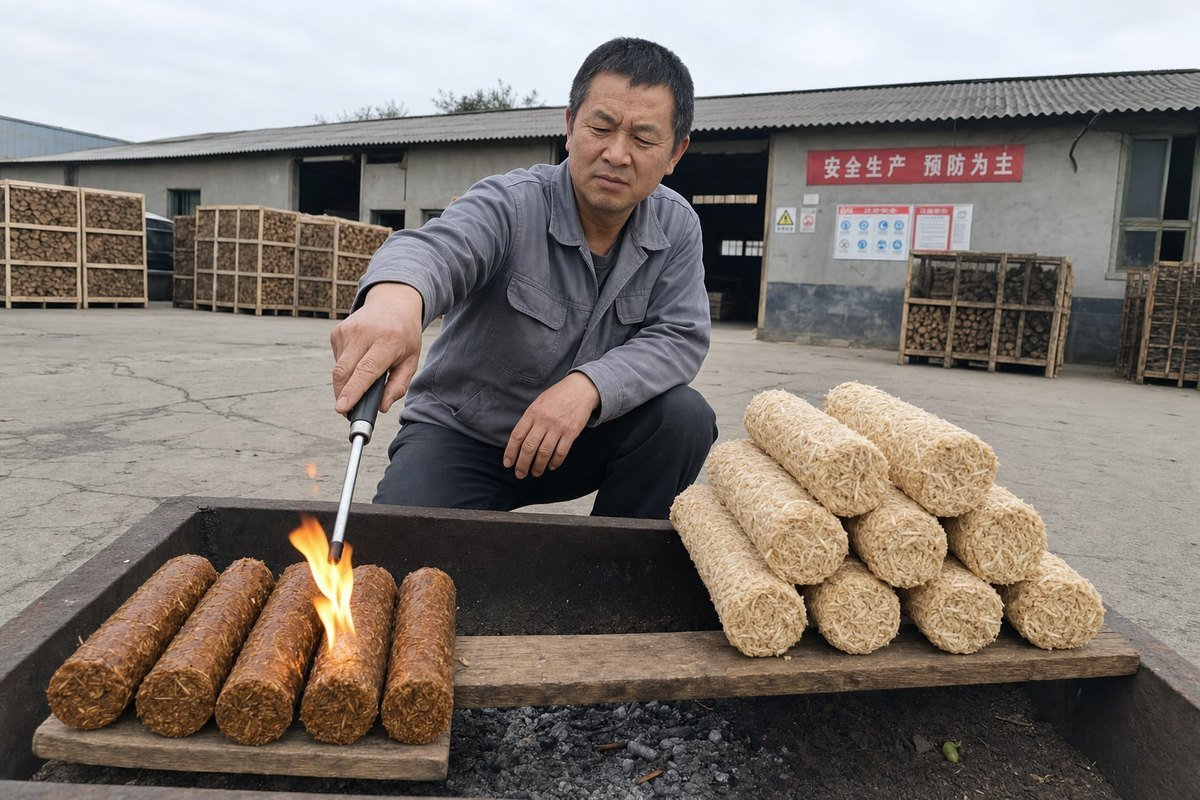
Choosing between wax-based and compressed wood shaving fire starters keeps many buyers stuck flash-point 1. I see this on our production line weekly — one wrong pick means returns, complaints, and lost shelf space.
Wax-based fire starters win for fast ignition, moisture resistance, and wet-weather reliability, while compressed wood shaving starters offer a steadier burn, less soot and residue, and a cleaner eco-friendly image. The better choice depends on your customers' primary use case, not on one universal winner.
That short answer helps, but a purchasing decision needs more depth. Below, I break down reliability, compliance, quality consistency, and branding flexibility — the four questions importers ask us most.
How do I know which fire starter type will burn most reliably for my customers?
Last winter, a German distributor sent us two competitor samples that failed in damp storage. We burned them side by side against our wax-dipped wood rolls in a test pit, and the difference was immediate.
Wax-based fire starters ignite faster, resist moisture better, and light reliably with a single match even in damp or cold conditions. Compressed wood shaving starters burn longer and steadier but can absorb humidity. For unpredictable outdoor use, wax-dominant products are the more dependable choice.

The market labels are messy. Many "compressed wood" starters still contain wax, and most "wax-based" starters use wood fiber as the core fuel. Our own wood firestarters, for example, blend roughly 50% wood fiber with 50% paraffin 2. So the real comparison is wax-dominant versus wood-dominant formulations. That framing changes how you should evaluate reliability.
Performance at a glance
| Factor | Wax-Dominant Starters | Wood-Dominant Starters |
|---|---|---|
| Ignition speed | Very fast, single match | Slower, needs more flame contact |
| Burn time duration | Typically 8–12 minutes | Often 8–15 minutes, steadier |
| Moisture resistance | Excellent, wax seals fibers | Fair, can absorb humidity |
| Ignition temperature needed | Lower | Higher |
| Shelf life stability | Years, even in damp storage | Shorter unless sealed well |
| Soot and residue | Slightly more with paraffin 3 | Cleaner, less residue |
Why moisture resistance decides real-world reliability
Your end customer rarely lights a fire in laboratory conditions. Firewood is often damp. The fire pit sat in the rain. The camping box lived in a humid garage all summer. Wax saturation acts as a moisture-proof seal for the internal wood fibers, so the starter stays volatile and ready after months — or years — of storage. Wood-dominant blocks, by contrast, can wick moisture from the air and become stubborn to light.
Where wood-dominant starters shine
Compressed blocks hold their physical shape during combustion. They act as a stable base under kindling wood, preserving airflow channels as the fire builds. For controlled indoor fireplaces with dry seasoned logs, that steady, longer burn is a genuine advantage. Buyers serving fireplace-focused customers should not dismiss the wood-heavy format.
Which option offers better compliance and safety documentation for import into my market?
A UK buyer once told me his previous supplier's shipment sat in customs for six weeks over a missing test report. In our 17+ years exporting fire products to 30+ countries, documentation problems sink more deals than product problems do.
Both types can be imported safely, but wax-based starters need clearer ingredient disclosure — paraffin content, flash-point data, and odor claims — while wood-dominant starters need proof of binder composition. What matters most is the supplier's certifications: ISO 9001, BSCI, CE marking, and SGS or Intertek test reports.

Fire starters are consumer combustibles, so importers in the US and EU carry real liability. The formulation type changes which questions regulators and retail buyers ask, but it does not change the paperwork discipline required. From our export desk in Ningbo, here is how the documentation burden typically differs.
Documentation checklist by product type
| Requirement | Wax-Dominant Starters | Wood-Dominant Starters |
|---|---|---|
| Ingredient declaration | Paraffin vs soy wax vs beeswax must be stated | Fiber source and binder type must be stated |
| Flammability testing | SGS/Intertek burn tests expected | Same, plus density consistency checks |
| Warning labels | Required in local language | Required in local language |
| Eco-claims substantiation | Needed if marketed as natural | Needed for recycled-timber or lignin claims |
| Indoor-use claims | Odor and smoke profile scrutiny | Generally easier to support |
Indoor-use and stove-safety claims deserve extra care
Retailers increasingly ask about indoor fireplace suitability. Wood-dominant starters have an easier story here — less paraffin vapor, less smell, cleaner combustion. Some high-efficiency wood stoves with catalytic combustors are even better matched with low-wax products, since heavy paraffinic vapors can coat sensitive catalytic elements over time. If your catalog targets stove owners, put that claim on the wood-dominant SKU and back it with test data.
Certification is a supplier question, not a product question
We hold ISO 9001 and BSCI certification, carry CE marking 4, and maintain SGS and Intertek test reports precisely because our buyers treat these as hard requirements, not nice-to-haves. Whichever formulation you choose, ask the factory for current reports before sampling. A supplier who hesitates on paperwork will hesitate on everything else.
Can I get consistent quality across large orders with either wax-based or compressed wood options?
Batch consistency is where I spend most of my quality-control energy. On our lines, we weigh wax uptake per roll and reject units outside tolerance — because one under-dipped batch can undo years of a brand's reputation.
Yes, but consistency depends on process control, not product type. Wax-based starters need tight control of wax saturation and dip temperature; compressed wood starters need uniform density and binder distribution. A factory with batch-to-batch QC delivers both types consistently; a trading company often cannot.

Both formats have failure modes that only show up at scale. Understanding them helps you audit suppliers with sharper questions.
Where wax-based starters go wrong at volume
The main variable is saturation. If the wax bath temperature drifts, rolls absorb too little wax and lose moisture resistance, or too much wax and burn with excess soot and residue. Wax type matters too — the paraffin vs soy wax choice affects melting point, odor, and shelf life stability. A disciplined factory logs bath temperature, dip time, and finished unit weight for every batch. Ask to see those records.
Where compressed wood starters go wrong at volume
Density is everything. Loose compression means fast, uneven burns; over-compression raises the ignition temperature and frustrates end users who expect a one-match light. Binder distribution also varies if the sawdust blend is inconsistent. Products built from mixed timber waste 5 can shift in fiber size season to season, which changes burn time duration unless the factory screens raw material.
A practical supplier audit sequence
- Request the current sample and a retained sample from a past mass-production run.
- Burn both side by side and compare ignition speed and total burn time.
- Ask for batch QC records — weights, densities, burn-test logs.
- Confirm the sample source is the actual production line, not a showroom.
- Start with a trial order and re-test units pulled randomly from the shipment.
In our experience, the first sample should reliably predict mass-production quality. When it does not, the problem is the factory, not the formulation. That is exactly why we run complete production lines in-house rather than outsourcing — it keeps tolerance drift visible and correctable before goods ship.
Which type gives me more flexibility for private-label branding and custom packaging?
One of my favorite projects was a Dutch outdoor brand that wanted a kraft-look retail box, a shorter roll for a lower price point, and a longer burn time duration for their premium tier — all from the same base product. We adjusted roll length and wax load, and shipped three shelf-ready SKUs.
Wax-based wood rolls offer slightly more branding flexibility because size, wax load, burn time, and finish can all be tuned per SKU. Compressed wood starters allow shape variety — cubes, sticks, nuggets — but density constraints limit tuning. Both support full private-label packaging with a capable OEM partner.
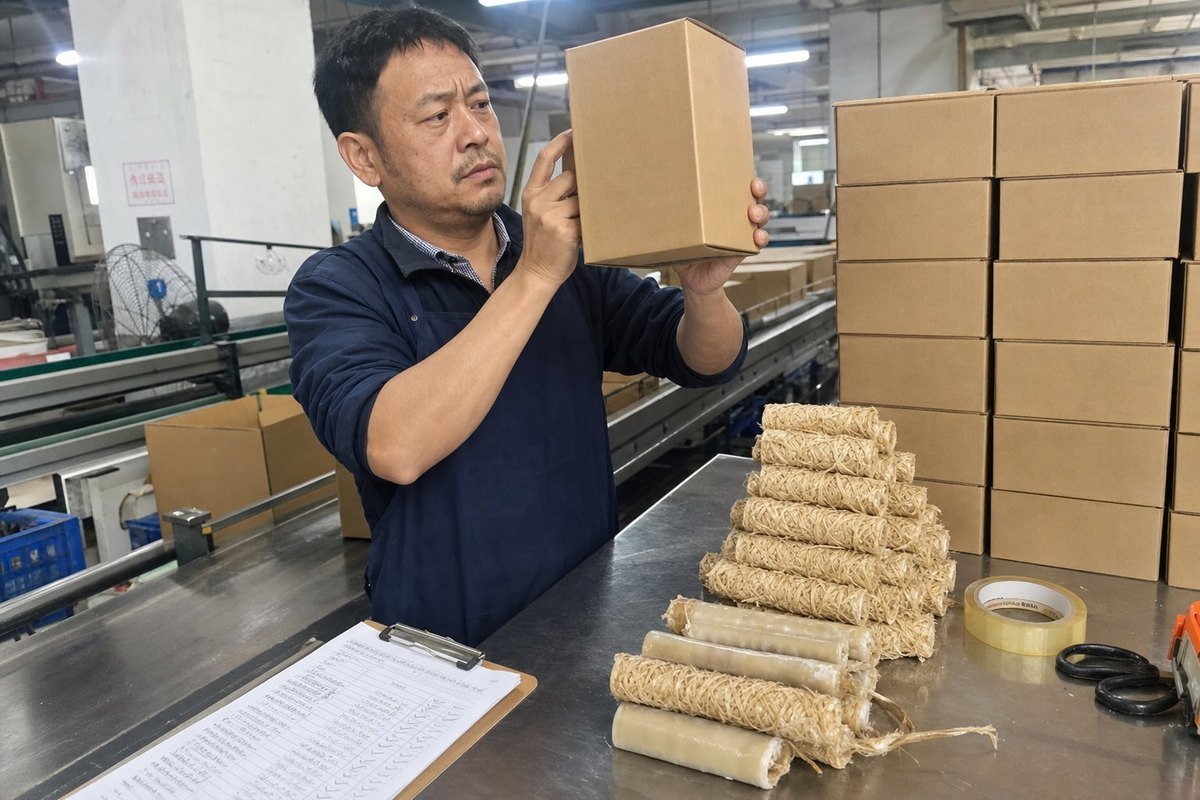
For most importers, the product is only half the purchase. The packaging, labeling, and shelf presentation carry the brand. Here is how the two formats compare from an OEM/ODM standpoint.
Customization options compared
| Customization Lever | Wax-Dominant Rolls | Wood-Dominant Blocks |
|---|---|---|
| Size and length | Fully adjustable per order | Limited by mold/press tooling |
| Burn time tuning | Adjust wax load and roll density | Adjust compression, less range |
| Shape variety | Cylindrical rolls, bundles | Cubes, sticks, nuggets, blocks |
| Scent or additive options | Possible with wax carrier | Difficult |
| Positioning story | Wet-weather reliability, camping | Eco-friendly fire starters, clean burn |
| Pairing potential | Kindling wood, fatwood sticks 6, torches | Firelighter cubes multipacks, stove kits |
Packaging is where private-label value is won
Count-based retail boxes — like a bold "100 pcs" carton — display packaging for checkout counters, kraft bags for an artisanal look, or jars for gift sets: all of these are format-agnostic. What matters is whether the factory handles custom boxes, warning labels in your market's language, barcodes 7, and logistics optimization under one roof. We build all of that into our OEM service because our buyers want one accountable partner, not four vendors to coordinate.
Think in product families, not single SKUs
The strongest private labels bundle a hero fire starter with complements — fatwood sticks, kindling wood packs, color-flame packets, or wax torches. A wax-dominant roll sits naturally at the center of an outdoor range; a wood-dominant block anchors an indoor fireplace range. Choose the format that matches the story your brand tells, then let the supplier tune the specs.
Conclusion
Picking the wrong fire starter format costs shelf space and trust. Match wax-dominant rolls to outdoor wet-weather buyers, wood-dominant blocks to clean indoor burns — then partner with a certified factory that keeps every batch consistent.
Footnotes
1. Wikipedia explains flash-point testing relevant to combustible product safety disclosure. ↩︎
2. Paraffin wax composition affects ignition, moisture resistance and shelf life for fire starters. ↩︎
3. Background reference on paraffin wax composition used in wax-based fire starters. ↩︎
4. Official EU source explaining CE marking compliance requirements for imported products. ↩︎
5. Background on timber waste variability helps explain inconsistent fiber size in wood-dominant starters. ↩︎
6. Explains what fatwood is, relevant as a common complementary fire-starting product. ↩︎
7. GS1 barcode standards support proper retail-ready private-label packaging compliance. ↩︎



Join the Conversation