






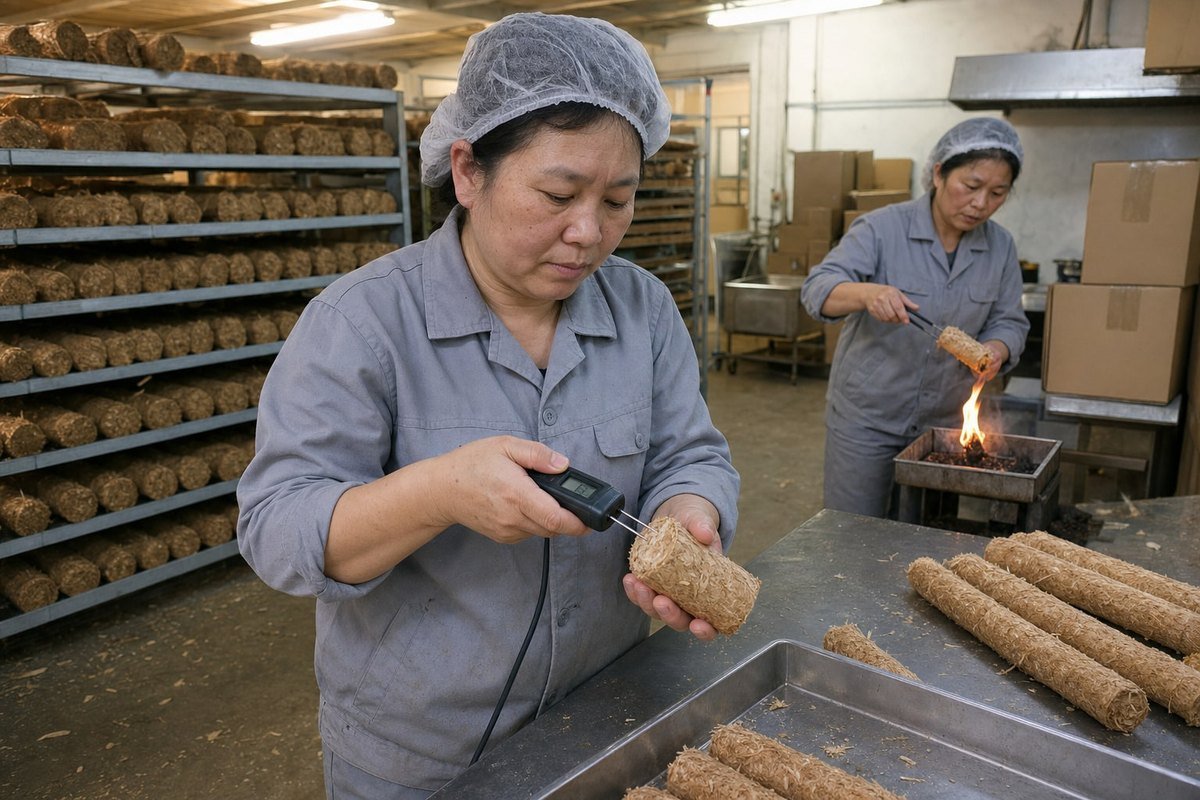
Moisture content quietly decides whether a wood fire starter performs or fails CE marking 1. On our production line, we have watched a few percentage points ruin ignition performance entirely. Buyers rarely spot the problem until customer complaints arrive. By then, a full container is already on the shelf. The fix starts at sourcing, not at the retail counter.
Moisture content directly controls wood fire starter ignition performance. Water absorbs the starter's heat before pyrolysis can begin, so higher moisture increases ignition time and energy demand. Starters kept below 12% moisture ignite fast and consistently; above 20%, ignition slows sharply or fails.
That is the short answer. But if you buy fire starters in bulk, you need more than a number. You need to know what to specify, how to verify it, and how to protect your brand. Let me walk you through all four questions below.
What moisture level should I require from my wood fire starter supplier for reliable ignition?
During a burn test last winter, our QC team compared two batches of wax-dipped wood rolls. One sat at 9% moisture, the other at 16%. The difference in flame height was visible within seconds.
Require a maximum moisture content of 8% to 12% in the wood fiber core before wax coating. At this level, the starter ignites within seconds, burns hot enough to dry adjacent kindling, and delivers consistent burn times. Anything above 15% risks slow, weak, or failed ignition.
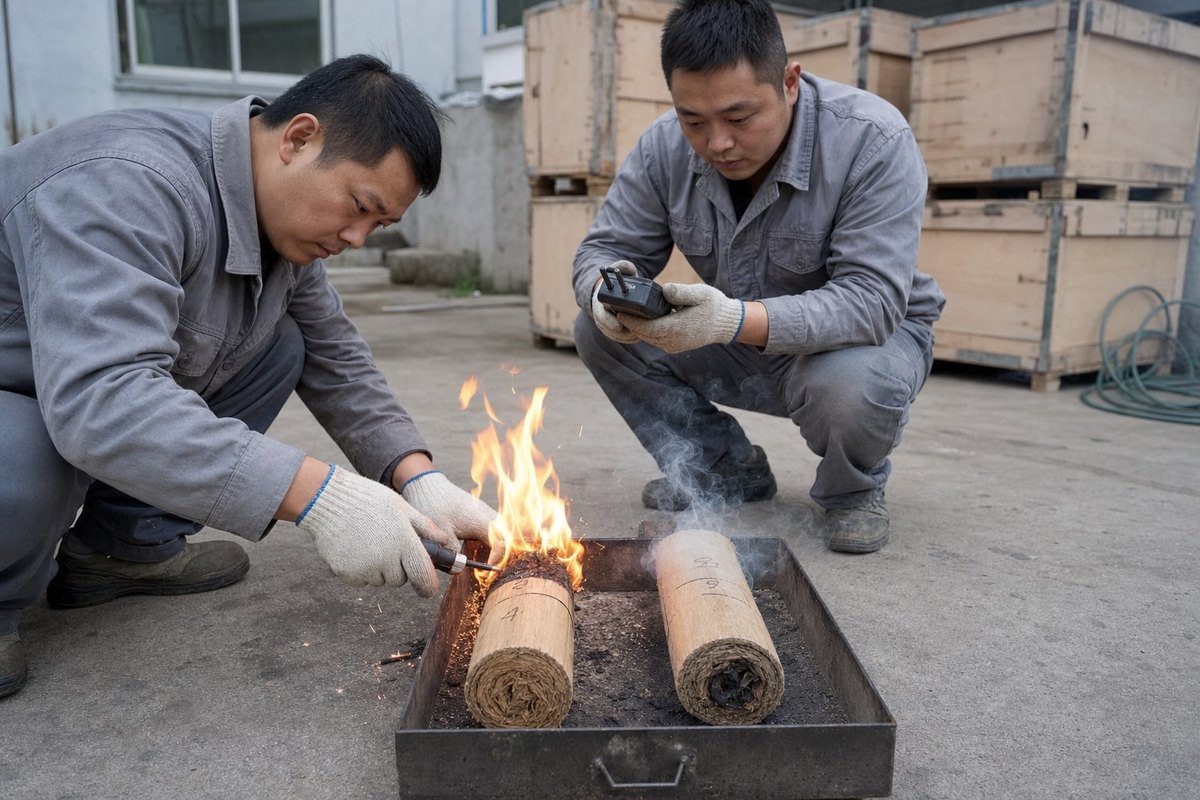
The science here is simple, even if the physics behind it is not. Water is a heat sink. Every gram of moisture inside a fire starter must be heated to 100°C and then evaporated before the wood fiber can reach its ignition temperature. That evaporation consumes energy the flame should be spending on the pyrolysis 2 process — the thermal breakdown that releases flammable gases. Fire research backs this up strongly. One classic study found that dry wood needs roughly half the radiant heat intensity for piloted ignition compared with wood at 60% moisture. Another widely cited relationship shows ignition time rising with the square of moisture content, meaning the delay grows nonlinearly, not gradually.
Why the fiber saturation point matters
Wood cell walls hold bound water up to the fiber saturation point 3, around 28–30% moisture. Below that point, drying gets progressively harder, but ignition behavior improves rapidly. Above it, free water floods the cell cavities and ignition becomes impractical without external drying. This is why our factory targets kiln-dried wood fiber well below 12% before any wax dipping begins. Kiln-dried firewood standards exist for the same reason: predictable ignition and clean combustion.
Recommended moisture specifications by component
| Component | Target Moisture | Acceptable Maximum | Risk Above Maximum |
|---|---|---|---|
| Wood fiber core (pre-wax) | 8–10% | 12% | Slow ignition, weak flame |
| Finished waxed starter | Sealed below 10% | 12% | Sputtering, shortened burn |
| Kindling sticks (if bundled) | 12–15% | 18% | Delayed flame transfer |
| Packaging environment | Below 60% RH | 65% RH | Hygroscopic 4 re-absorption |
The wax coating helps, because paraffin seals the fiber against humidity. But wax only locks in whatever moisture was already there. If the core was damp at dipping, the starter will underperform no matter how good the wax is. In our experience exporting to humid markets like Brazil and Southeast Asia, the pre-wax moisture spec is the single most important line in a purchase agreement. It affects combustion efficiency 5, effective BTU heat output during the critical first minutes, and ultimately whether the end user's kindling catches at all.
How do I verify a manufacturer's moisture control process before placing a bulk order?
A German distributor once asked me to video-call directly from our Ningbo drying room before signing. Smart move. Ten minutes on camera told him more than fifty emails ever could.
Verify moisture control by requesting the supplier's kiln-drying logs, in-line moisture meter records, batch QC reports, and third-party test data. Then order samples, test them with a pin-type moisture meter after splitting, and confirm the factory holds ISO 9001 process documentation.
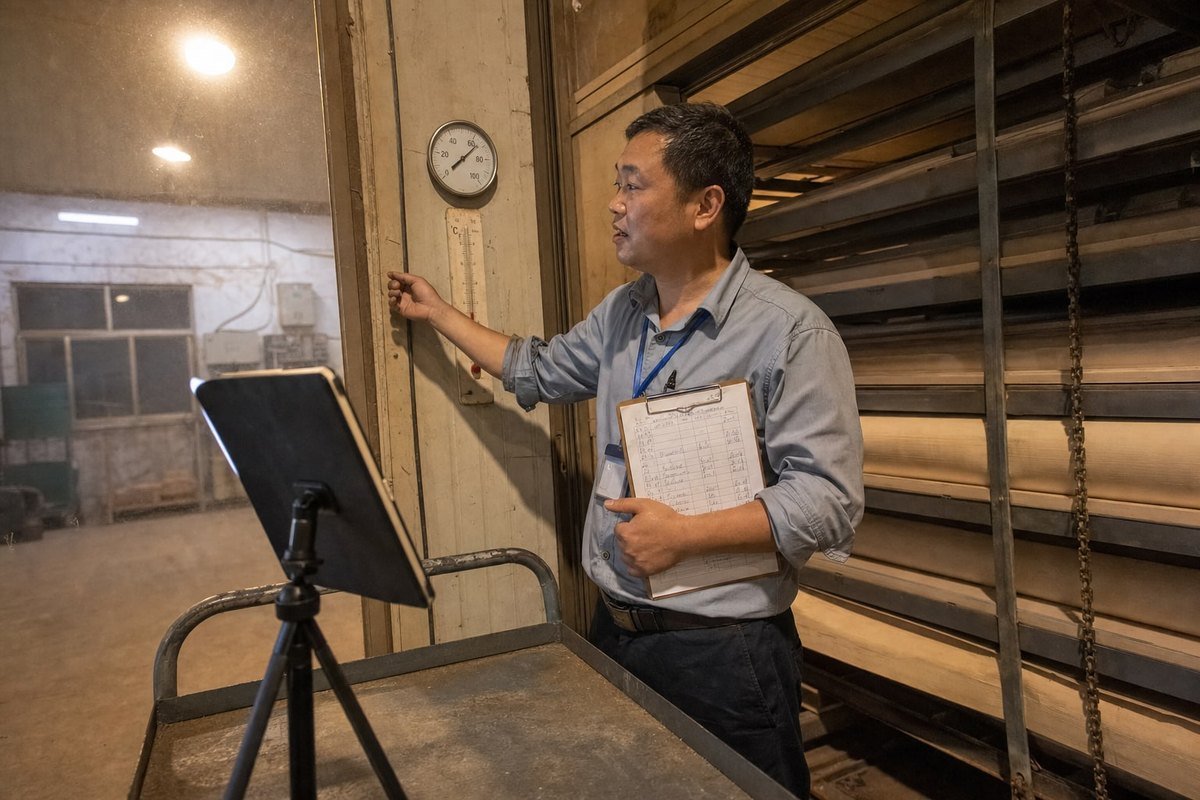
Verification is where serious buyers separate real factories from trading companies. A trading company can quote you any moisture spec you like. Only a factory can show you the process that hits it batch after batch. Here is the verification sequence I recommend to purchasing managers, based on how our own audits from European buyers usually run.
A five-step verification process
- Request drying documentation. Ask for kiln temperature and duration logs for recent production runs. Seasoning wood naturally takes months and varies with weather; kiln drying takes days and produces records. If a supplier cannot show drying logs, they are probably air-drying inconsistently.
- Ask for in-process moisture data. Our QC team measures fiber moisture at three points: raw material intake, post-drying, and pre-wax dipping. Ask any supplier for the same three-point data. One reading is not a process.
- Test samples yourself. Use a pin-type moisture meter, and split the starter core first. Internal moisture often runs 5–15% higher than surface readings. Surface-only testing is the most common buyer mistake we see.
- Run a real ignition test. Light samples in still air. Time the ignition, flame height, and total burn. Compare against the supplier's stated burn time. A 50%-wood-fiber, 50%-paraffin starter should ignite within seconds from a single match.
- Confirm process certification. ISO 9001 6 does not test moisture directly, but it proves the factory documents and repeats its process. Combined with a BSCI audit 7 and SGS or Intertek test reports, it tells you the spec you agreed on will survive scale-up.
What each check actually proves
| Verification Step | What It Proves | Red Flag If Missing |
|---|---|---|
| Kiln drying logs | Controlled, repeatable drying | Weather-dependent moisture swings |
| Three-point moisture records | In-line process control | Moisture checked only at final inspection |
| Split-core meter test | True internal dryness | Dry surface hiding a wet core |
| Timed ignition test | Real-world performance | Spec exists on paper only |
| ISO 9001 documentation | Batch-to-batch consistency | First sample won't match mass production |
The last point deserves emphasis. When we onboard a new OEM client, we always tell them the same thing: the sample is a promise. Our job is making batch ten thousand ignite exactly like batch one. Ask any prospective supplier how they guarantee that, and listen carefully to the answer.
Can inconsistent moisture content between batches affect my product's shelf life and customer complaints?
The hardest lesson in seventeen years of making fire products came from a shipment that tested perfectly at the factory — then absorbed humidity in an unsealed warehouse abroad.
Yes, batch-to-batch moisture inconsistency directly drives shelf-life problems and complaints. Damp batches ignite slowly, sputter, produce smoke, and can develop mold under packaging. Because wood fiber is hygroscopic, even initially dry batches re-absorb moisture if packaging and storage are not controlled.

Wood fiber never stops interacting with the air around it. Its hygroscopic properties mean it constantly moves toward equilibrium with ambient humidity. A starter dried to 9% in Ningbo can climb toward 15% or higher in a humid coastal warehouse if the packaging does not seal properly. Research on cellulosic materials found that raising equilibrium moisture from just 4% to 12.5% increased piloted ignition times by about 40%. Your customer does not know that number. They only know the starter "doesn't work like the last box."
How moisture problems become complaint tickets
The chain of failure is predictable. Inconsistent drying produces batches with different moisture levels. Wax dipping seals in the variation. Retail customers who loved batch A get batch B, which takes three matches instead of one. Reviews mention "smoky," "hard to light," or "cheap quality." None of those reviews say "moisture content" — but that is almost always the root cause. Slow, damp ignition also means incomplete combustion, which produces more particulate smoke and contributes to creosote accumulation 8 in fireplaces and stoves. For fireplace and BBQ distributors, that creosote complaint is especially damaging, because it touches safety, not just convenience.
Moisture level versus expected customer experience
| Starter Moisture at Point of Use | Ignition Behavior | Likely Customer Reaction |
|---|---|---|
| Below 10% | Lights on first match, strong flame | Positive reviews, repeat purchase |
| 10–15% | Lights but slower, mild sputter | "Okay but inconsistent" feedback |
| 15–20% | Multiple attempts, visible smoke | Complaints, returns begin |
| Above 20% | Frequent failure, weak flame, mold risk | Refund requests, damaged brand trust |
Prevention is a packaging and process question. On our lines, we control three things: uniform kiln drying before wax dipping, full wax encapsulation to slow re-absorption, and moisture-appropriate packaging — sealed bags or jars for humid destination markets. When we develop private-label packaging for a client, we ask where the product will be warehoused and sold. A box design that works for dry inland Germany may need a sealed inner liner for coastal Brazil. That conversation, held before production, prevents the complaint tickets that arrive six months later.
What certifications or test reports confirm moisture and quality standards for compliant sourcing?
Compliance paperwork used to feel like bureaucracy to me. Then a client told us a competitor's uncertified shipment was held at an EU port for weeks. Now I see certificates as shipping insurance.
Look for ISO 9001 quality management certification, BSCI social audits, CE marking for EU markets, and third-party SGS or Intertek test reports. These confirm documented moisture control, consistent production quality, product safety, and ethical manufacturing — the full compliance package importers need for legal, shelf-ready sourcing.
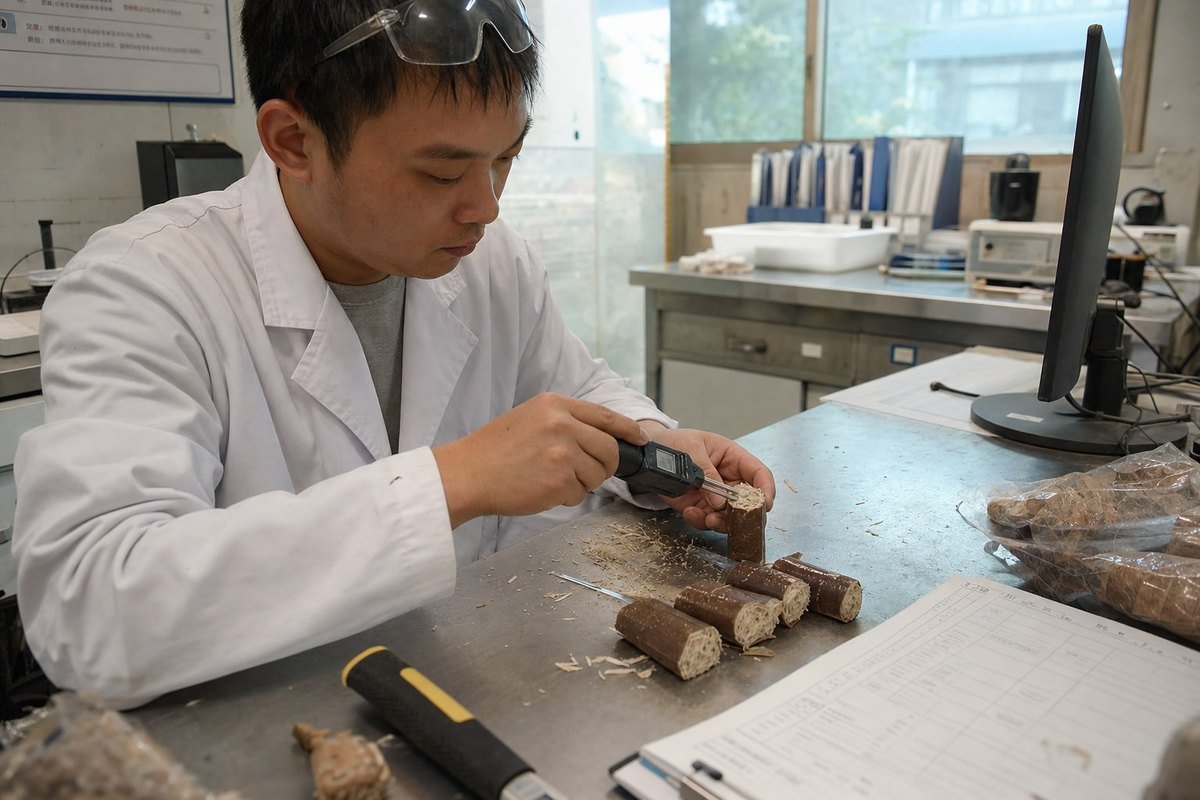
No single certificate says "moisture verified" on its face. Instead, compliant sourcing rests on a stack of documents that together prove the supplier controls their process, tests their product, and can defend both. Here is how I explain the stack to purchasing managers who visit our factory.
What each document actually covers
ISO 9001 certifies the quality management system. For moisture control, this is the foundation. It means drying procedures are documented, moisture checkpoints are defined, deviations are recorded, and corrective actions are traceable. When a buyer asks how we guarantee batch consistency, the honest answer is: because ISO 9001 forces us to write down and follow the same drying and dipping process every time.
SGS and Intertek test reports provide independent, third-party data on the finished product. These labs can test composition, burn characteristics, and physical properties. A supplier who volunteers recent third-party reports is showing confidence. A supplier who only offers self-declared data is asking you to take a risk they will not take themselves.
CE marking matters for European buyers. Fire-starting products sold in the EU must meet applicable safety requirements, and firelighters in particular face standards covering ignition behavior and safe handling. Correct warning labels, usage instructions, and composition disclosure — like the 50% wood fiber, 50% paraffin declaration on our retail boxes — are part of shelf-readiness, not decoration.
BSCI audits cover social compliance. Large retail sourcing channels increasingly require them before listing any product. They do not touch moisture, but they decide whether your product gets on the shelf at all.
What to request before your first purchase order
- Current ISO 9001 certificate with valid dates and scope covering the actual production site
- Most recent SGS or Intertek test report for the specific product line
- CE documentation and label artwork for EU-bound goods
- BSCI audit result if selling into major retail chains
- A written moisture specification in the purchase agreement, with the measurement method defined
- Pre-shipment inspection rights, including split-core moisture testing
One practical note from our export experience across 30-plus countries: always confirm the certificate covers the factory that actually makes your goods. Trading companies sometimes present certificates borrowed from partner factories they do not control. Since our headquarters is in Liuyang and production runs in Ningbo, we proactively show buyers documentation for the production site itself. Ask every supplier to do the same. It takes one email and can save you an entire failed season.
Conclusion
Moisture content makes or breaks wood fire starter ignition performance. Specify below 12%, verify with split-core testing, demand certified process control, and your product will light reliably — batch after batch.
Footnotes
1. Official EU source explaining CE marking requirements mentioned for European buyers. ↩︎
2. Defines the thermal decomposition process central to ignition physics discussed here. ↩︎
3. Background on wood drying and fiber saturation concept referenced in the article. ↩︎
4. Explains the moisture re-absorption property attributed to wood fiber in the text. ↩︎
5. Background concept on combustion efficiency referenced regarding moisture's effect on burning. ↩︎
6. Official ISO page for the quality management standard cited as certification proof. ↩︎
7. Official amfori website providing the primary definition and scope of BSCI audits. ↩︎
8. EPA resource on wood smoke and creosote risks linked to incomplete combustion. ↩︎



 English
  Spanish
  German
  French
  Arabic
  Portuguese
Join the Conversation