






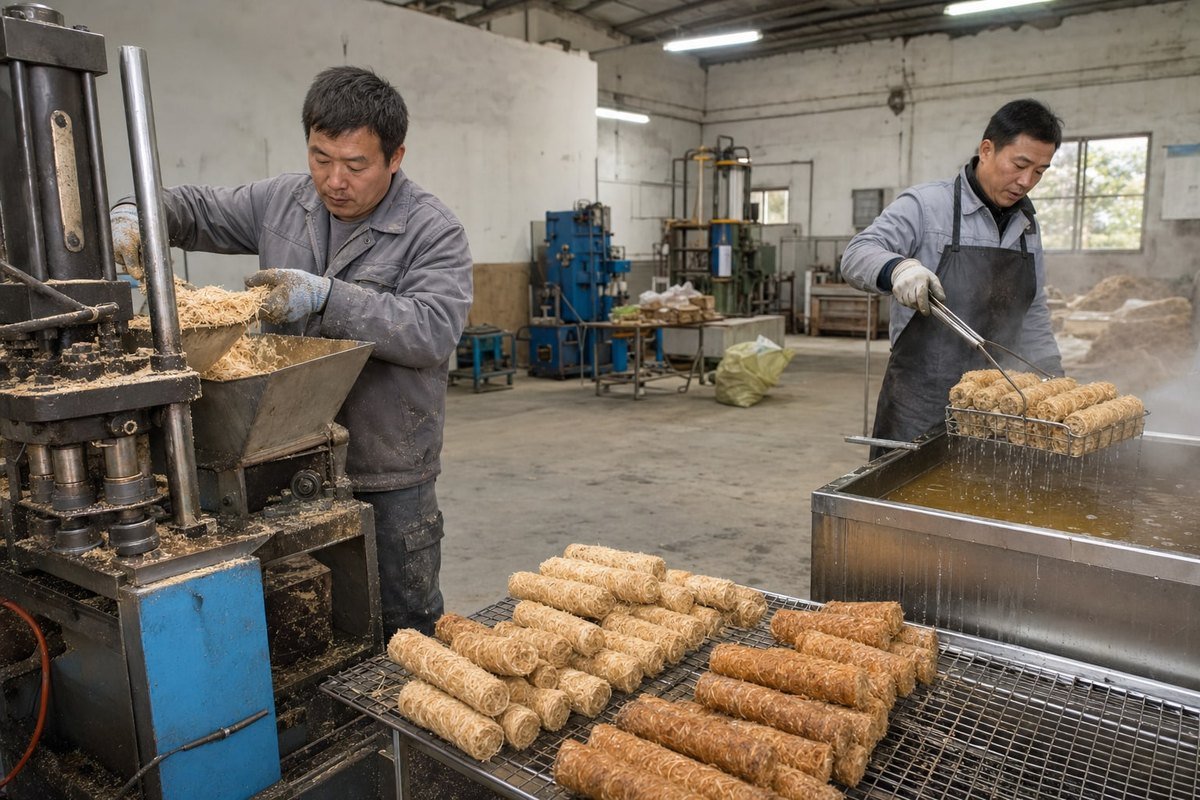
Wood fire starter performance often confuses buyers. On our production line, I have seen identical-looking starters behave completely differently at the flame — and the reason hides in the process.
Compression molding and wax dipping affect wood fire starter performance in different ways: compression controls density, burn duration, and structural consistency, while wax dipping controls ignition reliability, water resistance, and flame sustainment. Combining both methods produces starters that light easily and burn 10–15 minutes reliably.
That short answer hides a lot of engineering detail. Below, I break down what each process actually changes, and what you should verify before you commit to a bulk order.
What burn time and reliability differences should I expect between compression-molded and wax-dipped fire starters?
A distributor in Germany once sent me two competitor samples and asked why one burned twice as long as the other. Both were wood wool rolls. The difference was pure process.
Compressed-only starters burn slower but ignite harder; wax-dipped-only starters light instantly but burn faster and less evenly. Combined compression-plus-wax starters deliver the best of both: reliable single-match ignition and a steady burn duration of roughly 10–15 minutes per piece.
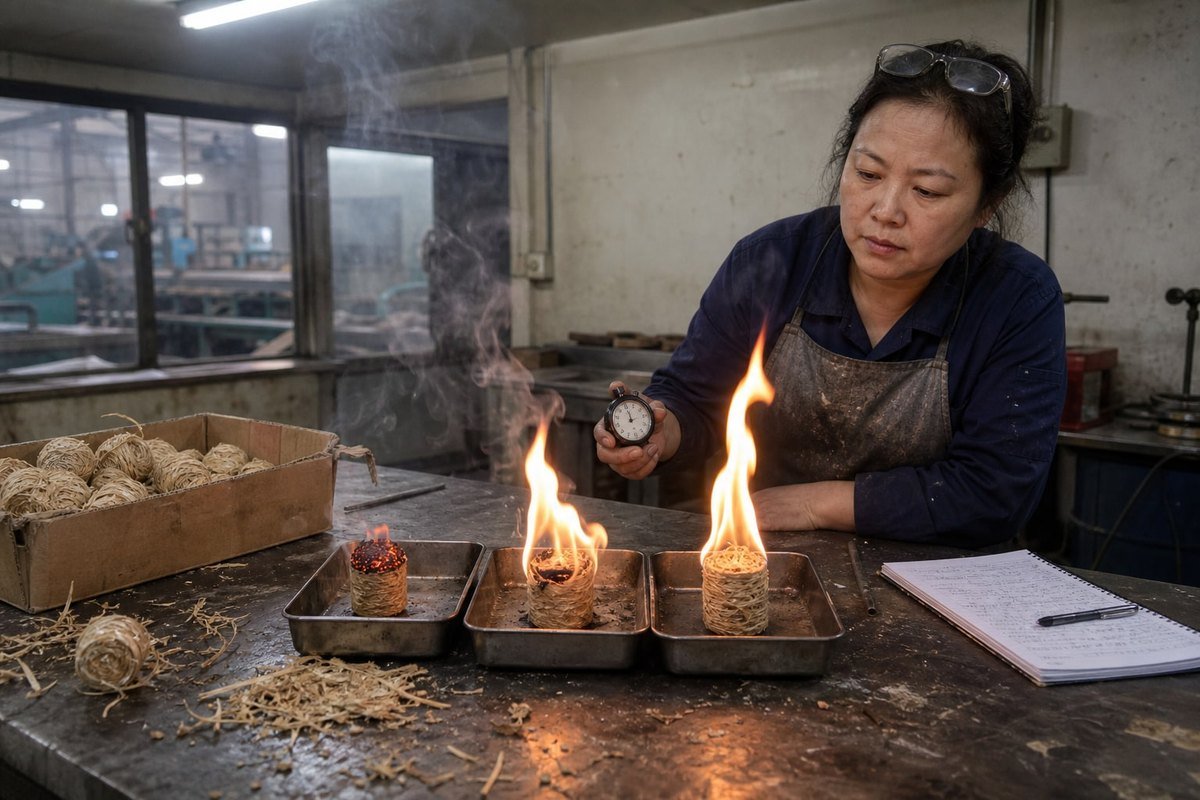
The fastest way to understand the difference is to see the two processes side by side:
| Performance Factor | Compressed Only | Wax-Dipped Only | Compressed + Wax-Dipped |
|---|---|---|---|
| Ignition speed | Slow to moderate | Very fast | Fast |
| Burn duration | Long, steady | Moderate, can flare | Long and steady (10–15 min) |
| Moisture resistance | Poor | Good | Excellent |
| Flame intensity | Low, smoldering | High, sometimes uneven | High and consistent |
| Handling durability | Good | Fragile if uncoated core | Very good |
Why compression changes the burn
Compression turns loose sawdust or wood wool into compressed biomass 1 with far fewer internal air pockets. That density slows oxygen penetration into the fuel core, so the material burns from the outside in. The result is longer burn duration and a steadier heat release rate. There is a trade-off, though. If density gets too high and the surface area gets too small, ignition becomes sluggish. We learned this early in our development work: over-compressed rolls needed two or three matches to catch, which no retail customer will tolerate.
Why wax changes the flame
Paraffin wax 2 is a high-calorific-value fuel. It vaporizes at low temperatures, so a wax-coated surface catches flame almost instantly. The wax layer also acts as a moisture barrier 3, which is why waxed starters keep their ignition reliability in damp sheds, garages, and campsites. Our standard wood firestarters use a roughly 50/50 wood fiber 4 and paraffin composition. The wood wool works like a wick, drawing molten wax upward through capillary action 5, while the compressed structure keeps the piece from collapsing into a puddle mid-burn. That wick-and-scaffold combination is what sustains the flame long enough to ignite kindling or charcoal.
Which manufacturing process gives me more consistent quality across large production batches?
Batch consistency is the question I hear most from purchasing managers. After 17-plus years running fire product lines in Ningbo, I can say the honest answer involves both processes — and the controls behind them.
Compression molding delivers higher batch-to-batch consistency because pressure, temperature, and fill weight are machine-controlled variables. Wax dipping is more operator-dependent, so consistency requires strict controls on wax temperature, dip time, and drain time. Combined-process factories must control both stages.

Consistency is not a single number. It comes from controlling specific variables at each stage. Here is how we manage it on our lines:
The variables that actually drift
- Raw fiber moisture content. Wood wool absorbs humidity. If incoming fiber varies from batch to batch, both compression density and wax uptake shift. We condition and check fiber before it reaches the molds.
- Molding pressure and dwell time. These set the final density and therefore the burn duration. Machine-set parameters keep these stable, which is why compression is the more repeatable of the two processes.
- Wax bath temperature. Cooler wax coats thickly but penetrates poorly. Hotter wax penetrates deeply but leaves a thin shell. Either extreme changes ignition behavior.
- Dip and drain timing. This determines paraffin saturation depth. Uneven timing produces starters that light differently within the same carton — the fastest way to generate retail complaints.
| Process Stage | Key Variable | Consistency Risk | Our Control Method |
|---|---|---|---|
| Fiber prep | Moisture content | High | Incoming inspection and conditioning |
| Compression | Pressure, fill weight | Low | Machine-set parameters, weight checks |
| Wax dipping | Bath temperature | Medium | Continuous temperature monitoring |
| Dip/drain | Timing | Medium | Standardized cycle times per SKU |
| Final QC | Burn test | — | Sample burns from every batch |
We burn-test samples from every production run against a target burn duration window. That is also why we tell buyers the first sample reliably reflects mass production — the same parameters that made your sample are locked for your order. A trading company reselling from multiple workshops simply cannot promise that, because it does not control the molds or the wax baths.
How do I evaluate wax coating thickness and material safety before placing a bulk order?
One buyer interaction sticks with me: a UK importer nearly ordered from a supplier whose "wax" turned out to be recycled industrial paraffin with unknown additives. His retail chain's compliance team caught it. Ours would have flagged it on day one.
Evaluate wax coating by cutting a sample lengthwise to check penetration depth, weighing pieces for consistency, and burn-testing for even flame spread. For safety, demand food-grade or fully refined paraffin documentation, SGS or Intertek test reports, and CE-compliant labeling before ordering.
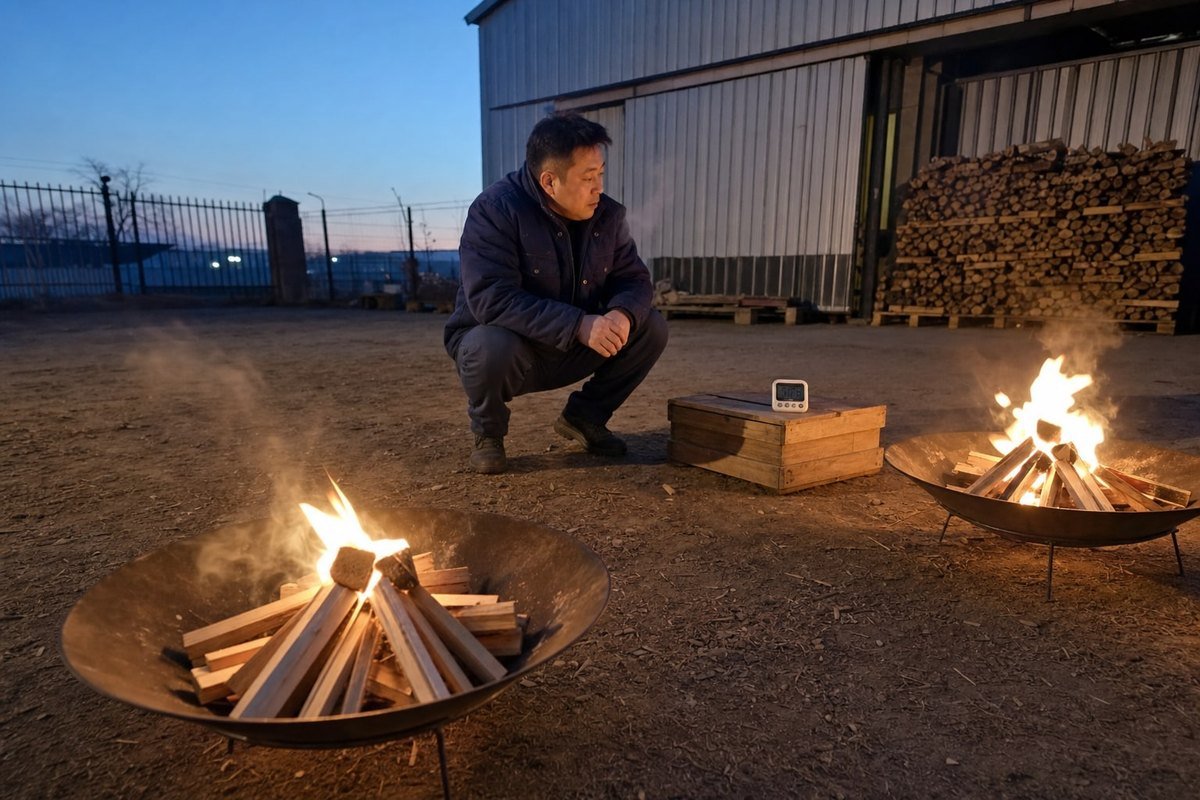
You do not need a laboratory to run a meaningful first evaluation. You need a knife, a scale, and a match. Here is the practical checklist we walk buyers through when they receive our samples.
The physical checks anyone can run
- Cut test. Slice a starter lengthwise. You should see wax penetration into the wood wool, not just a thin shell around a dry core. Deep, even paraffin saturation means consistent burning from start to finish. A shell-only coating burns bright for a minute and then dies.
- Weight check. Weigh ten pieces. Tight weight variation signals controlled fill weight and dip timing. Wide variation predicts uneven burn duration in the field.
- Burn test. Light one piece with a single match. Watch for even flame spread across the surface, a steady flame rather than flaring, and low smoke. Excessive black smoke suggests contaminated or low-grade wax — a clean-burning performance failure that customers will notice indoors.
- Water test. Splash a piece and try to light it. Good waterproofing properties 6 mean it still catches within a few seconds.
The paperwork checks that matter more
Physical tests confirm performance. Documents confirm safety and market access. In our experience exporting to the US, Germany, and the UK, these are non-negotiable:
| Document | What It Proves | Why It Matters |
|---|---|---|
| SGS / Intertek test reports | No harmful chemicals in wax and fiber | Retail compliance and consumer safety |
| Wax specification sheet | Fully refined paraffin grade | Rules out recycled industrial wax |
| ISO 9001 certificate | Documented quality management | Batch consistency is systematic, not luck |
| BSCI audit | Ethical factory conditions | Required by many EU and US retailers |
| CE-compliant labeling | Correct warnings and usage text | Legal shelf placement in the EU |
If a supplier hesitates on any of these documents, treat it as a performance red flag too. Factories that skip compliance paperwork usually skip process controls as well.
Can I request custom sizes, burn durations, or private-label packaging for either production method?
The trade-off we weigh most often in OEM projects is size versus burn time versus carton cost. A longer roll burns longer, but it also changes your packaging footprint and freight calculation. Getting all three right is where real ODM work happens.
Yes. Both compression molding and wax dipping support full customization. Mold dimensions set the size and shape, compression level and wax ratio tune the burn duration, and private-label packaging — custom boxes, display units, warning labels, and barcodes — is standard for OEM fire starter orders.
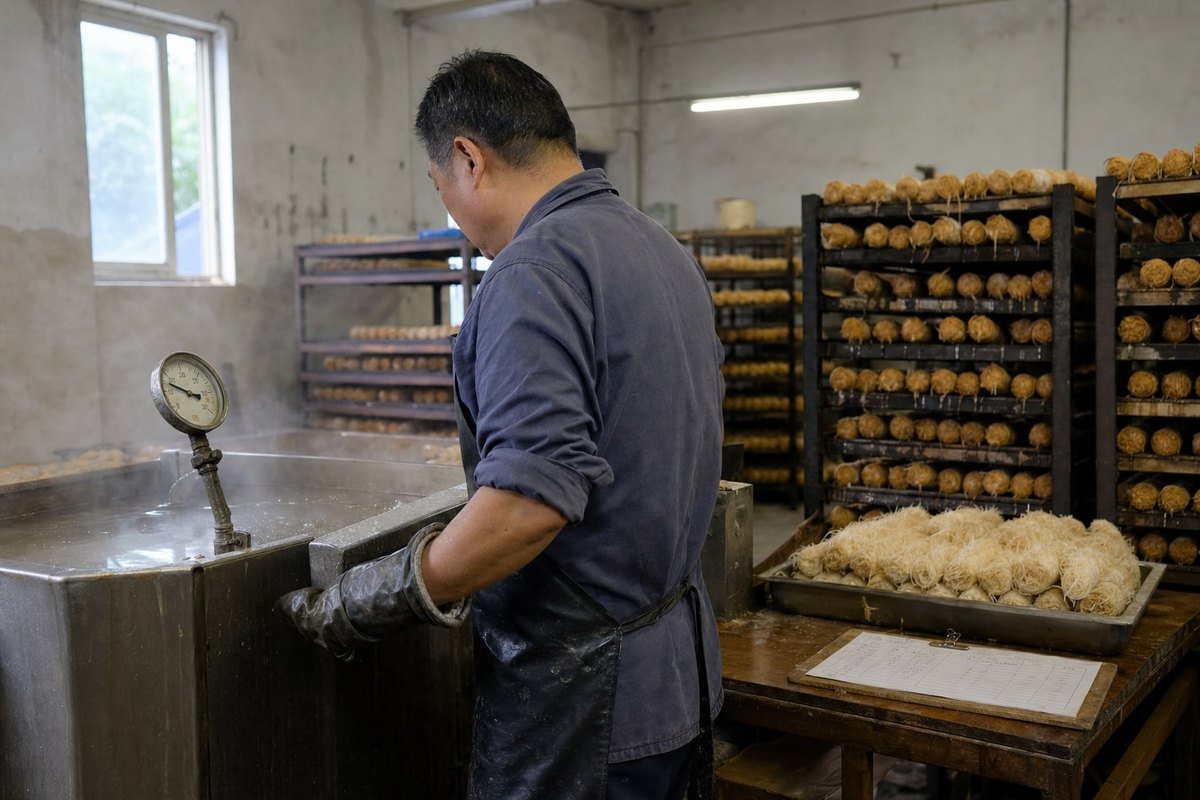
Customization is not a menu of cosmetic options. Each request changes a physical parameter, and a capable factory should explain exactly which one. Here is how the main requests map to process levers on our lines.
How your specs translate into process settings
- Longer burn duration. We increase compression density, enlarge the piece, or raise the wax-to-fiber ratio. Each route has side effects. Higher density slows ignition slightly. Bigger pieces raise unit cost. More wax raises calorific value 7 and flame longevity but can add smoke if pushed too far. We typically tune all three together to hit a target window — for example, a guaranteed minimum of 8 minutes for grill-focused brands, or 12-plus minutes for fireplace lines.
- Custom size and shape. New mold tooling handles this. Shape also matters functionally: a higher surface-area-to-volume ratio gives a taller, faster flame for quick charcoal ignition; a chunkier form gives longer, steadier heat output.
- Faster ignition in damp climates. For Northern European buyers, we can adjust dip parameters for deeper wax penetration, improving ignition reliability even when the product has sat in a humid warehouse.
- Private-label packaging. We supply custom retail boxes, kraft or plastic bag options, countertop display packaging, multilingual warning labels, and retail barcodes. Our standard "100 pcs" retail box format is a common starting point that buyers rebrand with their own artwork.
For trial orders, we keep MOQs flexible on standard mold sizes, since new tooling is the main cost driver for fully custom shapes. Most buyers start with a standard cylinder, validate sell-through, and then invest in a proprietary format once volume justifies it. That staged path protects your cash flow and lets the market vote before you commit to tooling.
Conclusion
Choosing fire starters without understanding the process behind them is a gamble. One bad batch damages your brand. Understanding compression and wax dipping removes that risk.
Compression molding builds the structure: density, burn duration, and batch uniformity. Wax dipping builds the combustion behavior: fast ignition, waterproofing, and flame sustainment. The best commercial wood fire starters combine both, pairing a compressed wood wool core with controlled paraffin saturation for single-match lighting and a steady 10–15 minute burn. Before you order in bulk, cut a sample open, run a burn test, and demand real compliance documents. When you are ready to specify your own sizes, burn times, and private-label packaging, work with a factory that controls both processes end to end — because in this product category, the process is the performance.
Footnotes
1. Explains how densified biomass fuel affects oxygen flow and burn rate. ↩︎
2. Background on paraffin wax properties supports the calorific-value combustion claim. ↩︎
3. Clarifies the moisture-barrier mechanism referenced for waterproofing performance. ↩︎
4. Wikipedia entry defining wood fiber properties and its industrial applications. ↩︎
5. Authoritative guide on capillary action and its role in liquid transport through porous materials. ↩︎
6. Supports the technical claim about waterproofing affecting ignition reliability. ↩︎
7. Wikipedia article explaining calorific value and the heat of combustion for fuels. ↩︎


 English
  Spanish
  German
  French
  Arabic
  Portuguese
Join the Conversation