






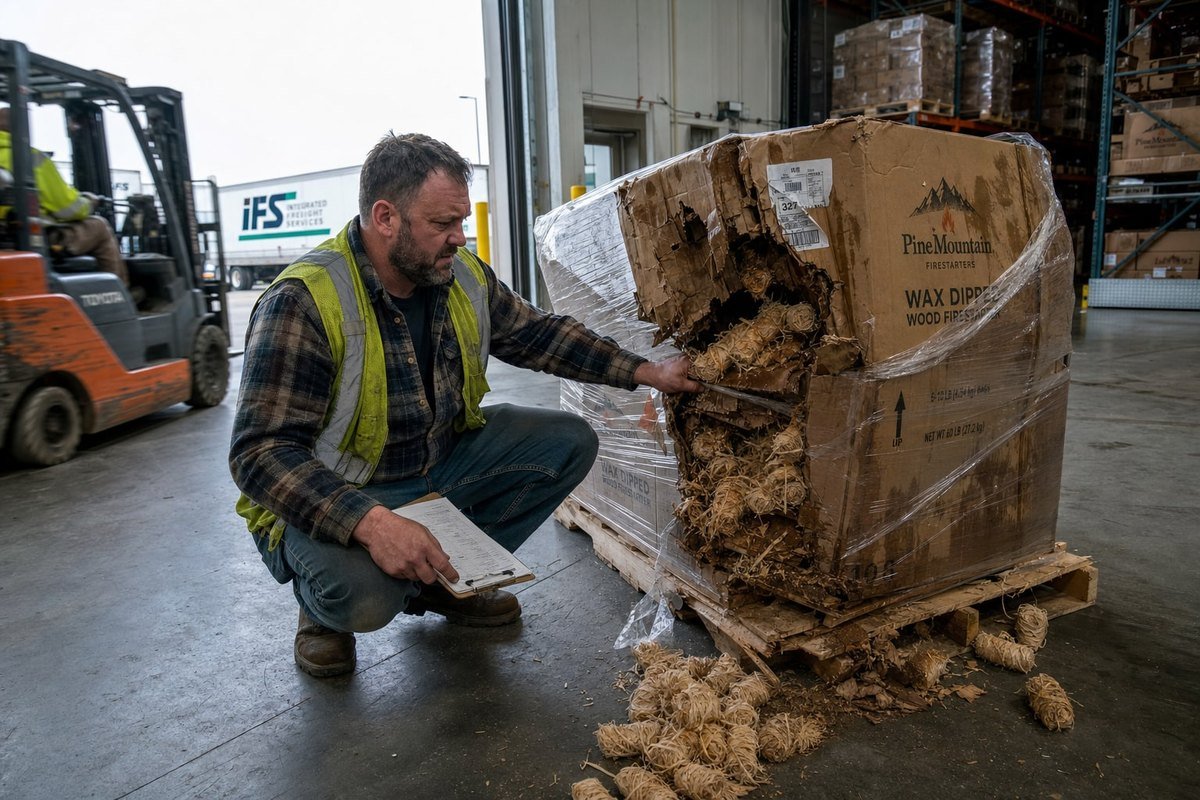
Shipping damage and delays when importing wood fire starters can wipe out a season's margin. After 17 years of exporting from our factory, I've seen crushed pallets ruin launch dates.
To handle shipping damage or delays when importing wood fire starters, inspect before signing, note damage on the Bill of Lading, photograph everything, keep all packaging, notify the seller, carrier, and insurer within 24–48 hours, and file a documented cargo damage claim fast.
The details matter, though. What you do in the first day often decides whether you recover your money or eat the loss. Let me walk you through each step, based on what actually works.
What steps should I take if my wood fire starters arrive damaged at the port?
Last winter, a Canadian distributor of ours received a container with two water-stained pallets of our wax-dipped wood rolls. Their receiving team handled it perfectly, and the claim paid out.
Inspect the shipment before signing, write "visible damage" on the delivery receipt or Bill of Lading, photograph cartons and contents from multiple angles, keep all packaging, and notify your supplier, carrier, and insurer within 24–48 hours with a written statement of loss.
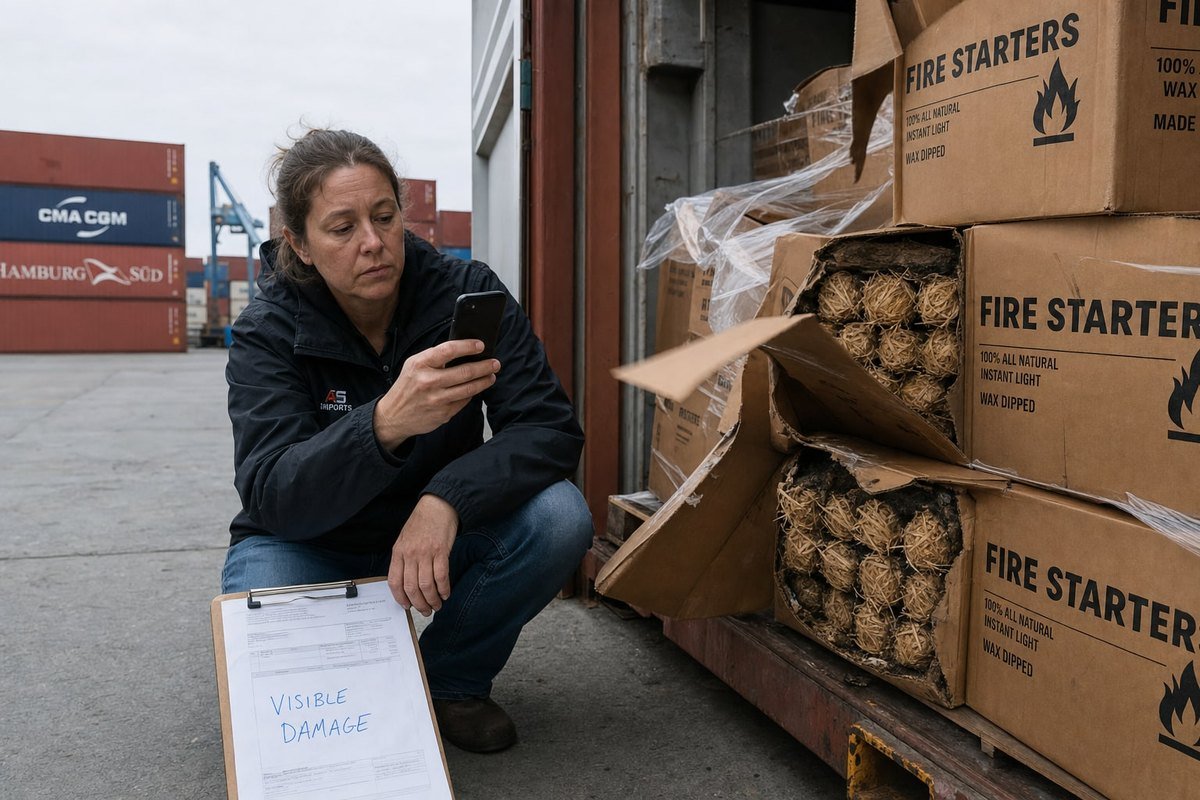
The first 24 hours decide most claims. Carriers and insurers rarely argue about fault when the evidence is clean. They deny claims when the paperwork is late, the photos are missing, or the packaging was thrown away.
The first 15 minutes at delivery
Before the driver leaves, check the outer condition of every pallet. Look at corners, tape, seals, and shrink wrap. If you see crushing, punctures, or water stains, write it on the delivery receipt before you sign. That annotation preserves your legal right to a cargo damage claim. A clean signature is treated as proof that the goods arrived fine.
Should you refuse the freight? Use a severity test. If the damage is minor or the goods are repairable or partially sellable, accept the shipment and document it. Refuse delivery only when the load is effectively worthless. Refusing repairable freight can complicate recovery.
The 24-hour action plan
- Notify your supplier in writing with photos and the order number.
- Notify the carrier or freight forwarder — many require notice within 24–48 hours.
- Notify your marine cargo insurance provider if you bought coverage.
- Record the date and time you discovered the damage.
- Separate damaged units from good units and count both.
Documents your claim will need
| Document | Why it matters |
|---|---|
| Signed Bill of Lading 1 noting damage | Proves condition at delivery |
| Written statement of loss or damage | Defines what you are claiming |
| Supplier commercial invoice | Establishes the value of goods |
| Photos of cartons, packing, and product | Shows damage occurred in transit |
| Replacement or repair estimate | Quantifies your recovery amount |
One more rule: do not discard anything. If the carrier takes damaged goods as salvage, hold them until pickup. Disposing of product too early can void the entire claim.
How can I work with my supplier to prevent shipping delays before they happen?
One lesson we learned early in our Ningbo export operation: most "shipping delays" actually start weeks before the vessel sails. Documentation gaps, not storms, cause the majority of holds.
Prevent delays by confirming production and shipping timelines in writing, agreeing on Incoterms 2020 responsibilities, verifying ISPM 15 compliance and export documents before departure, booking freight early in peak season, and using a customs broker to pre-clear entry paperwork.

Delays and damage are different problems with different fixes. Damage needs physical proof and fast notice. Delays need planning, paperwork, and buffers. Both start with your supplier relationship.
Get the paperwork right before the vessel sails
Wood-based products attract extra scrutiny at customs. Any wooden pallets or crates must carry visible IPPC markings for ISPM 15 compliance 2, or the shipment can be rejected or destroyed at the port. For US imports, a Lacey Act declaration 3 may apply to wood-fiber products, and getting it filed pre-arrival avoids administrative holds and fines. Ask your supplier whether a phytosanitary certificate is needed for your destination market. At our factory, we prepare this document set as standard because our buyers in the US and Germany cannot afford customs holds during Q4.
Build timing buffers into the order
| Risk window | Prevention step |
|---|---|
| Peak season (Aug–Nov) | Book freight 4–6 weeks earlier than usual |
| Customs entry | Hire an experienced customs broker pre-arrival |
| Port congestion | Track vessel ETA weekly; plan drayage early |
| Container sitting at port | Know your free time to avoid demurrage and detention fees |
| Seasonal stockouts | Consider a domestic buffer or Foreign Trade Zone storage |
Communicate like a partner, not a buyer
Ask for weekly production updates once your order enters manufacturing. Request booking confirmation, the draft Bill of Lading, and tracking numbers as milestones. When we quote lead times, we include a written production schedule, because purchasing managers need dates they can plan retail programs around. A supplier who resists written timelines is telling you something.
What packaging standards should I require from my manufacturer to reduce transit damage?
The trade-off we weigh on every packaging spec is simple: stronger cartons cost a little more per unit, but one crushed pallet costs more than a year of upgrades. We learned that pricing packaging cheap is expensive.
Require double-wall export cartons, inner dividers or shrink-wrapped bundles, moisture barriers such as liners and desiccants, ISPM 15 compliant pallets with corner boards and strapping, and drop-test verification, so wood fire starters survive crushing, humidity, and rough handling.
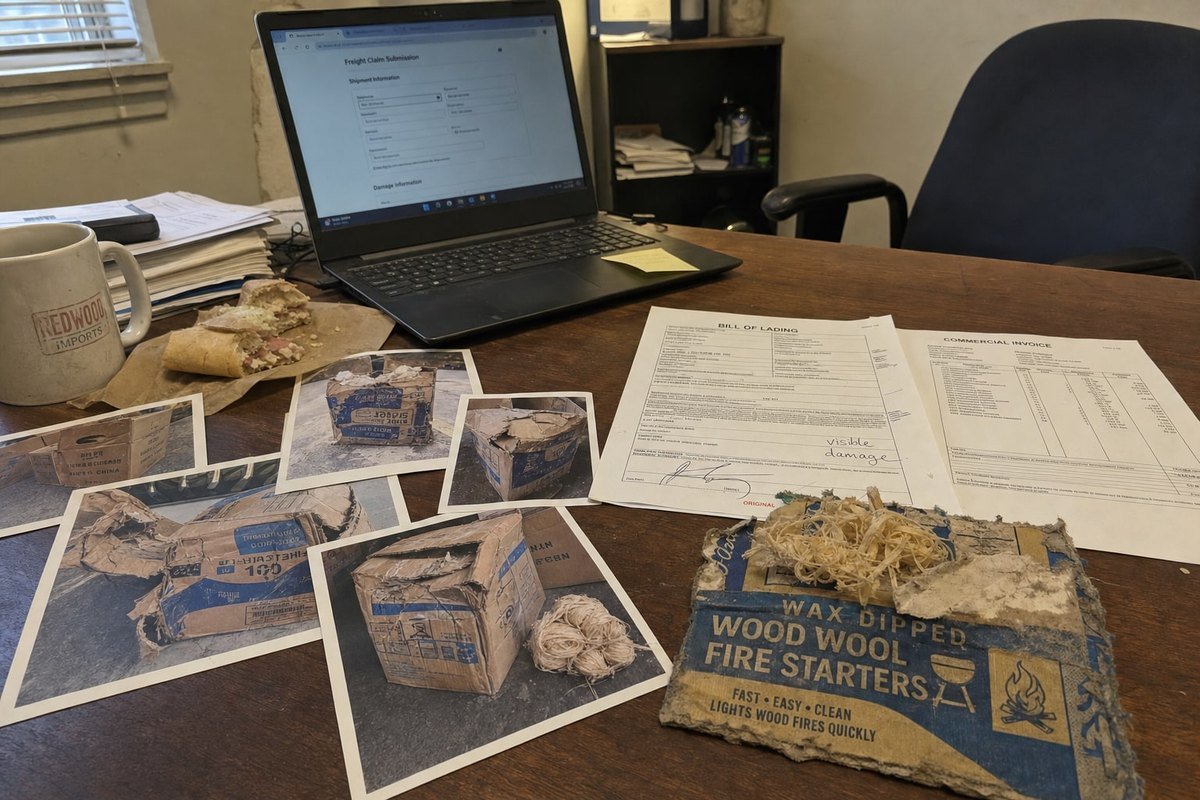
Wood fire starters are a special case. The wood-wool rolls are lightweight but crushable, and the compressed fiber core absorbs moisture. A carton can look only mildly dented while the product inside has lost its ignition performance. Packaging condition also becomes evidence in a claim, since insurers check whether damage came from transit or from inadequate packing.
Moisture is the silent killer
Sea containers experience "container rain" — condensation from humidity swings during ocean transit. For wax-dipped wood rolls, we specify polybag inner liners 5, desiccant placement inside cartons, and for humid routes, high-capacity desiccant poles in the container. The wax coating on our fire starters helps repel surface moisture, but the exposed fibrous ends still need barrier protection.
The packaging checklist to put in your purchase order
| Layer | Minimum standard | What it prevents |
|---|---|---|
| Retail box | Rigid board, snug fit, no internal movement | Product abrasion and crushed units |
| Inner packing | Dividers or shrink-wrapped bundles | Shifting and end-fraying |
| Export carton | Double-wall corrugated, weight-rated | Crushing under stacked pallets |
| Moisture barrier | Poly liner plus desiccant packs | Humidity damage to wood fiber |
| Pallet | ISPM 15 heat-treated, IPPC-stamped | Customs rejection and base failure |
| Stabilization | Corner boards, strapping, stretch wrap | Pallet lean and carton collapse |
Ask your supplier for photos of packed cartons and loaded containers before departure. We send loading photos on every shipment. They cost nothing and settle disputes later. Also request a carton drop-test report during sampling — a first sample should reflect mass-production packing quality, not just product quality.
Who is responsible for the cost when wood fire starters are lost or damaged during shipping?
A German buyer once asked me a blunt question during a factory audit: "If the container floods, who pays — you or me?" The honest answer is: it depends on three documents you signed before the goods ever moved.
Responsibility depends on your Incoterms 2020 term, the carrier's contract of carriage, and your insurance policy. Under FOB, risk transfers to the buyer at loading; under CIF or DAP, the seller carries more risk. Marine cargo insurance is the most reliable recovery path.
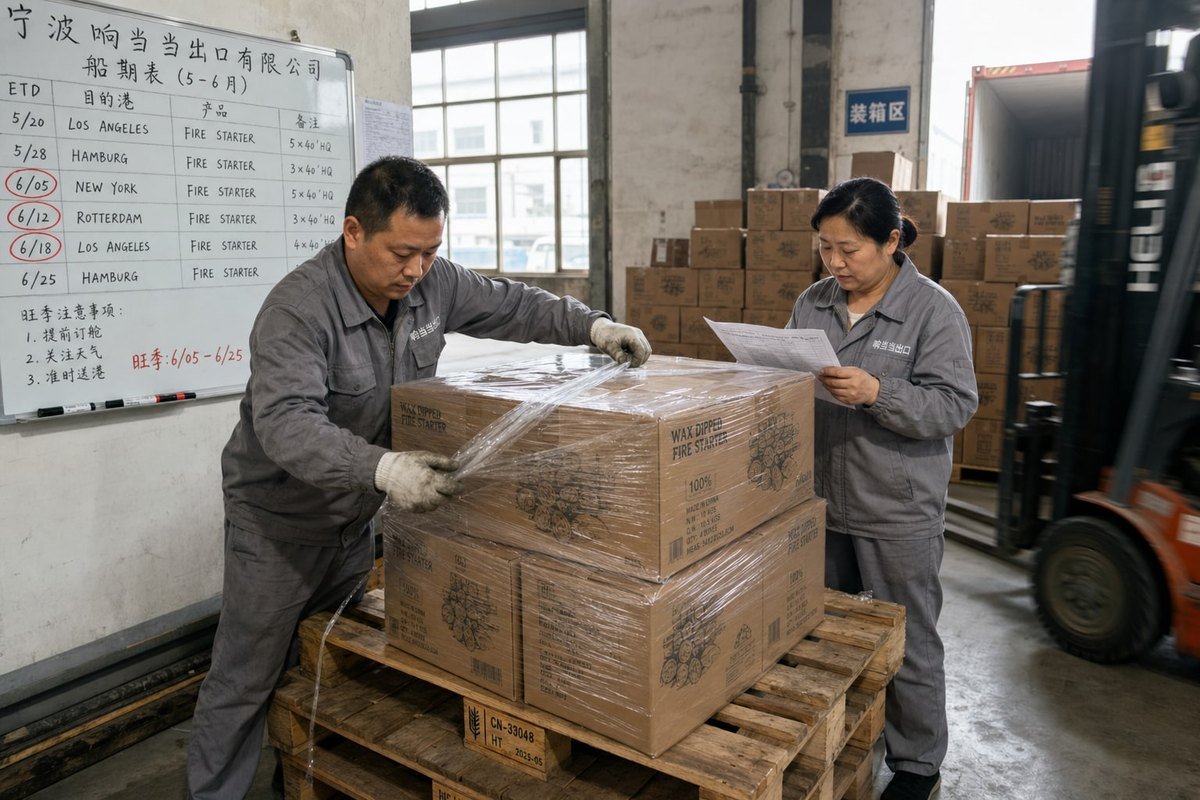
Nobody "just pays" automatically. Recovery flows through contracts, and importers who understand the chain of responsibility recover faster than importers who argue about fault.
The three layers of responsibility
First, the sales contract. Your Incoterms 2020 term defines the exact point where risk passes from seller to buyer. Under EXW or FOB, the buyer owns the risk for most of the journey. Under CIF, the seller arranges insurance, but the buyer still files the claim. Under DAP or DDP, the seller carries risk nearly to your door.
Second, the carrier. Ocean carriers limit liability to fixed amounts per package under international conventions 6, which is often far below your invoice value. A carrier cargo damage claim is worth filing, but do not expect it to cover full replacement cost on its own.
Third, the insurer. Marine cargo insurance fills the gap between carrier liability limits 7 and your real loss. For seasonal products like fire starters, where a lost shipment also means lost selling weeks, we always recommend our buyers insure to invoice value plus freight.
Practical recovery order
- Notify all three parties — seller, carrier, insurer — at once. Do not wait for one to respond first.
- Follow the shortest deadline among them. Some seller policies require damage reports within 7 days; some logistics partners want notice within 24–48 hours.
- Submit the full document set: annotated Bill of Lading, invoice, photos, and written loss statement.
- If the seller and carrier both stall, and you paid by card, a payment dispute can be a fallback.
On our side, when transit damage clearly traces to packing, we replace goods in the next shipment. A supplier who treats claims as a partnership test, not a battle, is the one worth reordering from.
Conclusion
Shipping damage or delays when importing wood fire starters are manageable if you act fast: document at delivery, meet every deadline, know your Incoterms, and choose suppliers who pack and communicate like partners.
Footnotes
1. Standard legal document defining the terms of a shipping agreement. ↩︎
2. International standard for treating wood packaging to prevent pest spread. ↩︎
3. US law requiring declarations for imported wood and plant products. ↩︎
4. Official international trade terms for the assignment of costs and risks. ↩︎
5. Protective packaging used to prevent moisture damage during transit. ↩︎
6. Global agreements that define the legal responsibilities of ocean carriers. ↩︎
7. International rules governing the limitation of liability for sea carriers. ↩︎



 English
  Spanish
  German
  French
  Arabic
  Portuguese
Join the Conversation