






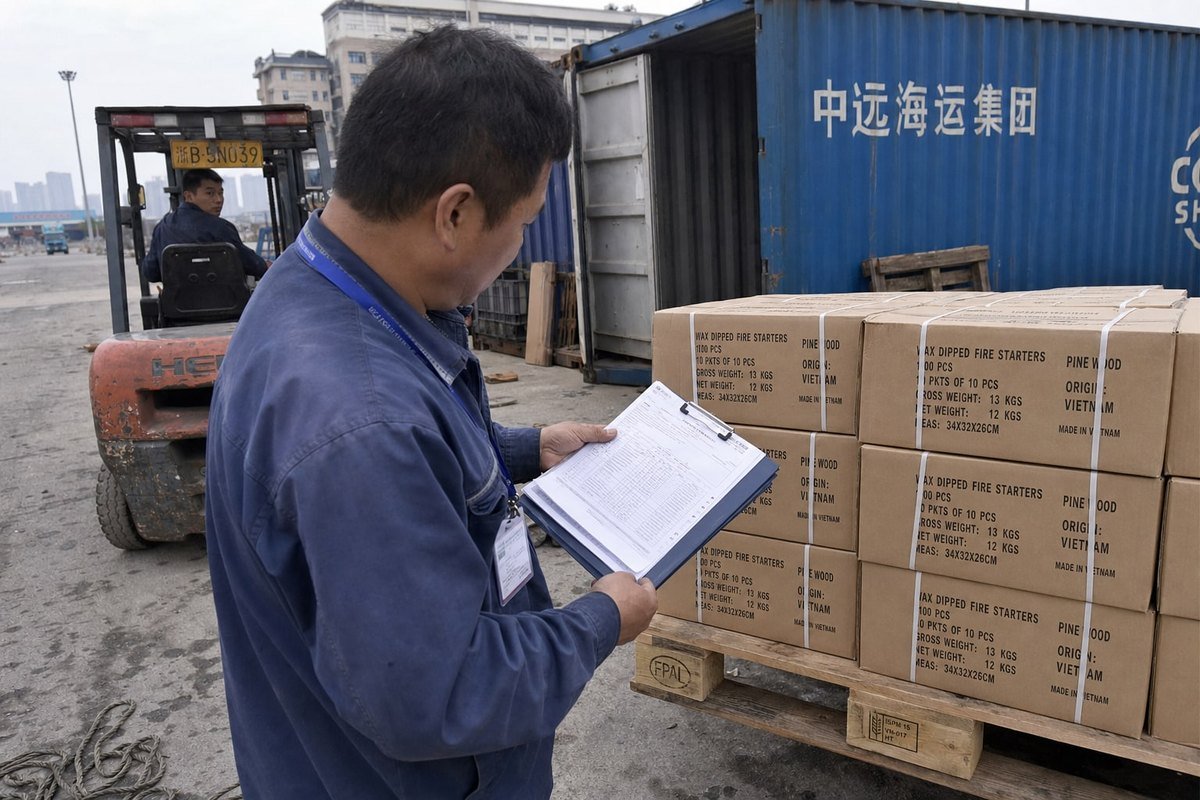
Customs clearance for importing wood fire starters trips up more buyers than pricing ever does. I have watched containers from our Ningbo lines sit at ports over one missing certificate.
Customs clearance for importing wood fire starters requires a commercial invoice, packing list, bill of lading, and customs declaration, plus conditional documents: correct HS code, Safety Data Sheet, ISPM 15 packaging evidence, proof of origin, and wood-compliance papers such as a Lacey Act Declaration or phytosanitary certificate.
That short answer hides a lot of detail. The exact document set depends on what the product is made of and where you are importing it. Let me walk you through each layer, in the order your customs broker will ask for it.
What certificates and test reports should I request from my wood fire starter supplier before shipping?
A German distributor once asked us for our full document pack before signing anything. Smart move. After 17 years of exporting fire-starting goods, we consider that request the mark of a serious buyer.
Before shipping, request the commercial invoice, packing list, Safety Data Sheet (SDS), SGS or Intertek test reports, factory certifications such as ISO 9001 and BSCI, proof of origin, ISPM 15 treatment evidence for pallets, and wood-composition details covering species, treatment, and country of harvest.

Think of the document pack in three tiers. The first tier proves the shipment itself is real and accurately described. The second tier proves the product is safe. The third tier proves the factory behind it is legitimate. Customs authorities lean on the first tier. Retailers and insurers lean on the second and third.
The three tiers of supplier documents
| Tier | Documents | Who asks for them |
|---|---|---|
| Shipment documents | Commercial invoice, packing list, bill of lading | Customs, freight forwarder |
| Product compliance | Safety Data Sheet (SDS), third-party test reports, flammability classification | Customs, carriers, retailers |
| Factory credentials | ISO 9001, BSCI audit, CE documentation where applicable | Retail buyers, importers, auditors |
The SDS deserves special attention. Our wood fire starters are wax-dipped wood wool rolls, so the SDS must state the wax type 1, flashpoint, and handling classification. Carriers use it to decide whether the goods ship as ordinary cargo or under Flammable Solids Class 4 rules. Most compact, retail-packed fire starters qualify for Limited Quantity treatment, but only the SDS proves it.
Also ask for wood-composition details in writing: species or genus, whether the wood underwent Heat Treatment (HT) 2, and the country of harvest. You may never need this data. But if a border officer asks, digging it up after the container has sailed is painful. We prepare this file for every buyer by default, because we learned early that documents requested late cost weeks; documents requested early cost an email.
How do I make sure my customs paperwork matches HS codes and import regulations in my country?
Early in our export history, a broker reclassified one of our shipments at the port, and the duty rate changed overnight. Since then, we confirm HS classification with every buyer before production even starts.
Match your paperwork by confirming the HS code with your customs broker first, then mirroring it on the invoice, packing list, and declaration. Wax-coated wood fire starters typically fall under HS Code 3606.90, while untreated wood products may classify under Chapter 44.

Classification is the single biggest source of clearance friction for this product category. Fire starters sit between two chapters of the tariff schedule 3, and the deciding factor is composition. Our wax-dipped wood rolls contain paraffin as the ignition agent, which usually pushes them toward HS Code 3606.90 4 as combustible preparations. Plain wood wool or untreated kindling leans toward Chapter 44 wood products. The duty rates, inspection risk, and conditional documents differ between the two.
Classification depends on composition
| Product type | Likely classification | Typical extra documents |
|---|---|---|
| Wax-dipped wood wool rolls | HS Code 3606.90 (combustible preparations) | SDS, flammability test report |
| Untreated wood wool or kindling | Chapter 44 (wood products) | Phytosanitary Certificate, Lacey Act Declaration (US) |
| Chemical-tablet starters | Chapter 36 variants | Full hazmat documentation |
Here is the process I recommend to every purchasing manager:
- Send your broker the full product spec: materials, wax content, packaging, and intended use.
- Get a written classification opinion, or a binding ruling for large recurring volumes.
- Confirm the supplier prints the same HS code and identical goods description on every document.
- Check destination-specific requirements, such as a USDA APHIS Permit question for US wood entries, EORI registration for the EU, or importer numbers elsewhere.
Consistency matters as much as correctness. If the invoice says "fire starters," the packing list says "wood wool rolls," and the declaration says "candles," expect an inspection. We align wording across all documents before anything leaves our Ningbo facility, and our buyers' brokers regularly tell them it makes entries noticeably smoother.
What safety and compliance labeling do wood fire starters need to clear customs smoothly?
Label artwork is where we spend surprising amounts of pre-production time with clients. One retail chain buyer sent us four rounds of warning-text revisions before approving the box for their US stores. It was worth it.
Wood fire starters need labels showing product identity, country of origin, flammability warnings, usage and storage instructions, net quantity, and importer details. EU shipments typically need CLP-style hazard wording, while retail packs benefit from Limited Quantity marks and barcodes.
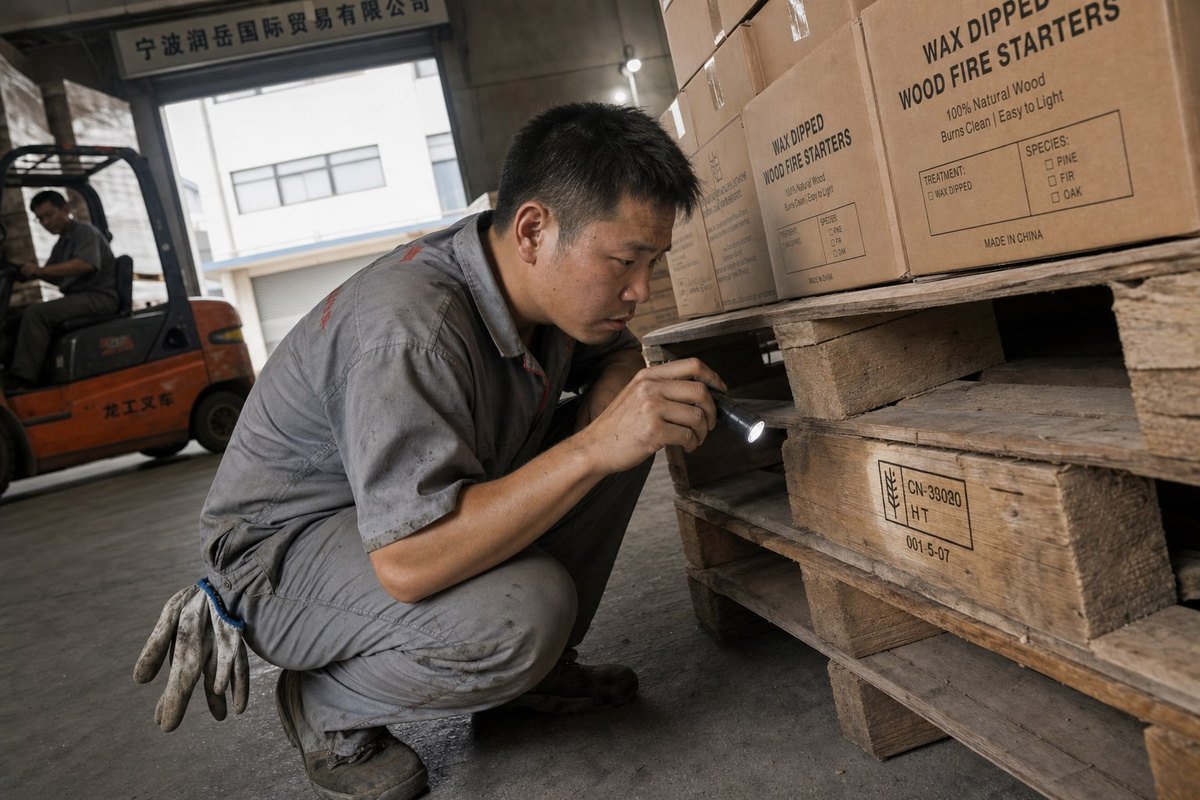
Customs officers rarely open a box to admire the product. They check whether the outer and inner labeling matches the declared goods and destination rules. Missing origin marking is one of the most common holds we hear about, and it is entirely avoidable.
Core label elements by market
| Label element | US | EU / UK | Purpose |
|---|---|---|---|
| Country of origin ("Made in China") | Required | Required | Customs admissibility |
| Flammability warning text | Expected | CLP-aligned wording | Consumer safety law |
| Importer / distributor address | Required for retail | Required | Traceability |
| Limited Quantity (LQ) mark | On shipping cartons if applicable | On shipping cartons if applicable | Carrier acceptance |
| Barcode / EAN-UPC | Retail requirement | Retail requirement | Shelf readiness |
Beyond the product label, remember the shipping cartons. If the goods move under Limited Quantity provisions, the LQ diamond must appear on the outer cartons, and the declared packing must match the SDS. Mismatches here trigger carrier refusals before customs even sees the freight.
There is one more labeling layer that has nothing to do with the retail box: Wood Packaging Material (WPM). Every pallet and crate must carry the ISPM 15 stamp 5 showing Heat Treatment (HT) or approved fumigation. Border plant-health inspectors check this mark even when the product itself clears without issue. An unstamped pallet can get a fully compliant shipment fumigated, re-palletized, or rejected at your expense. On our lines, we photograph the stamped pallets during loading and send the images with the shipping documents, so buyers hold visual proof of ISPM 15 compliance before the vessel departs.
Can my manufacturer help prepare documentation to avoid delays or rejected shipments?
A Canadian importer once told me he chose us over a cheaper quote purely because we answered his documentation questions in one day, in plain English, with actual files attached. That conversation shaped how we onboard every new client.
Yes. A capable manufacturer should draft the commercial invoice and packing list, supply the SDS and test reports, provide ISPM 15 compliant pallets, prepare wood-origin data for a Lacey Act Declaration or Phytosanitary Certificate, and align all descriptions with your broker before shipping.
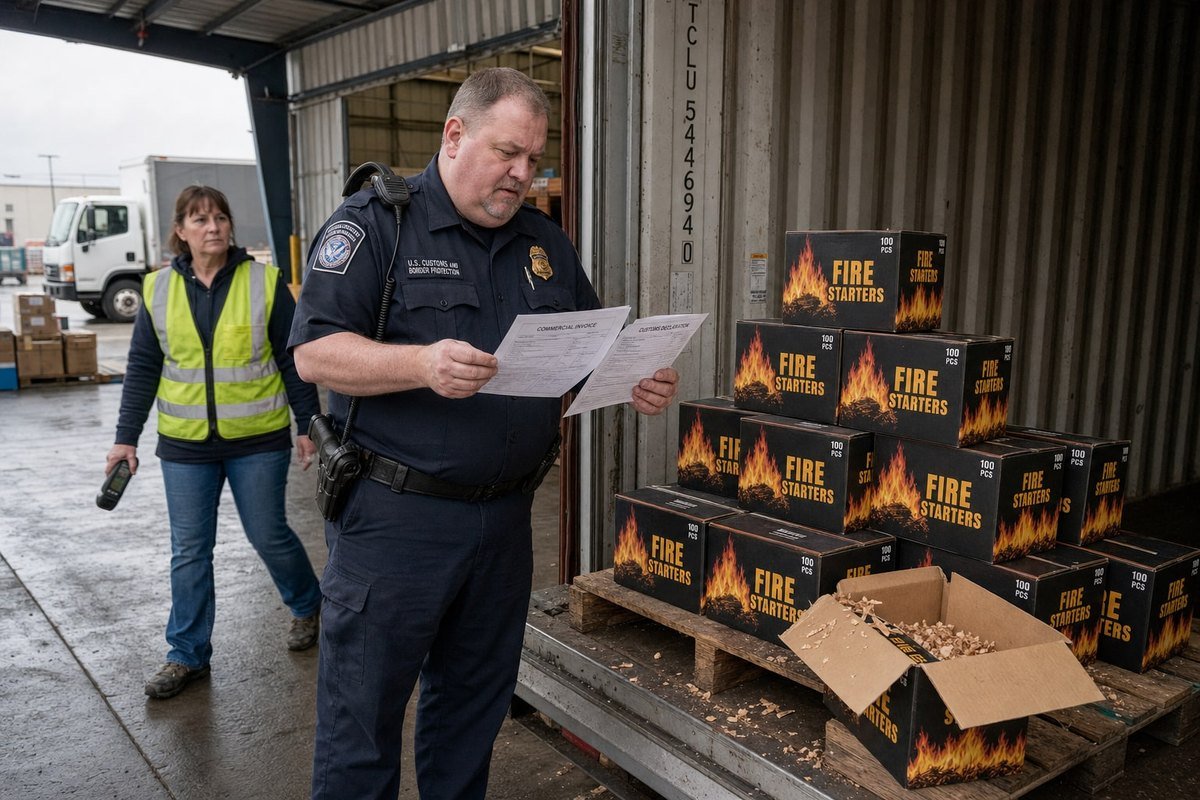
A factory cannot file your customs entry for you. That stays with you or your licensed broker 6, usually under a power of attorney. But the factory controls the source data behind every document, so a supplier who treats paperwork as your problem is quietly transferring risk onto you.
Here is the division of labor we follow with our B2B clients, and what you should expect from any serious partner:
- Before production: we confirm the goods description, HS code wording, and label artwork with your broker's input, including warning labels and barcodes for private-label runs.
- During production: we compile batch QC records and match test reports to the actual production lot, not an old sample.
- Before loading: we issue draft invoices and packing lists for your review, verify ISPM 15 stamps on all pallets, and prepare the SDS and origin proof.
- After sailing: we send the full digital document pack so your broker can pre-file the entry and any conditional forms, such as PPQ Form 585 data or plant-health paperwork if raw wood elements require it.
Watch for red flags, too. A supplier who cannot state the wood genus, wax flashpoint, or treatment method is guessing, and customs does not accept guesses. Some of our European buyers are already asking about harvest geolocation data ahead of the EU Deforestation Regulation 7, and FSC-style sourcing evidence to lower inspection risk. We would rather answer those questions in week one than watch a client's container answer them at the border.
Conclusion
Importing wood fire starters is simple with the right paperwork: core shipment documents, an accurate HS code, proper labeling, and wood-compliance evidence. Choose a factory that prepares these before you ask.
Footnotes
1. General information about paraffin and other waxes used in combustible products. ↩︎
2. USDA requirements for heat-treating wood packaging to eliminate invasive pests and ensure compliance. ↩︎
3. General definition and purpose of a tariff schedule in international trade and customs. ↩︎
4. Official USITC portal for searching the Harmonized Tariff Schedule of the United States. ↩︎
5. International standard for treating wood packaging material to prevent the global spread of pests. ↩︎
6. Official information regarding the role and licensing of customs brokers in international trade. ↩︎
7. Official EU regulation targeting products linked to deforestation and forest degradation to ensure sustainability. ↩︎


 English
  Spanish
  German
  French
  Arabic
  Portuguese
Join the Conversation