






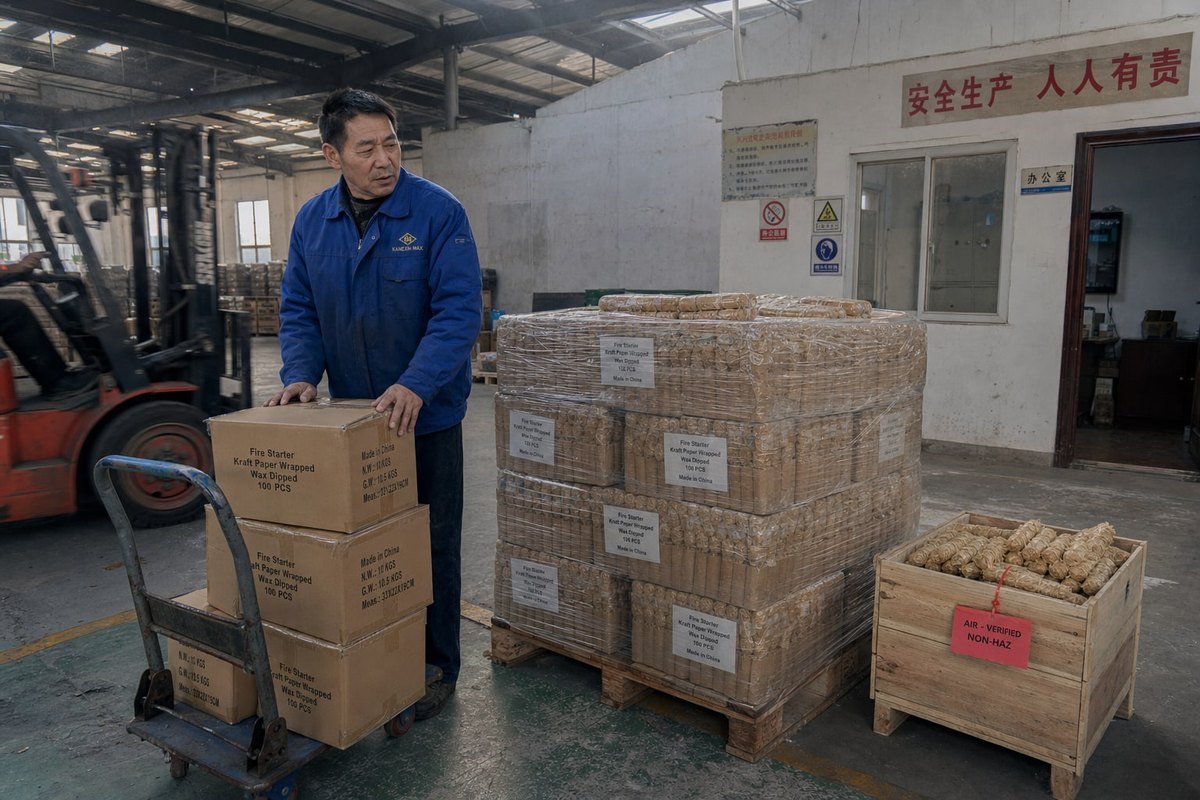
Choosing the right shipping method for wood fire starters seems simple until a shipment gets held at customs ISPM 15 phytosanitary rules 1. I have watched buyers lose an entire selling season that way. After 17 years exporting our wax-dipped wood rolls from our Ningbo production lines to 30+ countries, we have learned how to avoid it.
To choose the right shipping method for wood fire starters, first confirm the product's hazardous materials classification, then match order size to the mode: parcel ground shipping for small consumer packs, sea freight for bulk orders, and air freight only when the product is verified non-restricted and speed justifies the cost.
That short answer hides a lot of detail. Below, I break down the documents, the cost math, the packaging standards, and the air-versus-ocean decision, so you can pick the method that protects both your margin and your delivery dates.
What documentation do I need to ship wood fire starters internationally without customs delays?
Last spring, a German distributor asked us why a competitor's container sat in Hamburg for three weeks bill of lading 2. The answer was simple: missing test reports. Our paperwork checklist at the factory exists precisely to prevent that.
To clear customs smoothly, wood fire starters need a commercial invoice, packing list, bill of lading, a Safety Data Sheet or non-hazardous declaration, third-party test reports such as SGS or Intertek, and proof the wood is heat-treated or processed to meet ISPM 15 phytosanitary rules.
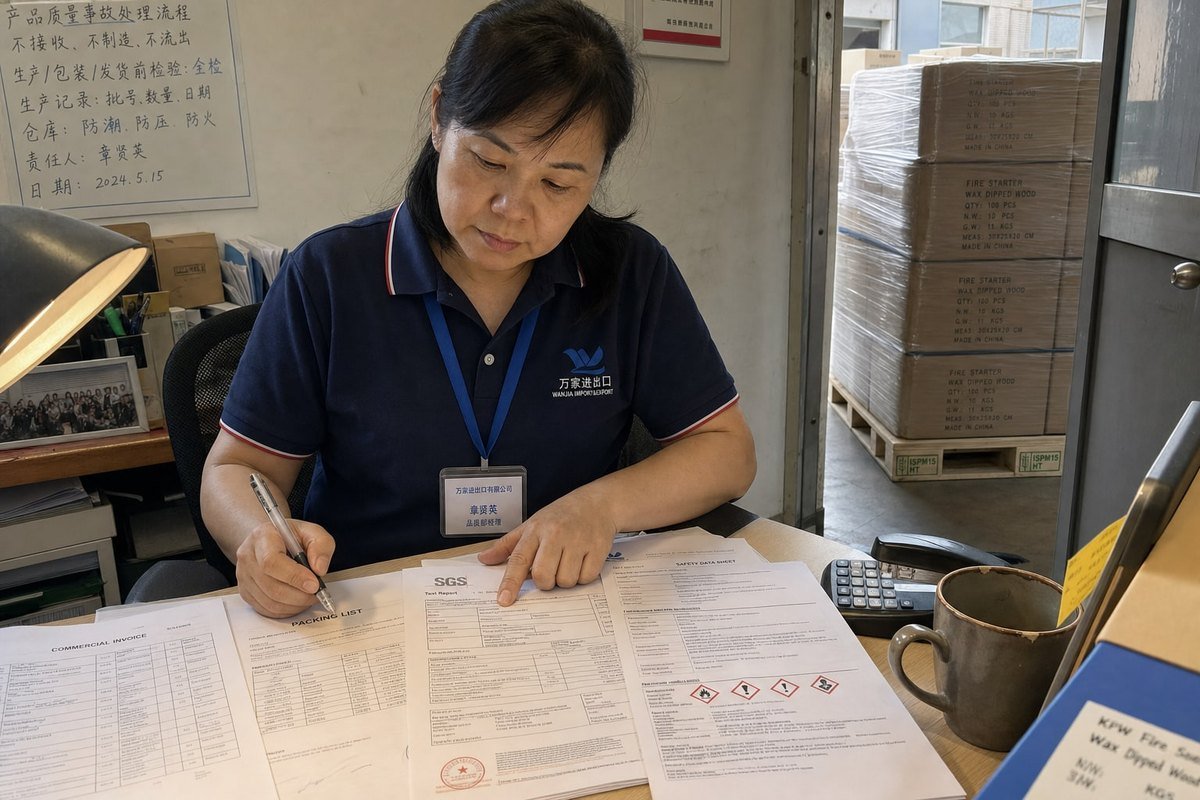
Customs officers do not guess. When they see the words "fire starter" on a manifest, they want proof of what the product actually is. Our wax-dipped wood rolls are solid, contain no flammable liquids, and burn only when deliberately lit. But we still have to document that, every single time.
The core document set
Here is the paperwork we prepare for every export shipment, and why each item matters:
| Document | Purpose | Who provides it |
|---|---|---|
| Commercial invoice & packing list | Declares value, quantity, HS code 3 | Manufacturer |
| Safety Data Sheet 4s (SDS) | Proves chemical composition and hazard status | Manufacturer's lab or test agency |
| SGS / Intertek test report | Independent verification of flammability behavior | Third-party lab |
| Non-DG (non-dangerous goods) declaration | Confirms the product is not regulated cargo | Manufacturer, backed by SDS |
| ISPM 15 / heat-treatment evidence | Satisfies phytosanitary rules for wood products | Manufacturer or fumigation provider |
| Certificate of origin 5 | Supports duty rates and trade agreements | Chamber of commerce |
Why the SDS matters most
The Safety Data Sheet is the document customs and carriers read first. It states whether the product falls under flammable solids regulations. A wax-coated wood roll usually does not, because paraffin is stable and the product has no self-ignition risk. But without an SDS on file, the default assumption can go against you. We keep updated SDS files for every SKU, including private-label versions, because our EU and US buyers treat this as a hard requirement, not a nice-to-have.
The wood question
Raw, untreated wood can carry forest pests. That is why kiln-dried or heat-processed material matters. Our production process removes this risk, and we document it. If your supplier cannot show this evidence, expect agricultural inspection holds, especially entering Australia, Canada, and the EU.
How do I balance sea freight costs against lead times for bulk fire starter orders?
A Canadian wholesaler once asked us to split one purchase order across two sailings so his fall inventory arrived in waves. That small change cut his warehouse costs and smoothed his cash flow. Freight planning is negotiable, and it should be.
Balance sea freight against lead times by ordering 90 to 120 days before your selling season, consolidating to full-container loads where possible, and reserving faster options only for top-up orders. Sea freight typically cuts per-unit transport cost by 60 to 80 percent versus air for dense wood products.
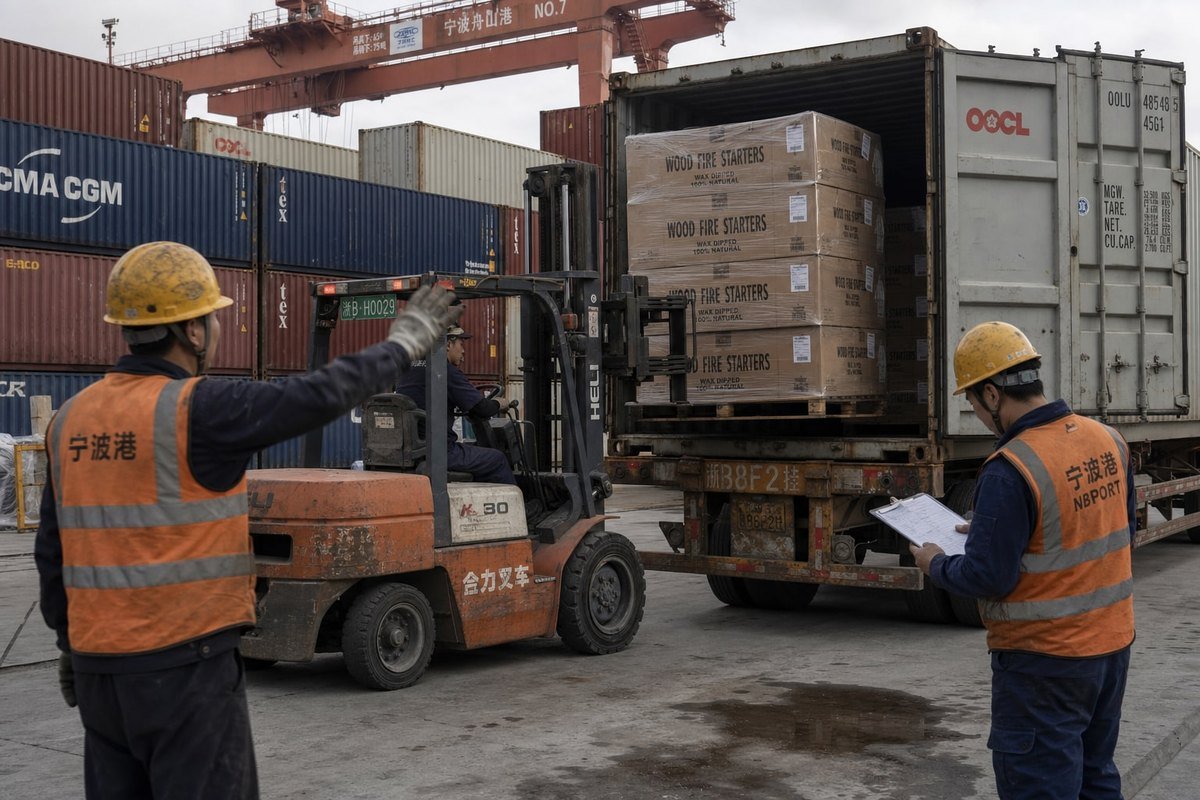
Wood fire starters are heavy relative to their retail price. That single fact pushes bulk orders toward the ocean. But cheap freight arriving after the cold season starts is worthless. So the real skill is timing, not just rate shopping.
Work backward from your selling season
Fire starters sell on weather. Fireplace and camping demand spikes are predictable, so we advise buyers to plan like this:
- Confirm artwork, packaging, and any private-label details 30 days before production.
- Allow 25 to 35 days for manufacturing and QC on a typical container order.
- Add 30 to 40 days ocean transit to North America or Europe, plus buffer.
- Add 7 to 14 days for customs clearance, drayage, and warehouse receiving.
That is why our experienced buyers place autumn-season orders in late spring. Latecomers pay for air freight or miss shelves entirely.
FCL versus LCL for fire starter cartons
| Factor | Full container (FCL) | Less-than-container (LCL) |
|---|---|---|
| Per-unit cost | Lowest | Higher, with handling fees |
| Damage risk | Low — sealed at our factory | Higher — multiple touch points |
| Transit predictability | Good | Slower, depends on consolidation |
| Best for | Seasonal main orders, established SKUs | Trial orders, new market tests |
For trial orders, we often help buyers combine fire starters with our color-flame pinecones or wax torches in one LCL shipment. Mixing SKUs spreads the fixed logistics cost across more revenue.
Do not chase the cheapest rate alone
The lowest ocean quote can hide slow transshipment routings and unreliable carriers. Bulk freight shipping decisions should weigh schedule reliability as heavily as price. A container that misses your promotion window costs far more than the few hundred dollars you saved on the rate.
Which packaging standards keep my wood fire starters safe during long-distance shipping?
Early in our export history, we shipped a batch in single-wall cartons to save a few cents per box. Crushed corners and frayed wood wool taught us a lesson we never repeated. Packaging is not a cost center; it is part of the shipping method.
Safe long-distance shipping of wood fire starters requires double-wall corrugated master cartons, moisture-resistant inner liners such as poly bags, snug internal packing that prevents movement, and clear handling labels. Dry, undamaged packaging directly protects the low moisture content that makes the product light on the first match.
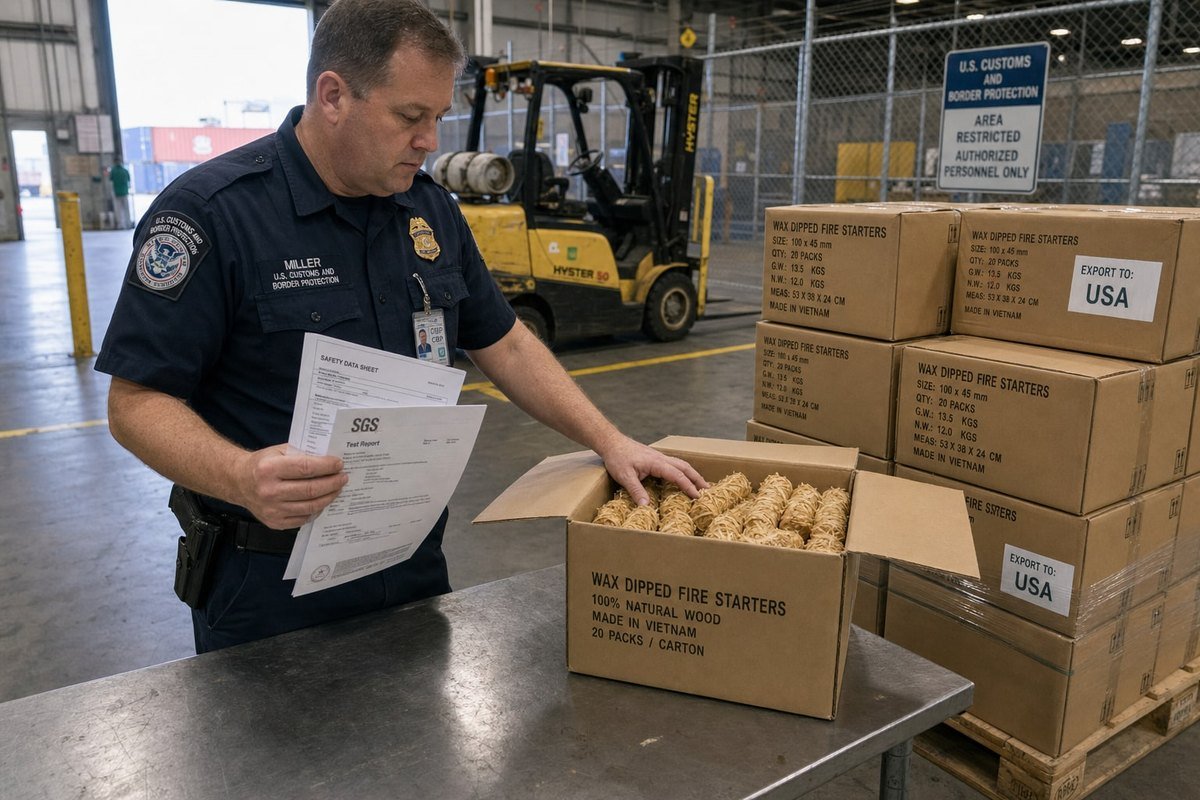
Wood wool fire starters have two enemies in transit: crushing and moisture. A soggy or compressed fire starter fails at the customer's fire pit, and that failure becomes a one-star review with your brand name on it, not ours. So we engineered our packaging standards around those two risks.
The four-layer approach we use
| Layer | Standard | What it prevents |
|---|---|---|
| Retail unit box | Rigid printed box, product held snug | Wax pucks rubbing or sticking together |
| Inner liner | Moisture-resistant poly bag or wax-lined paper | Humidity absorption during ocean transit |
| Master carton | Double-wall corrugated, weight-rated | Crushing under pallet stacking loads |
| Pallet layer | Stretch wrap, corner boards, edge protection | Shifting and puncture during handling |
Details that matter more than they look
Wood strips and kindling sticks have edges. If items can move freely inside a carton, those edges saw through cardboard over a 30-day voyage. We fill voids with protective packaging materials, and we size cartons tightly. Tight sizing also lowers your dimensional weight 6 calculation, so you are not paying carriers to ship empty air.
Humidity control matters just as much. Proper fatwood kindling storage principles apply in transit too: keep the product sealed and dry from factory to shelf. Our wax coating adds a natural moisture barrier, but the inner poly liner is what protects the exposed fibrous ends of each roll through tropical shipping lanes.
For private-label buyers, we print warning labels, barcodes, and handling marks directly on the master cartons. Shelf-ready packaging that survives the journey is part of our one-stop OEM service, not an add-on.
Should I choose air or ocean freight for my private-label wood fire starter orders?
One UK camping brand we supply once air-freighted a small launch batch, then moved everything to ocean once sales proved out. That two-step approach is one I now recommend to almost every new private-label buyer.
Choose ocean freight for private-label wood fire starter orders in nearly all cases, because the product is dense, seasonal demand is predictable, and sea transport avoids air-cargo flammability screening. Reserve air freight for small verified-compliant samples, urgent replenishment, or launch timelines that cannot slip.
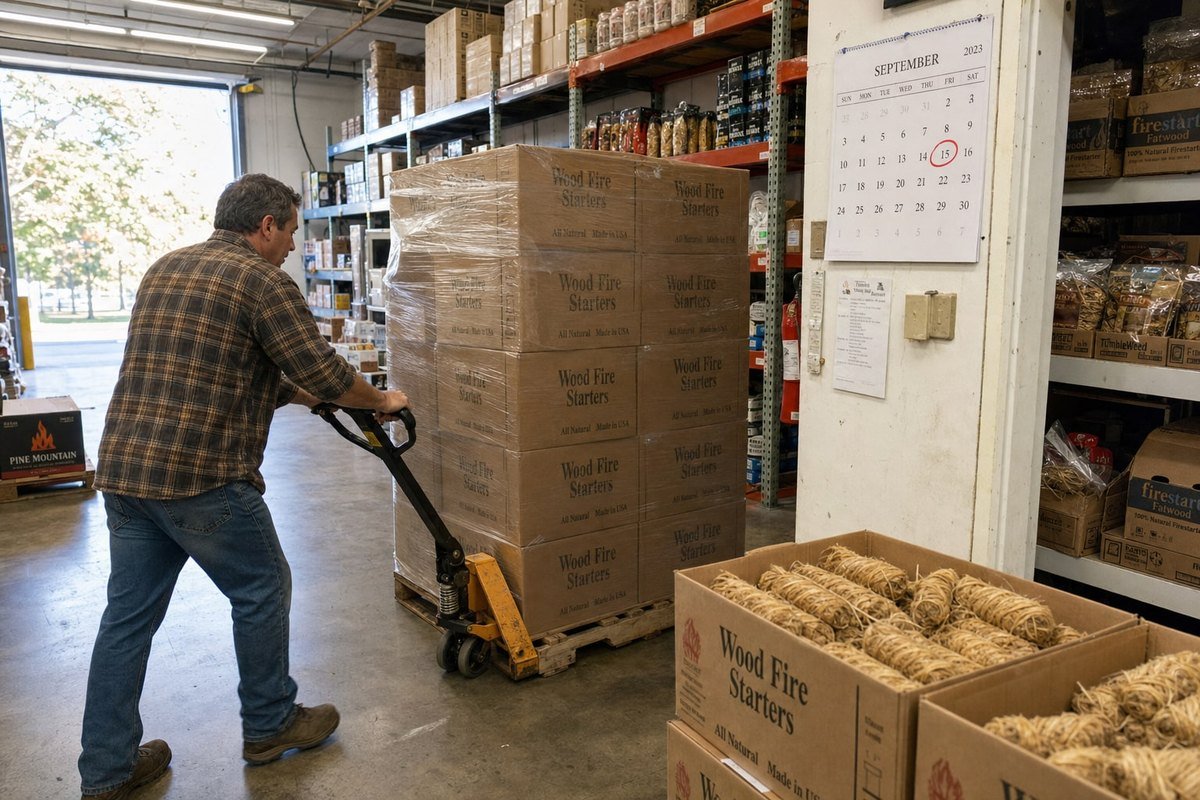
Here is the quick comparison I walk new buyers through:
- Ocean freight: lowest cost per unit, easiest compliance path, 30–40 day transit — the default for wood fire starters.
- Air freight: 3–7 day transit, but expensive for dense goods and subject to stricter cargo screening for anything fire-related.
- Express courier: fine for samples and pre-production approval units, but many couriers list fire-related goods among restricted items — USPS restricted items 7 rules, for example, are stricter than many sellers expect.
- Ground shipping services: relevant on the destination side, where domestic parcel distribution of consumer packs usually defaults to ground.
Why ocean wins on compliance, not just cost
Air cargo rules are tighter than sea rules for anything that resembles regulated goods. Even when a product carries a clean SDS, airlines can refuse cargo described as "fire starters" out of caution. Ocean carriers, working from proper documentation, handle our wax-dipped rolls as ordinary general cargo. Fewer screening layers means fewer surprises.
Think about the whole chain, not one leg
Your freight choice also shapes your downstream e-commerce fulfillment costs. Ocean shipments arriving on pallets slot cleanly into warehouse receiving. Air shipments often arrive as loose cartons that need re-handling. And once inventory lands, domestic ground shipping services carry your consumer packs the final mile, since ground is the practical default for fire-related retail parcels in the US and Europe.
A simple decision rule
If the order fills a quarter pallet or more, ship it by sea and plan the calendar backward. If you only need samples or a photo-shoot batch, use express courier with the SDS attached to the waybill. If you are stuck between the two, ask your supplier to split the order — we do this routinely, sending a small air batch for launch marketing while the main volume follows by ocean.
Conclusion
Wrong shipping choices cost seasons, not just dollars. Match the method to your product's hazard profile, document everything, package for the journey, and default to ocean for bulk. We handle the rest.
Footnotes
1. ISPM 15 is the international standard governing wood packaging pest treatment referenced for customs compliance. ↩︎
2. Wikipedia background on this core shipping document required for customs clearance. ↩︎
3. WTO resource on tariff classification systems relevant to customs invoice declarations for trade. ↩︎
4. Wikipedia explains the standardized document format used for hazard communication mentioned throughout the article. ↩︎
5. Official U.S. trade authority page explaining certificates of origin used to support duty rates. ↩︎
6. Carrier reference explaining dimensional weight calculations affecting shipping cost decisions. ↩︎
7. Official USPS landing page for hazardous, restricted, and prohibited items. ↩︎



 English
  Spanish
  German
  French
  Arabic
  Portuguese
Join the Conversation