






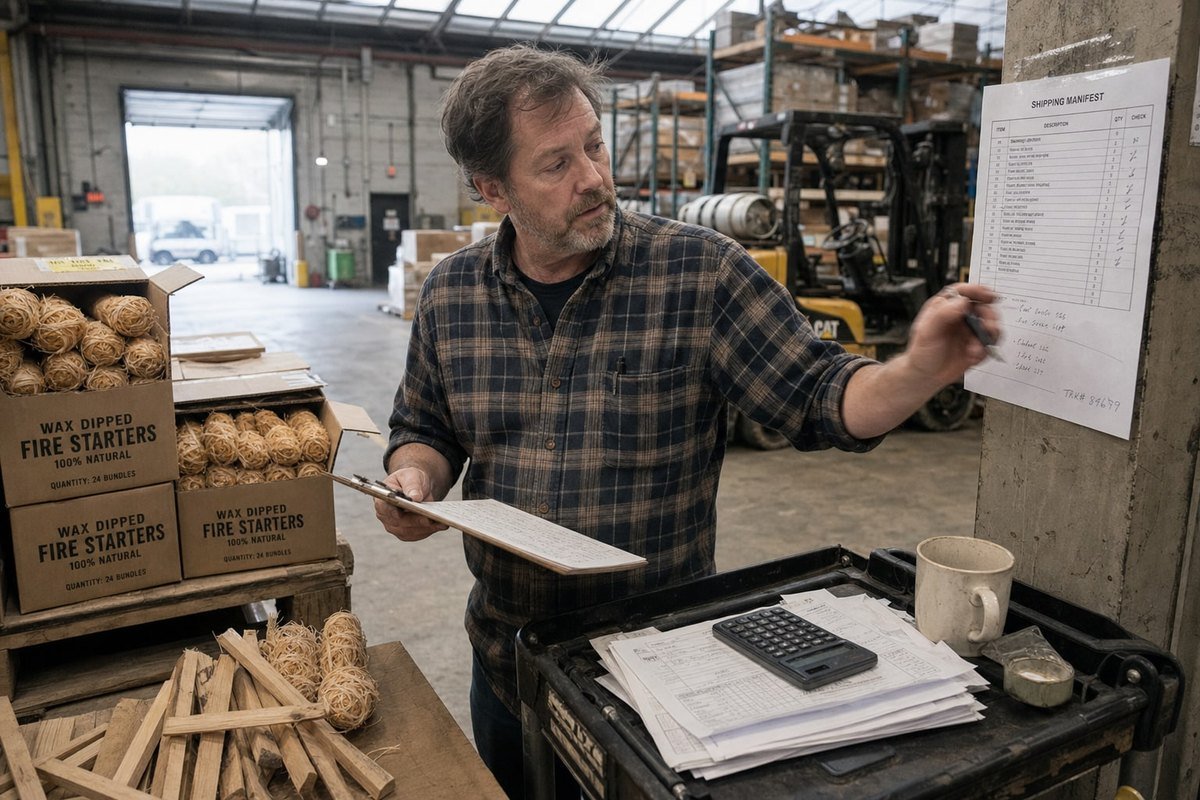
Choosing the right MOQ for wood fire starters trips up more buyers than I expected when our factory started exporting. Order too much, and cash sits in a warehouse. Order too little, and your landed cost destroys margin. Over 17 years of shipping wood wool fire lighters to 30+ countries, we've watched both mistakes sink promising product launches — and helped buyers avoid them with a simple framework.
The right MOQ when buying wood fire starters is the smallest order that keeps landed cost profitable after shipping and storage, matches your 60–90 day demand forecast, and fits your cash flow. Most buyers start with a trial order of 1,000–5,000 pieces before scaling up.
There is no universal formula. But there is a clear decision process. Below, I walk through how to size a trial order, what drives supplier minimums, how to negotiate, and how to protect your cash flow.
How do I calculate the ideal starting MOQ for a wood fire starter trial order?
A buyer from Poland once asked us for 40,000 pieces on his very first order. We talked him down to 5,000. Six months later, he thanked us — his first channel test revealed packaging changes he needed before scaling.
Calculate your trial MOQ by forecasting realistic sales for 60–90 days, then ordering slightly above that number. Divide total fixed costs plus target profit by your per-unit margin to find break-even quantity, and confirm the order stays within your storage capacity and cash limits.
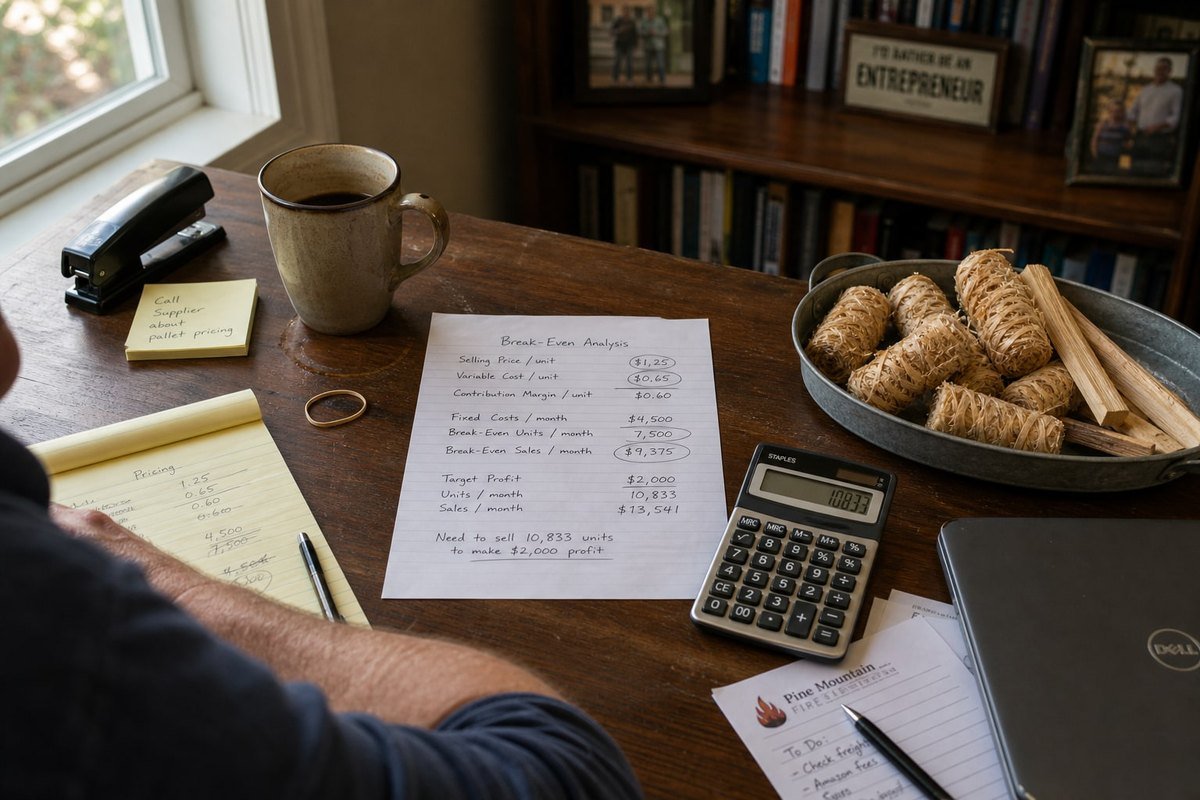
The math is simpler than most buyers fear. It comes down to three numbers: demand, landed cost, and break-even quantity 1.
Step 1: Forecast demand before anything else
Estimate how many units you can sell in 30, 60, and 90 days. Use historical sales of similar consumables, seasonal demand forecasting 2, and any planned promotions. Fire starters sell hardest from October through February in Europe and North America, with a second bump in grilling season. A trial order placed in August should cover your Q4 test window — not a full year.
Step 2: Calculate landed unit cost, not factory price
Compare suppliers on landed cost. That means factory price plus freight, duties, packaging, and handling. Wood fire starters are light but bulky relative to value, so shipping logistics matter more than for dense goods. A slightly higher factory price with better carton optimization often wins on total unit cost analysis.
Step 3: Run the break-even math
Use this formula: MOQ target = (Total Fixed Costs + Target Profit) ÷ (Selling Price − Variable Cost per Unit).
| Input | Example |
|---|---|
| Fixed costs (setup, freight, listing) | $1,200 |
| Target profit for trial | $800 |
| Selling price per unit | $1.40 |
| Variable cost per unit (landed) | $0.60 |
| Resulting MOQ target | 2,500 units |
If that number sits below your 90-day forecast and inside your budget, you have a workable trial quantity. Always sample first. Test ignition, burn time, smell, and ash before committing. In our experience, the first sample from a real factory should reliably reflect mass-production quality — if it doesn't, walk away.
What factors influence a manufacturer's minimum order quantity for wax-dipped firestarters?
On our production line in Ningbo, the wax-dipping stage is the real MOQ driver. Once we heat a wax bath and set up a run, the batch economics are fixed — whether we dip 2,000 rolls or 20,000.
Manufacturer MOQs for wax-dipped firestarters are driven by wax batch sizes, wood wool material minimums, production line setup costs, packaging print runs, and container-fill economics. Custom private-label packaging typically raises the MOQ because printers impose their own minimums on boxes and labels.
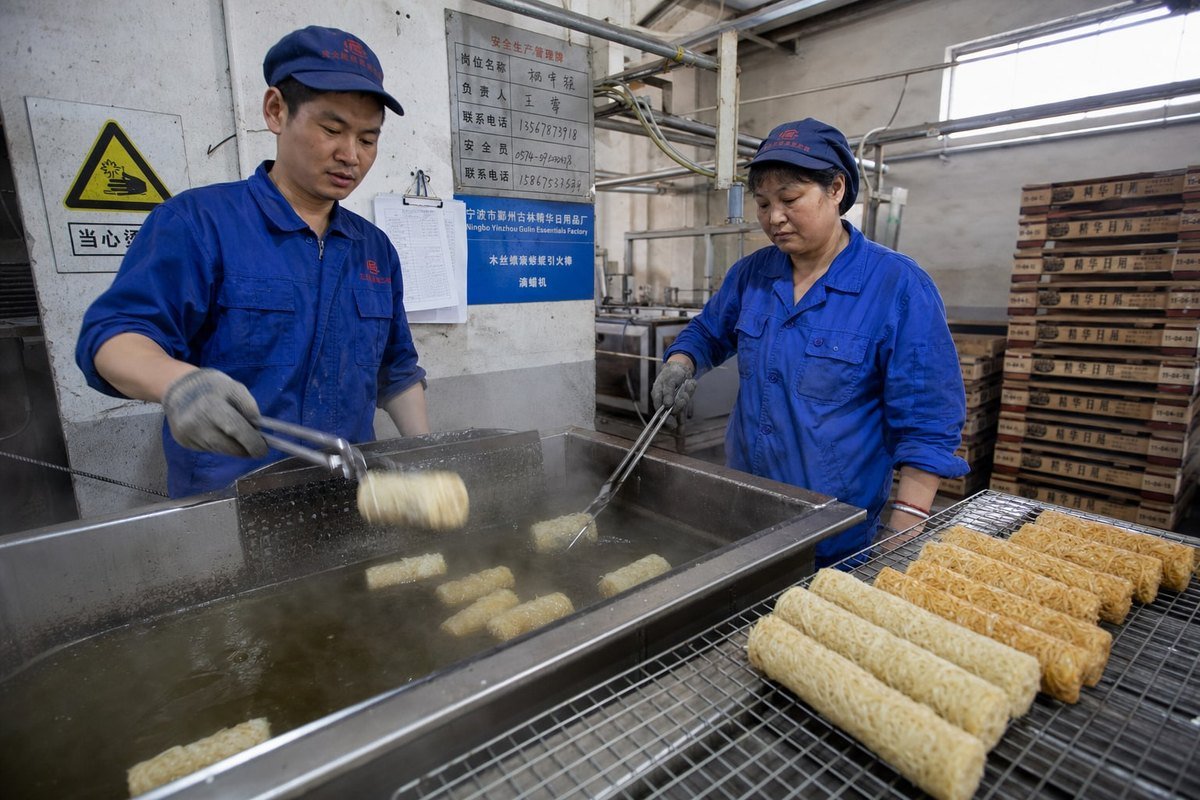
Understanding what sits behind a supplier's minimum changes how you negotiate. Some minimums are hard constraints. Others are efficiency preferences with room to move.
The five real cost drivers behind our minimums
| MOQ driver | Why it matters | Flexibility |
|---|---|---|
| Wax batch size | Paraffin baths run in fixed volumes; small runs waste heated wax | Low |
| Wood wool sourcing | Raw excelsior is bought in bulk; forestry supply cycles cause price volatility | Medium |
| Line setup time | Changeovers between products cost hours of output | Medium |
| Packaging print runs | Custom-printed retail boxes carry printer minimums of thousands of units | Low for custom, high for stock packaging |
| Freight economics | Orders should fill standard pallets or container space efficiently | High — quantities can flex to pallet math |
Why packaging changes everything
If you accept our stock packaging, the MOQ drops significantly. The moment you request private-label boxes with your brand, barcode, and warning labels, the printer's minimum becomes part of your minimum. This is not supplier stubbornness. It is arithmetic. We hold ISO 9001 3 and BSCI certification, and our compliance documentation — CE marking 4, SGS and Intertek test reports — applies per production batch, which also favors consolidated runs over fragmented small ones.
Freight shapes the number too
Wood wool fire lighters are volume-heavy cargo. Smart buyers match order quantities to standard pallet dimensions or container capacity. An order that fills 90% of a pallet costs nearly the same to ship as one that fills 100%. We often nudge buyers up or down a few cartons purely to optimize shipping logistics — it saves them money without changing our economics.
Can I negotiate a lower MOQ with my supplier for private-label wood fire starters?
One of our German distributors opened his first email with a blunt question: could we cut our private-label minimum in half for a market test? We said yes — with conditions. That conversation taught me what a fair MOQ negotiation looks like from both sides.
Yes, you can often negotiate a lower MOQ for private-label wood fire starters by accepting a modestly higher unit price, using semi-custom packaging like stickers on stock boxes, committing to a follow-up order, or timing your request during the supplier's low season.
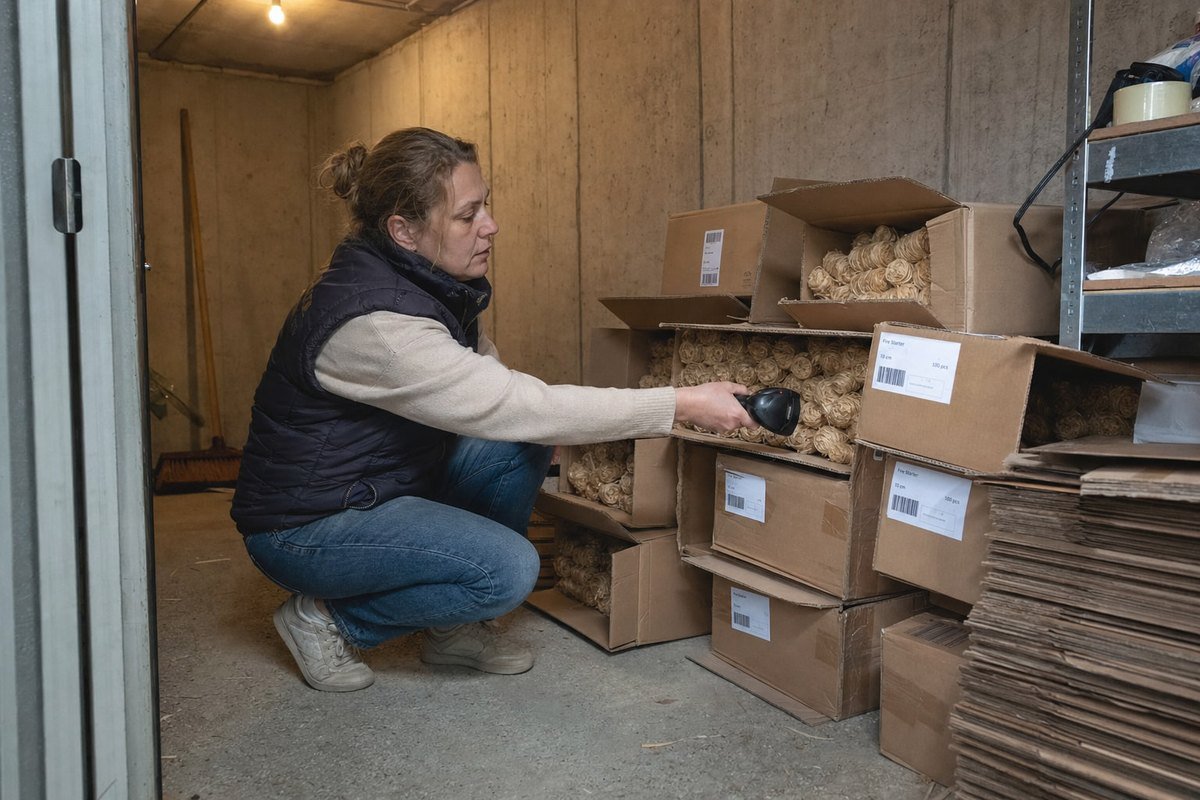
Successful supplier negotiation is not about pressure. It is about finding a structure that protects the factory's batch economics while lowering your risk.
Four negotiation levers that actually work
- Trade unit price for quantity. A 5–10% price increase can cover the factory's efficiency loss on a smaller run. For a trial, this is usually cheaper than overstocking.
- Simplify the customization. Ask for a branded sticker or sleeve on stock packaging instead of a fully printed box. This sidesteps the printer's minimum entirely. Full private-label branding can come with order two.
- Commit to a roadmap. When buyers share a realistic scaling plan — trial now, seasonal order later — we treat the small first order as an investment in the relationship, not an exception.
- Time it well. Requesting a small run in our slower months is far easier to accommodate than during peak Q3 production, when every line hour is booked. Good lead time management on your side gives the factory room to say yes.
What not to do
Do not demand a minimum wildly below the supplier's normal band. If a factory typically sells in 10,000-piece lots, asking for 500 signals you have not done your homework, and it can damage trust before the relationship starts. Also, be wary of any supplier who instantly agrees to any quantity at any price. In our 17 years serving wholesale distribution channels 5 in the US, Germany, and the UK, the suppliers with zero MOQ discipline are usually trading companies with no control over batch-to-batch quality.
How do I balance MOQ requirements with storage costs and cash flow for my business?
A Canadian buyer once told me his biggest fire-starter loss came not from a bad product, but from a good product stored badly — two pallets absorbed moisture over a humid summer and ignition performance suffered. Storage is not a footnote in the MOQ decision. It is central.
Balance MOQ against storage and cash flow by capping inventory investment at what you can afford to hold for 90 days, targeting annual carrying costs of 20–30% of inventory value, and choosing order sizes that turn over before storage fees and product degradation erode your margin.
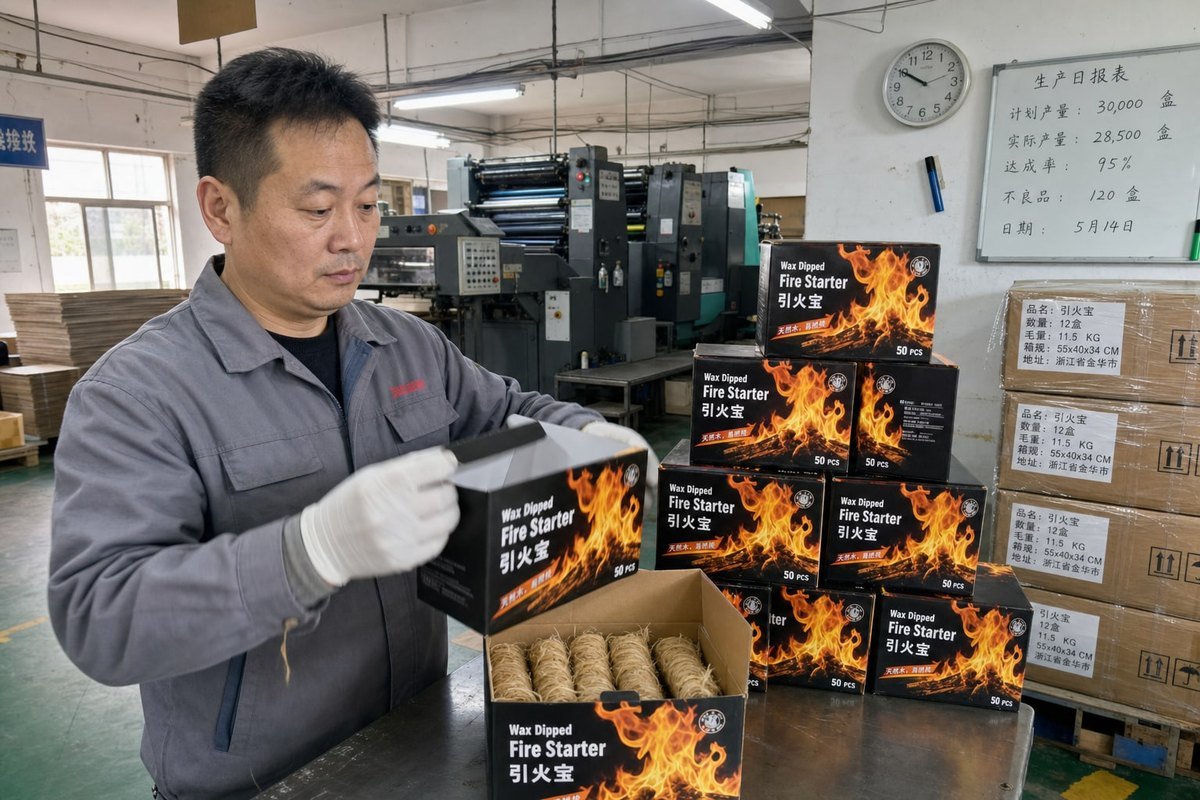
Every unit in your warehouse costs money to keep there. Inventory carrying costs 6 — warehousing, insurance, handling, shrinkage — typically run 20–30% of inventory value per year. For a slow-turning product, that quietly eats the discount you earned by ordering big.
The trade-off in plain numbers
| Scenario | Order size | Unit cost | Carrying cost impact | Risk profile |
|---|---|---|---|---|
| Small trial | 3,000 pcs | Higher | Minimal | Low capital risk, higher unit cost |
| Mid-tier order | 10,000 pcs | Better via bulk pricing tiers | Moderate | Balanced |
| Full container | 40,000+ pcs | Lowest | Significant if turnover is slow | High if demand is unproven |
Bulk pricing tiers reward volume. But that reward only pays off if the product turns. A rule I share with new buyers: the faster your inventory turnover, the more MOQ you can justify. If you sell fire starters alongside cordwood or charcoal, check your attach rate — how many fire-starter units move per unit of primary fuel — and let that data set your reorder quantity.
Storage constraints specific to fire starters
Wax-dipped wood rolls need dry, temperature-stable storage. Moisture degrades ignition speed. Some jurisdictions also apply fire-code limits 7 on volumes of combustible goods stored indoors, so check local regulations before committing warehouse space. Verify your actual storage capacity — in pallet positions, not vague square footage — before you sign the purchase order.
Cash flow as the final gate
Never let a discount pull you into an order that ties up capital you need elsewhere. My practical rule: if the order exceeds what you can comfortably hold for one full season without stress, it is too big — regardless of the per-unit price. Cash trapped in slow inventory cannot fund marketing, restocks, or new product lines.
Conclusion
Ordering blind at a supplier's stated minimum risks dead stock, moisture-damaged pallets, and frozen cash. The fix is a framework, not a formula.
Forecast 60–90 days of demand. Calculate true landed cost. Run the break-even math. Then negotiate a structure — semi-custom packaging, tiered commitments, seasonal timing — that fits both your cash flow and the factory's batch economics. In our years supplying wood fire starters to distributors across Europe and North America, the buyers who scale successfully almost always start with a right-sized trial, validate burn performance and sell-through, and then step up confidently into better pricing tiers. That is exactly the path we recommend — and the one we are built to support, from first sample to full private-label container.
Footnotes
1. Background concept for the break-even calculation formula used to size trial orders. ↩︎
2. Provides background on demand forecasting methods used to size trial orders. ↩︎
3. Authoritative Wikipedia entry providing a comprehensive and accessible overview of the ISO 9001 quality management standard. ↩︎
4. CE marking is cited as part of compliance documentation for the product batches. ↩︎
5. US government trade resource relevant to wholesale distribution and import practices. ↩︎
6. Explains the inventory carrying cost concept central to the storage cost discussion. ↩︎
7. NFPA sets fire code standards relevant to storing combustible goods indoors. ↩︎



 English
  Spanish
  German
  French
  Arabic
  Portuguese
Join the Conversation