






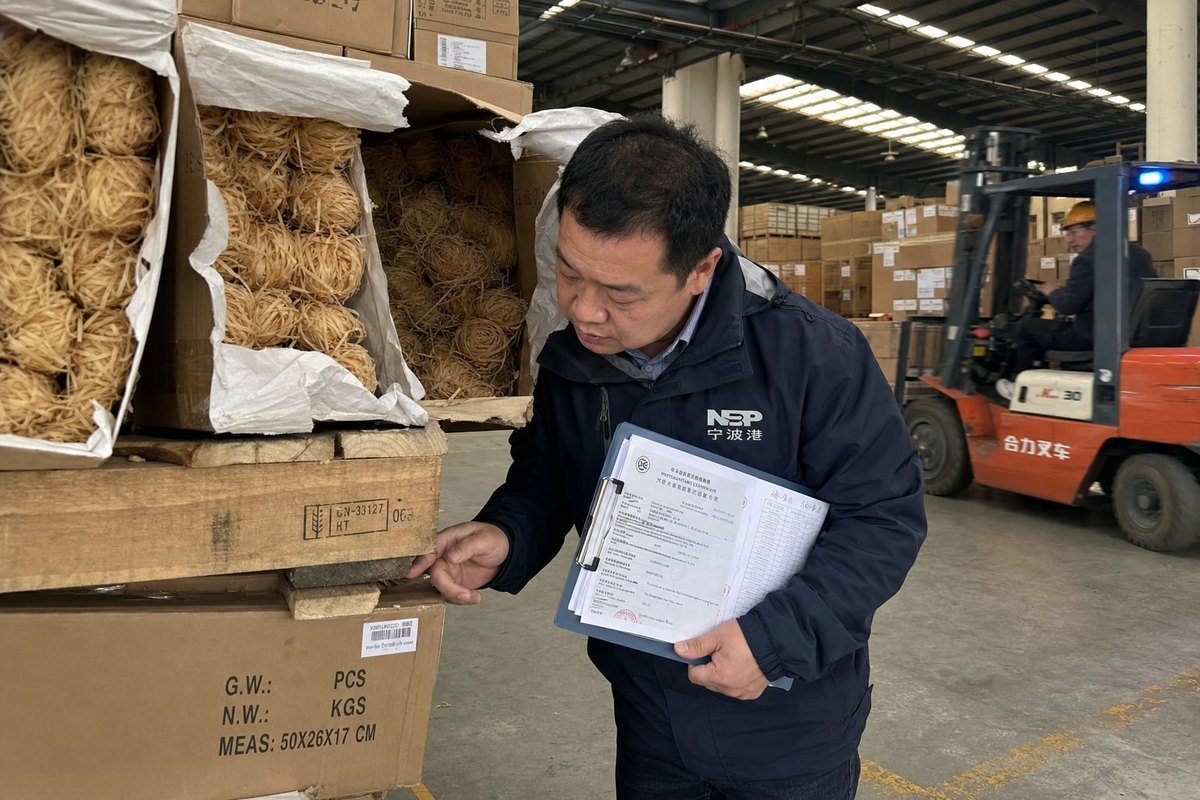
Customs delays when importing wood fire starters cost real money. On our production line in Ningbo, we have watched buyers lose entire retail seasons over one missing certificate.
To avoid customs delays when importing wood fire starters, confirm the correct HS Code classification, request a phytosanitary certificate or kiln-dried treatment proof, verify ISPM 15 compliant pallets, match all shipping documents exactly, and secure required safety test reports before the goods leave the factory.
Wood fire starters sit at a tricky crossroads. Customs may treat them as a wood product, a combustible consumer good, or a biosecurity risk. That means generic import advice is not enough. Below, I break down the exact documents, certifications, packaging rules, and supplier checks that keep your containers moving.
What documentation should I request from my supplier before shipping to avoid customs holds?
A German distributor once called us in a panic. His previous supplier shipped without a fumigation record, and his container sat in Hamburg for three weeks. We rebuilt his document pack from scratch.
Before shipping, request a commercial invoice with precise product descriptions and HS codes, a matching packing list, the bill of lading, a certificate of origin, a phytosanitary certificate or heat-treatment proof, and a Material Safety Data Sheet covering the wax coating.

Most customs holds are paperwork problems, and paperwork problems start at the factory. In our 17+ years exporting fire-starting goods to 30+ countries, we have learned one simple rule: every document must tell the same story. If the invoice says 850 kg and the packing list says 900 kg, a customs officer will stop the shipment and start asking questions. Manual document audits are slow, and they get slower during peak season.
The core document set
Here is the baseline set we prepare for every wood fire starter shipment, whether it goes to the US, the EU, or Australia:
| Document | What customs checks | Common error |
|---|---|---|
| Commercial invoice | Product description, HS code, value, currency, origin | Vague terms like "wood goods" |
| Packing list | Carton counts, net/gross weights, dimensions | Numbers that differ from the invoice |
| Bill of lading / air waybill | Consignee details, shipment contents | Misspelled consignee names |
| Certificate of origin | Country of manufacture | Missing chamber stamp |
| Phytosanitary certificate 1 or treatment record | Pest and biosecurity risk | Issued after departure, not before |
| Material Safety Data Sheet | Wax and binder composition | Outdated format or missing sections |
Why the description matters so much
Your invoice should never say "fire goods" or "miscellaneous wood product." We write descriptions like "wax-dipped wood wool fire starter rolls, compressed natural wood fiber coated in paraffin wax, for consumer fireplace use." That level of detail lets officers verify the HS code without opening cartons.
Timing is part of documentation
Some regulated goods need permits applied for four to six weeks before shipping. We advise buyers to lock the document pack before production finishes, not after the container is booked. Ask your supplier for draft documents early, review them line by line, and keep digital backups. When customs asks a question, the importers who answer within hours clear fastest.
Which certifications and test reports do wood fire starters need for smooth customs clearance in my country?
Compliance requirements were the first thing we invested in when we scaled beyond Asia. Certification is not a nice-to-have for our buyers in the US and Europe — it is a hard gate.
Wood fire starters typically need third-party safety test reports from labs like SGS or Intertek, CE-relevant conformity documentation for the EU, kiln-dried wood treatment proof or a phytosanitary certificate, and, for the US, Lacey Act declarations identifying the wood species and origin.
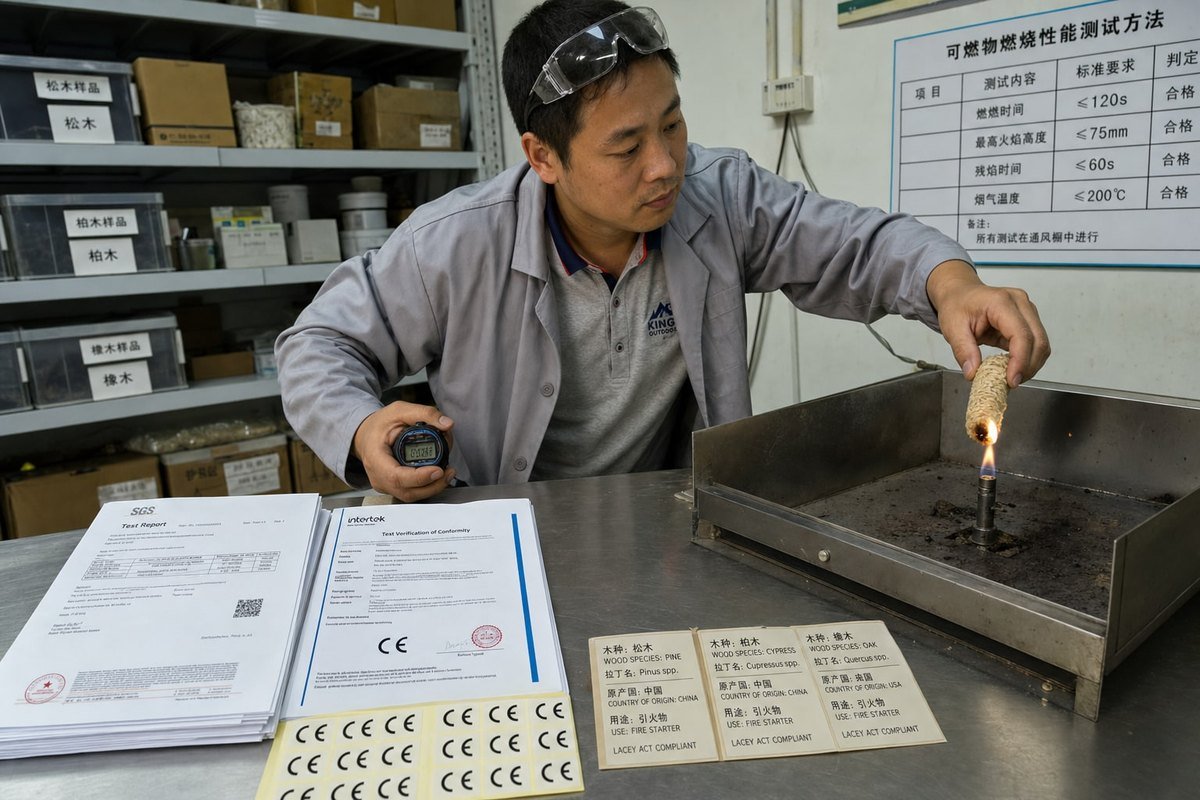
Requirements differ by destination, so I will break this down by market rather than give one generic list. Our factory holds ISO 9001 2 and BSCI audits, plus SGS and Intertek test reports, precisely because different markets pull different documents during the customs clearance process.
United States
US customs looks at two angles. First, biosecurity: Lacey Act requirements 3 may apply to wood products, meaning you declare the genus, species, and country of harvest. Second, product safety: wax-coated starters are generally not classified under flammable solid shipping regulations when tested and documented properly, but you should hold a Material Safety Data Sheet and a lab report proving the product is not a dangerous good for transport. That single report can prevent a carrier from refusing the booking.
European Union and UK
EU buyers ask us for conformity documentation, ingredient disclosure for the wax and any binders, and increasingly for proof that packaging meets recycling and Extended Producer Responsibility 4 rules. Some buyers now also request confirmation that no PFAS-containing binders 5 are used. Wood-origin traceability is tightening under deforestation rules, so keep supplier declarations on file.
Australia and other strict biosecurity markets
Australia treats plant-fiber products seriously. Expect requests for a phytosanitary certificate, heat-treatment records showing the wood reached the required core temperature, and clean-container evidence during stink bug season.
| Market | Key certification focus | Typical proof requested |
|---|---|---|
| US | Lacey Act, transport safety | Species declaration, MSDS, lab test report |
| EU/UK | Consumer safety, packaging EPR | SGS/Intertek report, EPR registration, ingredient list |
| Australia | Biosecurity | Phytosanitary certificate, heat-treatment record |
| Middle East | Conformity certificates | Pre-shipment inspection, test reports |
Ask your supplier for current, dated reports — not scans from five years ago.
How can I make sure my supplier's packaging and labeling meet import regulations?
Packaging trips up more importers than the product itself. Early in our export history, we redesigned our entire pallet program after learning how strictly ports enforce wood packaging marks.
Verify that all pallets, crates, and dunnage carry visible ISPM 15 compliance marks, that retail boxes show required warning labels, country of origin, and barcodes, and that the supplier can print destination-specific compliance text before production starts.
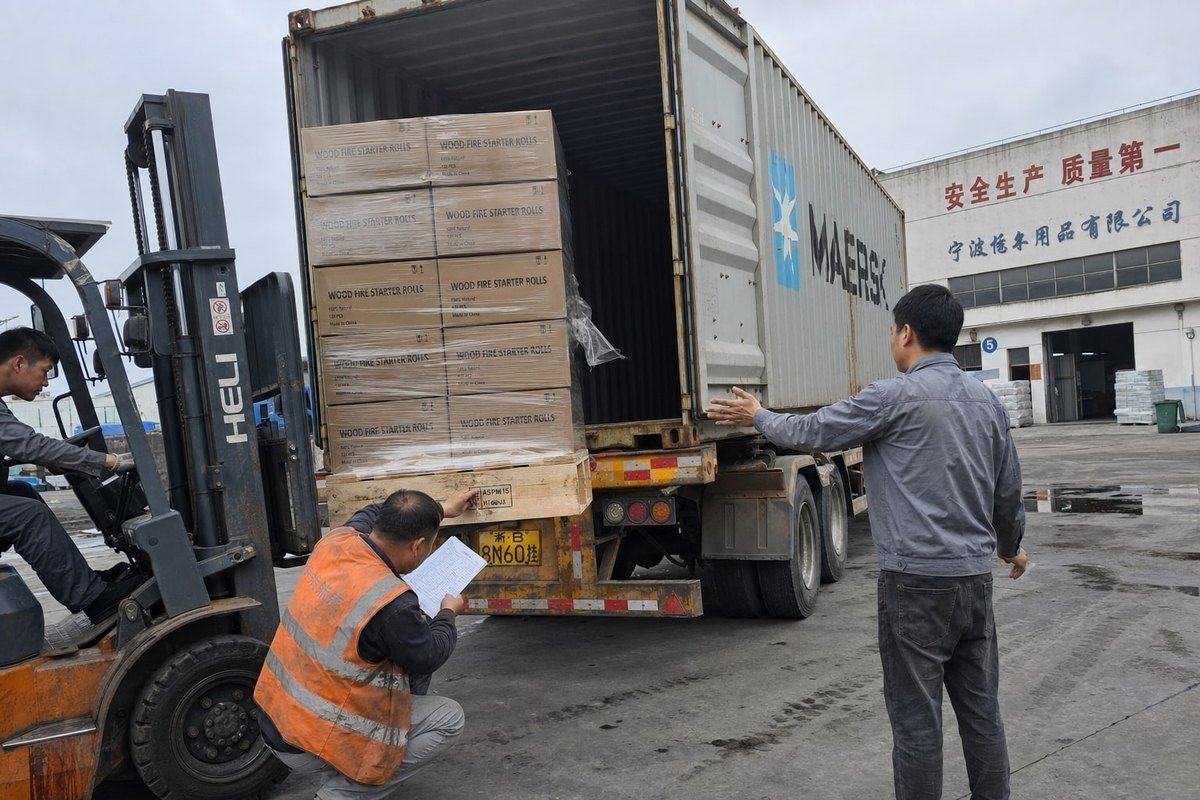
There are two packaging layers to check, and each has its own rules. Miss either one, and your container can be refused at the border even when the product itself is fully compliant.
Layer one: transport packaging
Every wooden pallet, crate, and piece of bracing must be ISPM 15 compliant 6, with a permanent, legible heat-treatment or fumigation stamp on at least two sides. Inspectors also look for bark, soil, insect holes, and pest evidence. One infested pallet can send the whole container to fumigation — or back to origin. We photograph our pallet marks before every container loading and send the photos to buyers. Ask your supplier to do the same. It costs nothing and creates proof.
Layer two: retail packaging and labels
Consumer-facing boxes carry their own requirements. Here is the checklist we run for private-label orders:
| Label element | US expectation | EU expectation |
|---|---|---|
| Warning text | Clear fire-hazard warnings in English | Warnings in destination language(s) |
| Country of origin | "Made in China" clearly marked | Origin marking required |
| Barcode | UPC registered to the brand | EAN registered to the brand |
| Usage instructions | Recommended | Often required for combustibles |
| Recycling / EPR marks | State-level variations | EPR registration number increasingly checked |
Get artwork approved before production
Since we run full OEM/ODM programs — custom boxes, display packaging, warning labels, barcodes — we always send label artwork for buyer and, ideally, broker review before printing. Changing a warning label after 100,000 boxes are printed is expensive. Changing a PDF is free. Confirm the language requirements for your specific market, because a compliant US label can still fail in France or Poland.
What should I look for in a manufacturing partner to minimize the risk of shipment delays?
Buyers often ask me why two suppliers quoting the same product can deliver such different customs outcomes. The answer is almost always process depth, not price.
Choose a manufacturer with current international certifications, in-house production rather than trading, experience exporting to your specific market, complete document support including HS Code classification guidance, batch-to-batch quality control, and fast English communication for customs queries.
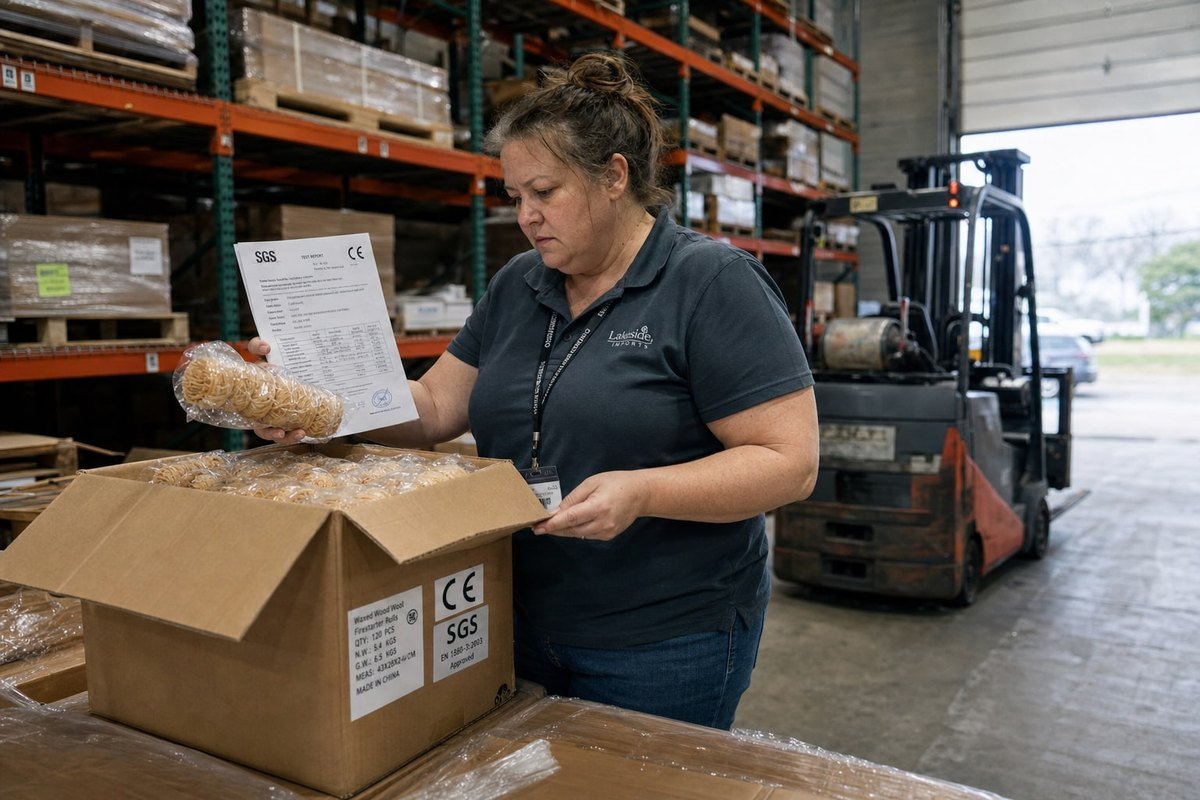
A customs broker can handle clearance, but a broker cannot fix bad information from the factory. The importer stays responsible for accurate composition data, correct valuation, and complete supporting documents. So your real risk control starts with supplier selection. After 17+ years running production in Ningbo and serving distributors from Home Depot–type retail channels to camping brands, here is what I would screen for if I were the buyer.
The six-point supplier screen
- Verified certifications. Ask for current ISO 9001 and BSCI audit reports plus recent SGS or Intertek test reports. Verify certificate numbers directly with the issuing body.
- Real factory status. Trading companies often cannot answer composition questions — wood species, wax type, binder chemistry — that customs and Lacey Act declarations demand. Visit or video-audit the production line.
- Market-specific export history. A supplier who has shipped wood fire starters to your country already knows the pitfalls, from phytosanitary paperwork to import duty rates, and can share redacted past documents as proof.
- Document discipline. Request a sample document pack from a previous shipment. Check whether the invoice, packing list, and treatment certificates align.
- Classification support. Your supplier should provide accurate material breakdowns so your broker can confirm the HS Code classification 7 — often in the compressed wood fuel headings — instead of guessing. A guessed code is a leading cause of holds and wrong duty assessments.
- Response speed. Customs holds grow longer when questions go unanswered. Test the supplier before ordering: send a technical question and time the reply. We aim to answer buyer and broker queries within one business day, because a two-day silence at the port can become a two-week delay.
Finally, weigh consistency. A first sample means little if batch ten differs. Strict batch-to-batch quality control is what makes your compliance documents stay true shipment after shipment.
Conclusion
Customs delays are preventable. Verify documents, certifications, ISPM 15 packaging, and correct classification before shipping — and partner with a factory that treats compliance as standard practice, not an extra.
Footnotes
1. Background on the biosecurity certificate required for wood-based product exports ↩︎
2. Authoritative Wikipedia entry provides a stable, accessible overview of the quality management standard. ↩︎
3. Official source on US wildlife and timber import declaration law mentioned in article ↩︎
4. EPA overview of packaging recycling obligations mentioned for EU compliance ↩︎
5. EPA resource on PFAS chemicals relevant to buyer requests for binder-free products ↩︎
6. Explains international wood packaging treatment standard referenced for pallet compliance ↩︎
7. World Customs Organization page explaining harmonized system classification referenced repeatedly ↩︎

 English
  Spanish
  German
  French
  Arabic
  Portuguese
Join the Conversation