







Coordinating shipping and container loading for wood fire starters looks simple until a missed cutoff strands your cargo at port SGS and Intertek 1. I have watched it happen, and our export team learned the hard way.
To coordinate shipping and container loading for wood fire starters, share exact cargo data, carton dimensions, and ready dates with your freight forwarder early, agree on FCL or LCL, confirm packaging and compliance documents, then lock pickup, stuffing, VGM, and gate-in deadlines before the vessel cutoff.
That is the short answer. Below, I walk through each stage in order: documents and lead times, load planning, packaging standards, and choosing the right forwarder.
What documents and lead times should I prepare before contacting my freight forwarder?
A buyer in Germany once asked me why his quote changed twice in one week. The answer was simple: his cargo data changed twice. Our export desk in Ningbo sees this constantly.
Before contacting your freight forwarder, prepare a commercial invoice, packing list, MSDS documentation, HS code, and cargo dimensions, plus a firm cargo ready date. Allow two to three weeks of lead time before the target sailing so booking, trucking, and export clearance can be arranged without rush fees.

Ocean freight booking runs on information, not hope. When we prepare a shipment of wax-dipped wood rolls 2 from our Ningbo facility, we build the file before we ever request a quote. That discipline saves days later.
The core document set
Your forwarder cannot classify, book, or clear cargo without paperwork. Here is what we prepare for every fire starter shipment:
| Document | Purpose | When to Send |
|---|---|---|
| Commercial invoice | Declares value for customs | Before booking |
| Packing list | Confirms cartons, weights, dimensions | Before booking |
| MSDS documentation | Confirms non-hazardous or hazmat status | At quoting stage |
| Certificate of origin | Supports duty treatment | Before vessel departure |
| Shipper's letter of instruction | Authorizes the forwarder to act | At booking |
| Bill of Lading 3 draft | Confirms consignee and cargo details | After gate-in, before sailing |
The MSDS matters most for this product category. Wax-dipped wood wool fire starters are usually classified as non-hazardous general cargo 4, but carriers will ask for proof. We keep SGS and Intertek test reports on file for exactly this reason. Without them, a carrier may hold your booking pending review.
Lead times that actually work
Work backward from the sailing date. We plan the latest factory delivery time first, then add buffer. A realistic backward plan looks like this: booking confirmed 14 days before sailing, cargo ready 7 days before, documents submitted 5 days before, and gate-in 3 days before the cutoff. Also confirm your Incoterms 2020 5 term early. FOB, EXW, or CIF changes who books, who pays, and who is responsible at each step. Ambiguity here causes more disputes than pricing ever does.
How can I optimize container loading to maximize space for wood fire starters?
There is a trade-off we weigh on every order: bigger master cartons 7 cut handling time, but they waste cube inside a container. Getting that balance right decides whether you ship one container or pay for two.
Maximize container space for wood fire starters by standardizing carton sizes to fit container dimensions, choosing a 40ft high cube for volumetric cargo, floor-loading or using a tight palletization strategy, balancing cargo weight distribution, and confirming an FCL versus LCL decision based on total volume.
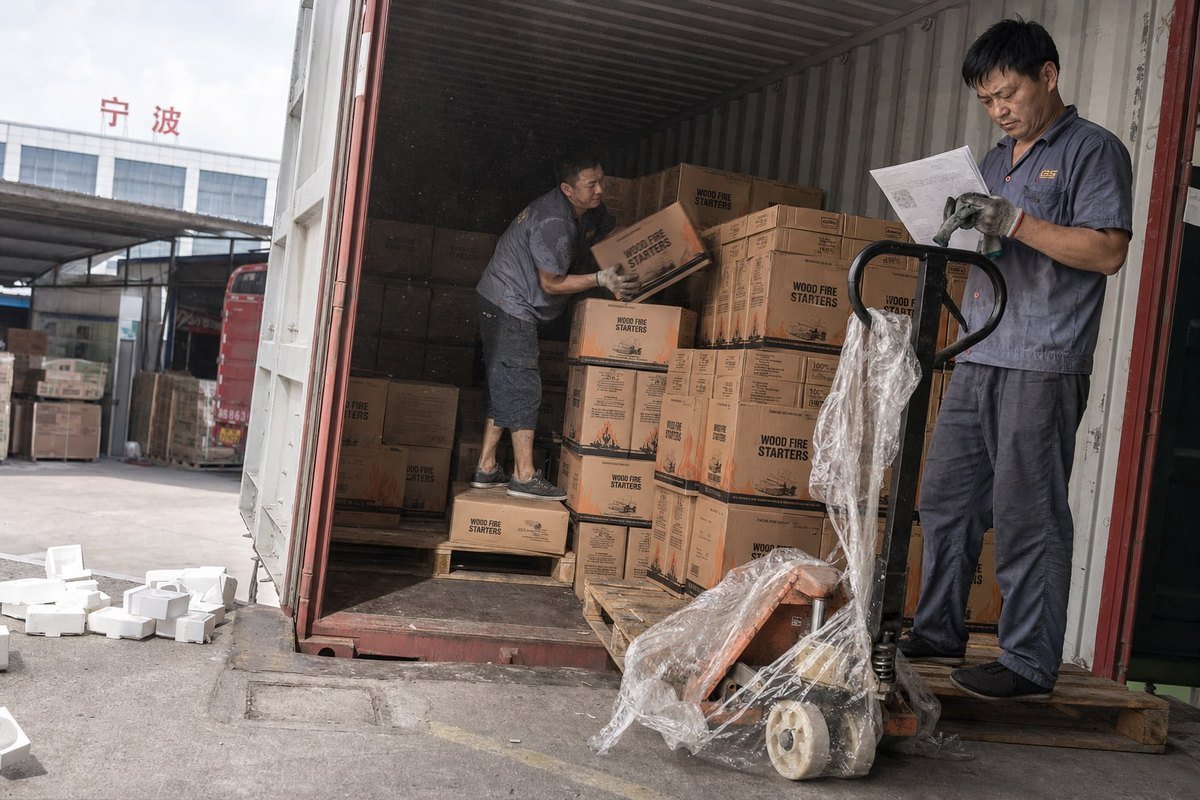
Wood fire starters are light for their size. Wood wool and wax weigh little, so you will hit the container's volume limit long before its weight limit. That makes cube efficiency the whole game.
FCL or LCL: decide first
| Factor | FCL (Full Container Load) | LCL (Less than Container Load) |
|---|---|---|
| Best volume range | 15+ CBM | Under 15 CBM |
| Loading control | You control the stuffing plan | Consolidator controls placement |
| Handling risk | Loaded once, sealed once | Multiple touches at CFS warehouse |
| Documentation | One shipper, simpler | Consolidation docs, more overhead |
| Cost logic | Flat container rate | Pay per CBM, but with surcharges |
For trial orders of retail-boxed fire starters, LCL often makes sense. Once a buyer reorders at scale, we push toward FCL because we control the loading plan and the cargo travels sealed from our dock to theirs.
Cube math before booking
A 40ft high cube gives roughly 76 CBM of nominal space, but realistic utilization sits around 85 to 90 percent with well-planned cartons. We design master cartons for our 100-piece retail boxes so their dimensions divide cleanly into container width. A carton that is 2 cm too wide can waste an entire vertical column down the length of the container.
Weight distribution and securing
Even light cargo needs a plan. Spread weight evenly along the floor, keep heavier pallets low and centered, and never front-load the container. For floor-loaded cartons, we build tight tiers with no voids. For palletized loads, we add blocking and bracing at the door end so nothing shifts during rough sea legs. Send your forwarder the stuffing plan in advance. Good forwarders will review it and flag risks before loading day.
What packaging standards do I need to meet for safe, compliant container shipping?
Early in our export history, a shipment sat in a hot container for five weeks, and wax softened into the carton walls. That single lesson reshaped our packaging specifications permanently.
Compliant packaging for wood fire starters requires ISPM 15 heat-treated pallets, moisture barriers with desiccants, wax-resistant inner liners, crush-rated master cartons, correct warning labels and barcodes, and MSDS-aligned markings. If any component is regulated, Limited Quantity retail packaging rules may also apply.

Packaging discipline is where consistency pays off. Our production line packs every batch to the same carton spec, so the container plan a buyer approved on the first order still works on the tenth. Here are the standards that matter, layer by layer.
Layer one: pallets and outer protection
ISPM 15 compliance is non-negotiable for wood pallets crossing borders. Pallets must be heat-treated and stamped with the IPPC mark, or customs at destination can reject or fumigate the entire shipment at your cost. Note that the fire starters themselves are a manufactured wood product, so they typically do not need a phytosanitary certificate, but always confirm destination rules with your customs brokerage services provider, since a few markets ask questions about any wood-based goods.
Layer two: moisture and wax control
Ocean containers sweat. Temperature swings create condensation that can soften cartons and degrade wood wool. Our standard approach:
- Line master cartons with poly barriers to block moisture.
- Add desiccant packs at container level for long transits.
- Use wax-resistant liners so paraffin cannot leach into cardboard in tropical heat.
- Lay floor protection paper so any wax residue never touches the container floor, avoiding cleaning claims.
Layer three: labels and compliance marks
| Packaging Element | Requirement | Why It Matters |
|---|---|---|
| Warning labels | Market-specific flammability warnings | Retail compliance in US and EU |
| Barcodes | Retail-ready EAN or UPC | Direct-to-shelf distribution |
| Carton markings | Weight, dimensions, handling marks | Warehouse and port handling |
| Test report references | CE, SGS, or Intertek alignment | Proof for customs and retailers |
If your fire starters ever include chemical accelerants, flammable solids regulations under Class 4.1 could apply, and a Limited Quantity exception for small retail packs may reduce costs. Our wax-and-wood formula avoids this entirely, which is one reason buyers choose it: general cargo ships cheaper and faster than hazmat.
How do I choose a freight forwarder experienced in handling fire-starting products?
A US distributor once told me his previous forwarder refused his fire starter booking outright, assuming it was dangerous goods. The cargo was harmless. The forwarder just did not know the category.
Choose a freight forwarder who has shipped combustible retail goods before, understands MSDS review and carrier screening, offers customs brokerage services at both ends, provides real-time tracking, and can explain how they handle carrier questions about flammability without defaulting to costly hazmat classification.
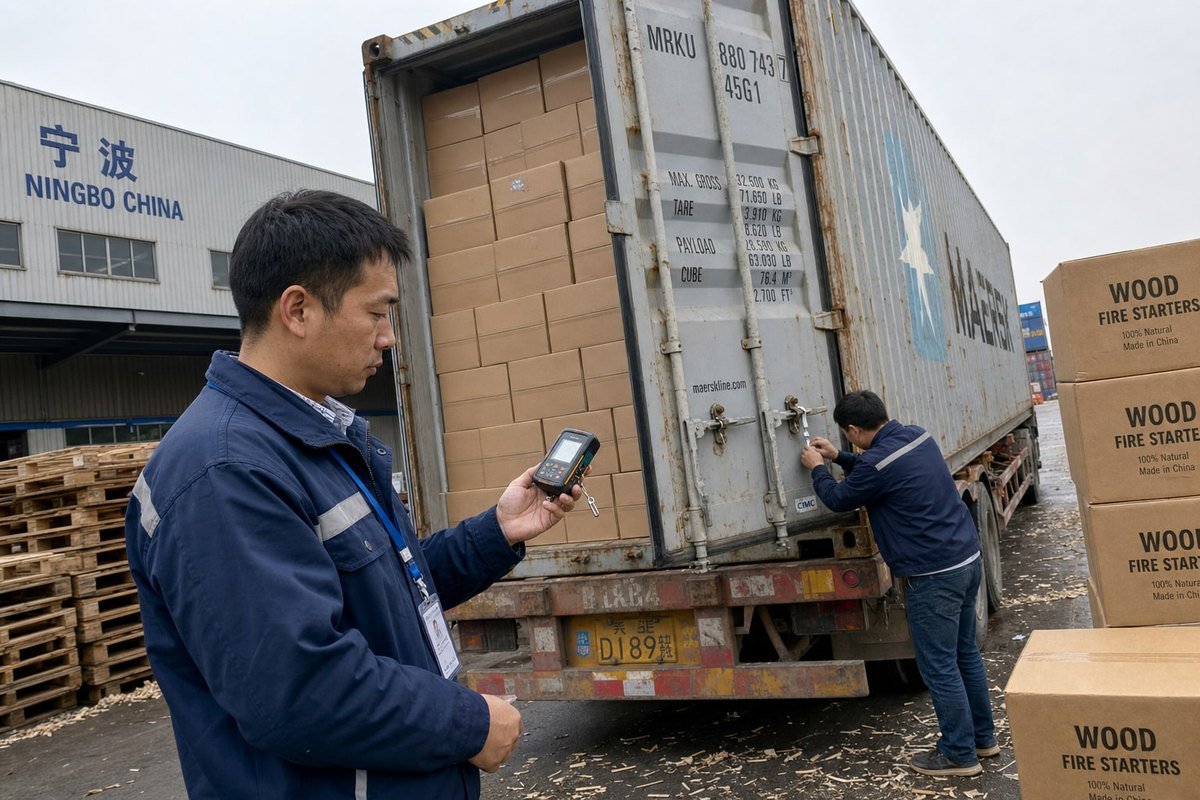
Not every forwarder is equal for this product category. Rate sheets look similar, but the real differences show up when a carrier flags your cargo for review or a customs officer asks about wood content.
Questions that reveal experience
We advise buyers to ask five things before committing:
- Have you shipped fire starters, matches, candles, or similar wax-based goods before?
- How do you handle carrier MSDS screening, and how long does it usually take?
- Do you provide customs brokerage services at destination, or do I need a separate broker?
- What milestone tracking do you provide from gate-in to final delivery?
- Who is my single point of contact when something goes wrong at 2 a.m.?
A forwarder who answers these quickly, in plain language, will coordinate well. One who hesitates on the MSDS question will likely stall your first booking.
Red flags versus green flags
Watch for forwarders who immediately quote hazmat rates without reviewing your safety data. That usually means they do not understand the product and are pricing in their own uncertainty. Equally, be cautious with forwarders who never ask about your cargo at all. Good partners ask about wax content, packaging, and pallet treatment because those details affect the booking.
On our side, we shorten this process for buyers. Because we export to 30+ countries, we hand new forwarders a complete cargo file: test reports, MSDS, carton specs, and stuffing plans. A capable forwarder turns that into a confirmed booking within days. An inexperienced one turns it into a week of questions. Also confirm the forwarder issues the Bill of Lading promptly after sailing and supports telex release if you need faster cargo release at destination. Slow documentation at this stage delays your goods even after a perfect ocean transit.
Conclusion
Smooth shipping of wood fire starters is a coordination problem, not a rate problem. Share accurate data early, pack to standard, respect cutoffs, and partner with forwarders who know the category.
Footnotes
1. Global leader in testing and certification for product safety, compliance, and quality control. ↩︎
2. Explains the composition and historical use of fire-lighting materials like wood wool and wax. ↩︎
3. Authoritative Wikipedia entry providing a comprehensive definition and legal functions of the document. ↩︎
4. Overview of freight transport categories, including general cargo and logistics for non-hazardous goods. ↩︎
5. Official source for international commercial terms defining buyer and seller responsibilities in shipping. ↩︎
6. Official government source (eCFR) for the Hazardous Materials Table referenced in the original link. ↩︎
7. Explains the design and structural requirements for corrugated fiberboard boxes used in shipping. ↩︎



Join the Conversation