






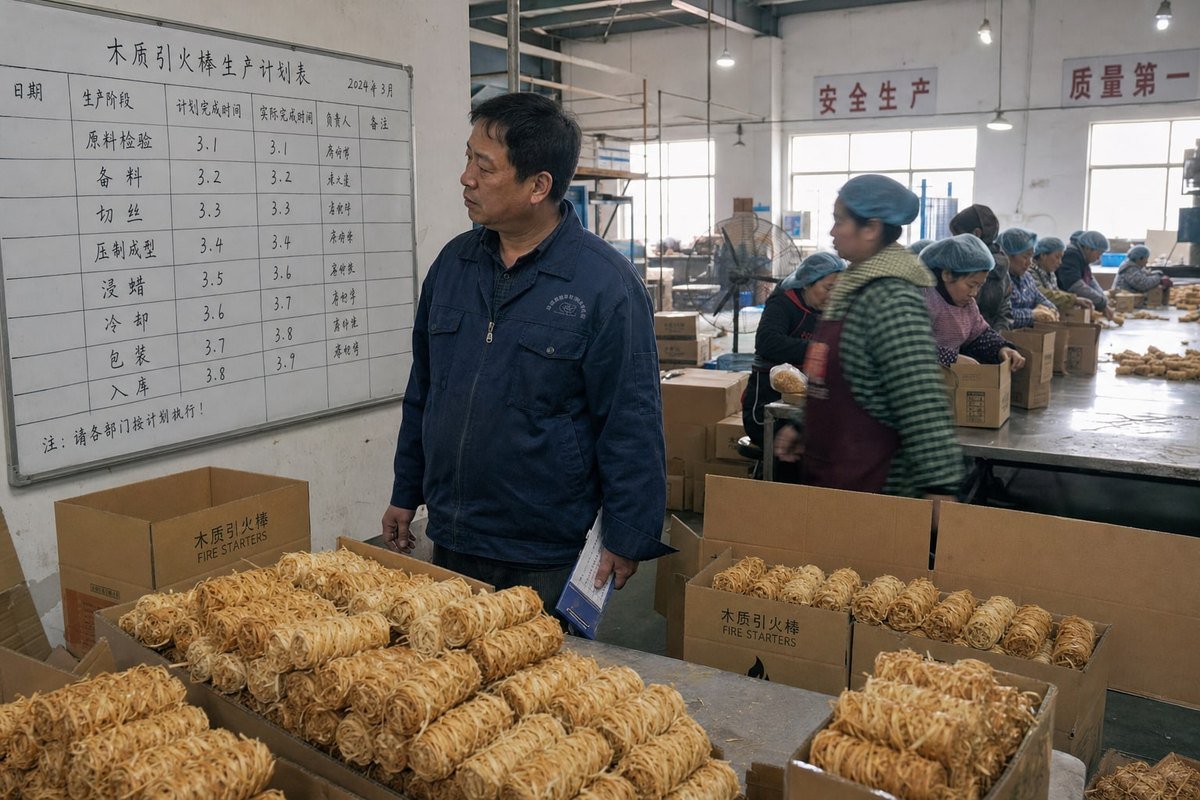
Production delay risks when sourcing wood fire starters can quietly destroy a season. I have watched buyers lose retail placements over two late weeks. Our factory built its process to prevent that.
To manage production delay risks when sourcing wood fire starters, verify the supplier's on-time delivery record, confirm realistic lead times in writing before ordering, add penalty and partial-shipment clauses to contracts, and choose a certified manufacturer with proven peak-season capacity, backup materials, and transparent production updates.
Each of those steps deserves a closer look. Below, I will walk through them one by one, using lessons from our own production floor and from buyers we serve worldwide.
What Should I Look for in a Supplier's Track Record to Avoid Unexpected Delays?
A few years back, a German distributor asked me for three years of our shipment records before his first trial order. That request taught me what serious buyers check first.
Look for documented on-time delivery rates above 95%, verifiable certifications such as ISO 9001 and BSCI, consistent lead times across past orders, stable ownership of production lines, references from buyers in your market, and a clear history of handling seasonal demand fluctuations without missed shipments.

A track record is more than a marketing claim. It is a pattern you can verify. In our experience exporting fire-starting goods to 30+ countries, the suppliers who cause supply chain disruptions 1 almost always showed warning signs before the first purchase order was ever placed. The problem is that buyers rarely knew where to look.
Hard Evidence Beats Promises
Ask for proof, not statements. A real factory can show audit reports, shipment histories, and third-party test documents. A trading company often cannot. This distinction matters because a middleman has no direct control over quality control standards 2 or scheduling on the actual production line.
Here is what I recommend requesting, and why each item matters:
| What to Request | What It Reveals |
|---|---|
| On-time delivery data (12–24 months) | Whether delays are rare exceptions or a habit |
| ISO 9001 / BSCI audit reports | Process discipline and social compliance |
| SGS or Intertek test reports | Product safety and material consistency |
| FSC certification compliance documents | Legal, sustainable wood sourcing for retail markets |
| References in your region | Real export experience with your compliance rules |
| Photos or video of production lines | Confirmation the supplier actually manufactures |
Watch for Behavioral Red Flags
Slow responses to simple questions are a preview of slow responses during a crisis. Vague answers about raw material sources hint at future raw material shortages 3. Frequent changes to quoted minimum order quantities 4 suggest unstable manufacturing capacity. When we onboard a new B2B client, we expect these questions, and we answer them with documents. Any supplier who resists this level of scrutiny is telling you something important. Believe them.
How Can I Verify Lead Times Before Committing to a Large Order?
There is a trade-off I discuss with every new buyer: a fast quoted lead time looks attractive, but an honest lead time protects your launch date. We always quote the honest one.
Verify lead times by placing a small trial order first, requesting a stage-by-stage production schedule in writing, confirming raw material availability before deposit, checking the factory's current order load, and adding a 10–15 day buffer to any quoted date for new suppliers or peak-season orders.
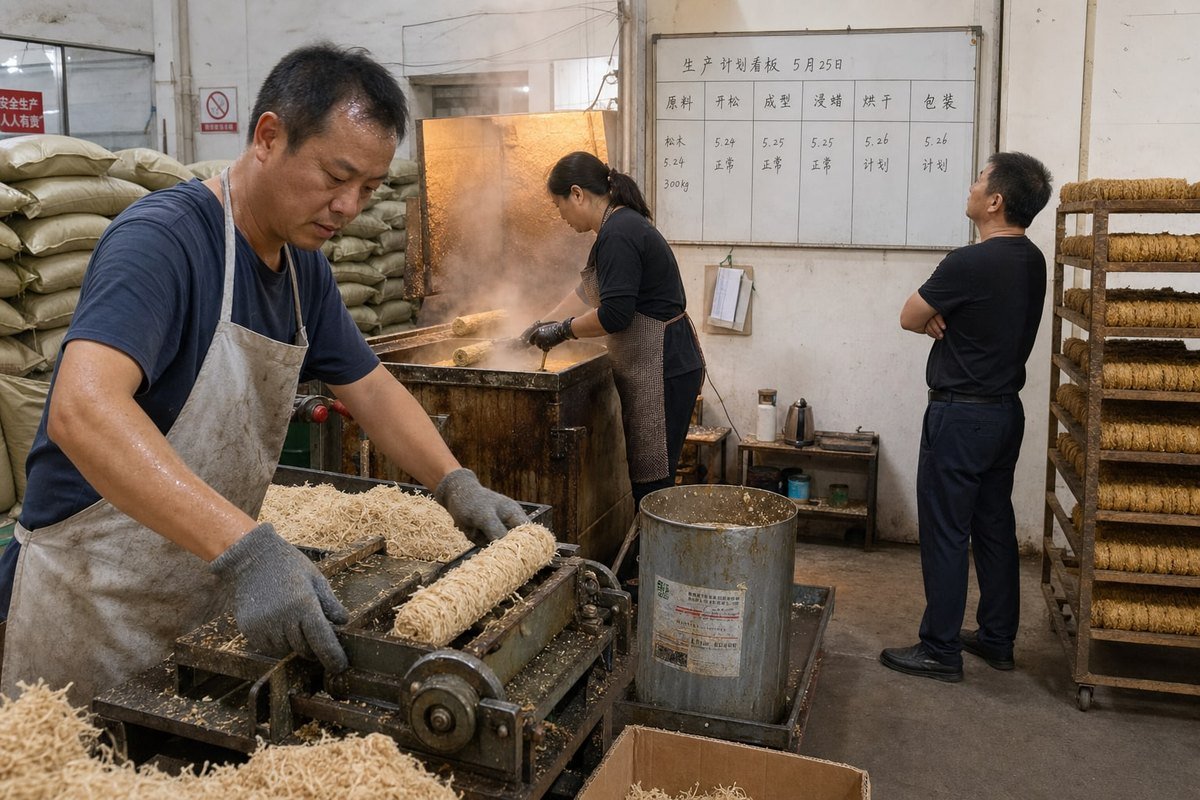
Lead time management starts before the purchase order, not after. A quoted "30 days" means nothing until you understand what those 30 days contain. For wax-dipped wood fire starters, production involves several dependent stages: wood wool preparation, rolling, wax dipping, drying, packing, and export documentation 5. A bottleneck in any single stage delays everything downstream. During humid months, drying throughput alone can quietly stretch a schedule if the factory lacks proper equipment.
Break the Lead Time Into Stages
Ask your supplier to itemize the timeline. An honest factory can do this in minutes. A vague one will resist. When we prepare schedules for our Ningbo production lines, we map each stage against material readiness, so buyers can see exactly where their order sits at any point.
| Verification Step | What to Ask | Warning Sign |
|---|---|---|
| Trial order | Can you ship a small batch in the quoted time? | Trial arrives late or quality differs from sample |
| Written schedule | Which week covers materials, production, packing? | Only a single end date, no breakdown |
| Material readiness | Is wood wool, wax, and packaging in stock? | "We will order materials after your deposit" |
| Factory load | How many orders run in my production window? | No clear answer about current capacity |
| Logistics plan | Which port, which sailing schedule? | No awareness of logistics and shipping delays |
Test Before You Trust
A trial order is the cheapest insurance you can buy. It tests real lead time, real communication speed, and whether mass production 6 matches the first sample. We actively encourage flexible trial MOQs for this reason. A supplier confident in its lead times will welcome the test. One padding its promises will push you toward a large commitment immediately. Also track lead-time drift over repeat orders. If a supplier's quoted lead time increases by more than 20% between orders, treat that as a trigger to qualify a backup source.
What Contract Terms Can Protect My Business If Production Falls Behind Schedule?
One of our UK buyers once shared the contract he used with a previous supplier who shipped six weeks late. It had no delay clause at all. We helped him fix that.
Protect your business with contract terms covering fixed ship dates, late-delivery penalties or discounts, partial-shipment rights, deposit refund conditions, mandatory delay notifications within 48 hours, quality inspection rights before balance payment, and cancellation options if delays exceed an agreed threshold.

A contract cannot prevent a delay, but it can change who carries the cost. Most sourcing contracts I see from first-time importers are one-sided in the supplier's favor, simply because the buyer never asked for more. In my experience, reputable factories accept fair delay terms without much argument. Factories that refuse all accountability are forecasting their own behavior.
The Clauses That Actually Matter
Focus on terms that create early warning and give you options. Vague penalty language helps no one. Specific triggers do.
- Fixed ex-factory date, not just an ETA. Tie the date to your deposit payment date, so the clock starts clearly.
- Graduated late penalties. For example, a small percentage discount per week of delay. This keeps the supplier motivated without being punitive over a two-day slip.
- Partial-shipment rights. If 60% of your order is ready, you can ship it and protect your shelf dates while the rest follows.
- 48-hour delay notification. The supplier must inform you of any schedule change within two days of knowing. Silence is the real killer during supply chain disruptions.
- Pre-shipment inspection rights. Balance payment releases only after inspection. This prevents quality failures from becoming shipping delays.
- Cancellation threshold. If the delay passes an agreed limit, such as 30 days, you may cancel with deposit refund and switch to a backup supplier.
Balance Protection With Partnership
Contracts work best when both sides see them as planning tools, not weapons. When we sign OEM agreements 7 with private-label clients, delay terms force us to plan safety stock levels of raw materials and reserve capacity honestly. That discipline benefits everyone. A buyer who demands zero-risk terms at rock-bottom prices, however, usually ends up with a supplier who signs anything and honors nothing. Fair terms attract serious factories.
How Do I Choose a Manufacturer With the Capacity to Handle My Peak-Season Demand?
Every August, our production planning meetings turn intense. Fire starter demand from US and European buyers peaks before winter, and capacity decisions made in summer determine everyone's Q4.
Choose a manufacturer by auditing its real production capacity versus current commitments, confirming it pre-stocks raw materials ahead of winter demand, checking whether it runs dedicated lines, verifying peak-season staffing plans, and ensuring it can decouple production from packaging to buffer against shortages.
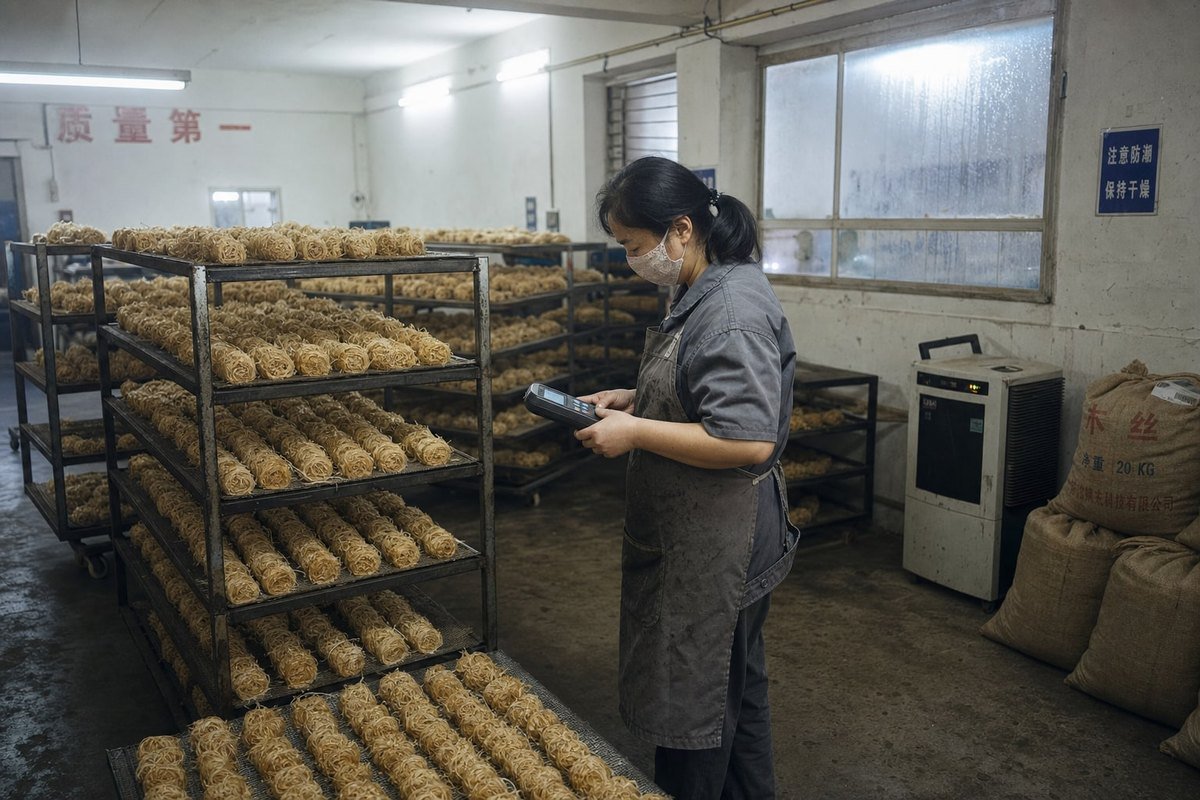
Peak-season capacity is where wood fire starters differ from steady-demand products. Seasonal demand fluctuations mean most buyers want delivery in the same three-month window. A factory that performs well in April can collapse in September. So the question is not "can this supplier make my quantity?" It is "can this supplier make my quantity while making everyone else's?"
Audit Capacity, Not Claims
Numbers on a website mean little. Ask specific, verifiable questions during your evaluation:
| Capacity Question | Why It Matters |
|---|---|
| Monthly output during peak vs. off-season | Reveals true headroom, not theoretical maximum |
| Raw material stocking strategy | Timber and wax secured in advance beat spot buying during raw material shortages |
| Staffing plan for peak months | Trained seasonal labor prevents quality drops |
| Percentage of capacity already committed | Tells you whether your order gets a real slot |
| Backup material or supplier options | Supplier diversification upstream protects your order too |
| Semi-finished goods storage | Producing units ahead of final packaging absorbs packaging delays |
Look for Structural Resilience
The strongest factories build slack into their systems. At our facilities, we secure wood and wax supply well ahead of the season, precisely because upstream shortages are the most common cause of missed windows. We also separate core production from final retail packaging where possible. If a client's custom box arrives late, finished fire starter units wait safely in storage instead of blocking the line. Ask any candidate supplier how they handle this. Their answer reveals whether they plan for problems or merely react to them. Finally, confirm their quality control standards hold during peak volume. Batch-to-batch consistency under pressure is the true test of manufacturing capacity, and it is where 17 years of process refinement shows.
Conclusion
Delay risk is manageable when you act early: verify track records, test lead times, contract for accountability, and pick capacity-proven partners. Do this before ordering, and winter shelves stay stocked.
Footnotes
1. International Trade Centre helps SME exporters manage supply chain disruptions and buyer risk. ↩︎
2. ISO defines quality control standards like ISO 9001 that reduce manufacturing delays. ↩︎
3. Explains raw material supply dynamics that drive shortages affecting production schedules. ↩︎
4. Alibaba.com is a leading marketplace documenting supplier MOQ practices for global buyers. ↩︎
5. WTO provides authoritative guidance on export documentation requirements in global trade. ↩︎
6. Background context on mass production concepts relevant to scaling wood fire starter output. ↩︎
7. Background on OEM agreements clarifies private-label manufacturing relationships discussed here. ↩︎


 English
  Spanish
  German
  French
  Arabic
  Portuguese
Join the Conversation