






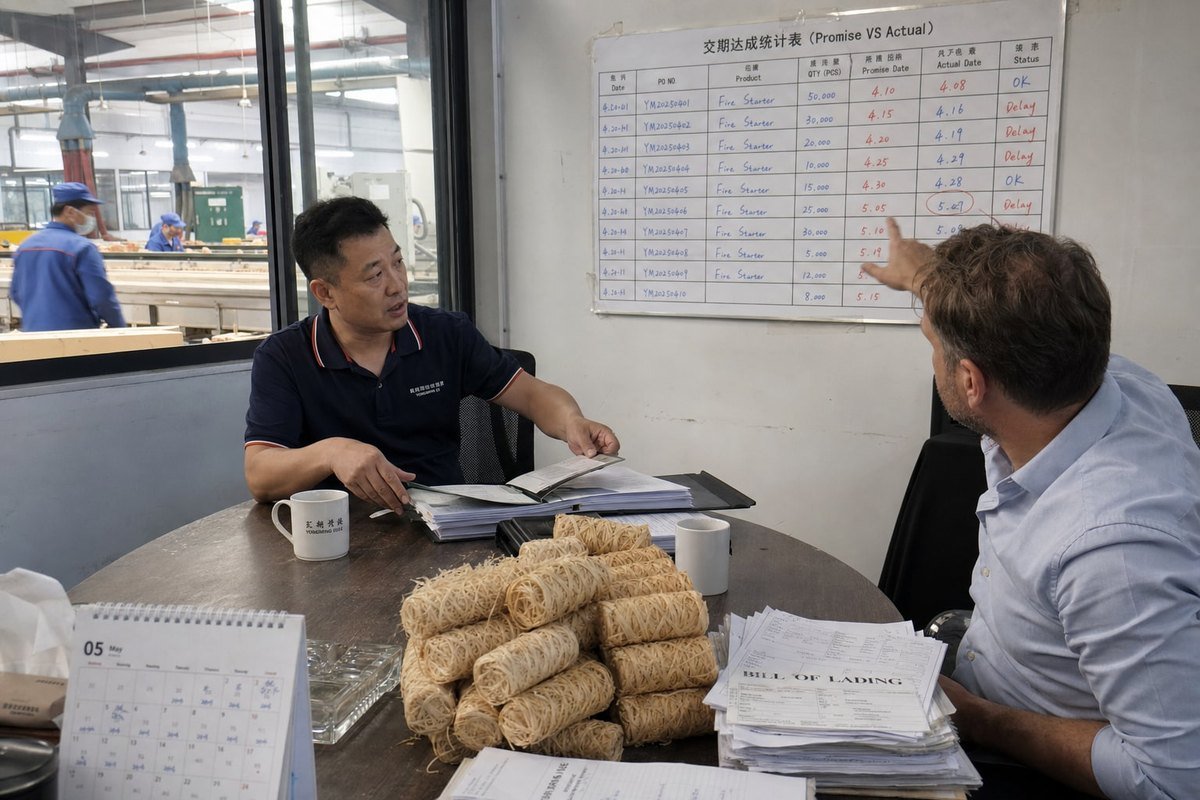
Wood fire starter lead time promises break more launches than pricing ever does. I've watched buyers lose entire winter seasons because a quoted date on our competitors' quotes was pure fiction.
A supplier's wood fire starter lead time is reliable only when historical delivery data shows promised dates matching actual receipt dates consistently, with low variability, verified production capacity, documented raw material sourcing, and proactive communication during production — not when a single quoted number looks attractive.
A quote is a promise. Data is proof. This guide shows you how to separate the two, step by step, before you commit your replenishment plan to any factory.
What documents should I request to verify a supplier's stated lead time is realistic?
Early in our export history, a German distributor asked us for two years of shipment records before placing a trial order. That request taught me what serious buyers actually check.
Request 12–24 months of purchase order history showing promised versus actual receipt dates, current production schedules, raw material purchase records, kiln capacity documentation, third-party audit reports such as BSCI or ISO 9001, and recent bills of lading confirming real shipping transit times.
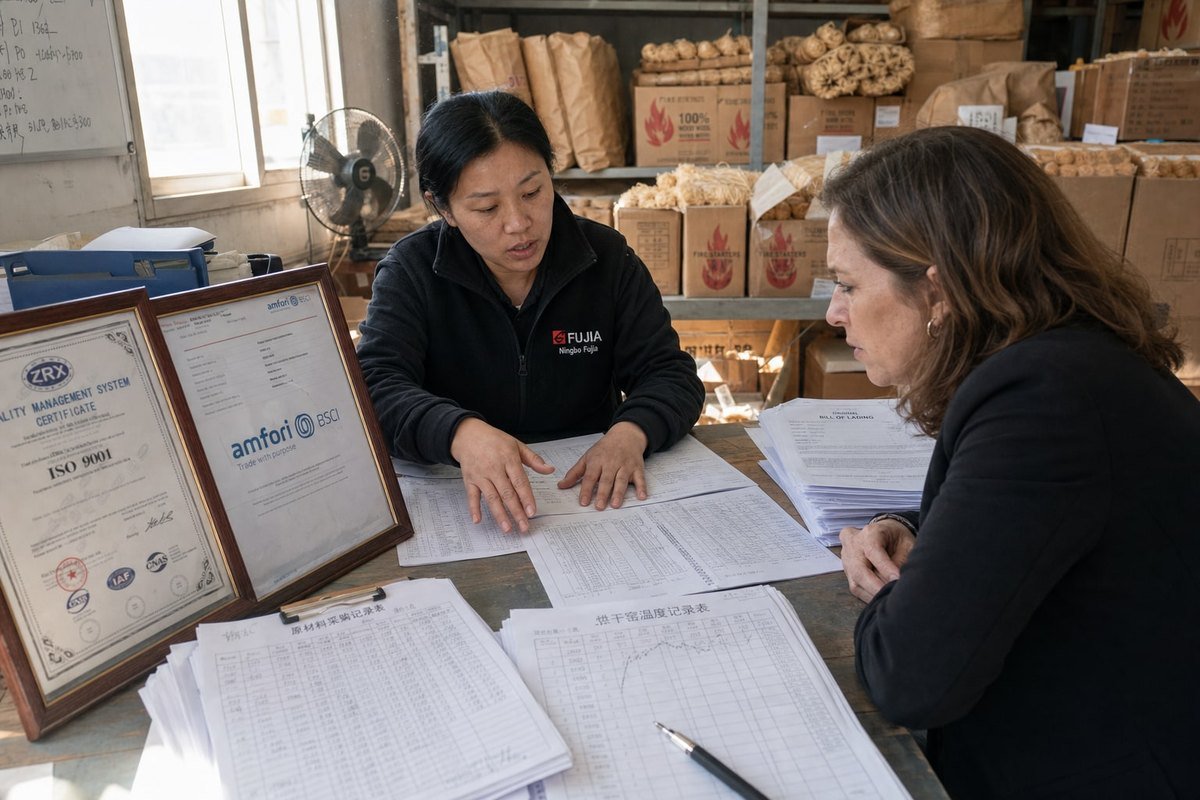
Documents force honesty. A supplier can say anything on a sales call. Paper trails are harder to fake. When buyers visit our Ningbo production site, we hand over PO logs and audit reports before they ask. That habit came from years of watching trading companies get caught inventing capacity they never had.
The core document set
Start with historical delivery performance records. Ask for anonymized PO lines from the last 12 to 24 months. You want three dates per line: order confirmation, ship date, and delivery date. Then compare the promised lead time against the actual one. If the supplier refuses or claims the data does not exist, that alone tells you something about their supply chain transparency.
Next, verify the operational documents that make lead times physically possible.
| Document | What It Proves | Red Flag If Missing |
|---|---|---|
| PO history (12–24 months) | Real promised-vs-actual performance | Supplier is guessing or hiding delays |
| ISO 9001 / BSCI audit reports | Process discipline and factory legitimacy | Possible trading company, not a factory |
| Raw material purchase records | Stable kiln-dried kindling sourcing 1 | Reliance on unpredictable off-cut streams |
| Production schedule snapshot | Current order backlog and open capacity | Overbooked lines during peak season |
| Recent bills of lading 2 | Actual shipping transit times to your port | Inflated or optimistic transit estimates |
How to read the PO history
Do not stop at the average. Calculate the on-time delivery rate, the median lead time, and the spread between the fastest and slowest deliveries. A supplier averaging 14 days but ranging from 10 to 28 days will wreck your safety stock levels 3. Also check for clusters. Random one-off delays are normal. Repeated misses every October through December signal a structural peak-season problem, not bad luck. Finally, cross-check the bills of lading against the claimed order fulfillment cycle. If quoted transit is 25 days but every B/L shows 35, the gap is baked into every future shipment too.
How can I tell if a wood fire starter factory has enough production capacity for my order?
Capacity is where I see the most wishful thinking. Our own lines in Ningbo run wax-dipping, wood wool winding, and packaging in parallel, and even we plan peak season months in advance.
Divide the factory's verified daily output by its total committed client volume to find true headroom. Confirm machine counts, kiln drying throughput, wax-dipping stations, and packaging line speed on-site or by video, then check whether your order fits inside the remaining unbooked capacity.
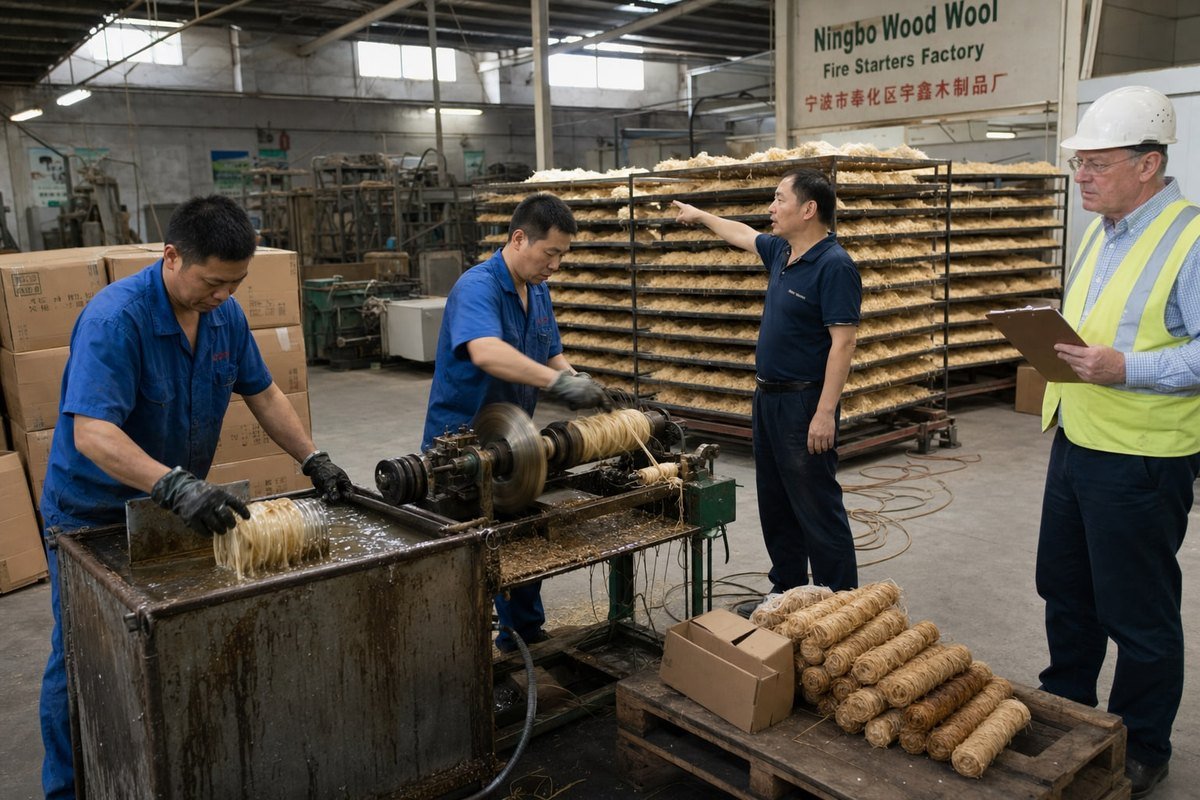
A proper production capacity assessment 4 looks at the whole chain, not just the headline number. Wood fire starters pass through several stages: raw wood shaving or wool cutting, drying, forming or winding the rolls, wax dipping, cooling, and packaging. The slowest stage sets the real output. In our experience, buyers almost always underestimate the packaging bottleneck. Manual bagging of small-format starters is frequently slower than the wood processing itself. A factory that can dip 50,000 pucks a day but only hand-pack 20,000 has a 20,000-unit factory.
The bottleneck checklist
Walk through each stage and ask for numbers.
| Production Stage | What to Verify | Typical Bottleneck Risk |
|---|---|---|
| Raw material intake | Moisture control below 20%, stable wood supply | Wet wood forces mid-production drying delays |
| Drying | Kiln type and daily throughput | Traditional kilns scale poorly in cold snaps |
| Forming and winding | Machine count and shift schedule | Low risk if automated |
| Wax dipping | Tank capacity and cooling space | Cooling area limits daily batches |
| Packaging | Manual versus automated bagging speed | Often the true constraint |
Headroom math
Ask two direct questions. First, what is your total monthly output at full utilization? Second, what volume is already committed to existing clients during your delivery window? The difference is your headroom. If your order consumes more than 60–70% of that free headroom, one hiccup elsewhere delays you. Also probe raw material availability. A factory that owns or contracts its wood supply is far more stable than one buying off-cut waste streams from third-party mills, where local biomass and pellet demand can suddenly poach the raw material. Quality control standards matter here too: a factory rushing beyond real capacity usually cuts corners on wax coverage and moisture checks first.
What red flags suggest a supplier's lead time promises won't hold up during peak season?
Every autumn, we field urgent inquiries from buyers whose original supplier just pushed delivery by six weeks. The warning signs were almost always visible months earlier.
Key red flags include quoted lead times that never change between off-season and peak season, refusal to share historical delivery performance, dependence on third-party off-cut wood streams, no owned drying capacity, vague answers about current order backlog, and slowing responses to routine status inquiries.
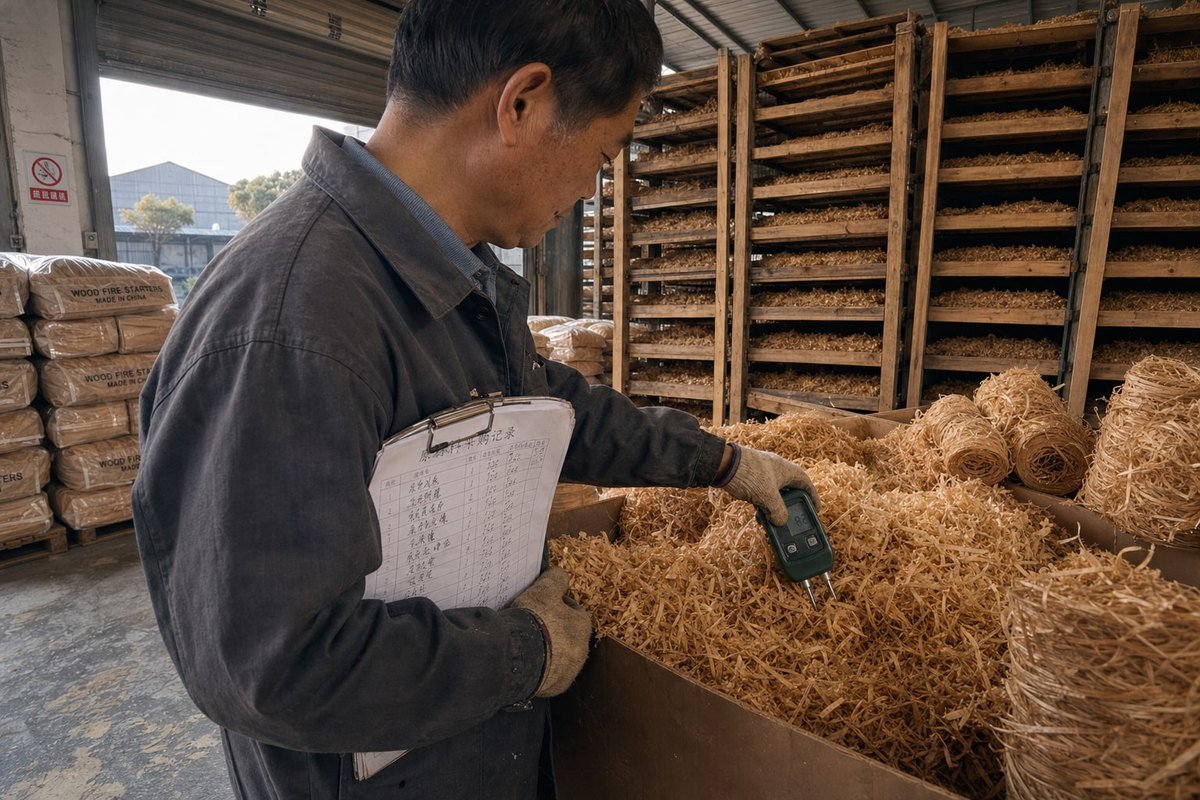
Peak season is the stress test. Fire starters are brutally seasonal. Orders for the US and European winter concentrate between August and November, and every weakness in a supplier's operation surfaces at once. Good peak season demand planning starts with recognizing the warning signs early enough to act.
Red flags ranked by severity
- A flat lead time quote year-round. If a supplier quotes 20 days in April and 20 days in October, they are either massively underutilized or not being honest. Honest factories quote longer peak windows.
- No visibility into raw material sourcing. Suppliers relying on sawmill off-cuts compete with the biomass heating market 5. When local pellet demand spikes during a cold snap, their wood supply can vanish overnight, and your lead time stretches with it.
- Limited or outdated drying technology. Kiln-dried kindling sourcing 6 depends on drying throughput. Factories with only traditional heat kilns cannot rapidly scale when unseasonal cold drives sudden demand.
- Evasive answers about backlog. A confident factory will tell you how booked they are. Vagueness usually hides overcommitment.
- Communication slowing down. Delayed replies to simple status questions are often the first external symptom of an internal production backlog.
- No mention of logistics constraints. Peak season also congests ports. A supplier far from major shipping hubs, or one who never discusses logistics infrastructure, is ignoring a variable that adds one to three weeks of transit variability.
We structure our own peak planning around pre-booked wood supply and staged production starting in early summer. When a supplier cannot describe a similar plan for the season, assume their promise is aspirational, not operational. Build extra safety stock levels into your first peak cycle with any new supplier, regardless of what they promise.
How do I evaluate a supplier's communication and reporting during production to confirm they're on schedule?
One lesson from 17+ years of exporting: buyers rarely leave over a single delay. They leave over silence. That shaped how our team reports to clients during every order fulfillment cycle.
Set milestone reporting requirements before production starts — order confirmation, raw material intake, production start, mid-production photos, pre-shipment inspection, and booking confirmation. Then judge the supplier on response speed, proof quality, and whether they flag problems proactively rather than after deadlines pass.
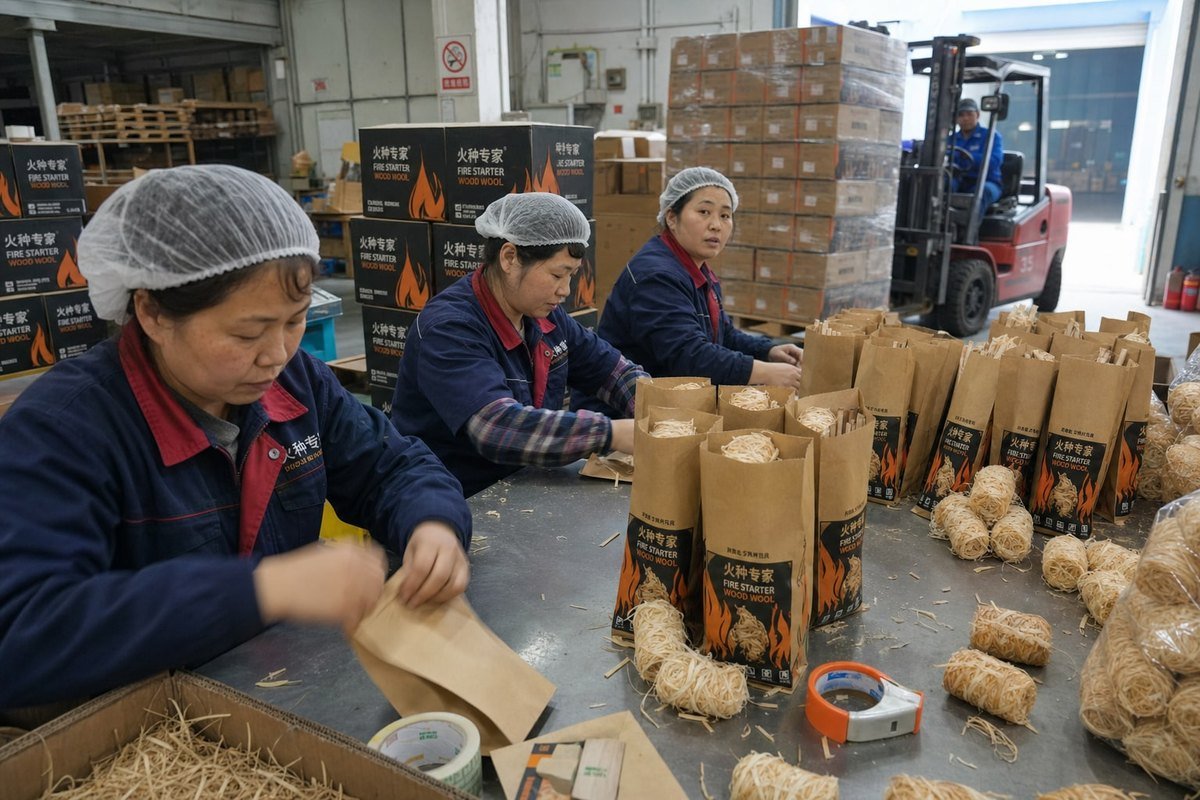
Communication is measurable. Treat it like any other metric on your vendor audit checklist, not as a soft feeling. The structure below turns "good communication" into something you can score.
Define milestones up front
Agree on a reporting cadence in the PO or a simple side agreement. For a typical wood fire starter order, six checkpoints work well: confirmation with a production schedule, raw material arrival with moisture readings, production start with line photos, a mid-production update with quantity completed, pre-shipment inspection results against your quality control standards, and vessel booking with the estimated shipping transit times. Photos and short videos are cheap proof. A factory that resists sending them is telling you the schedule exists only on paper.
Score what you receive
| Signal | On-Schedule Supplier | At-Risk Supplier |
|---|---|---|
| Response time | Within 24 hours, consistently | Stretching to 3+ days as deadlines near |
| Proof provided | Dated photos, videos, inspection data | Text reassurances only |
| Problem disclosure | Flags issues early with a recovery plan | Reveals delays after the ship date passes |
| Milestone accuracy | Updates match the agreed schedule | Milestones quietly slip without comment |
| Answer specificity | Quantities, dates, batch numbers | Vague phrases like "almost done" |
Test them before it matters
During a trial order, send one unscheduled question mid-production, such as asking for the current completed quantity. The speed and specificity of the answer previews how they will behave when a real problem hits. Also watch corrective-action behavior 7. Every factory has problems; ours included. The difference between a reliable partner and a risky one is whether they tell you on day two with a solution, or on day thirty with an apology. Suppliers who volunteer bad news early are the ones whose good news you can trust.
Conclusion
Judge lead time by evidence, not quotes. Verify documents, capacity headroom, seasonal red flags, and reporting discipline — then partner with factories whose history proves their promises hold.
Footnotes
1. Explains wood drying science behind kiln throughput claims suppliers make. ↩︎
2. Explains the shipping document buyers use to verify actual transit times. ↩︎
3. Background on inventory buffers tied directly to lead time variability discussed here. ↩︎
4. International Trade Centre resources help exporters evaluate factory production capacity. ↩︎
5. IEA data shows how biomass demand competes for the same wood feedstock. ↩︎
6. Authoritative wood-drying research supports claims about kiln throughput limiting production scalability. ↩︎
7. ISO quality standards formalize the corrective action process suppliers should follow. ↩︎


 English
  Spanish
  German
  French
  Arabic
  Portuguese
Join the Conversation