






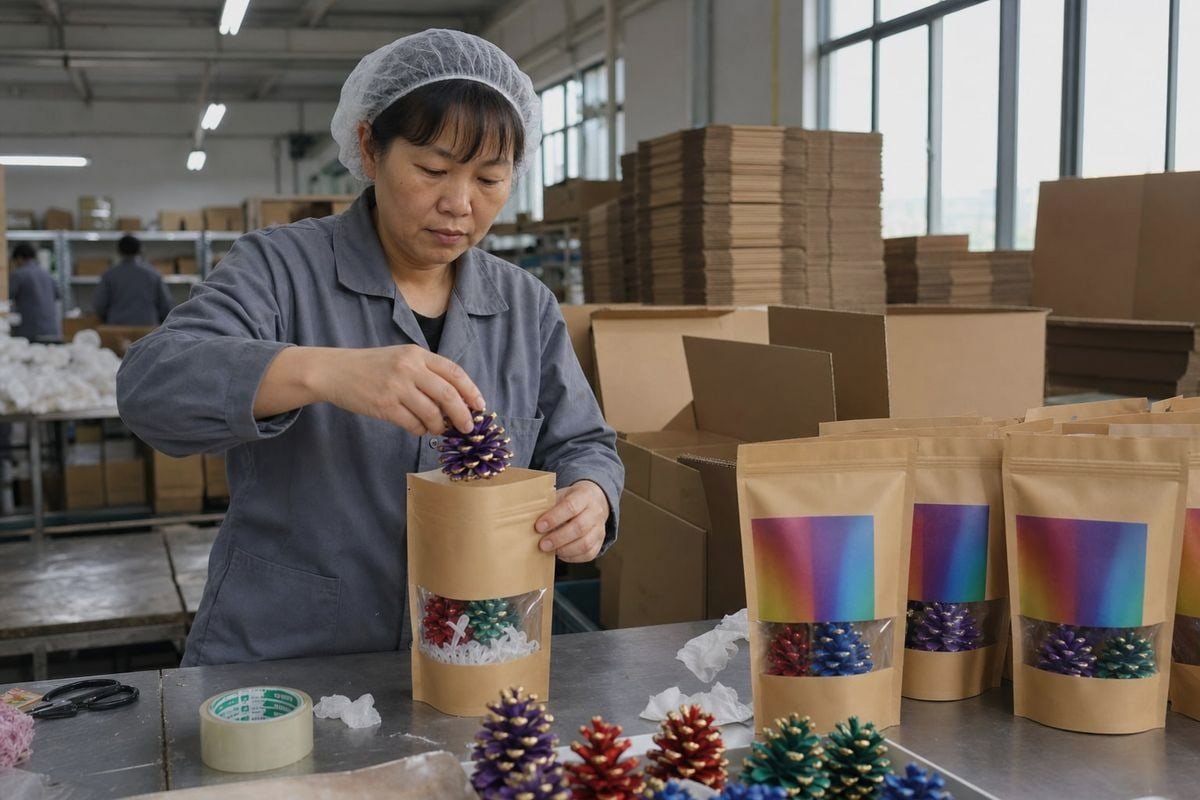
Retail packaging for colored pine cones has to sell and survive at once BSCI certification 1. On our packing line, I have seen beautiful cones arrive at buyers chipped, dusty, and unsellable — a costly, avoidable failure.
Effective retail packaging for colored pine cones combines a clear window or vivid printed panel for shelf appeal with snug internal dividers, anti-abrasion tissue, and double-walled corrugated shippers, plus compliant warning labels, so cones display beautifully and arrive intact after international transit.
Below, I break the problem into four practical questions: compliance labeling, protective materials, shelf-standout design, and custom low-MOQ options Intertek testing 2. Each section reflects what actually works when shipping fire-themed décor across 30+ countries.
What certifications and warning labels should I include on colored pine cone packaging to meet import safety regulations?
A German distributor once asked us to reprint 5,000 pouches because the flame warning icon was two millimeters too small for their retailer's audit. That lesson shaped how our team handles labeling today.
Colored pine cone packaging for fire use should carry CE-aligned flame warning icons, "keep away from children" text, usage and disposal instructions, country-of-origin marking, a barcode, and importer details, backed by SGS or Intertek test reports and ISO 9001/BSCI factory certification for retail audits.

Compliance is the first gate, not an afterthought. In our experience exporting color-flame pinecones to the US, Germany, the UK, and France, a missing label stops a shipment faster than any quality issue. Retail sourcing channels like Home Depot–type chains audit packaging artwork before they audit the product itself.
Core label elements by market
Different markets emphasize different things, but the overlap is large. Here is how I brief our artwork team when a buyer targets multiple regions.
| Label Element | US Market | EU Market (DE/FR/NL) | UK Market |
|---|---|---|---|
| Flame/fire warning icon | Required for fire products | Required, CE-aligned sizing | Required, UKCA context |
| Child safety statement | Strongly expected | Mandatory wording | Mandatory wording |
| Usage instructions | Plain English | Local language(s) required | English |
| Country of origin | "Made in China" mandatory | Mandatory | Mandatory |
| Importer name and address | Expected by retailers | Mandatory | Mandatory |
| Barcode (UPC/EAN) | UPC | EAN-13 | EAN-13 |
Certification backing behind the label
Labels are only as strong as the test reports behind them. We hold ISO 9001 3 and BSCI certification and run products through SGS 4 or Intertek testing so buyers can hand documentation straight to their retailer's compliance desk. My advice: ask your supplier for the actual test report, not just a claim on a spec sheet. If the cones are scent-infused or coated, confirm the coating chemistry is covered in the report too.
Also plan physical space. A clear window packaging design looks great, but if the front panel leaves no room for mandated warnings, you will end up with a sticker slapped over your artwork. Reserve the back panel and a bottom strip for regulatory content from day one.
Which packaging materials best protect colored pine cones from breakage and scent loss during international shipping?
The trade-off I weigh most often is rigidity versus weight. Pine cone scales are brittle, coatings can transfer, and every extra gram of board raises freight cost on a 40-foot container.
Double-walled corrugated cardboard shippers, custom box inserts or molded pulp trays that isolate each cone, non-abrasive tissue lining, resealable inner pouches for scent retention, and desiccant packets for humidity control together give colored pine cones the best protection during international shipping.
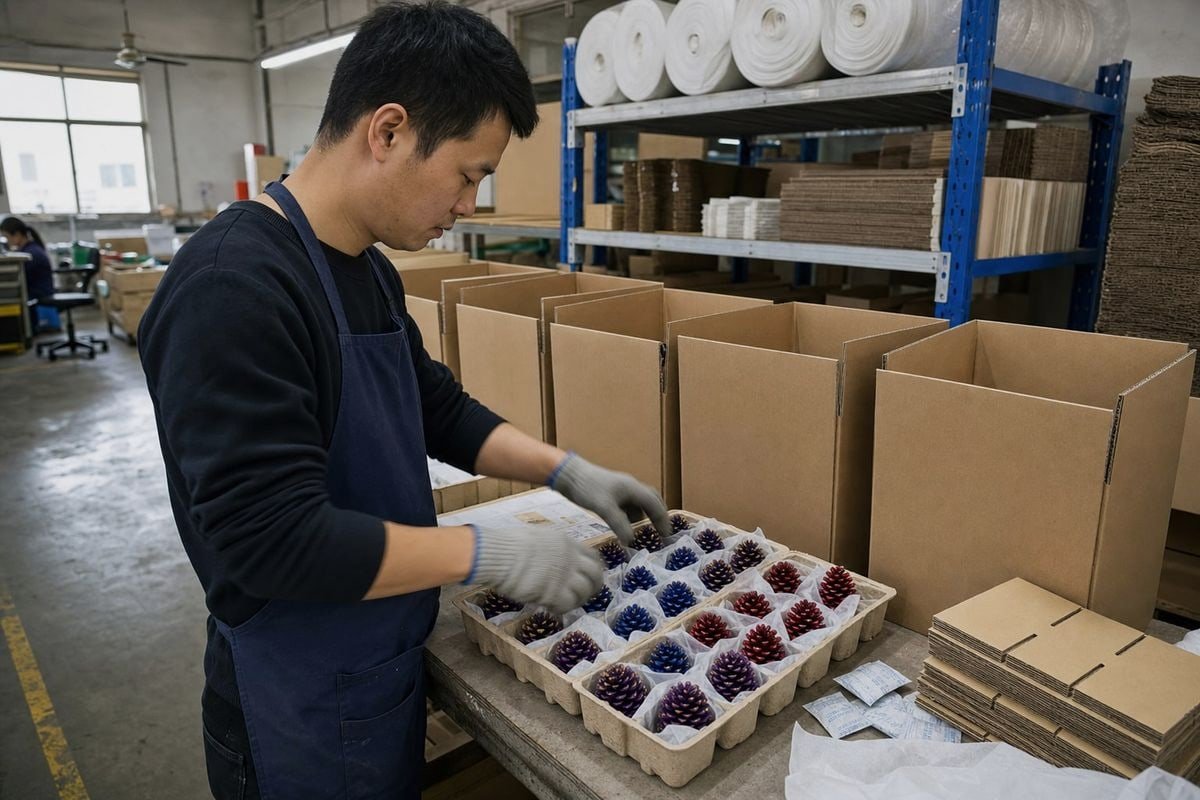
Fragile item shipping is really a movement-control problem. A cone that cannot move cannot chip. When we pack color-flame pinecones in Ningbo, our rule is simple: if you shake the master carton and hear rattling, the pack-out fails QC and goes back to the line.
Layer-by-layer protection strategy
I recommend thinking in three layers, from the cone outward:
- Contact layer. Wrap or line with non-abrasive tissue or silk paper. This stops friction-based chipping and paint or glitter transfer between cones. Anti-static paper helps if glitter finishes are involved.
- Containment layer. Use protective inserts — die-cut dividers, molded pulp trays, or compartment trays — so each cone sits in its own cell. Snug sizing matters more than padding thickness.
- Transit layer. Pack retail units into a double-walled corrugated cardboard 5 master carton with corner protection. Corrugate absorbs compression when cartons are stacked on pallets.
Scent and moisture control
Scent loss and moisture damage are quieter risks. Cinnamon-scented or wax-treated cones lose aroma through porous board over a long ocean transit. A resealable inner pouch or a light moisture-barrier coating on the inner carton preserves both scent and shape. Small desiccant packets 6 prevent the cones from absorbing humidity, expanding, and cracking their coating. Some buyers ask for micro-perforated scent vents on the retail unit; we advise keeping those sealed with a peel tab until the product reaches the shelf.
For void fill, wood wool 7 and honeycomb paper are my defaults. Both are eco-friendly packaging materials, both cushion well, and both reinforce a natural brand story instead of fighting it with plastic foam.
How can I design retail packaging that makes my colored pine cones stand out on store shelves?
A UK camping-brand buyer once told me their end customers decide in three seconds whether to pick up a pack. That single comment changed how we mock up every display design.
To maximize retail shelf appeal, use a clear window or die-cut panel showing the actual cone colors, a bold rainbow-gradient accent signaling the flame effect, high-contrast typography readable from ten feet, kraft textures for a natural story, and shelf testing under real store lighting.

Product visibility drives sell-through more than any single design choice, so start with what the shopper must understand instantly: what it is, what color effect it creates, and how many cones are inside. Everything else moves to secondary panels.
Format options and when to use them
Different channels favor different formats. Here is the comparison I walk buyers through during OEM briefings:
| Format | Best For | Display Strength | Shipping Efficiency |
|---|---|---|---|
| Stand-up kraft pouch with clear window | Camping/outdoor retail, gift shops | High — shows real product | Excellent — light, flexible |
| Die-cut boxes with window film | Premium gift and holiday décor | Very high — structured, giftable | Good — stackable |
| Printed folding carton (no window) | Mass retail, lower price points | Medium — relies on print | Excellent |
| Burlap drawstring sack | Rustic, artisanal, fireplace channel | High — tactile novelty | Moderate — needs outer tray |
| Counter tray / point-of-purchase display | Impulse zones near checkout | Very high — self-merchandising | Ships as one unit |
Design tensions worth resolving, not avoiding
Some buyers push back on windows, worried about UV fading and scuff marks. That concern is valid but solvable: a UV-resistant coating on the window film protects dyed cones under harsh retail lighting, and a tissue nest behind the window stops scuffing. In my view, showing the real color sells this product category better than any printed photo can.
Others assume rustic kraft alone is enough. It usually is not. Vivid cones deserve vivid contrast — a rainbow gradient behind distressed black lettering, as on our campfire pouch design, signals the multicolor flame effect from across the aisle while the kraft texture keeps the natural, eco-friendly cue. Test your mockup next to competitor packs at arm's length, five feet, and fifteen feet before you approve print.
Can I get custom box sizes and private-label branding for colored pine cones at a low minimum order quantity?
Trial orders are where long-term partnerships start. Over 17 years, most of our largest distributor accounts began with one cautious, small private-label run to test their market.
Yes. Factories with in-house OEM/ODM capability offer custom box sizes, private-label branding, custom inserts, barcodes, and warning labels at low trial MOQs — often one production batch — with stock structural templates keeping tooling costs minimal for first orders.
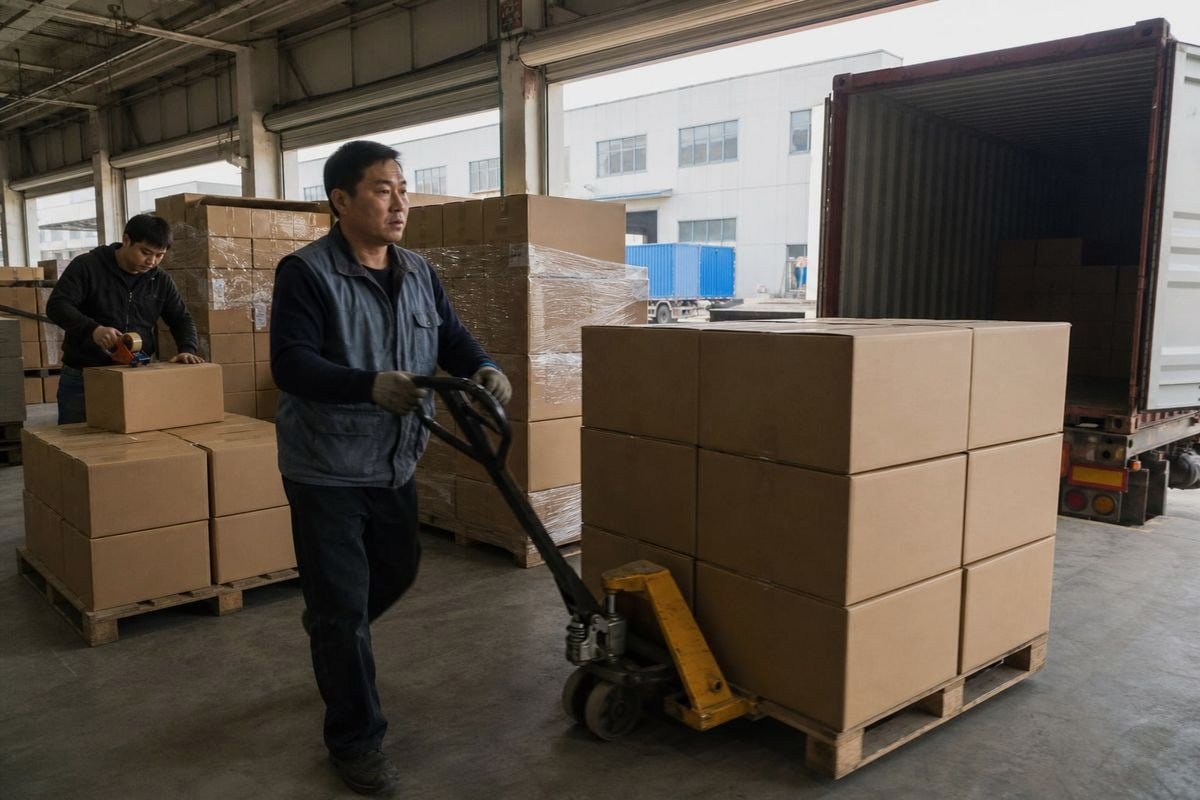
Low-MOQ customization is realistic when the factory controls its own production lines. Because we run complete lines in Ningbo, we can slot a trial batch of branded pouches or cartons between larger runs without the markup a trading company would add.
What is customizable at trial volume
Here is how I set expectations with new buyers on their first order:
| Customization | Available at Low MOQ? | Notes |
|---|---|---|
| Printed pouch or box with your logo | Yes | Digital or short-run printing avoids plate costs |
| Custom box size | Yes, from stock templates | Fully new die-cut structures need higher volume |
| Custom box inserts / dividers | Yes | Standard divider grids fit most cone sizes |
| Barcodes, warning labels, importer info | Yes | Included in artwork setup |
| Custom cone colors and scents | Yes, small surcharge | First sample matches mass-production quality |
| Retail-ready display cartons | Usually second order | POP displays justify slightly larger runs |
How the process typically works
The workflow we follow is straightforward. First, you send your logo, target market, and channel — camping retail, fireplace distribution, or seasonal gift. Second, we propose a structure: pouch, windowed carton, or burlap sack with outer shipper. Third, we produce a physical sample with your artwork and the correct market-specific labels already in place. Fourth, you approve, and the trial batch ships with full test documentation.
One honest caveat: a low MOQ is not the same as a low price per unit. Short print runs cost more per piece. I always tell purchasing managers to treat the trial order as market research, then let volume pricing take over from the second order. What matters most on order one is that the sample you approved is exactly what arrives — which is why strict batch-to-batch quality control is the differentiator to ask about, not the MOQ number alone.
Conclusion
Great retail packaging for colored pine cones works in two layers: design the shelf experience first, then engineer the shipping system. Get compliance, protection, and branding right, and cones arrive shelf-ready and sell fast.
Footnotes
1. Amfori administers the BSCI social compliance certification mentioned for factory audits. ↩︎
2. Intertek provides the certification testing services mentioned for import safety compliance. ↩︎
3. Authoritative Wikipedia entry explaining the ISO 9001 quality management standard. ↩︎
4. SGS is the third-party testing body referenced for compliance documentation. ↩︎
5. Background on corrugated fiberboard structure supports the packaging protection discussion. ↩︎
6. Explains how desiccants control humidity, relevant to the moisture protection method described. ↩︎
7. Background on wood wool as a natural cushioning material referenced for void fill. ↩︎



 English
  Spanish
  German
  French
  Arabic
  Portuguese
Join the Conversation