






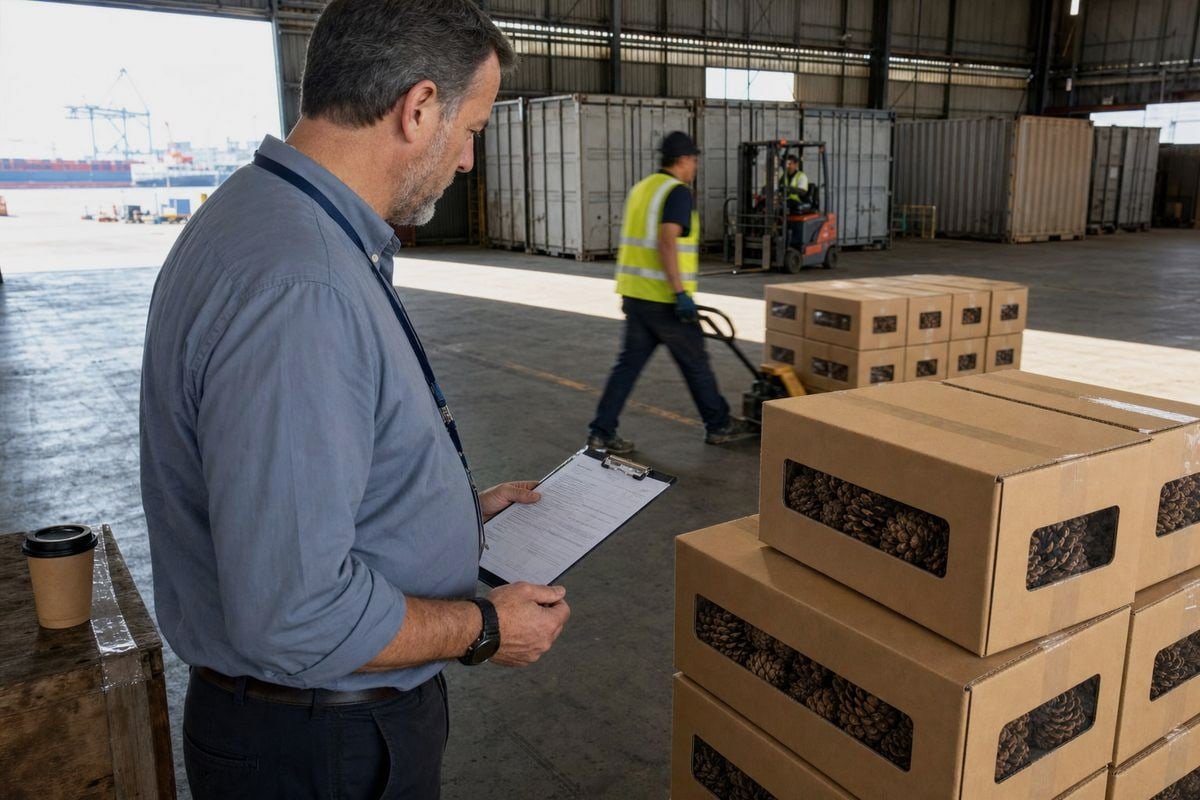
TSCA import certification for colored pine cones from China confuses many buyers EPA Chemical Substance Inventory 1. Our production team in Ningbo has watched shipments sit at US ports over one missing certification line.
To complete TSCA import certification for colored pine cones from China, first classify the shipment as an article or a chemical mixture. Then file a Positive Certification Statement (TSCA-compliant) or a Negative Certification Statement (not subject to TSCA) through CBP ACE Filing, including your name, email, and phone number.
That sounds simple. In practice, the answer depends on what is actually on those pine cones. Let me walk you through each step, based on what we see on real US-bound shipments.
How do I know if my colored pine cones fall under TSCA regulations?
A buyer from Texas once asked me why his painted pine cones needed paperwork his natural ones did not. The answer changed his whole sourcing checklist, and it starts with one distinction.
Colored pine cones fall under TSCA scrutiny when the dyes, coatings, preservatives, or color-flame chemicals applied to them count as chemical substances or mixtures. A fully cured, decorative painted cone is usually an article outside certification, while cones designed to release chemicals typically require certification.

TSCA Section 13 2 does not regulate pine cones because they come from China. It regulates chemical substances and mixtures entering the United States. So the real question is never "are pine cones regulated?" It is "what was applied to these pine cones, and does it behave like a chemical at the border?"
The article-vs-mixture test
An article is a finished object whose function depends on its shape or design, not on releasing chemicals. A purple pine cone with metallic gold tips, painted with fully cured lacquer, is generally an article. The paint is bonded. It stays put. Articles generally do not require TSCA certification unless a specific rule says otherwise.
Now flip the logic. Our color-flame pinecones are designed to release metal salts into a fire to create blue, green, and purple flames. The chemical release is the product's entire function. That shipment is not a simple article. It carries chemical substances within TSCA jurisdiction, and certification applies.
Here is how the common product types break down:
| Pine cone type | Likely TSCA status | Certification usually needed? |
|---|---|---|
| Natural, unharvested-look cones | Plant-derived article | No |
| Painted or dyed, fully cured finish | Article | Usually no, but document why |
| Glitter-coated with cured adhesive | Article | Usually no |
| Scented cones (fragrance release) | Mixture on a carrier | Often yes |
| Color-flame cones (chemical release) | Chemical substances on a carrier | Yes |
| Preserved cones with active biocides | Fact-specific | Often yes |
Two more traps deserve attention. First, screen for PFAS in any "snow-effect" or water-resistant coating, because the EPA's 2023 Section 8(a)(7) reporting rule strips away many traditional article exemptions for PFAS-containing products. Second, do not rely on marketing labels. "Craft item" or "holiday décor" on an invoice carries zero legal weight. CBP looks at composition, not adjectives. If you claim article status, keep a written analysis on file explaining why. That document has saved our buyers real time during entry reviews.
What documentation do I need from my Chinese manufacturer for TSCA compliance?
Every autumn, our compliance desk in Liuyang prepares the same document pack for US-bound color-flame pinecone orders. After 17 years exporting to 30+ countries, we know exactly what CBP and brokers expect.
Request a full product specification sheet, a Safety Data Sheet (SDS) for every dye or coating, CAS Registry Numbers for each chemical, a supplier composition declaration, third-party test reports, and the correct HTS Code Classification. Add Lacey Act species data and a Phytosanitary Certificate for plant material.

The Importer of Record bears full legal liability for the chemical identity of the dyes and pigments on those cones. You certify based on "actual knowledge" or "reasonable inquiry." That means your documentation from the factory is not paperwork for its own sake. It is your legal defense.
The core document pack
Here is the checklist we hand our US distributors before every shipment:
| Document | What it must show | Why it matters |
|---|---|---|
| Product specification sheet | Whether cones are natural, dyed, painted, coated, or scented | Drives the article-vs-mixture decision |
| Safety Data Sheet 3 (SDS) | Full chemical composition of colorants and coatings | Enables reasonable inquiry |
| CAS Registry Numbers 4 | Exact identifiers for each substance | Needed to check the EPA Chemical Substance Inventory 5 |
| Composition declaration | Signed factory statement of all treatments | Documents your due diligence |
| Third-party test reports | SGS or Intertek results for heavy metals | Supports TSCA Section 6 screening |
| Commercial invoice | Precise product description matching the goods | Prevents CBP entry delays |
| Lacey Act 6 declaration data | Genus, species, country of harvest | Separate mandatory plant filing |
| Phytosanitary Certificate | Plant health inspection from origin | Required for untreated plant parts |
Why pine cones need dual compliance
Many buyers focus so hard on TSCA that they forget the plant side. Colored pine cones typically fall under HTS code 0604.99.6000, covering plant parts dyed, bleached, or otherwise prepared for ornamental use. Because the base material is plant matter, the Lacey Act requires its own declaration of genus, species, and country of harvest. TSCA and Lacey run in parallel. One filing never covers the other.
One more point on heavy metals. Low-cost decorative pigments from unvetted workshops sometimes contain lead or cadmium contamination, which raises TSCA Section 6 restriction problems. We build a heavy-metal screening step into every pigment batch precisely because our buyers cannot afford that surprise at entry. Ask any supplier to show batch-level test data, not just a one-time certificate from years ago.
How can I verify my supplier's TSCA certification is legitimate before placing an order?
Trial orders taught me something uncomfortable early in my export career: some suppliers will email you a "TSCA certificate" that is nothing more than a logo pasted onto a template. Verification protects your entire program.
Verify a supplier's TSCA claims by cross-checking every CAS Registry Number against the EPA Chemical Substance Inventory for Active status, confirming SDS documents match declared formulations, validating SGS or Intertek reports directly with the testing lab, and requesting batch-level heavy-metal results rather than one-time certificates.

Here is the uncomfortable truth many first-time importers miss. There is no such thing as an official "TSCA certificate" issued to a factory. The certification is a statement the importer files at entry. So when a supplier says "we are TSCA certified," what they should mean is: "our chemical formulation is documented, our substances are listed and Active on the EPA Inventory, and we can prove it." Anything vaguer deserves scrutiny.
A five-step verification process
- Collect CAS Registry Numbers for every colorant. Refuse vague answers like "food-grade dye." You need specific identifiers for each pigment, binder, and metal salt.
- Check each substance on the EPA Chemical Substance Inventory. Confirm each one is listed and marked Active. Any Inactive chemical used in the coloring process requires a formal notification to the EPA before your shipment can legally clear.
- Validate the SDS against the declaration. The Safety Data Sheet, the composition declaration, and the invoice description must tell the same story. Mismatches signal either sloppiness or concealment.
- Verify test reports at the source. SGS and Intertek reports carry report numbers you can confirm directly with the lab. We encourage buyers to do this with our reports because a genuine factory has nothing to hide.
- Audit the quality system, not just the paperwork. ISO 9001 7 and BSCI audits show whether a supplier can hold a formulation steady batch after batch. TSCA compliance is only as good as batch consistency, because a formulation that drifts between production runs invalidates the documentation you filed.
One practical trade-off worth naming: this verification takes two to three weeks before your first order. That feels slow when a season is approaching. But it is far faster than a detained container. Build it into your sourcing calendar once, and every reorder afterward moves quickly.
What happens if my colored pine cone shipment fails TSCA import requirements?
A distributor in the Netherlands once told me about a US colleague whose container of scented cones sat in bonded storage for six weeks. The daily storage fees eventually exceeded the product margin. That story shapes how we prepare every entry pack.
A shipment that fails TSCA import requirements can be detained at the port, refused entry, or ordered re-exported or destroyed at the importer's expense. Importers face storage charges, civil penalties for false certifications, and increased CBP scrutiny on future entries.
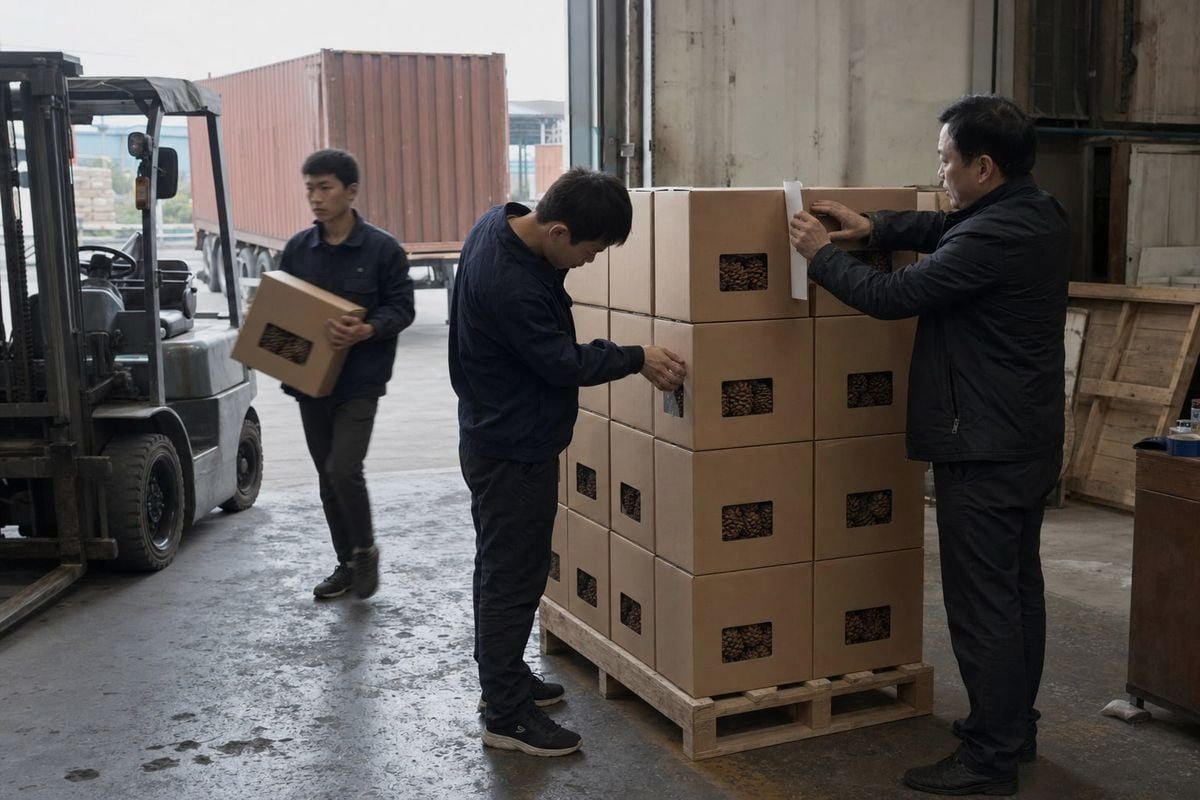
Failure at the border rarely comes from one dramatic violation. It usually comes from small, avoidable gaps. Understanding the failure modes helps you close them before your goods ship.
Common failure scenarios and their costs
| Failure mode | Typical consequence | How to prevent it |
|---|---|---|
| No certification filed when CBP expects one | Entry hold until filed; release delayed | Confirm certification approach with your broker pre-shipment |
| Wrong certification type filed | Rejection and refiling; possible penalty exposure | Base the choice on composition, not product marketing terms |
| Missing certifier contact details | Filing rejected as incomplete | Include name, email, and phone on every certification |
| Vague invoice description | Extended CBP review and exam | Match invoice wording to the actual goods |
| Inactive Inventory chemical in the coating | Shipment cannot legally clear until EPA notification | Verify Active status before production |
| Heavy-metal contamination found | Detention, possible destruction, brand damage | Batch-level lead and cadmium testing |
The filing mechanics that prevent failure
Get the mechanics right and most of these risks disappear. Electronic certifications go through CBP ACE Filing 8 at the time of entry. Paper certifications must be typed or preprinted on the invoice and filed before release of the shipment. Either way, the statement must carry the certifier's name, email address, and telephone number. Choose the Positive Certification Statement when your chemicals are subject to TSCA and comply with it. Choose the Negative Certification Statement when the shipment is genuinely outside TSCA jurisdiction, and keep your written reasoning on file.
Then retain everything, including supplier declarations, SDS files, and chemical identity records, for at least three years from the date of entry. Records are cheap. A penalty investigation without records is not. From our side, we archive formulation and test data for every exported batch so our buyers can answer any EPA or CBP question long after the container has been unloaded.
Conclusion
Colored pine cones look simple, but composition decides everything. Classify the shipment correctly, gather real documentation, verify your supplier, and

 English
  Spanish
  German
  French
  Arabic
  Portuguese
Join the Conversation