







Verifying the product code and customs name for fireplace pine cones sounds simple — until a shipment stalls at port. On our production line in Ningbo, we have seen exactly why. One wrong digit on a declaration, and a container of color-flame pinecones sits in customs limbo for weeks while storage fees pile up and your retail launch date slips away. The fix is a disciplined verification process before you ever book a vessel, and that is what I will walk you through here.
To verify the product code and customs name for fireplace pine cones from China, first define the product precisely — natural, dyed, or chemically treated for colored flames — then match it against the Harmonized Tariff Schedule, confirm the code with official China Customs tools, and align the commodity description on all shipping documents.
Let me break this down step by step. We will cover the likely HS codes, the correct customs naming, [the paperwork your supplier owes you](https://sunrichfire.com/which-export-documents-request-sourcing-fireplace-colored-pine-cones-china/), and how to lock all of this down before a bulk order.
What HS Code Should I Use When Importing Fireplace Pine Cones from China?
A German distributor once sent us a purchase order with an HS code copied from a décor supplier. Our compliance team flagged it immediately — his pinecones were flame-treated, and that changes everything about the classification.
Natural dried pine cones generally fall under HS Code 0604.99.3000, often duty-free. Painted, frosted, or dyed cones shift to 0604.99.6000 as prepared plant material. Cones treated with metal salts for colored flames may be reclassified under 3604.90 as pyrotechnic-type articles.
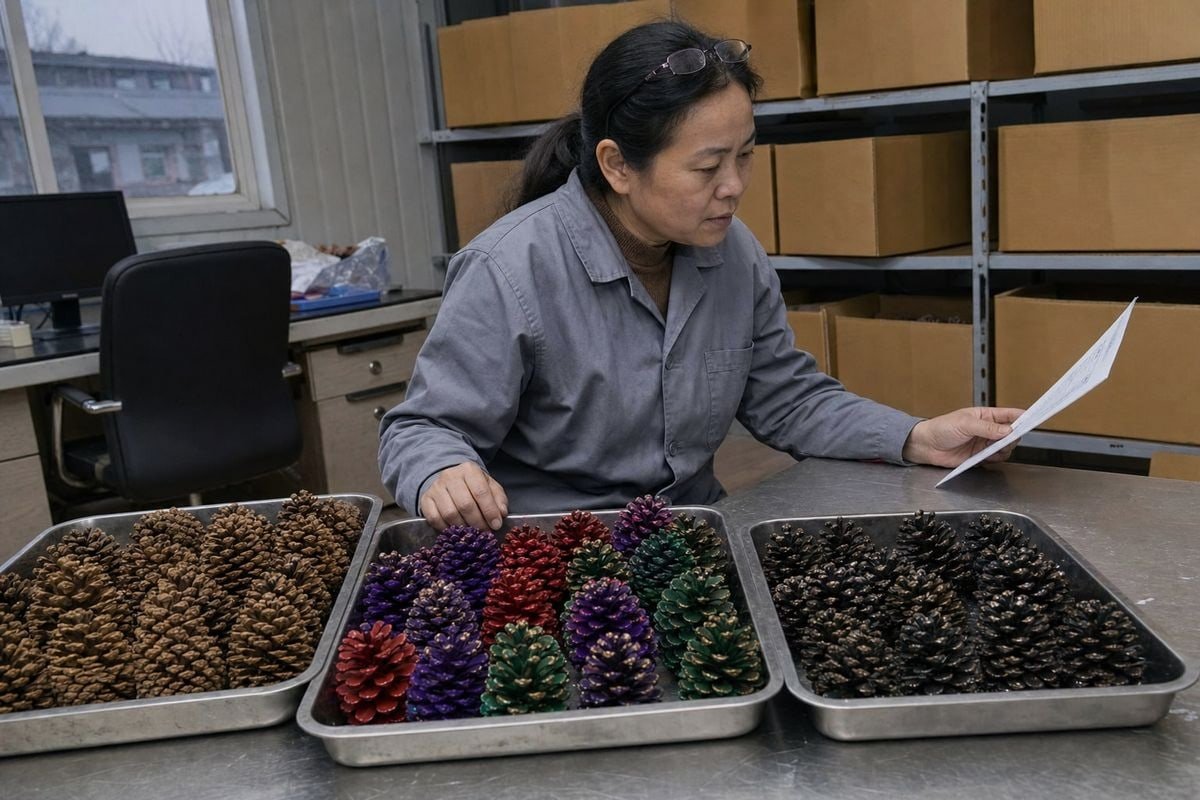
The core lesson from our 17+ years exporting fire-themed products is this: HS Code classification follows what the product physically is, not what the marketing says. A "fireplace pine cone" can be three completely different customs items depending on its processing state.
The Three Classification Paths
| Product Type | Likely HS Code | Customs Logic | Typical Duty Outcome |
|---|---|---|---|
| Natural dried pine cones | 0604.99.3000 | Raw plant part for ornamental use | Often duty-free |
| Painted, frosted, or dyed cones | 0604.99.6000 | "Otherwise prepared" plant material | Higher ad valorem rate |
| Cones treated with metal salts for color flames | 3604.90 (potentially) | Chemically prepared combustible article | Different duty band, more scrutiny |
Why does this matter so much? Because the GRI classification rules 1 require customs officers to classify by the most specific accurate description. A pinecone impregnated with copper sulfate or similar compounds is no longer just a plant part. Its function has changed. Its chemistry has changed. Customs sees that.
Import duty rates 2 also shift dramatically between these headings. And for US buyers, Section 301 tariffs 3 on Chinese goods may apply differently depending on the final code. That means the classification decision is not a paperwork detail — it directly changes your landed cost.
One caution I always give buyers: no public source gives one definitive code for every fireplace pine cone product. Your exact specification decides the code. When a product is borderline — and color-flame pinecones often are — China Customs offers pre-classification decisions through the Single Window portal, and these rulings stay valid for three years and are recognized across Chinese ports. For a commercially important SKU, that ruling is cheap insurance.
How Do I Confirm the Correct Customs Product Name to Avoid Clearance Delays?
When we prepare export documents at our factory in Liuyang, the commodity description gets checked twice — once by production, once by compliance. That habit came from an early lesson: a vague name invites inspection.
Confirm the customs product name by describing the goods technically — material, treatment, and function — such as "natural dried pine cones" or "chemically treated pine cones for colored-flame effects." Never use marketing terms like "Christmas decorations," and ensure the same description appears identically on the invoice, packing list, and declaration.

The customs name — the commodity description on your paperwork — must match the tariff heading you declared. If your invoice says "Christmas Decorations" but your code says plant material, an officer sees a mismatch. Mismatches trigger inspections. Inspections cause delays. It really is that mechanical.
There is a specific trap here worth agitating over. Labeling natural pine cones as "Christmas Decorations" can push them toward Chapter 95 festive articles, which often carries a worse duty outcome. A well-known US ruling classified a natural pine cone garland under heading 0604 as plant material and explicitly rejected the festive-article argument — proof that customs authorities look at the actual material, not seasonal marketing language.
What a Strong Customs Description Includes
A defensible commodity description should state:
- The base material — natural pine cones, genus Pinus.
- The processing state — dried, cleaned, painted, dyed, or chemically treated.
- The intended function — ornamental use, or combustible fireplace/campfire product.
- The form and packaging — bulk, retail pouch, or gift set.
This mirrors general customs guidance worldwide: describe the type, purpose, material, production method, and packaging in plain technical terms. It also supports customs valuation, because a precise description helps officers accept your declared value without questioning what the goods really are.
Finally, keep everything consistent. In our export experience across 30+ countries, the single fastest way to lose a week at port is having three documents with three slightly different product names. Align them word for word.
What Certification and Test Reports Should My Supplier Provide to Support Customs Declarations?
Compliance paperwork is where we refuse to compromise, and it is why buyers stay with us. Every batch of our color-flame pinecones ships with documentation because our ISO 9001, BSCI, CE, and SGS/Intertek framework demands it — and because border agencies increasingly demand it too.
Your supplier should provide a GACC phytosanitary certificate for natural cones, an SDS for chemically treated flame products, third-party test reports such as SGS or Intertek, business registration proof, and for US imports, data supporting a Lacey Act Declaration listing the genus Pinus.
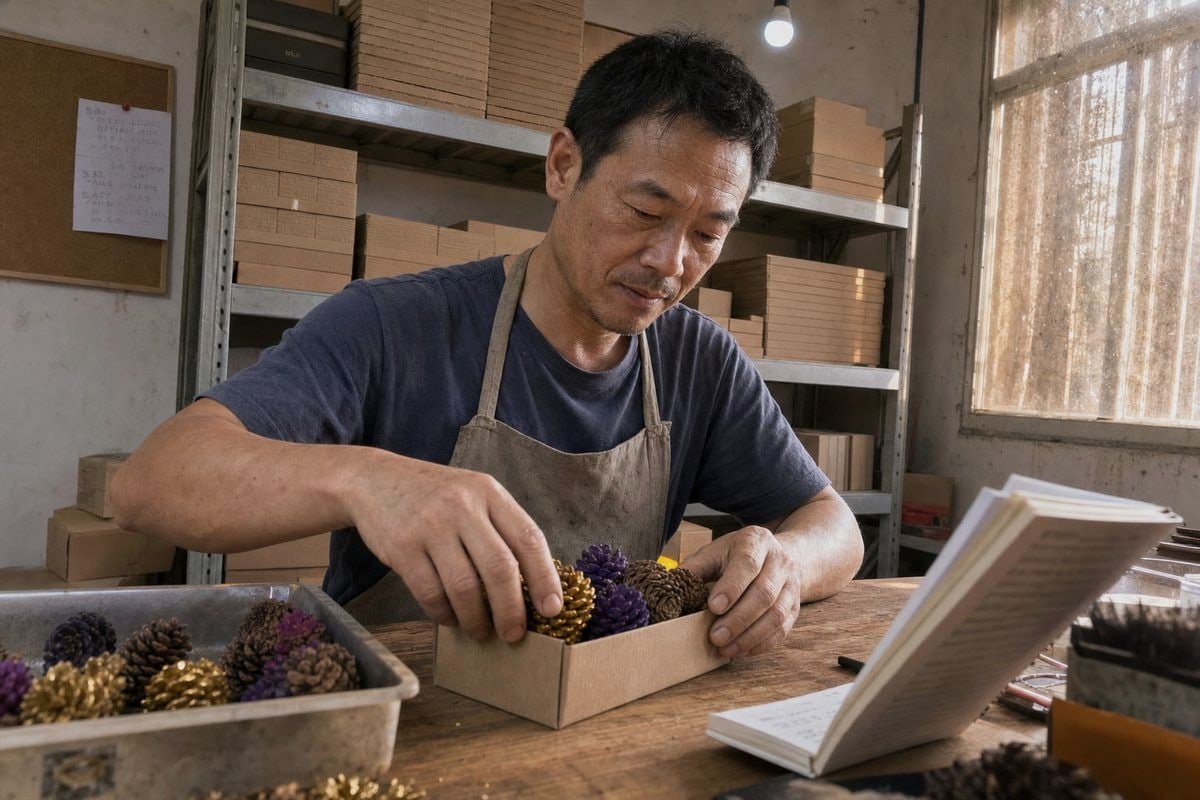
Documents are not decoration. Each one answers a specific question a border agency will ask. Here is how I explain the package to new buyers.
The Document Checklist and Why Each One Matters
| Document | Who Issues It | What It Proves | Who Asks for It |
|---|---|---|---|
| Phytosanitary certificate | GACC (China Customs) | Cones are free from pests like pine wood nematode | Destination plant-health authorities |
| Lacey Act Declaration data (PPQ Form 505) | Importer files; supplier provides species data | Legal plant sourcing, genus Pinus declared | US Customs / USDA APHIS |
| Safety Data Sheet (SDS) | Manufacturer | Chemical composition and handling of flame-treated cones | Carriers, e-commerce platforms, customs |
| Third-party test reports | SGS, Intertek, or similar | Product safety and compliance claims are verified | Retailers, customs on inspection |
| Business license / export registration | Chinese authorities | Supplier is a registered legal exporter | Importers, banks, customs brokers |
Phytosanitary certification 4 deserves special emphasis for natural cones. Untreated plant material can carry pests, and shipments without the certificate can be destroyed or returned at your cost. For flame-coloring products like ours, the SDS matters just as much — carriers and platforms like Amazon run safety audits on combustible consumer goods, and no SDS means no listing.
Two more points from our export practice. First, EU buyers should confirm any glitter or "frosted" finish complies with EU Regulation 2023/2055 5, which bans conventional plastic-based microplastic glitters — biodegradable or inorganic shimmer only. Second, keep the full document file for every shipment. Import compliance audits can arrive years after clearance, and the importer of record — that is you — carries the liability, not the supplier.
How Can I Work with My Manufacturer to Verify Product Codes Before Placing a Bulk Order?
The trade-off I discuss most often with purchasing managers is speed versus certainty. Skipping code verification saves a week upfront. Getting it wrong costs a month at port. In every case I have seen, certainty wins.
Work with your manufacturer by requesting full product specifications, photos, and treatment details, then cross-check their suggested code against the China Customs tariff lookup and your national Harmonized Tariff Schedule, involve a licensed customs broker, and request a Chinese pre-classification ruling for ambiguous products before committing to a bulk order.
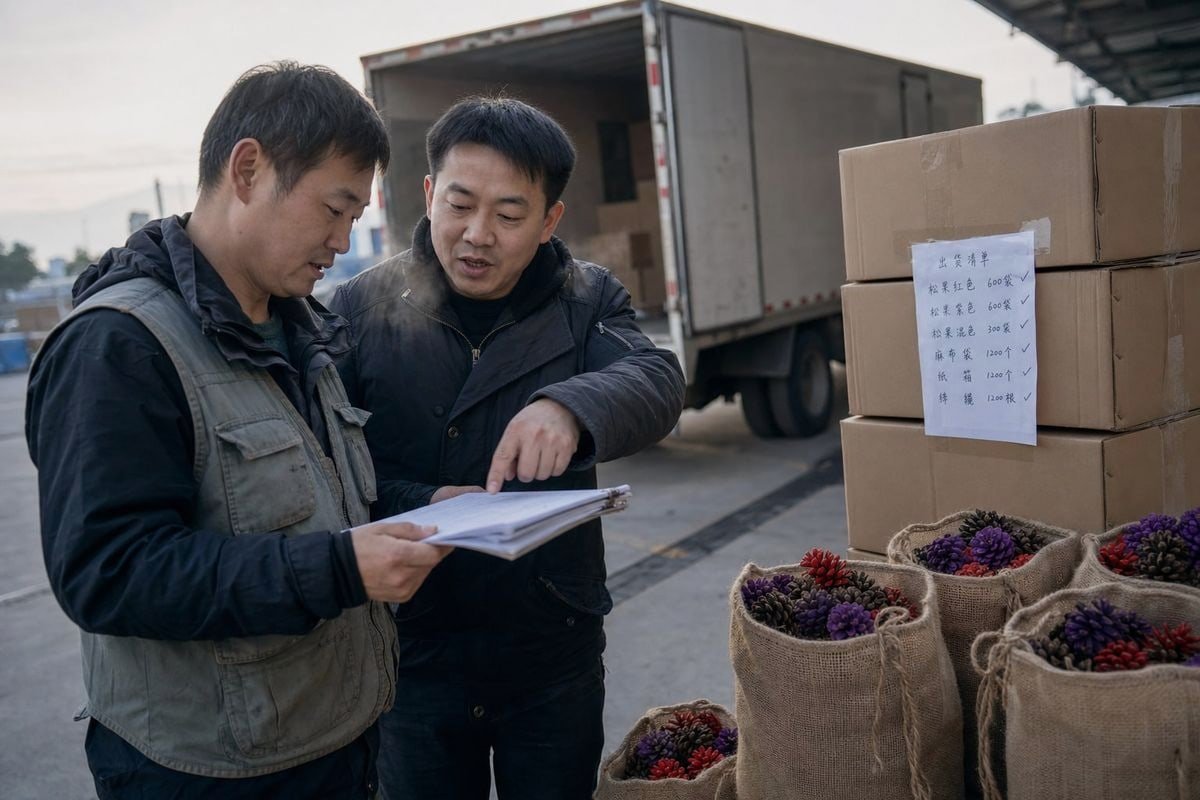
Treat any supplier-provided code as a starting hypothesis, never a final answer. Even well-meaning factories default to whatever code cleared their last shipment, and your product may differ in one detail that changes the heading. Here is the workflow we run with our own OEM buyers before any bulk production.
A Seven-Step Pre-Order Verification Process
- Collect the full specification. Photos, material composition, chemical treatment details, and packaging format — retail pouch, jar, or bulk carton.
- Classify the product honestly. Decide together: natural, decorative-prepared, or combustible flame product. This decision drives everything downstream.
- Search official Chinese tools. Use the China Customs Tariff Lookup System and the China International Trade Single Window classification module; the 12360 hotline handles case-specific questions.
- Read the notes, not just the code. Section notes, chapter notes, and heading text decide borderline cases under GRI classification rules.
- Cross-check the destination side. The 6-digit HS base is international, but national schedules diverge. Verify the import code in your own Harmonized Tariff Schedule 6 and check for Section 301 exposure and any AD/CVD scope risk on wood-attached décor components. A licensed customs broker earns their fee here.
- Request a pre-classification ruling if uncertain. Filed through the online portal, valid for three years, recognized across Chinese ports.
- Document everything. Keep screenshots, specs, and the written reasoning behind the final code. If customs ever questions the shipment, that file is your defense.
A supplier due-diligence step fits naturally here too. Verify the factory's Unified Social Credit Code 7 through China's National Enterprise Credit Information Publicity System, and where possible check customs export records — do their historical HS codes actually match the product line they claim? A factory like ours, with complete production lines and years of consistent export data under the same headings, shows a clean pattern. A trading company reselling mystery goods usually does not.
Conclusion
Wrong codes stall containers and inflate costs. Verify the product's true nature, match the code and customs name, collect certified documents, and confirm everything with your manufacturer before shipping.
Footnotes
1. Authoritative overview of the international system used to classify traded products and the general rules for interpretation. ↩︎
2. General definition and explanation of taxes levied on imported goods by national customs authorities. ↩︎
3. Official USTR page detailing trade enforcement actions and tariffs applied to Chinese imports under Section 301. ↩︎
4. International standard for certificates verifying that plant exports meet the importing country's phytosanitary requirements. ↩︎
5. Official EU legislation regarding the restriction of synthetic polymer microparticles (glitter) in consumer products. ↩︎
6. Official US government portal for searching and verifying current import duty rates and Harmonized System codes. ↩︎
7. Explanation of the mandatory registration code for all businesses and organizations operating within mainland China. ↩︎



 English
  Spanish
  German
  French
  Arabic
  Portuguese
Join the Conversation