







Import costs and tariffs can quietly destroy the margin on wood fire starters. I have watched buyers price from our factory quote alone — and regret it after customs clearance.
To factor import costs and tariffs into wholesale pricing for wood fire starters from China, calculate the full landed cost per unit — factory price, ocean freight, insurance, duties, and customs fees — then divide by one minus your target gross margin to set a protected wholesale price.
That formula sounds simple. The hard part is knowing every cost line before the container ships. Let me walk you through it, line by line, the way I explain it to our distributors.
What import duties and tariff codes apply to wood fire starters imported from China?
A German distributor once asked me why his broker quoted a different duty rate than his freight forwarder. Both used different HTS code classifications for the same wax-dipped wood rolls we make.
Wood fire starters made of wood fiber and paraffin are typically classified under HTS heading 3606 (combustible preparations) or 4401 (wood wool), with base MFN duties of roughly 0–5%, plus Section 301 tariffs of up to 25% on Chinese-origin goods for US imports.

Classification is the single biggest variable in your duty bill. In our 17+ years exporting fire-starting goods to the US, Germany, the UK, and 30+ other markets, I have seen the same product land at very different duty rates depending on how the entry was filed. The composition matters. Our standard firelighters are roughly 50% wood fiber and 50% paraffin wax, and that blend usually pushes the product into the combustible-preparations chapter rather than plain wood articles. But a pure untreated wood-wool product could sit elsewhere. Never guess. Ask your customs broker to give a binding classification opinion, or request a formal ruling from customs before your first bulk order.
Why origin and policy stack on top of the base rate
For US buyers, the base MFN rate is only the starting point. Section 301 tariffs 1 on Chinese-origin goods add a surcharge on top, and additional policy actions can stack further. The de minimis exemption 2 that once let small Chinese shipments enter duty-free was revoked in 2025, so even sample-sized orders now face formal entry. Anti-dumping duty rates are not currently a common issue for fire starters, but you should still confirm your product is not swept into any active order, because those rates can be severe.
Typical duty components at a glance
| Cost component | Applies to | Typical range |
|---|---|---|
| Base MFN duty | All origins | 0–5% of dutiable value |
| Section 301 tariffs | Chinese-origin goods (US) | Up to 25% additional |
| Additional policy surcharges | Varies by action | 10%+ when active |
| EU common customs tariff | EU imports | Usually 0–6.5% |
Verify the 10-digit code with your broker every year. Trade policy moves, and last year's rate is not a promise.
How do I calculate landed cost per unit including freight, duties, and customs fees?
When we quote FOB Ningbo, I always remind new buyers that our price is the floor, not the finish line. Landed cost calculation is what actually decides your wholesale economics.
Add the factory unit price, per-unit ocean freight, cargo insurance, import duties and tariffs, customs brokerage fees, and port handling charges, then divide any shipment-level fees by total units. The sum is your landed cost per unit — the true cost basis for wholesale pricing.
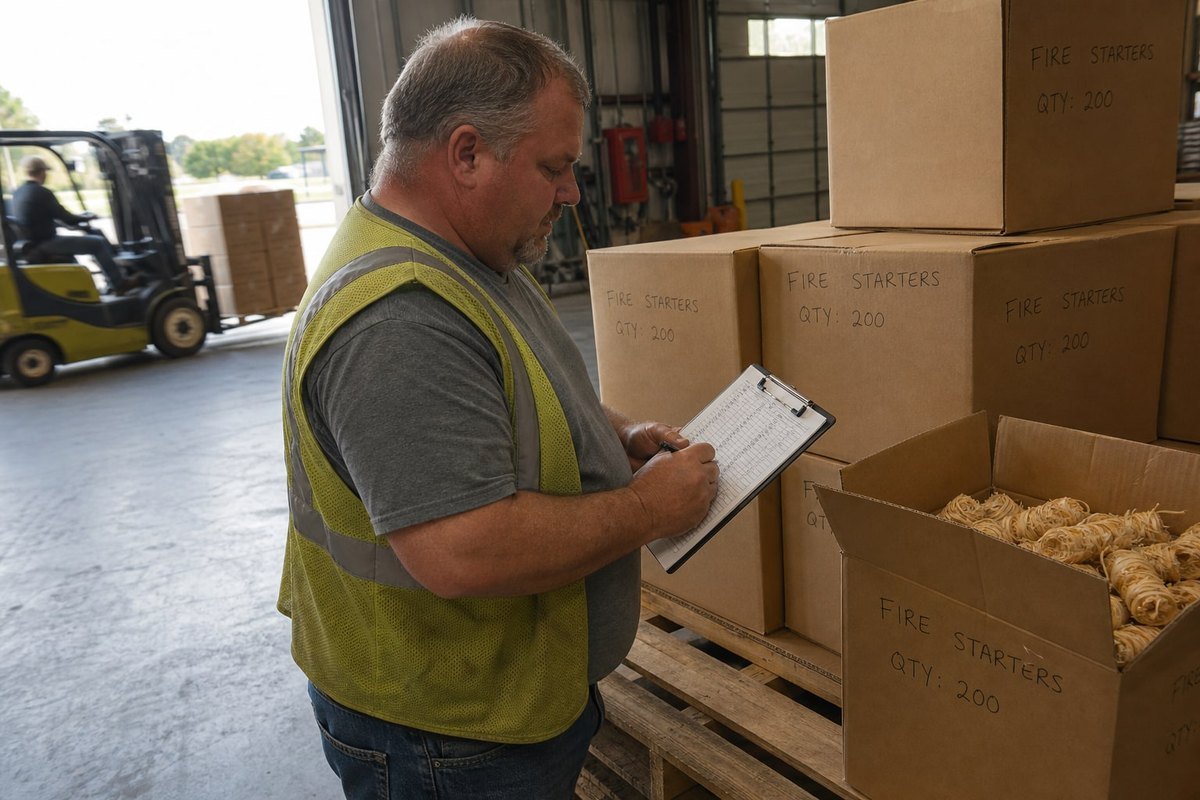
Let me make this concrete with a realistic worked example, because fire starters are a low-value, tariff-sensitive product where every cent per unit matters. Assume you order 20,000 boxes of 100-piece fire starters at $1.80 per box FOB, shipped in one 20-foot container to a US port.
A worked landed-cost example
| Cost line | Shipment total | Per box (20,000 boxes) |
|---|---|---|
| Factory price (FOB) | $36,000 | $1.800 |
| Ocean freight | $3,200 | $0.160 |
| Cargo insurance (~0.4% of CIF value) | $160 | $0.008 |
| Duties + Section 301 (est. 27% of dutiable value) | $9,720 | $0.486 |
| Customs brokerage fees + entry filing | $300 | $0.015 |
| MPF + HMF + port handling | $650 | $0.033 |
| Inland trucking to warehouse | $1,400 | $0.070 |
| Total landed cost | $51,430 | $2.572 |
Notice the outcome. The tariff line alone added about 27% to the factory price, and total landed cost sits roughly 43% above the FOB quote. Anyone who priced from $1.80 just lost the margin they thought they had.
Incoterms decide which lines you pay
Your Incoterms 2020 3 terms determine which of these lines are yours. Under FOB, you own everything from the port of loading onward. Under CIF, freight and insurance are in the seller's price, but duties and destination fees are still yours. DDP shifts nearly everything to the seller — but the seller prices that risk in. We ship most orders FOB or CIF because it keeps costs transparent for both sides. Also note the duty base: US customs generally assesses duty on the FOB value, while the EU assesses on the CIF value. Confirm the rule for your country before you run an import duty calculator, or your estimate will be off from the start.
A Canadian buyer once forwarded me a demurrage invoice bigger than his brokerage bill, all because one customs exam delayed pickup by six days. Hidden fees are real, and they cluster.
Beyond tariffs, budget for the Merchandise Processing Fee, Harbor Maintenance Fee, customs bond costs, brokerage and documentation charges of $150–$400 per shipment, ISPM 15 and Lacey Act compliance for wood products, plus a contingency for demurrage, detention, and inspection fees.

Most of these fees are small individually. Together, they can add 3–8% to your landed cost on a modest shipment. And because several are flat fees per entry, small trial orders feel them hardest. Here is the checklist I share with first-time importers of our wood firestarters and color-flame products.
The hidden-fee checklist
| Fee category | Typical cost | When it hits |
|---|---|---|
| Merchandise Processing Fee (MPF) | ~0.3464% of value, with min/max caps | Every US formal entry |
| Harbor Maintenance Fee 4 (HMF) | 0.125% of value | Ocean shipments to US ports |
| Continuous customs bond | ~$250–$550/year, pro-rated per shipment | Annual, spread across entries |
| Brokerage + documentation | $150–$400 per shipment | Every entry |
| ISPM 15 5 / phytosanitary documentation | Varies; often built into packing cost | Wood-based goods and wood packaging |
| Lacey Act 6 declaration handling | Admin time or broker fee | Regulated wood products (US) |
| Customs exam fees | $150–$1,000+ if selected | Random or targeted exams |
| Demurrage and detention | $75–$300+ per container per day | Port or container delays |
Compliance is a cost line, not an afterthought
Because fire starters are wood-based and combustible, compliance paperwork is part of your supply chain logistics, not optional admin. Heat-treated packaging, correct declarations, and clean documentation prevent the truly expensive problems: holds, exams, and storage charges. This is exactly why we maintain ISO 9001 7, BSCI, CE, and SGS/Intertek certification with test reports on file. When our buyers' brokers request documentation, we hand it over the same day. In my experience, a shipment with complete, consistent paperwork clears faster, gets examined less, and generates fewer surprise invoices. Budget a 3–5% contingency line anyway. Ports are unpredictable, and a buffer beats a scramble.
How can I set competitive wholesale pricing while protecting my margins after all import costs?
The trade-off I discuss most often with distributors is order size versus cash flow. Bigger orders spread fixed import fees thinner — but tie up more working capital before season.
Set your wholesale price by dividing landed cost per unit by one minus your target gross margin. For a $2.57 landed cost and a 40% margin, the wholesale price is $4.28. Then stress-test the price against tariff increases and freight swings before committing.
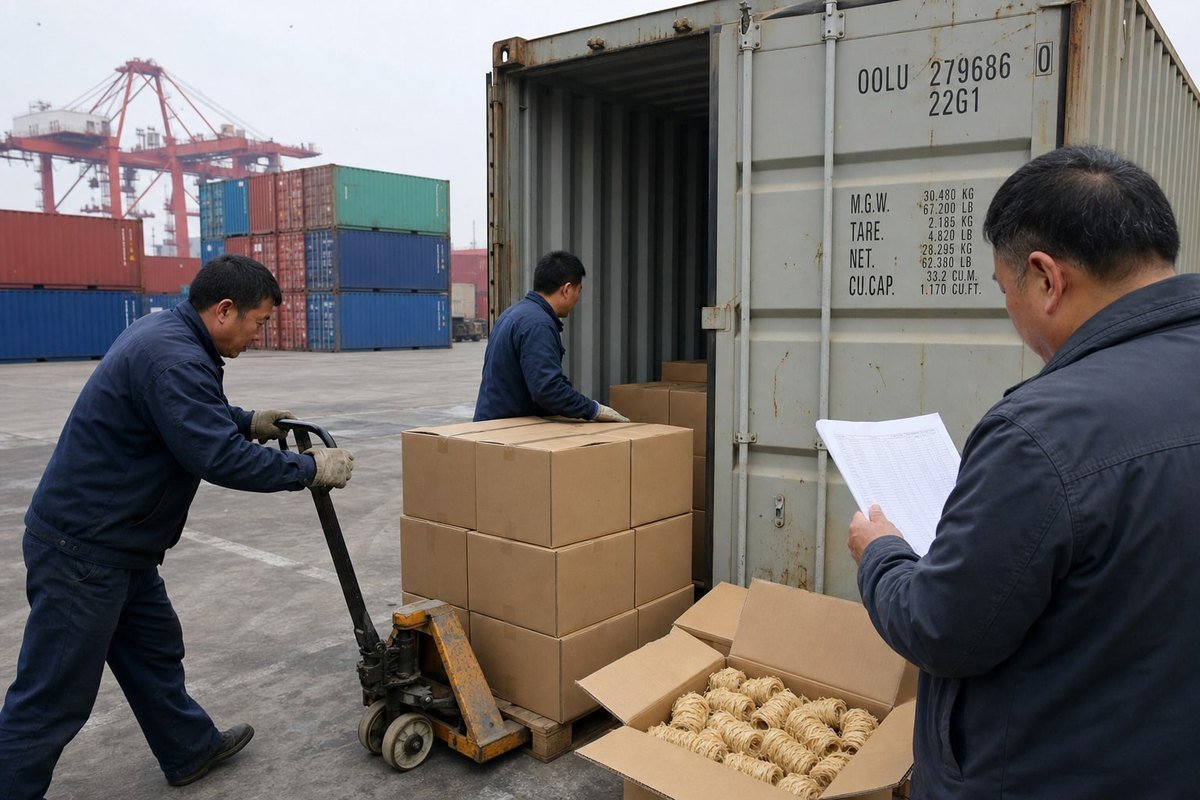
The margin-divide formula is the backbone of any sound wholesale markup strategy, because it protects margin as a percentage rather than a fixed dollar amount. A simple "cost × 2" heuristic works as a sanity check, but it fails the moment tariffs or ocean freight rates move. Here is the process I recommend.
A five-step pricing process
- Build the full landed cost per unit, per SKU, using real quotes — not estimates.
- Set a target gross margin based on your channel. Wholesale programs commonly target 30–45%.
- Apply the formula: wholesale price = landed cost ÷ (1 − target margin).
- Run a sensitivity check: recalculate at tariff +10 points and freight +30%.
- Check the resulting retail price against shelf competitors. Adjust pack size or spec before cutting margin.
Sensitivity check: what if tariffs rise?
Using our earlier example at a 40% margin target:
| Scenario | Landed cost/box | Wholesale price at 40% margin |
|---|---|---|
| Base case (27% total duty) | $2.57 | $4.28 |
| Tariffs +10 points | $2.75 | $4.58 |
| Freight +30% | $2.62 | $4.37 |
| Both shocks together | $2.80 | $4.67 |
That spread of $0.39 per box is your risk exposure. Some importers bake a 3–5% policy-volatility buffer into their markup to absorb mid-transit tariff changes without renegotiating contracts. Others time bulk intake ahead of peak fireplace season to lock costs before rates move. On the sourcing side, this is where working with a genuine factory pays off. Because we control our own production lines in Ningbo, we can adjust burn time, roll size, piece count per box, and packaging spec to hit a target landed cost — a private-label 80-piece box instead of 100 pieces can preserve your shelf price and your margin at the same time. Review your landed-cost model at least annually, and again whenever tariffs or freight indices shift meaningfully.
Conclusion
Pricing from a factory quote alone erodes margin invoice by invoice. Price from full landed cost, verify your HTS code, budget hidden fees, and stress-test tariffs — then your wholesale program stays profitable.
Footnotes
1. Official source explaining Section 301 tariff actions on Chinese-origin goods. ↩︎
2. CBP explains the de minimis rule affecting small shipment duty exemptions. ↩︎
3. Background on Incoterms rules that determine shipping cost responsibility. ↩︎
4. CBP page detailing the Harbor Maintenance Fee assessed on ocean shipments. ↩︎
5. Background on international standard for wood packaging phytosanitary treatment. ↩︎
6. USDA APHIS source on Lacey Act compliance for wood product imports. ↩︎
7. Comprehensive and accessible overview of the ISO 9001 quality management standard. ↩︎



Join the Conversation