







Choosing display formats for fireplace colored pine cones from China trips up many buyers BSCI for social compliance 1. I have watched great products fail on shelves simply because the packaging didn't match the market.
Choose display formats for fireplace colored pine cones from China based on product use, sales channel, and compliance needs. Drawstring burlap or mesh bags suit rustic gift markets, clear PET boxes fit premium retail, stand-up kraft pouches serve camping channels, and wicker baskets work for impulse-buy zones.
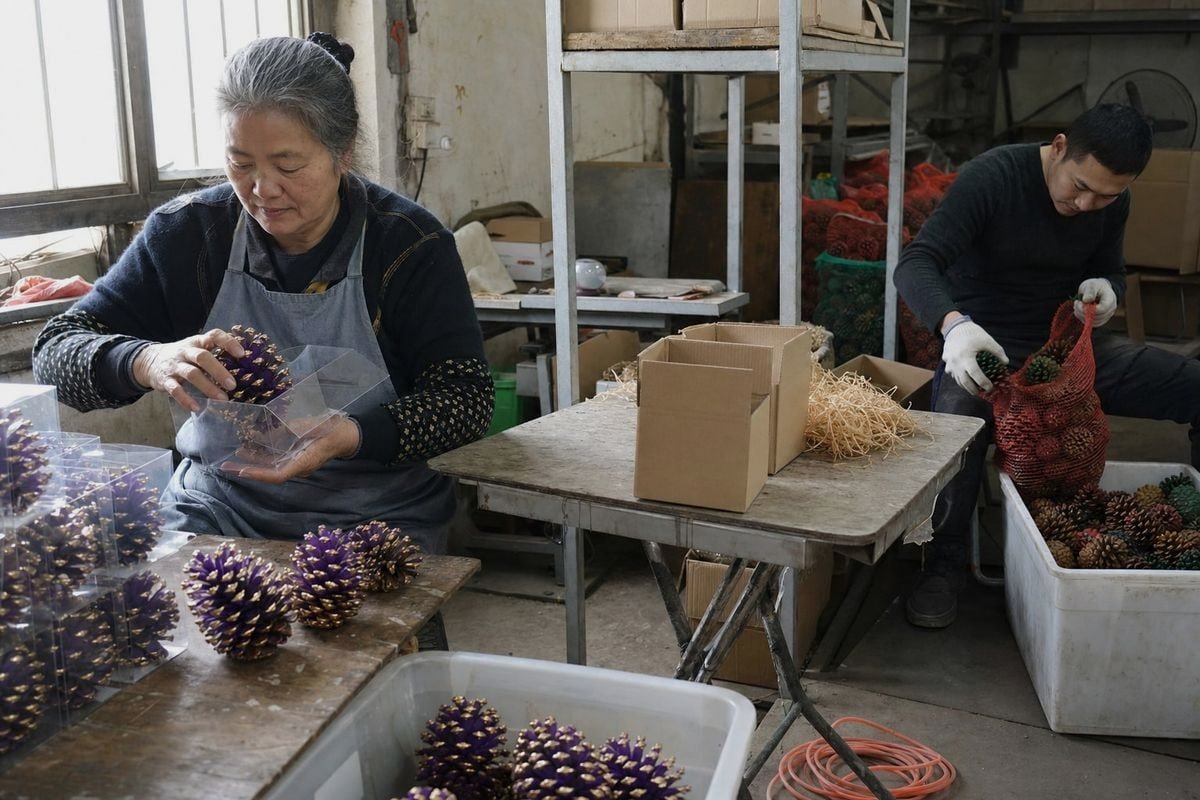
The right format sells the product before the flame ever changes color. Below, I break down every packaging option we produce, plus the compliance, customization, MOQ, and lead-time details you need before ordering.
What packaging formats are available for colored pine cones from Chinese manufacturers?
At our Ningbo production facility, we run four separate packing lines for color-flame pinecones alone. Each line exists because a different sales channel demanded a different format over our 17 years of exporting.
Chinese manufacturers typically offer six packaging formats for colored pine cones: drawstring burlap or mesh bags, stand-up kraft pouches with clear windows, clear PET or acetate boxes, decorative metal tins, bulk poly bags for refills, and retail-ready display cartons for shelf placement.
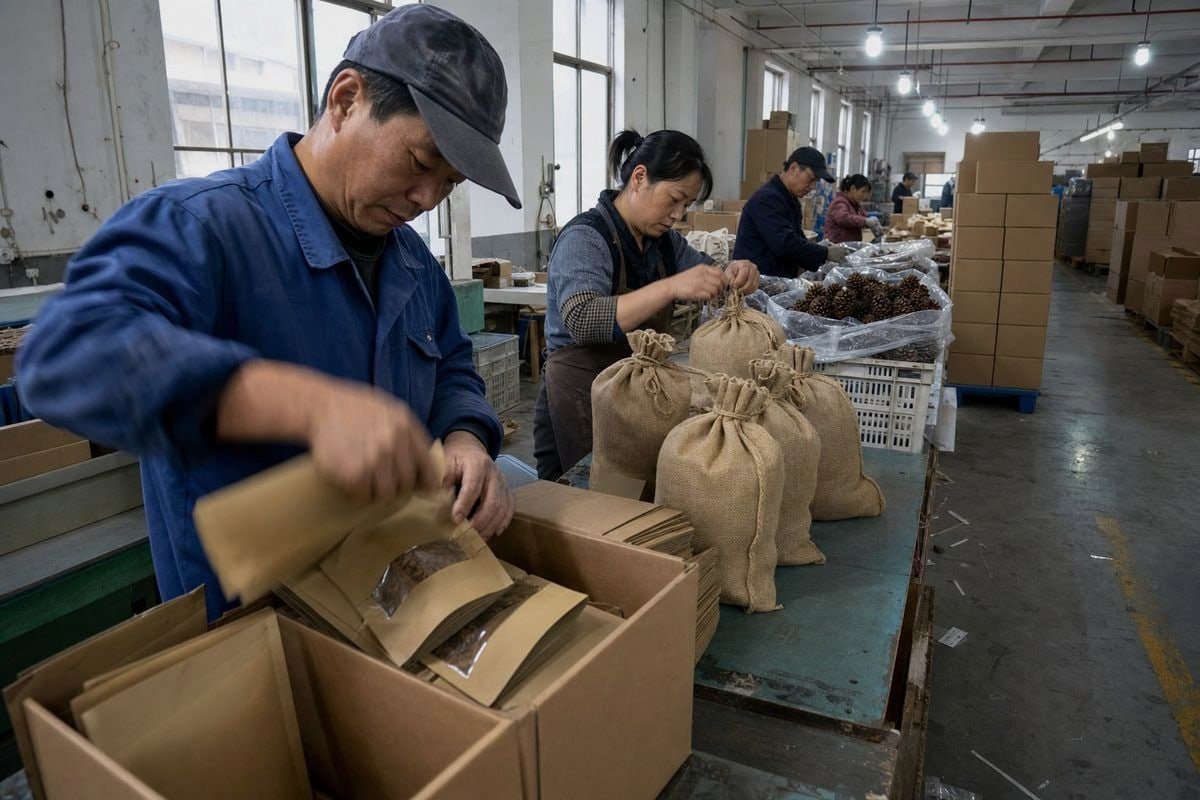
The format you choose should follow your customer, not your personal taste. In our experience shipping to 30+ countries, the same color-changing fire starters sell in completely different packaging depending on the channel. A German fireplace distributor wants something very different from a US camping brand, even when the pinecones inside are identical.
The six core formats compared
| Format | Best Sales Channel | Look and Feel | Typical Unit Count |
|---|---|---|---|
| Drawstring burlap bag | Gift shops, farmhouse decor retailers | Rustic, artisanal, handcrafted | 6–12 cones |
| Stand-up kraft pouch with window | Camping and outdoor stores | Rugged, eco-friendly, adventure-themed | 8–15 cones |
| Clear PET/acetate box | Premium retail, department stores | Polished, giftable, color-forward | 4–9 cones |
| Decorative metal tin or wooden crate | Fire starter kits, holiday bundles | High-value, keepsake quality | Kit-dependent |
| Bulk poly or mesh bag | Refills, wholesale hearth decor | Utility-first, value-driven | 5 lb or more |
| Retail-ready display carton | Big-box and grocery placement | Shelf-optimized, grab-and-go | 12–24 units per carton |
Match the format to the product's actual use
There is a real distinction between decorative painted cones and functional flame-color cones. Our hand-painted decorative line — purple cones with metallic gold tips, deep reds, emerald greens — sells best in clear boxes that show off the lacquered finish. Buyers purchase those as holiday fireplace decorations, so visibility drives the sale.
Our functional color-flame pinecones are different. Customers burn them, so they buy repeatedly. Open mesh bag packaging and resealable pouches win here because access and storage matter more than sparkle. One US buyer initially ordered our functional cones in sealed acetate boxes. Reorders were slow. We switched them to a kraft stand-up pouch with a clear window, and the repeat-purchase pattern improved because the format finally matched how people actually used the product.
Also consider mixed strategies. Several of our European distributors run bulk pine cone firestarters in refill bags alongside a premium tin kit. The tin drives the first purchase; the refill bag drives the tenth.
How do I choose retail-ready display packaging that meets EU and US safety labeling requirements?
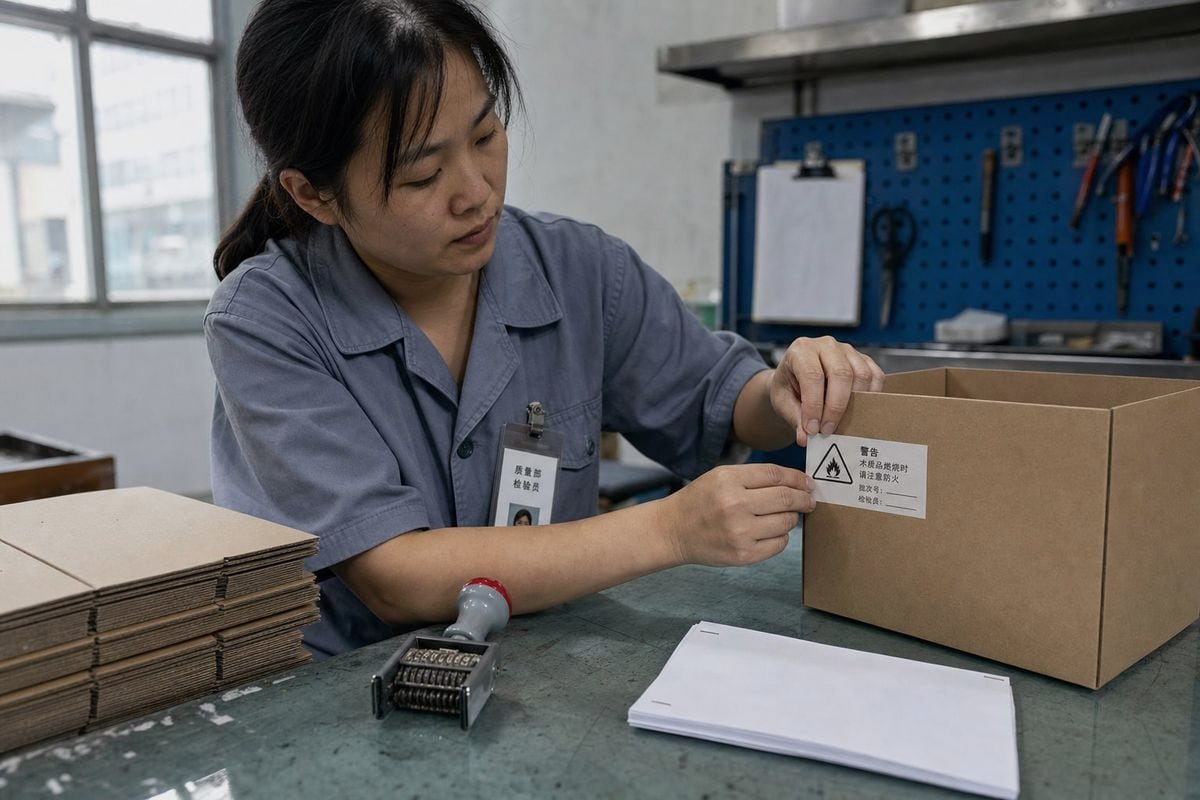
A compliance rejection at customs taught us this lesson early. Years ago, a shipment to France sat in port for weeks over labeling gaps — since then, our factory treats warning labels as part of the packaging design, not an afterthought.
Choose retail-ready packaging that carries CE marking for the EU, clear English warning text for the US, a "wood-burning fires only" statement, batch codes, and importer details. Request MSDS safety data sheets and third-party test reports from your supplier before confirming artwork.
Safety labeling is not optional decoration. Every major retail sourcing channel we supply — including Home Depot–type chains — audits packaging compliance before a purchase order is even issued. If your display box fails that audit, the product never reaches the shelf, no matter how beautiful the cones look inside.
What must appear on the packaging
The single most important warning is the fireplace-type restriction. Color-flame products are for wood-burning fires 2 only and must never be used in gas log fireplaces. We print this warning prominently on every format we produce, because it protects the consumer, the retailer, and you as the importer.
Beyond that core warning, here is what we build into artwork for each market:
| Labeling Element | EU Requirement | US Requirement |
|---|---|---|
| Fire-type warning | Required, in local language(s) | Required, in English |
| CE marking 3 | Required where applicable | Not applicable |
| Importer name and address | Required | Recommended |
| Batch/lot code | Required for traceability | Required by most retailers |
| Keep-away-from-children notice | Required | Required |
| Country of origin | Required | Required |
| Barcode (EAN/UPC) | EAN-13 standard | UPC-A standard |
Documents to request before you order
Ask your supplier for three things in writing. First, MSDS safety data sheets covering the flame colorant chemicals 4 used in the cones. Ours confirm the formulation is free of harmful heavy metals. Second, third-party test reports — we hold SGS and Intertek 5 reports and share them with buyers during sampling, because serious importers verify rather than trust. Third, factory certifications: ISO 9001 6 for quality systems and BSCI for social compliance, which many European retail chains now require from every vendor.
One practical tip from our export team: finalize your compliance text before designing the visual layout. Warning blocks take up real space on a small pouch or box, and retrofitting them after the artwork is approved always delays production.
Can I customize display boxes and branding for my colored pine cones order?
One of my favorite projects last year came from a UK hearth brand that wanted "quiet luxury" packaging — matte sage-green boxes, no neon, minimal text. Our design team turned their brief into shelf-ready samples within three weeks.
Yes. Established Chinese factories offer full OEM/ODM customization: private-label branding, custom box structures and finishes, printed warning labels, barcodes, biodegradable window films, and counter display units. You supply the brand assets; the factory handles structural design, artwork adaptation, and compliance placement.
Private label manufacturing is where most of our long-term buyer relationships begin. A distributor rarely wants to sell a generic Chinese product; they want their own brand on the shelf. Our one-stop OEM/ODM service 7 exists precisely for this, and after 17+ years we have refined the process into predictable stages.
What you can customize
Almost everything is on the table:
- Structure — drawstring bags, stand-up pouches, folding boxes, tins, crates, and counter display units that hold 12–24 retail units.
- Materials — kraft paper, burlap, cotton mesh, PET, and increasingly biodegradable cellulose windows for eco-conscious hearth and home buyers.
- Finish — matte lamination, spot gloss, foil accents, or distressed rustic printing.
- Branding — your logo, your color palette, your story panel, your social handles.
- Function — resealable zippers, hang holes, clear windows, QR codes linking to usage videos or even AR flame previews that let shoppers visualize the color effects before purchase.
- Merchandising strategy — seasonal color-blocking editions, such as harvest orange assortments for Thanksgiving or icy blue palettes for winter, which our data shows drive volume during holiday peaks.
The customization process, step by step
Our workflow runs like this. You send your logo and brand guidelines. Our designers produce structural dielines and artwork proofs, usually within five to seven working days. We then place your required compliance elements — warnings, barcodes, importer block — into the layout. Next comes a physical pre-production sample. Because we control our own production lines with strict batch-to-batch quality control, the sample you approve genuinely reflects mass-production quality. That consistency is the whole point of working with a real factory rather than a trading company.
One trend worth acting on: flat-pack retail-ready packaging. We now ship display cartons flat and pre-scored, which cuts container volume noticeably and lets store staff set up a wicker-basket-style floor display or shelf tray in under a minute. For buyers watching freight costs and carbon footprint, this is an easy win.
What MOQ and lead time should I expect for custom pine cone display packaging?
Trial orders are a conversation we have with new buyers almost weekly. A Canadian distributor once told me he had been quoted a 50,000-unit minimum elsewhere just to test a product — that is not how we work.
Expect MOQs of roughly 500–1,000 units for standard packaging with a logo, and 2,000–5,000 units for fully custom structures. Lead times run 25–40 days for repeat orders and 45–60 days for first-time custom orders, including sampling. Book 60–90 days ahead of peak season.

MOQ and lead time are shaped by one thing: how much of the packaging is truly custom. Printing your logo on our existing burlap bag is fast and low-commitment. Tooling a brand-new tin shape with embossing takes longer and requires higher volume to justify setup costs.
Typical MOQ and lead time by customization level
| Customization Level | Typical MOQ | Sample Time | Production Lead Time |
|---|---|---|---|
| Stock packaging, no branding | 300–500 units | 3–5 days | 20–25 days |
| Stock packaging + printed logo | 500–1,000 units | 7–10 days | 25–35 days |
| Custom pouch/box artwork | 1,000–3,000 units | 10–15 days | 35–45 days |
| New structure (tin, crate, display unit) | 3,000–5,000 units | 15–25 days | 45–60 days |
How to plan around seasonality
Fireplace and holiday fireplace decorations peak from October through December in the US and Europe. Working backward, that means your goods should leave China by late August or September at the latest, once you account for ocean freight of four to six weeks plus customs and inland distribution. In practice, we tell buyers to confirm custom packaging artwork by June for a Q4 launch. Every year, someone calls us in September hoping for a Christmas delivery, and every year we have to be honest about physics.
A few ways we help buyers manage this. First, flexible trial MOQs: we would rather run a smaller first order and earn the reorder than lose a good partner over a rigid minimum. Second, split shipments: air-freight a small launch quantity while the main volume travels by sea. Third, packaging inventory: for repeat buyers, we can hold printed packaging materials in stock, which cuts reorder lead times meaningfully. Our logistics team also consolidates mixed orders — color-flame pinecones alongside our Magic Fire packets or wax-dipped firestarters — into one container to optimize freight cost per unit.
Conclusion
The wrong display format buries a great product; the right one sells it on sight. Match packaging to channel, verify compliance documents, customize confidently, and plan lead times early.
Footnotes
1. Official source for the BSCI social compliance program referenced for retail vendor requirements. ↩︎
2. EPA resource on wood-burning safety supports the fireplace-type warning requirement discussed. ↩︎
3. Explains the EU conformity marking system referenced for retail packaging compliance. ↩︎
4. FDA regulates color additive chemicals, relevant to the colorant safety claims mentioned. ↩︎
5. SGS is a named third-party testing and certification body cited for safety verification. ↩︎
6. Authoritative Wikipedia entry providing a stable and comprehensive overview of the ISO 9001 quality management standard. ↩︎
7. Background explanation of ODM/OEM manufacturing arrangements referenced for private-label packaging. ↩︎



 English
  Spanish
  German
  French
  Arabic
  Portuguese
Join the Conversation