






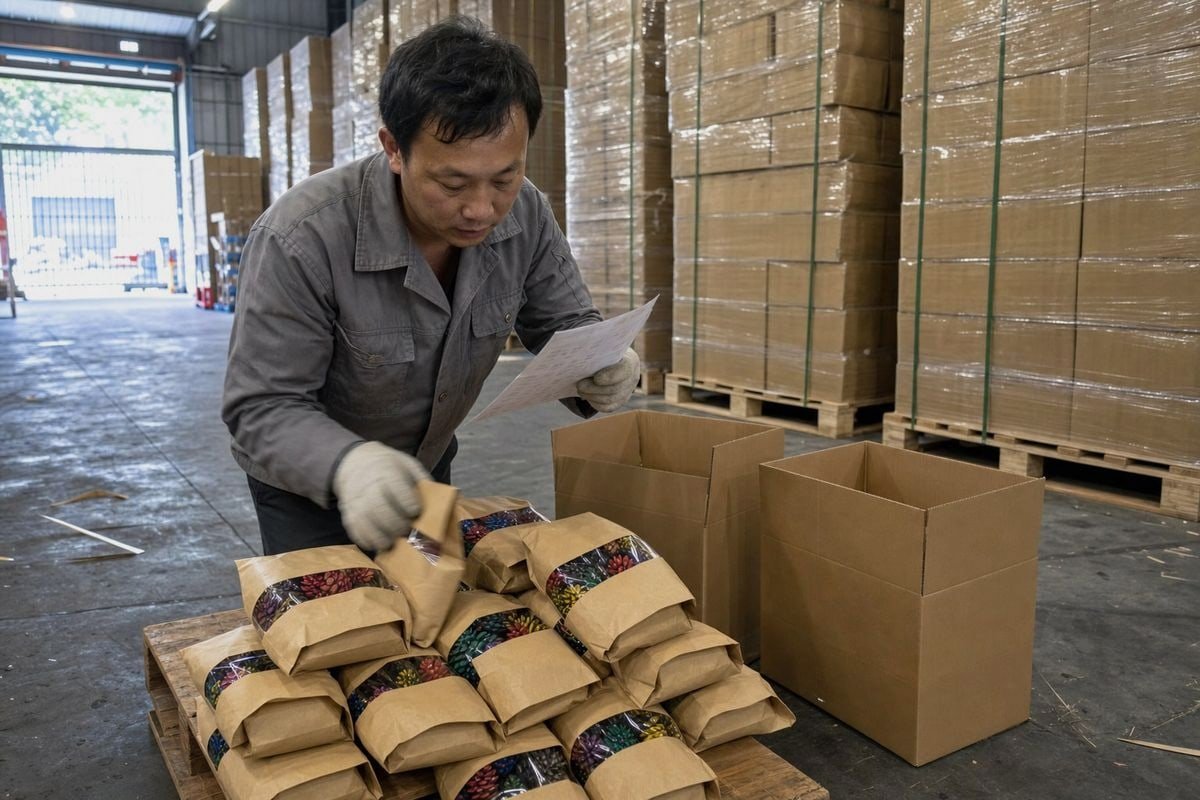
Getting the first trial order of fireplace colored pine cones right is harder than it looks. On our production line, I've watched buyers overcommit, tie up cash, and miss the season. The fix is a small, structured test order — and this article shows you exactly how to size it.
For a first trial order of fireplace colored pine cones, order the smallest quantity that tests real demand: typically one to two cases (roughly 50–200 consumer bags) for retail, or 10–20 units for online listing tests. Confirm the factory's minimum order quantity and compliance documents before scaling.
That short answer hides several decisions. Your channel, pack size, and season all change the math. Let me walk through each question buyers ask us most often.
What's the minimum order quantity your factory accepts for a first-time trial order?
A purchasing manager from Germany once told me his previous supplier demanded a full container for a first order. That request killed the deal — and it should have. Our factory takes a different approach.
Most reputable factories accept a first-time trial order of one case to a few hundred units of colored pine cones. A flexible minimum order quantity for trials typically ranges from 100 to 500 consumer bags, far below full-container volumes, so buyers can validate demand before committing to bulk wholesale pricing tiers.
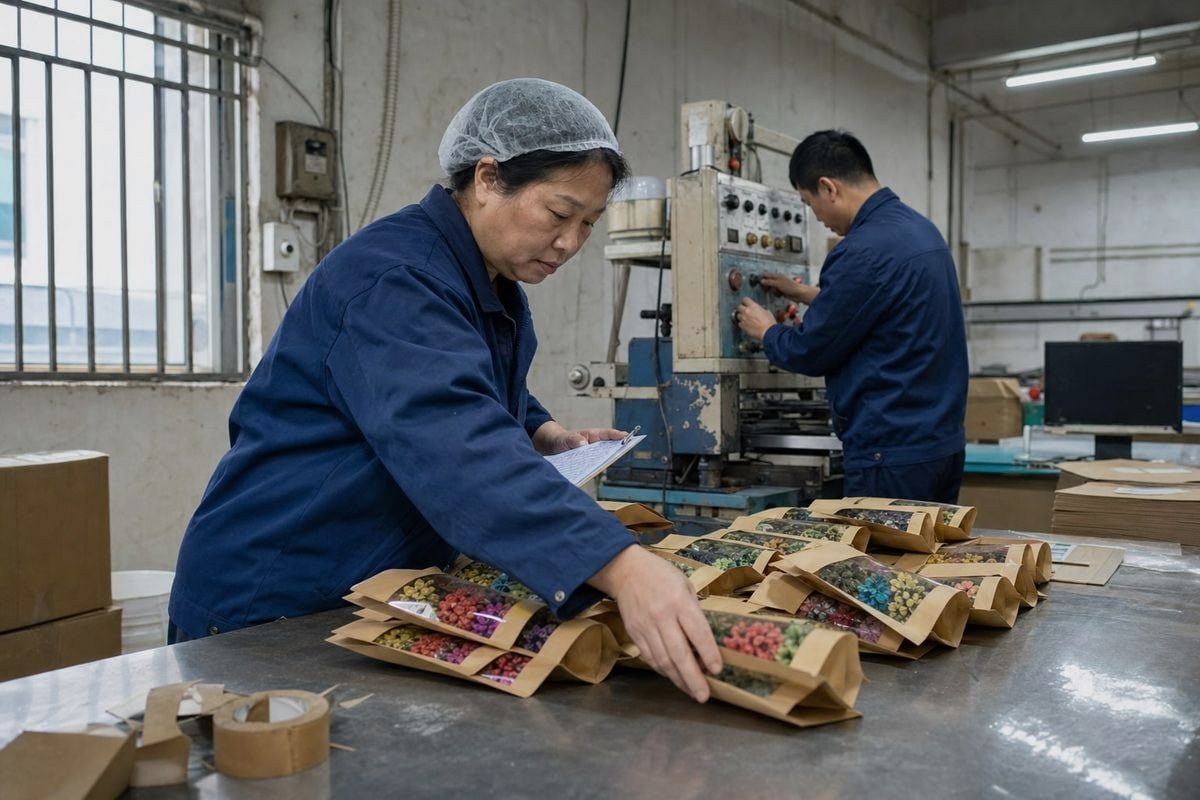
The minimum order quantity question is really a question about risk sharing. A factory that insists on huge first orders is pushing all the risk onto you. In our 17+ years exporting fire-themed products to over 30 countries, we have learned that a fair trial MOQ builds long-term partnerships. Buyers who start small and succeed come back with container orders. Buyers forced into large first orders often disappear.
What drives the MOQ number?
Three factors set the floor on any trial order:
| Factor | Why it matters | Typical impact on MOQ |
|---|---|---|
| Production batch size | Flame colorant chemicals are mixed and applied in batches | Sets a practical floor of one production run |
| Packaging setup | Printed bags, burlap sacks, or kraft pouches have print minimums | Custom retail packaging design raises the MOQ |
| Shipping and freight costs | Small parcels cost more per unit than LCL or FCL | Very small orders can double landed cost |
Stock packaging keeps the MOQ low. If you want private label manufacturing 1 on your first order — your logo on the drawstring burlap sack or kraft stand-up pouch — expect the MOQ to rise to the packaging print minimum, usually a few hundred units.
A practical negotiation tip
Ask the factory two questions. First: what is the trial MOQ with stock packaging? Second: what is the MOQ with my branding? The gap between those numbers tells you whether to test with neutral packaging first, then rebrand once the product proves itself. We often recommend exactly that sequence, because it separates product risk from branding risk.
How do I decide how many colored pine cones to order for a market test?
When we help a new distributor plan their first shipment, I always start with one question: where will these sit in 60 days — on a shelf, in a warehouse, or in a customer's hearth? The answer sizes the order.
Size a market test by channel: 6–24 display-ready bags per gift shop location, one case of the best-selling pack size for fireplace specialty retail, and 10–20 units for a direct-to-consumer listing test. Then reorder based on sell-through in the first 30–60 days.
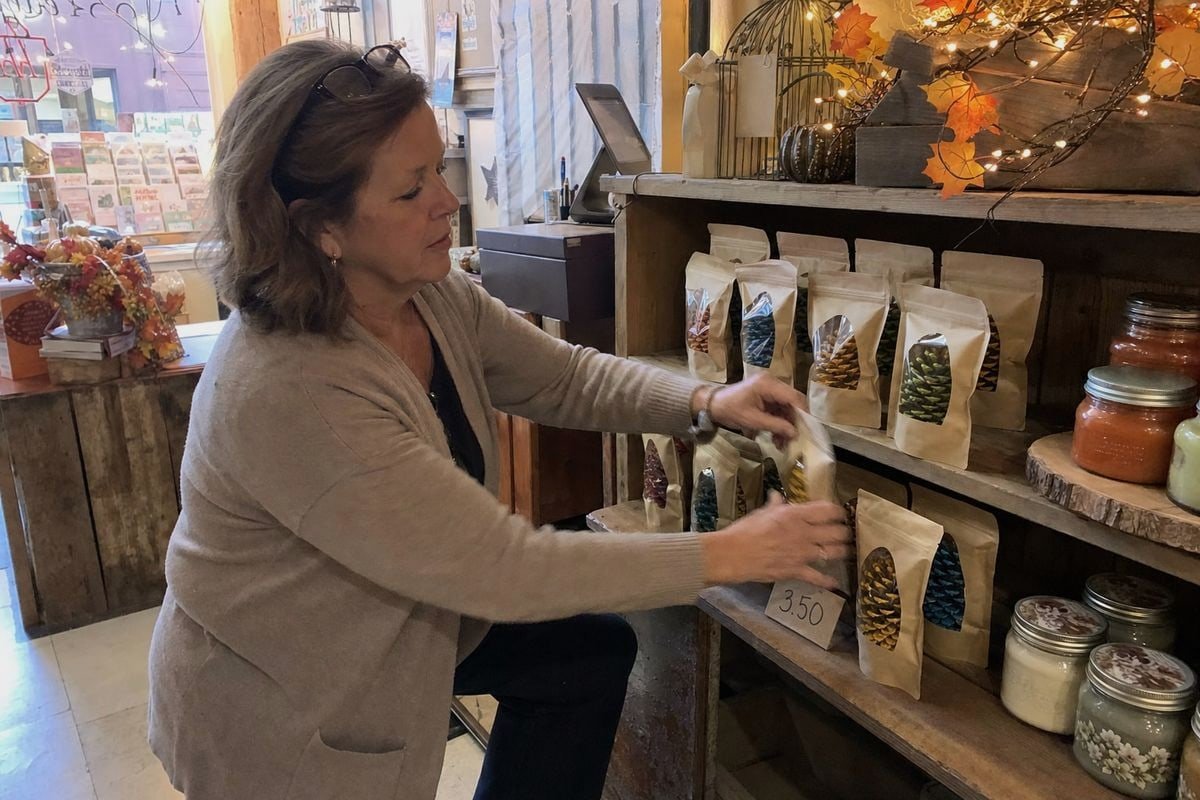
The right quantity depends less on the pine cone itself and more on the sales channel, the pack size, and the use case. This category is sold in multiple small consumer formats — 1 lb gift baskets 2, 2 lb and 5 lb bags, and pouches of roughly 8–12 cones. There is no single standardized wholesale size, so your test should be framed as one SKU in one pack size, not a broad assortment buy.
A quantity framework by business model
| Business model | Suggested first order | What you are actually testing |
|---|---|---|
| Gift shop / seasonal impulse | 6–24 small display-ready bags | Shelf appeal and impulse conversion |
| Fireplace / hearth accessories retail | 1 case of the best pack size | Sell-through over 30–60 days |
| Online direct-to-consumer | 10–20 units | Listing conversion, shipping survival |
| Private-label bundle | Factory trial MOQ | Photos, pricing, page conversion |
The consumer use-rate rule of thumb
Here is a simple calculator. A typical customer throws 2–3 cones into the fire per session. A 2 lb bag holds enough cones for several fires, so one bag can last a customer weeks during fireplace season. That means repeat purchases come slowly — which argues for a cautious first buy and fast inventory turnover, not deep stock. Time the order for fall and winter, because seasonal demand peaks sharply around the holidays and drops hard after. A trial order that arrives in March can sit for six months. One that arrives in late September can sell out in four weeks. Also set aside about 10% of your first order for burn demonstrations and video content; visual proof of the multicolored flame effect is the primary driver for this impulse purchase.
Can I order a mixed quantity of different scents or colors in my first trial batch?
One trade-off I weigh constantly on the factory floor: mixed trial batches slow down our line changeovers, but they give buyers far better market data. In almost every case, the data wins — so we say yes.
Yes, most factories with real production depth allow mixed trial batches. You can combine different flame colors, cone sizes, packaging formats, and scent variants within one trial MOQ, though each variant usually carries a small sub-minimum, often 50–100 units per variation.

A mixed first batch is one of the smartest moves a trial buyer can make. It converts a single order into several parallel experiments. Blue and green flame effects are consistently the most popular and marketable hues in this category, so anchor your mix around them, then add one or two test variants.
How to structure a mixed trial order
Here is a split we often recommend to importers testing a new market:
| Variant | Share of trial order | Purpose |
|---|---|---|
| Blue/green flame, standard bag | 50% | Proven core seller |
| Multicolor rainbow mix | 25% | Novelty and gift appeal |
| Scent-layered micro-batch (e.g., cinnamon) | 15% | Test premium price point |
| Alternative packaging format | 10% | Test conversion by presentation |
Packaging deserves its own experiment. Cotton or burlap gift bags photograph beautifully and suit gift channels; clear-window kraft pouches and plastic refill formats suit repeat home users. Splitting inventory roughly 70/30 between gift-ready formats and bulk refill bags quickly tells you whether your primary buyer is a gift-giver or a repeat fireplace user. That single insight shapes your entire second order.
What mixing does not change
Mixing variants does not exempt any variant from quality control. On our lines, every color variant goes through the same batch checks, including a burning duration test, before packing. A trial batch that skips per-variant QC gives you misleading market data — customers may reject a variant for burn quality, and you will wrongly blame the color.
Will a small trial order still include compliance testing and quality documentation?
Early in our export history, a UK buyer rejected a competitor's shipment at customs because it arrived with no Safety Data Sheets 3. That lesson shaped how we handle every order since — including the smallest trials.
Yes. A professional factory provides full compliance documentation with every order, regardless of size. A small trial of colored pine cones should still include Safety Data Sheets, applicable test reports from labs like SGS or Intertek, proper warning labels, and batch quality records at no extra negotiation.
Compliance is not a volume-based privilege. It is a property of the product and the factory system. Our certifications — ISO 9001 4, BSCI, CE, and third-party SGS/Intertek test reports — apply to the production process itself, so a 100-bag trial order BSCI 5 carries the same documentation as a full container. If a supplier tells you compliance documents are "only for large orders," they are telling you the documents may not exist at all.
Why documentation matters even for a test
Some buyers assume a trial order is too small to attract regulatory attention 6. That is a dangerous assumption. Customs holds, marketplace delistings, and retailer onboarding audits do not scale with order size. A US retail sourcing channel will ask for the same test reports for 20 units as for 20,000. And because flame colorant chemistry in this category historically included compounds like copper sulfate 7, buyers and regulators pay close attention to what is actually inside. Eco-friendly formulations without harmful chemicals must be provable on paper, not just claimed in a listing.
The documents your trial order should include
- Safety Data Sheets for the colorant formulation.
- Third-party test reports covering safety and composition.
- CE marking and related conformity documentation where required.
- Batch QC records, including burn time and color consistency checks.
- Correct warning labels — including the note that these products are for wood-burning fires only, never gas fireplaces, where residue can clog components.
One more reason documentation matters on a trial: the trial exists to predict mass production. Strict batch-to-batch quality control means your first sample reliably reflects what a container load will look like. Without documented QC, a beautiful trial batch proves nothing about order number two.
Conclusion
Start small, test one SKU per channel, mix variants smartly, and demand full compliance from unit one. When your trial data comes back strong, we're ready to scale with you.
Footnotes
1. Background on white-label branding relevant to custom packaging decisions for trial orders. ↩︎
2. Background on the gift basket retail format used as a consumer pack size. ↩︎
3. OSHA's official guidance on the Safety Data Sheet requirement referenced in the article. ↩︎
4. Official ISO reference for the quality management standard the factory cites. ↩︎
5. Official page for the amfori BSCI social compliance program mentioned as a certification. ↩︎
6. Intertek provides third-party testing that addresses the regulatory compliance discussed here. ↩︎
7. Background on the chemical historically used to create colored flame effects. ↩︎



 English
  Spanish
  German
  French
  Arabic
  Portuguese
Join the Conversation